

A mother drowned and her husband and children were rescued when the family got into difficulty while swimming on Friday.
The Indian woman, 32, was pulled from the sea off a beach in Umm Al Quwain.
Her husband, 49, and twin children, 4, were saved.
Members of the public ran to help the father as he tried to swim out to his wife, UAQ Police said. Police and marine rescue arrived soon after.
All four were taken to a nearby public hospital where the mother was pronounced dead.
The children and their father are in a stable condition, said police Brig Khalifa Al Shamsi.
He urged beachgoers to take care in the water, wear life jackets if they are weak swimmers and keep a close eye on their children.
The women's death was the third such tragedy this week.
On Tuesday, a five-year-old boy who spent 50 days in intensive care died as a result of a swimming accident.
-

Zaid Al Shehhi and his uncle pictured in a family photo. The five-year-old died 50 days after being pulled unconscious from the sea. Courtesy: Al Shehhi family -

Zaid suffered brain damage after getting into difficulty in the water on April 4. He was rescued by a jet skier who took the boy ashore for medical help. Courtesy: Al Shehhi family -
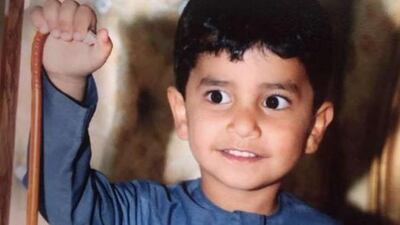
Doctors kept the child alive for 50 days but he suffered brain and organ damage related to loss of oxygen. Courtesy: Al Shehhi family -

In a further tragedy, Zaid's friend Abdul Aziz Al Shehhi, died in a similar drowning accident off Al Rams beach in RAK -
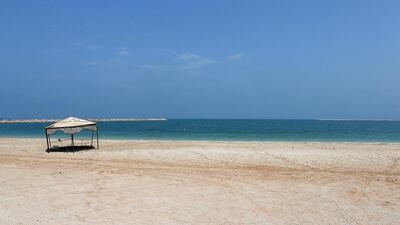
Public beaches in Ras Al Khaimah have lifeguards are various points, but are not all patrolled. The National -
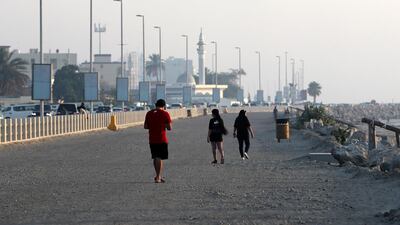
The authorities urged parents to ensure their children have inflatable jackets or armbands, whether a lifeguard is present or not. Pawan Singh / The National -
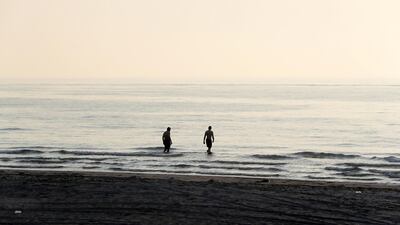
Even strong swimmers can be caught off guard by riptides and sudden current changes. Pawan Singh / The National


Zaid Al Shehhi was pulled unconscious from the water at Al Maahad beach on April 4 after getting into difficulty while swimming.
He suffered brain and organ damage relating to oxygen loss.
In a further tragedy, a friend of Zaid's family drowned in an accident on Thursday.
Abdul Aziz Al Shehhi, 14, was pulled from the water dead after getting into trouble while swimming off Al Rams beach in Ras Al Khaimah.
Dr Ammar Al Hakim, head of the paediatric unit at Ajman's Sheikh Khalifa Medical City, one of the largest hospitals in the Northern Emirates, urged parents and lifeguards to be alert.
“Pulling a child out of the water doesn’t mean they are safely rescued, because a body deprived of oxygen can lead to severe repercussions," he said.
It can prove fatal hours after the accident, if medical treatment is not sought.
"I'm saddened by this and its an eye opener for all parents to be more cautious," he said. “Never allow children to swim without armbands."

