


Only a few years ago, if someone offered to serve you a burger that looked and tasted like beef, but was made out of plants, you would have called it science fiction.
But Beyond Meat and Impossible Burgers plant-based meat alternatives are now readily available in supermarkets and fast food restaurants in the UAE and around the world.
Now the new frontier in alternative meat is cellular, where steaks are grown in laboratories over a period of only a month.
One company that has worked out the biotechnology to grow cuts of beef is Aleph Farms.
It is now in talks to grow lamb meat in the UAE.
Gary Brenner is vice president of product and market development for the Israeli company, and a veteran of more than thirty years in the food industry.
“A lot of the other companies are doing minced meat of one kind or another, or just certain tissue cells,” he said.
"We're doing the whole muscle product and that's what we're going to bring to market in the future.
"The idea is to produce locally. When it comes to the tissue cells we want to collaborate with local biotech research laboratories, and to source the tissue cells from a sheep locally.”
While it is likely to be a couple of years before UAE residents can sit down to enjoy a lamb chop grown at a local lab , Aleph Farms are pushing forward with their beef plans.
A commercial-scale pilot plant is set to be operational before the end of this year.
Aleph Foods grows entire muscles, making the type of product consumers instantly recognise as a cut of steak.
Mr Brenner said no animals are slaughtered in the process of creating the meat, as cells can be taken from cows and sheep without injury.
“The steaks are grown in controlled conditions, in bioreactors, and the bioreactors look very much like what you see in big yoghurt factors,” he said
The process is fully automated and there is no human contact.
“They grow in a liquid growth media. Part of it is minerals and nutrients, and in some cases it’s what we call recombinant proteins.
“We can grow the steaks very quickly, because we can feed the cells as much as we want. There are no antibiotics and no genetically modified products.”
An environmental imperative
At present more than 50 billion kilograms of beef are consumed annually worldwide. Demand is set to increase, as the world's population is predicted to grow to nearly 10 billion by 2050.
Farm-grown meat is considered environmentally unsustainable by many climate activists. A recent study published in Science magazine found that producing a kilo of beef emits 60kg of greenhouse gases.
Gulfood 2021:
-

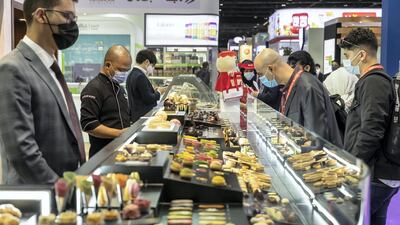
Delegates and visitors taste and try the produce on offer -
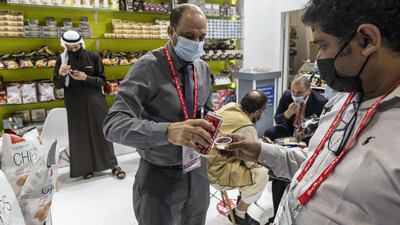
Delegates and visitors taste and try the produce on offer -
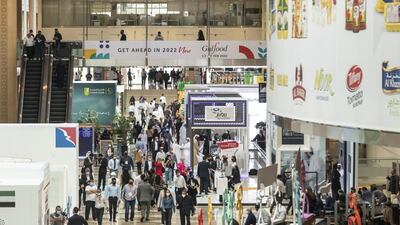
Delegates and buyers attend the Gulfood exhibition at the Dubai World Trade Centre. All pictures by Antonie Robertson / The National -

Chefs prepare food for attendees to try. Companies from about 85 countries are exhibiting their produce this week -
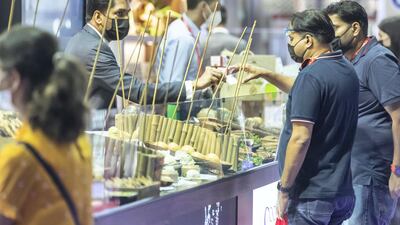
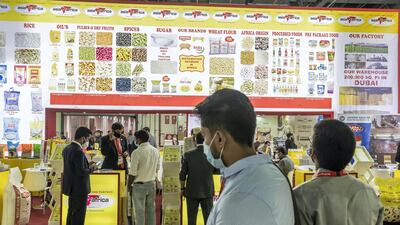
The trade show is a major source of business for local and international companies, at a time when food security is high on the agenda -
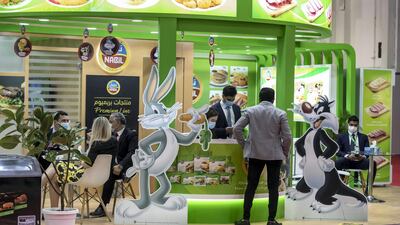
Everything from fresh food to dried produce is available -

Many companies establish major leads at the annual event, leading to supply deals later -

Delegates and visitors taste and try the produce on offer -
Delegates and visitors taste and try the produce on offer -
Delegates and visitors taste and try the produce on offer -
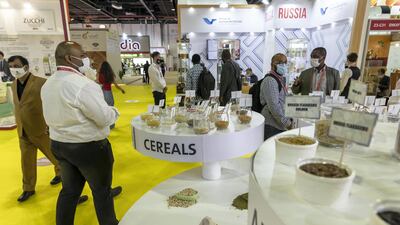
Delegates and visitors taste and try the produce on offer


As consumers become more conscious of the consequences of their food choices, the global market for meat alternatives is growing faster than any other segment of the food industry, with an expected value of $140 billion annually by 2030.
But will these creative new meat solutions ever be affordable?
Adriaan Figee is the chief commercial officer of Zanderbergen World’s Finest Meat, which distributes and produces Beyond Meat in Europe and the Middle East.
Speaking to The National at the Gulfood exhibition in Dubai, he said they hoped "in due time" to sell their products at the same price as real meat protein.
“They are still a bit more expensive. The research and development and the investment which went into it, still contributes to the fact that it’s a more premium product,” he said.
Willem Spigt, the alternative protein product manager for the Dutch company said the cost will come down in the future.
"It also has to do with the scalability. In global terms 1 per cent of total meat sales is plant based, so it's still a very small market," he added.
“You need that scale of market to actually drive down the product’s cost. You probably need it to be 10 to 20 per cent of the meat market to actually come to the same cost.”
It is the same story for the cultivated meat market, which is still a frontier industry.
“We expect we will be able to bring our product in parity with a good steak by 2025,” said Mr Brenner.
But the Israeli food development expert is in no doubt about the imperative for meat substitutes.
“If we're going to have 10 billion people, we’d better have alternative ways to feed them, because conventional sources will just destroy the planet,” he concluded.

