

Worshippers gathered in mosques across the UAE on Thursday, to welcome the first Ramadan after all Covid-19 restrictions were lifted.
The Moon-sighting committee declared Thursday the first day of the holy month.
Fathers and grandfathers came in with little children at dawn, offering the first of the five daily prayers.
Many recalled the days of social distancing and were relieved the rules introduced during the coronavirus pandemic were relegated to the past.
Mohamad Mahroof, a Dubai-based financial controller and partner of a restaurant group, said it was "so good to gather together with family and friends and pray".
“The mosque was crowded but there was still enough space for everyone," he said.
“The first day of Ramadan is always special.”
The 60-year-old returned home and recited the Quran, taking a short nap before heading to work.
“Young people find the first day of Ramadan difficult but at 60, I’m used to it,” he said.
For Fazeela Nizamudeen, the first day of the holy month was the start of a conversation with her children about spirituality.
The mother of three boys, aged 12, 9 and 4, said it was important to speak to them about the teachings of the Quran.
The family woke up before 4am, prayed and shared a pre-dawn suhoor meal of rice, lentils, meat and fruit.

The older boys went to the mosque with their father, while Ms Nizamudeen stayed home to pray with her youngest son.
“They said the mosque was packed today. Even though they went 10 minutes early they prayed outside because there were so many people,” she said.
Ms Nizamudeen said she also explained to the children how special it was to observe Ramadan in the UAE.
“In Dubai and the UAE, we are lucky because so many people are fasting together during Ramadan. There is so much that supports the Islamic way of life,” she said.
Mohammed Shareef, a 36-year-old Egyptian man, told The National, that he usually performs morning prayers at home, but decided to go to the mosque to soak up the spirituality of the holy month.
“I felt more peaceful when I stepped inside the mosque in the morning with other worshippers. There were dozens of people with me and I felt it is great to pray with other Muslims,” said Mr Shareef.
He took his sleepy eight-year-old son with him to the mosque.
“I wanted him to experience the spiritual atmosphere just like when my father took me to the mosque at the same age. Ramadan is a special month for us and we want to pray in mosques rather than homes as it is more rewarding.”
They had their last meal at about 4.50am before walking to the nearby mosque in Sharjah’s Al Khan area.
“We had our Fajr prayer after 5am. The mosque was almost full and people were smiling and exchanging gestures for the beginning of Ramadan,” said Mr Shareef.
“It is a unique month for all Muslims as more people go to pray at mosques and read the Quran. The first day is hard with fasting but for me, it's the feeling of thirst.”
A time for loved ones
The holiest month on the Islamic calendar in Islam, Ramadan is observed by more than 1.9 billion Muslims around the world. It is said to be the month the Quran was revealed to Prophet Mohammed.
It is typically a time for reflection and spending time with loved ones.
-
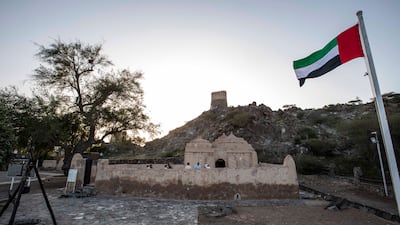
Al Bidya Mosque in Fujairah, which dates back to the 15th century. Leslie Pableo for The National -
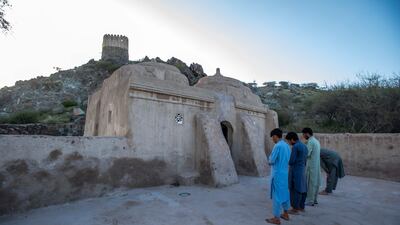
Worshippers outside Al Bidya Mosque, the oldest mosque in the UAE that is still in use. Leslie Pableo for The National -
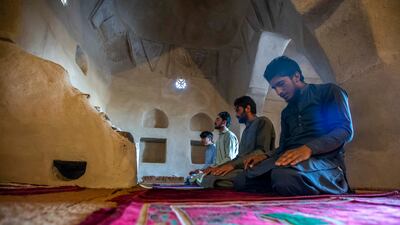
Inside Al Bidya mosque at the start of Ramadan. Leslie Pableo for The National -
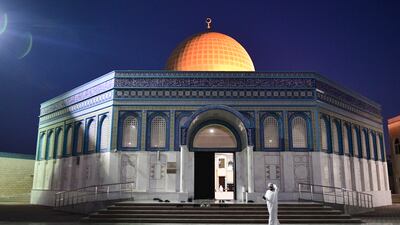
The Bani Hashim Mosque in Abu Dhabi, on the first morning of Ramadan. Khushnum Bhandari / The National -
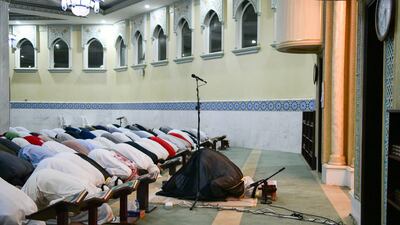
Worshippers at the first early morning Ramadan prayer at the Bani Hashim Mosque. Khushnum Bhandari / The National -
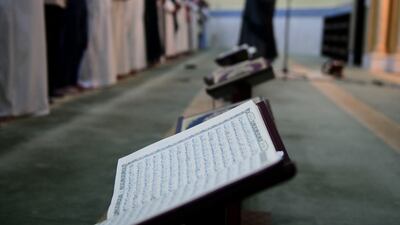
The first early morning Ramadan prayer at the Bani Hashim Mosque. Khushnum Bhandari / The National -
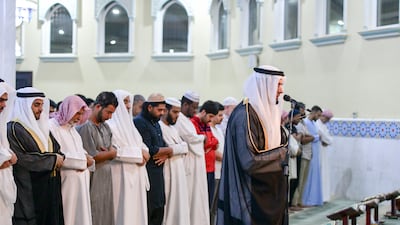
Imam Rashid Zobair, who is originally from Morocco, leads early morning Ramadan prayer at the Bani Hashim Mosque. Khushnum Bhandari / The National -
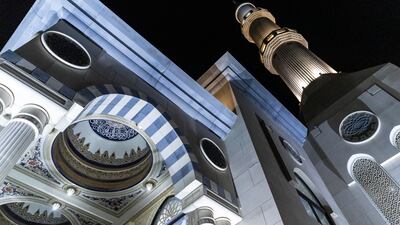
The Al Farooq Omar bin Al Khattab Mosque in Dubai. Antonie Robertson / The National -
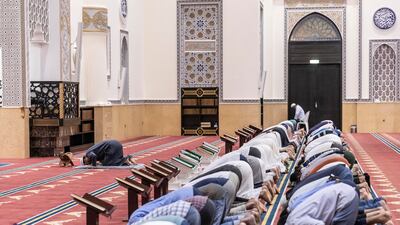
Worshippers at the Al Farooq Omar bin Al Khattab Mosque on the first morning of the holy month. Antonie Robertson/The National -
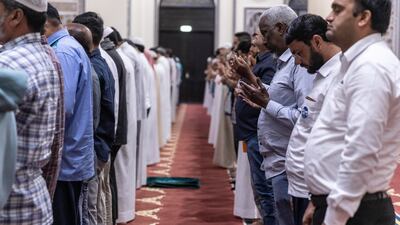
Worshippers at the Al Farooq Omar bin Al Khattab Mosque. Antonie Robertson/The National -
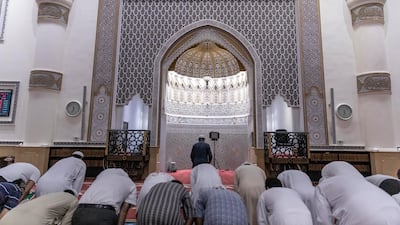
The first morning prayer of Ramadan at the Al Farooq Omar bin Al Khattab Mosque. Antonie Robertson/The National -
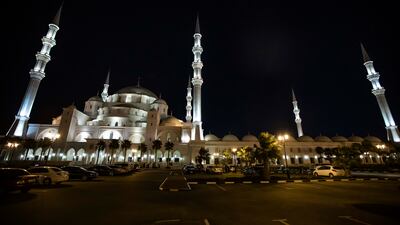
Sheikh Zayed Mosque in Fujairah during the first evening prayer of Ramadan. Leslie Pableo for The National -
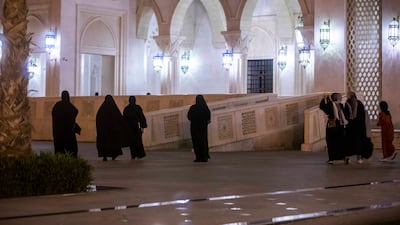
Worshippers arrive at Sheikh Zayed Mosque, the second largest in the UAE, for the first evening prayer of Ramadan. Leslie Pableo for The National -
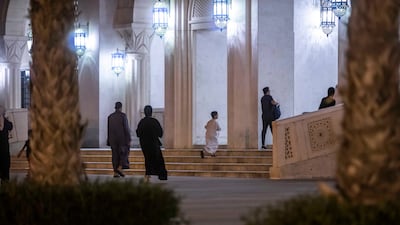
Worshippers at Sheikh Zayed Mosque for the start of the holy month. Leslie Pableo for The National


Fasting during the holy month is one of the Five Pillars of Islam and is mandatory for all Muslims who are in good health.
Ramadan is also considered a nocturnal month for Muslims who end their daily fast at sunset, then begin longer-form taraweeh prayers, an additional extended evening prayer performed after isha.
Taraweeh prayers are then traditionally followed by social gatherings that last into the night.
This year, Muslims in the UAE will begin the month by fasting for about 14 hours and 45 minutes.
As the days lengthen, the fasting time increases. By the last day of the holy month the fast will be about 46 minutes longer than on the first.
On Wednesday, President Sheikh Mohamed called for “peace and harmony” for people in the UAE and around the globe, in an uplifting Ramadan message.
He wished for a “blessed month of reflection” on the eve of Ramadan.
“As the holy month of Ramadan begins, I wish you all a blessed month of reflection and pray that God continues to grant peace and harmony to the people of the UAE and the world,” Sheikh Mohamed wrote on Twitter.
Sheikh Mohammed bin Rashid, Vice President and Ruler of Dubai, also shared a Ramadan message on social media.
“All congratulations to the people of the Emirates and to all the Arab and Islamic peoples on the occasion of the blessed month of Ramadan,” he wrote on Twitter.
Earlier, the President had sent out Ramadan greetings to leaders across the Arab world.
Sheikh Mohamed offered congratulatory messages to the rulers and other leaders of Islamic nations, state news agency Wam reported.
He called for the continued good health and well-being of the leaders and their people and expressed his desire for further progress and prosperity for Arab and Islamic countries.
The President's sentiments were echoed by the Ruler of Dubai.

