

The pavilion was overflowing with enthusiasts snapping selfies with the poster boy of Russia: the AK-47, popularly known as Kalashnikov.
A spokesman for the Russian company was explaining to curious visitors how to use the weapon of choice for many militaries (and militias) around the world.
Another man politely handed out a branded flag to passers-by, as part of his marketing effort.
The company is among hundreds of other defence firms from all over the globe who descend on Abu Dhabi every other year for the International Defence Exhibition (Idex).
-
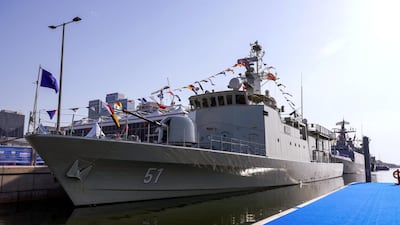
The Bahraini warship RBNS Al Muharraq on display on Idex and the Naval Defence and Maritime Security Exhibition, or Navdex Victor Besa / The National -
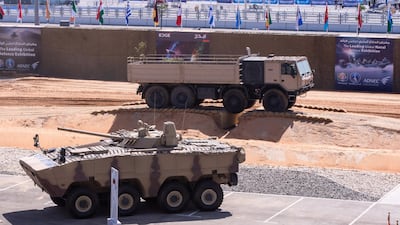
A heavy-duty vehicle demonstration in the grandstand area. Idex runs until Thursday, February 25 Victor Besa / The National -
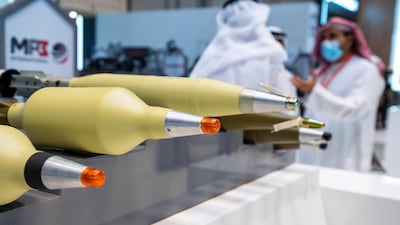
Visitors tour exhibits on Tuesday, the third day of Idex Victor Besa / The National -
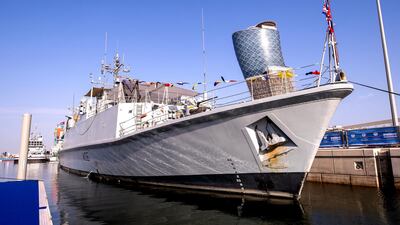
More than 900 exhibitors are participating in this year's event Victor Besa / The National -
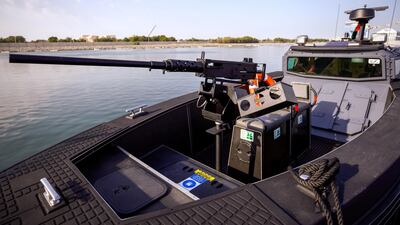
A 50 calibre heavy machinegun mounted on the Chaser-980 speedboat manufactured by UAE company Aksum Marine. Victor Besa / The National -
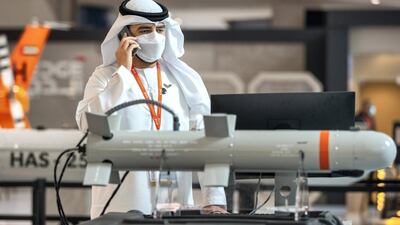
Local and international companies are launching dozens of products at Idex. An array of equipment and technologies is on display Victor Besa / The National -
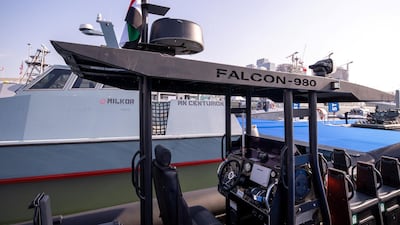
The Falcon 980 manufactured by UAE company Aksum Marine Victor Besa / The National -
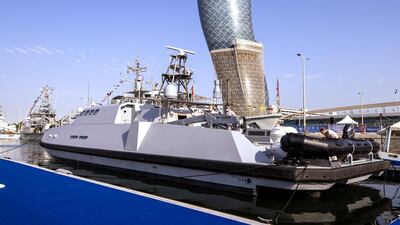
Contracts worth billions of dollars have already been signed at Idex and Navdex Victor Besa / The National -
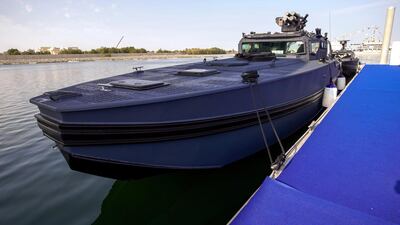
A Chaser speedboat made by Aksum Marine Victor Besa / The National -
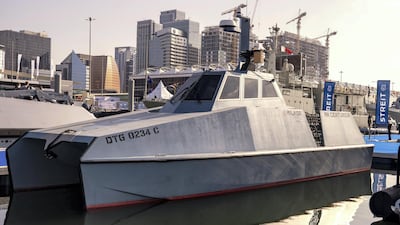
The Milkor MN Centurion high-speed interceptor craft Victor Besa / The National -
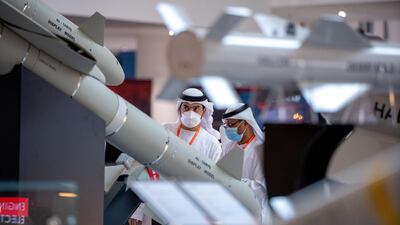
A visitor looks at the Al-Tariq missile manufactured by UAE company Halcon Victor Besa / The National -
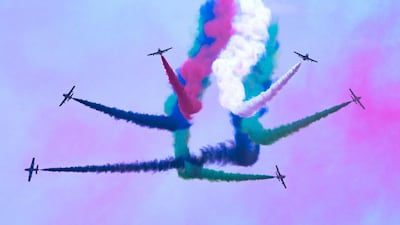
Al Fursan air display at IDEX on day 3, at the ADNEC Grandstand. Victor Besa / The National -
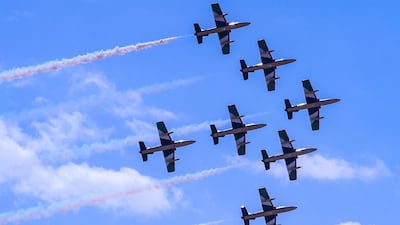
Al Fursan air display at IDEX on day 3, at the ADNEC Grandstand. Victor Besa / The National -

Al Fursan air display at IDEX on day 3, at the ADNEC Grandstand. Victor Besa / The National -
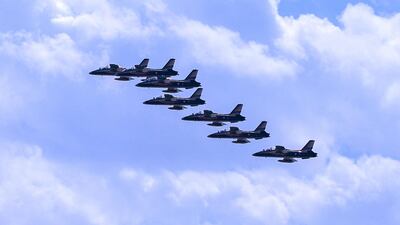
Al Fursan air display at IDEX on day 3, at the ADNEC Grandstand. Victor Besa / The National -
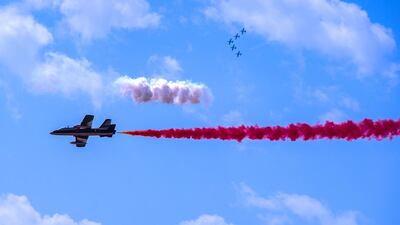
Al Fursan air display at IDEX on day 3, at the ADNEC Grandstand. Victor Besa / The National -
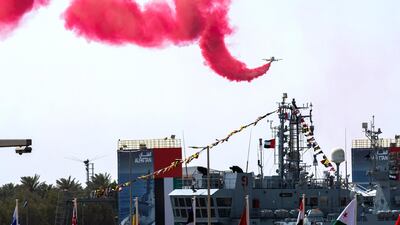
Al Fursan air display at IDEX on day 3, at the ADNEC Grandstand. Victor Besa / The National


They are not gathering just to attract lucrative contracts from countries shopping for the state-of-the-art missiles, drones, rifles, tanks and fighter jets; they are also projecting defence diplomacy in one of the most attractive markets: the Middle East, a region sometimes called a “rough neighbourhood” with a wide spectrum of security threats.
"It's enough for us to have Kalashnikov on the flags or national symbols of some countries which fought for independence. This is the best military diplomacy for Russia," Mikheev Alexander, Director General of Rosoboronexport (Rostec), told The National.
Rostec is a state corporation that brings together all the major producers of defence and high-tech products in Russia.
-
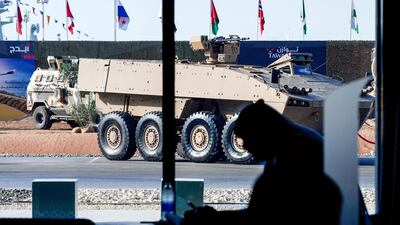
People attend the International Defence Exhibition and Conference in Abu Dhabi on Monday. The Middle East’s largest defence fair runs until Thursday. All pictures by Victor Besa / The National -
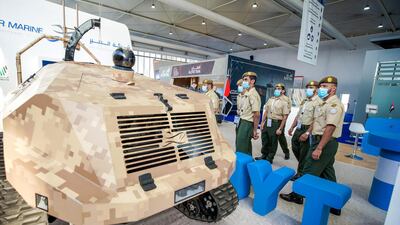
The Al Seer Marine Unmanned Ground Vehicle. Al Seer Marine is one of the UAE companies exhibiting at Idex -
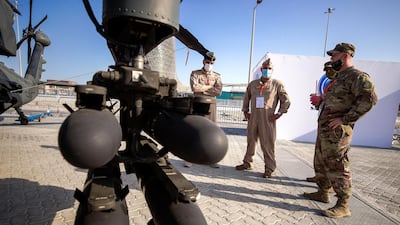
The Sikorsky UH-60 Black Hawk helicopter -
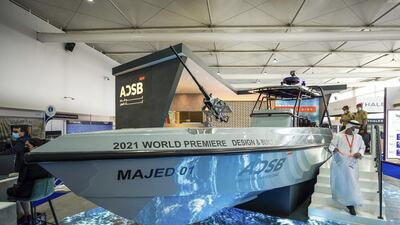
The Majed 01 speedboat manufactured by Abu Dhabi Ship Building -
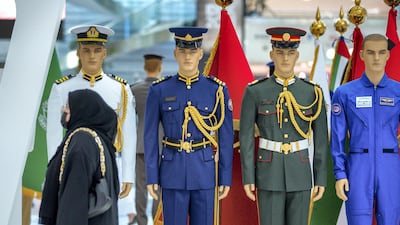
Advanced weapons sit alongside more typical pieces of military kit at the Exhibition -
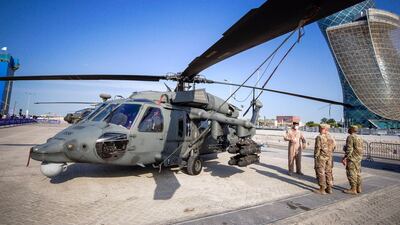
The Sikorsky UH-60 Black Hawk helicopter -
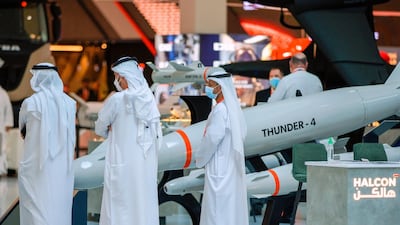
Visitors view the Thunder-4 guided system made by UAE defence firm Halcon -
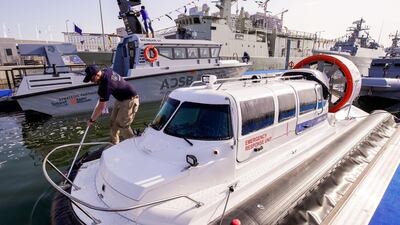
Marine vessel crews wash their boats before the start of the day at Idex -
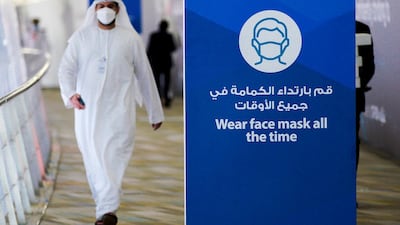
Strict measures are in place to protect public health -
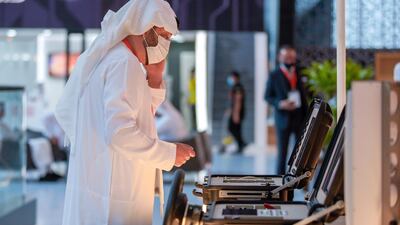
An engineer sets up the EARTH Automated System manufactured by UAE company NIMR -
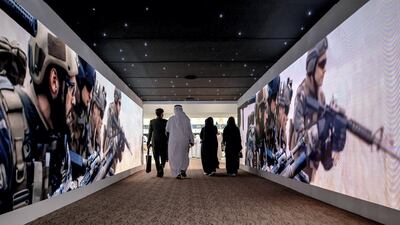
Visitors at Idex on Monday


Mr Alexander was referring to countries like Mozambique, Burkina Faso and East Timor, which adopted the world’s most used firearm in their flags or national symbols.
“Idex has been always an exhibition of breakthroughs. Each company shows the best it has. But we are not here to compete. We are not in the process of outmatching American F-35s or submarines, but we have our own technical expertise to develop armed forces and they are on offer,” added Mr Alexander with a confident and defiant tone, despite sanctions imposed by the US on his country.
That might constitute an obstacle for attracting business from allies of the US in the region, but some of them show continuous interest in Russian military know-how.

Not too far from the Russian stand, a young man took the wheel of one of the state-of-the-art armoured vehicles from the US, while a couple took a souvenir photo with ammunition, land-mine clearing robots and the famous M-16, America’s answer to the Kalashnikov.
Such shows are an opportunity for the participating countries to exhibit their military capabilities for the purpose of bolstering national pride and military deterrence, alongside diplomacy.
“They are sending a message that I could be a friend or I could be an enemy,” said a commercial director of one of the biggest drone-producing companies in Europe, who requested not to be named because he was not allowed to talk to the media.
It was hard not to notice the size of displays advertised by small countries like Armenia, and other middle-income states that are keen on providing competitive, cost-effective alternatives to the sophisticated American, European and Israeli products.
The US, Russia and Israel are not alone in targeting the Middle East market.
The visiting Defence Minister of Greece, Nikolaos Panagiotopoulos, discussed why he was so keen on attending this year’s show.
“I see the benefits of military diplomacy as we have engaged extensively in it. It paves the way for stronger relations. In the last of two years, we have reached out through our military capabilities to countries in the region with the aim of maintaining stability and collective security. That was reflected in more military exercises and more interoperability between armed forces,” said Mr Panagiotopoulos, himself former marketing professional.
“Strong diplomatic efforts should support a strong deterrent element by a country’s armed forces. We are proceeding on both directions. It’s important to keep upgrading our military capabilities to enforce our deterrent element. The use of force isn’t an end but backs up the diplomatic effort,” said Mr Panagiotopoulos.

Israel is also represented for the first time in Idex after the country normalised ties with the United Arab Emirates, Bahrain, Morocco and Sudan in recent months, in what officials describe as a “historic moment of pride”.
The Israeli pavilion features a range of technology and innovation to quickly neutralise the enemy, including in harsh weather conditions. The Israelis are now navigating the Middle East market after proving their military mettle in Europe.
"We are engaging with like-minded countries to face common threats. We are not talking about wars here, we are talking about defence, cooperation and protecting ourselves. The Romans said a long time ago, if you want to make peace, prepare for war. You have to be strong and deter your enemies," Israeli Ambassador to the UAE Eitan Na'eh told The National, as he toured his country's pavilion.
“Be aware also of the fact that military diplomacy is about helping disaster-stricken countries and Israel did that actively in countries like Thailand after the Tsunami in 2004. I myself participated in two search and rescue missions in Turkey and one in Greece. We also offered humanitarian assistance to Lebanon after the Beirut blast. Israel always extends its hands for peace,” said Mr Na’eh.
The Israeli army’s aid offer to Lebanon in August last year after a deadly explosion in Beirut came despite the fact that both countries are still technically at war.
With wars raging in Yemen, Libya, Syria and insecurity across much of the region, the impact of war, the very sight of tanks, missiles and armoured vehicles can conjure up the memories of shattered communities, families and displaced civilians.
But the senior official at the drone company highlighted how technology is changing warfare.
"Less and less people are dying in wars today, both civilian and military people thanks to this technology, which is very powerful and accurate. Thanks to this sophisticated technology, our missiles detect exactly the exact door, window and location to avoid collateral damage. You make surgical operations. That's the world today," he said.

