


In the days of the new UAE, unification meant different things to different people. Some arrived in the years before 1971 to lend their expertise. Others came in search of a better life. And for some, the union meant something as simple yet vital as electricity. In the final part of three-part series to celebrate the UAE's 49th National Day, we speak to an Indian couple who have spent most of their lives here.
For Mahendra Mulchand and Damayanti Mahendra, the formation of the UAE on December 2, 1971, meant community.
Their ties to the country predate its foundation. The Indian couple have called Dubai home for nearly 60 years and remember the first National Day as a day like any other.
“For me, it was just like another day because everything was the same,” said Mr Mulchand, 77. “I did not find any change. It was all the same because Dubai is Dubai. Trade was good, very good, and after it was better. The [public] were saying whatever happens, happens.”
Mr Mulchand came to the Gulf with his cousin from Mumbai in 1963.
He was 19 years old and filled with trepidation as he stepped aboard the Daressa, a British India Line ship bound for Kuwait with calls at Karachi, Gwadar, Muscat, Dubai and Doha.
Before boarding, Mr Mulchand paid a crew member to save him a berth by a window. He spent most of the eight-day journey seasick and staring at the ocean.
“The room was open, like a cinema hall, and I took a space near the sea side,” he said. “I was regretting that I came. I was only a child and I had left my mother, but we were poor so I had to go and earn something.”
His family was exiled from Pakistan in 1947 after Partition, the violent division of British India into two states. They had gone to Mumbai, leaving their home and property in Pakistan expecting to return.
Instead, the family created a home in Dubai.
Mr Mulchand’s elder brother was the first in the family to travel to the Gulf, settling in Doha.
Mr Mulchand and his cousin followed, but after a month in Doha, Mr Mulchand moved to Abu Dhabi, a city ready to boom.

It was not to his liking. He told his brother he was ready to return to India.
"I was 18, very young, and I would cry," Mr Mulchand said. "I did not enjoy Abu Dhabi because there was no power, no electricity. So I told my brother, 'I'm not very happy to stay in Abu Dhabi'. So he said, 'OK. Go to Dubai'."
Mr Mulchand found work at the British Bank of the Middle East in Sharjah. He began as a typist and shared a villa with his cousin, buying electricity from a neighbour who charged 10 rupees for 12 hours' service.
"My salary was only 300 rupees and from those 300 rupees, you can't believe it, I used to save 100," Mr Mulchand said. "Once a week, I'd go to the cinema for 25 baisa."
After a year, he moved to Dubai, which had a larger Indian community.
His first Dubai home was the two-storey Bu Jassim building near Naif Police Station.
He commuted to Sharjah with his boss, a three-hour return trip by Land Rover over sand and sabkha. The working day was short and they were home by 3.30pm.
Mr Mulchand was quickly promoted and, as a talented banker, he became an eligible bachelor.
He met Damayanti in Mumbai on his first trip back to India and they married in 1968. Ms Mahendra was 18 and had never travelled abroad.
“At that time I was crying, ‘I'm only a child'," she said. "'Why has my mother made my marriage [to someone] in Dubai?'”
Mr Mulchand tried to prepare her for Dubai. “There were no women, no roads, no cars,” he said. “Only Land Rovers."
He met her at the airport with three of his cousins, who looked forward to a woman’s presence in the home.

Ms Mahendra wasted no time in settling in. On weekends, she hosted friends and relatives, placing orders for vegetables with an Indian grocer, whose goods arrived by plane on Fridays from India.
“Every Friday was a feast in my house,” Ms Mahendra said. “All the gents were coming and saying, ‘oh, now we have home cooking’.”
Once they had children, Dubai became home.
The family moved into a flat in a two-storey building between Bastakiya and Al Raffa in Bur Dubai. The Mahendras and their neighbours kept the front doors open so their children could play together and move freely between the flats.
“Bonding was stronger then,” said their daughter, Anjali Dinesh. “Because people were few, they were close knit.”
Adults socialised at the Indian Association.
“Sheikh Rashid would come every Diwali,” said Ms Mahendra, who is now 71.
“And we used to visit Sheikh Rashid every Eid,” Mr Mulchand said. “We were much closer. There were not many people. [The Indian community] was small, we were maybe 100 or 200 families.
“From the beginning we had a very good life. It was very close to India. We were not feeling that we were far away from India because our cousins were in Dubai.”
News of unification came through friends, not formal news channels.
The Indian and Pakistani diaspora had witnessed the violence that new borders could bring. But close relationships reassured them of a smooth transition.
“I was sure they would look after us, because we knew the Ruler personally and would go to the Ruler’s house,” Mr Mulchand said.
As years passed, more family came to Dubai. They have have raised three daughters.
“For us, this is home,” Mr Mulchand said. “I never thought I would stay but then I enjoyed it. You enjoy it because all your family is here.”
Ms Dinesh agreed. “The point is, people took up our language, they took up Hindi and English,” she said. “They mingled with all the communities and learnt their languages. Any policeman you talk to, he can speak your language.”
“Even the Sheikh knew Hindi,” Mr Mulchand said. “What more do you want?”
______________
Sheikh Zayed and the story of a nation
-
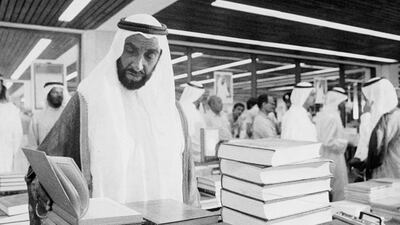
Sheikh Zayed, seen here attending an early book fair in Abu Dhabi. Courtesy: Al Ittihad -
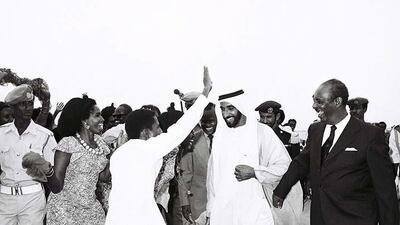
The true genius of a culture and a society lay, Sheikh Zayed believed, in their capacity to adopt and thrive in a changing world. Courtesy: Al Ittihad -

Sheikh Zayed raising the flag at Union House in Dubai. December 2, 1971. Courtesy: Al Ittihad -

Sheikh Zayed attending the first UAE National Day celebrations on December 2, 1972. Courtesy: Al Ittihad -

Sheikh Zayed attending the first session of the National Consultative Council in Abu Dhabi in October 1971. Courtesy: Al Ittihad -
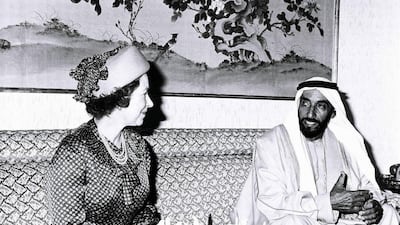
Sheikh Zayed meets Queen Elizabeth II during a state visit 40 years ago. Courtesy: Al Ittihad -
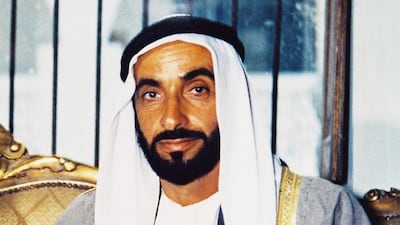
Sheikh Zayed, the founding father of the UAE. Courtesy: Al Ittihad -
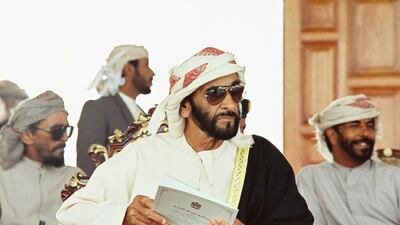
Sheikh Zayed was a man of the people. Courtesy: Al Ittihad -
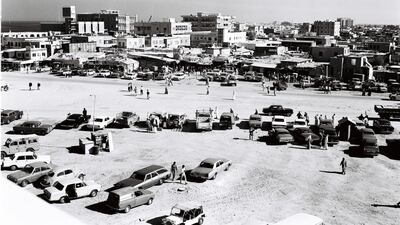
The old souq in Abu Dhabi shot at some point in the 1970s. Courtesy Al Ittihad -
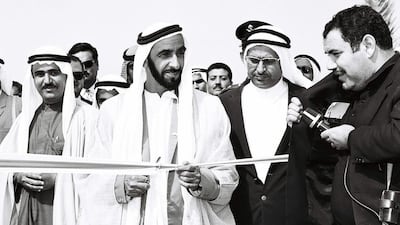
Sheikh Zayed's leadership is not just remembered for all that he built, but for all he did for others. Courtesy: Al Ittihad -
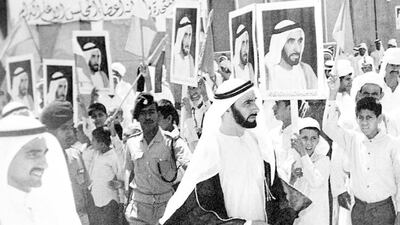
Sheikh Zayed walking past supporters Fujairah during his in January 1972. Wam -
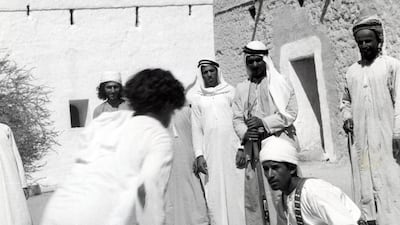
Men dance while holding khanjars in Al Ain, 1959. Getty Images -
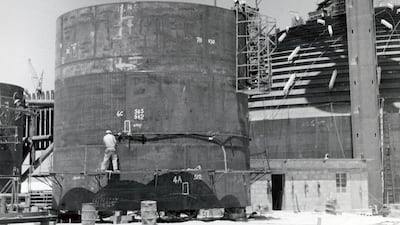
Oil sustained the development of the UAE. And this, a petroleum tank being built in Dubai Creek in 1970, was a familiar sight. Getty Images -
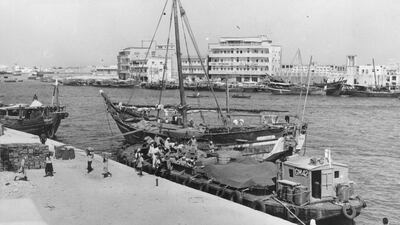
Ships unloading their goods on the creek for the Customs Department in Dubai in 1967. Getty Images



