
Sheikh Mansoor bin Mohammed hailed Dubai health authorities for launching the Pfizer-BioNTech vaccination campaign after being inoculated.
Sheikh Mansoor – son of Sheikh Mohammed bin Rashid, Vice President and Ruler of Dubai – the chairman of Dubai’s Supreme Committee of Crisis and Disaster Management, is the first senior figure in the country to be pictured receiving the vaccination.
His father was one of several leading UAE Cabinet members to take China's Sinopharm vaccine after its approval for emergency use in September.
The Sinopharm vaccine was subsequently approved for use by all members of the public this month.
-
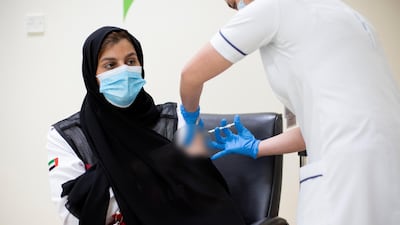
A Dubai ambulance worker is vaccinated with the Pfizer-BioNtech vaccine in Dubai. -
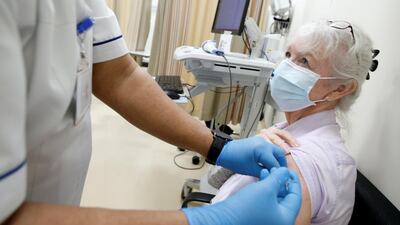
An older resident receives her first shot at Zabeel Health Centre on December 27, 2020. -
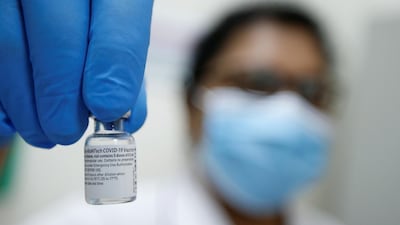
The vaccine is expected to be rolled out to all age groups once people in the essential categories have been vaccinated. -
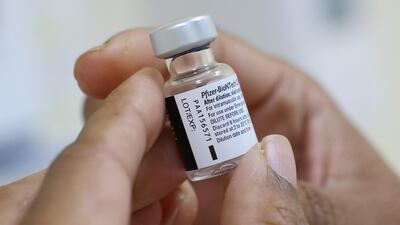
A nurse holds a dose of the Pfizer-BioNTech vaccine, which was approved for use by Dubai's emergency and crisis authority and the federal Ministry of Health. -
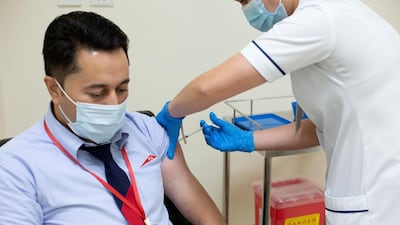
An employee from Roads and Transport Authority receives a dose of the Pfizer-BioNTech vaccine in Dubai. -
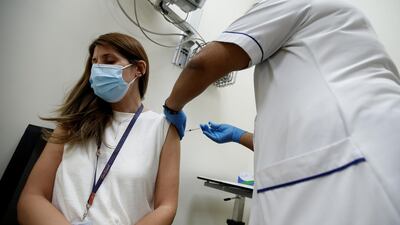
A woman receives a dose of the Pfizer-BioNTech vaccine at Zabeel Health Centre in Dubai on 27 December, 2020. -
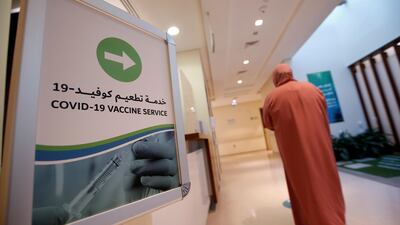
The city has six vaccine centres where the Pfizer-BioNTech shot is available. -
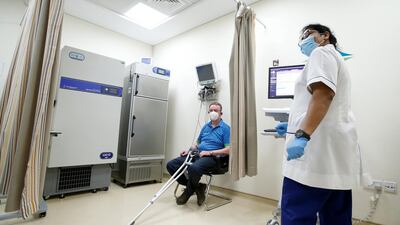
A man waits to receive the first of two doses at Zabeel Health Centre in Dubai on 27 December, 2020. -
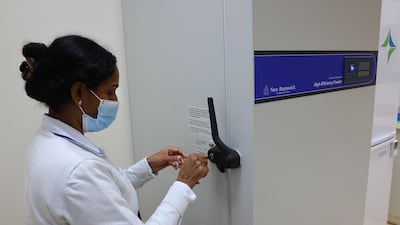
A nurse opens a freezer at Barsha Health Centre. The Pfizer-BioNTech vaccine must be kept at minus 70C when transported. -
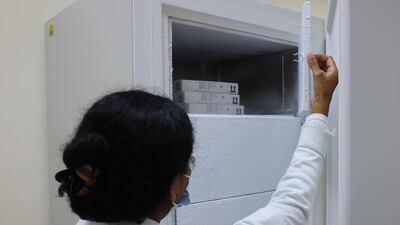
A nurse opens a freezer at Barsha Health Centre. The Pfizer-BioNTech vaccine must be kept at minus 70C when transported. -
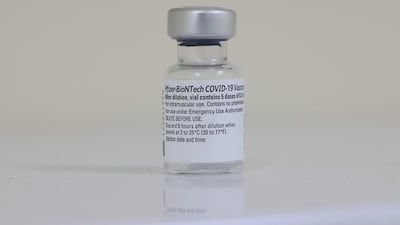
A vial of the vaccine is seen at Barsha Health Centre. AFP -
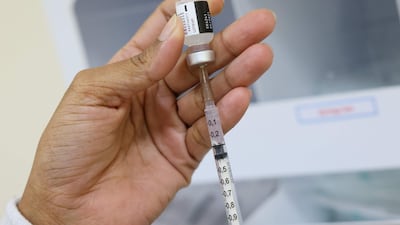
A nurse prepares a dose of the Pfizer-BioNTech vaccine at al-Barsha Health Centre in Dubai. AFP


"Thank you, Dubai Health Authority, for leading the Pfizer-BioNTech vaccination campaign, and thank you once again to our first line of defence heroes who continue to work with full dedication and sincerity," Sheikh Mansoor said.
"The UAE has and will always prioritise the health, safety and security of its community."
The Pfizer-BioNTech vaccine was made available in Dubai on December 23.
As part of a phased strategy, doses will initially be available to the following groups in the next three months – people aged over 60, those with chronic diseases, people with disabilities, frontline workers and those who work in essential sectors.
Dubai plans to inoculate 70 per cent of its population with the Pfizer-BioNTech by the end of 2021 in a campaign free of charge for citizens and residents, a health official said.
The emirate began the first phase of the vaccination campaign last week, focusing on priority groups including those 60 and older, people with chronic medical conditions, those with disabilities and frontline workers.
"We are targeting to vaccinate approximately 70 per cent of the population of Dubai by the end of 2021. We want to reach the herd immunity that is required," said Farida Al Khaja, chairwoman of Dubai's steering committee for Covid-19 vaccinations.
Ms Al Khaja said a second phase beginning in April would be open to all citizens and residents.

