

Anti-vaxxers and protests against wearing masks are endangering the chances of defeating the Covid-19 pandemic, an infectious disease expert warned.
Prof Eskild Petersen from Aarhus University in Denmark said the proliferation of fake news regarding vaccines on social media was creating a huge headache for global health organisations.
Speaking on Saturday at the UAE Infectious Diseases Week conference in Dubai, Prof Petersen said vaccine literacy was the main way to tackle this.
He also gave a warning about a bleak winter ahead with a jab unlikely to materialise before the spring but cautioned against a reliance on lockdowns to curb Covid-19.
“Vaccine hesitancy represents a very high threat to defeating the pandemic,” said Prof Petersen, referring to reports in August that up to half the UK population said they would refuse to take a vaccine.
“There needs to be at least 60 per cent of the population who are immune to Covid-19 before we can say it’s no longer a pandemic.
"That won’t happen if half the population is refusing to take the vaccine. The pandemic will just continue."
The World Health Organisation listed vaccine hesitancy as one of the 10 biggest threats to global safety last year.
Prof Petersen also criticised people who shared fake news about vaccines on social media.
"All scientific evidence shows without any doubt that the benefits of vaccines far outweigh the disadvantages," he said.
"The anti-vaccine campaigners talk to emotion and are immune to facts proven by scientific studies and have a deep mistrust of authorities."
He said one option was to control the false information being shared online but this would have a limited effect.
“There are downright false claims being shared online and while you can try to block false news sites, it would be much more effective to increase the level of education,” he said.
-
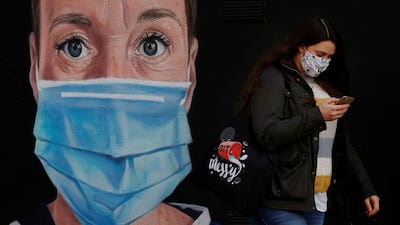
A woman wears a face mask as she walks past a mural of a nurse in Manchester. Reuters -
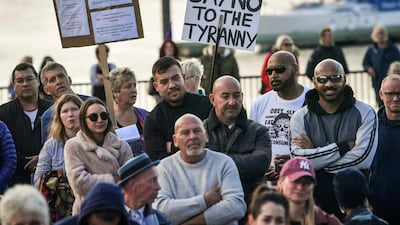
People attend an anti-lockdown protest outside the Senedd Cymru in Cardiff Bay, Wales. AP Photo -
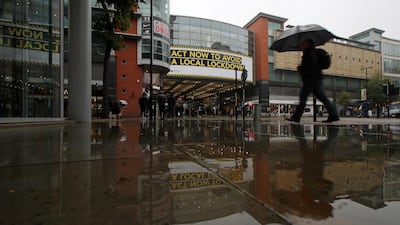
A sign appealing to the public to follow guidelines in Manchester. Reuters -
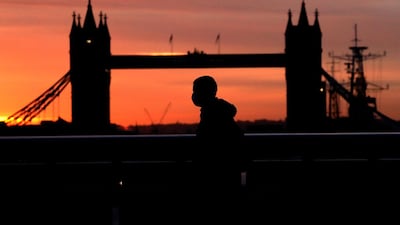
A person wearing a face mask walks across London Bridge, with Tower Bridge in the background, at sunrise in London. AP Photo -

A worker adjusts a face mask on a mannequin at a shop in Nottingham. Reuters -

A man wearing a face mask walks along the River Mersey in Liverpool. Reuters -
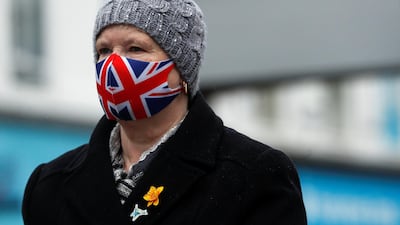
A person wears a Union Jack face mask in Newcastle Upon Tyne. Reuters -
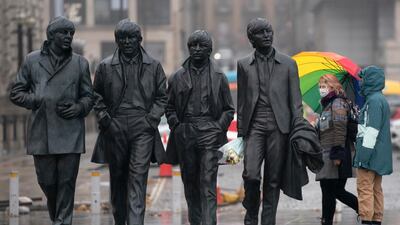
Members of the public wearing face masks stand near a statue of The Beatles in Liverpool. AP Photo


“We need to promote vaccine literacy, which will require better communication.”
He was also critical of how the wearing of face masks was politicised in some countries, especially in the US.
Governments have a responsibility to set an example, he said.
“It’s about social responsibility. We all have to wear masks even though they might not be comfortable,” he said.
“You might be infected and not realise it. That’s why physical distancing is so important.”
He also said the coming months were looking particularly bleak for European countries, where a second wave looked inevitable.
However, he urged countries against going back into lockdown to try to stem the spread of infections.
“Lockdown is a very crude measure that comes at a high cost,” he said.
“The test, trace and isolate method allows society to continue while keeping schools, universities and shops open.
“It also requires a high testing capacity and enough public health personnel to trace cases and ensure isolation.”
People would also have to be patient as governments around the world try to find a vaccine for the virus.
“There will be no vaccine before spring,” he said.
It can take often take up to 20 years to produce an effective vaccine, he said.
“It’s really important that it’s not rushed and that vaccines are not put out there that are not effective," he said.
“It needs to be a good vaccine with few side effects because otherwise it will give a bad reputation to all vaccines."
The UAE, meanwhile, recorded 1,538 cased of Covid-19 on Saturday, which represents the highest daily tally so far.
Authorities introduced strict rules regarding physical distancing and wearing masks.

