

Sheikh Khaled bin Mohamed, Crown Prince of Abu Dhabi, has underlined the emirate's plans to boost the quality of life of its citizens through a focus on housing, health care and education.
Sheikh Khaled set out a vision for the future while chairing the first meeting of the restructured Abu Dhabi Executive Council on Thursday.
The council approved an updated housing benefits policy for citizens, which will include providing ready-built homes for those on low-incomes, increasing the value of housing loans to help those in need and reducing waiting times for claimants.
“His Highness [Sheikh Khaled] highlighted that the Executive Council will ensure the continuity of the Abu Dhabi government's commitment to achieving the priorities and vision of President Sheikh Mohamed by further enhancing the quality of life for citizens and continuing to strengthen their security and stability through the key pillars of housing, education and health care,” said state news agency Wam in its report of the meeting, which was held at the Abu Dhabi Crown Prince Court.
The Abu Dhabi Crown Prince directed the development of a future-proof housing services framework, supported by the private sector, to drive up efficiency and improve access to services, said Wam.
He stressed the importance of structures being put in place to deliver suitable homes for citizen as soon as possible.
Sheikh Khaled has already taken significant steps to boost housing policies for Emiratis.
In April, he approved a Dh2.74 billion ($746 million) housing support scheme for Emiratis living in the capital.

Assistance for 1,800 citizens will be delivered under the directives of President Sheikh Mohamed.
Low-income retirees and families of deceased mortgage holders will not to be required to make housing loan repayments under the strategy. Housing loans will also be provided to eligible citizens.
On Tuesday, Sheikh Khaled approved a Dh85.4bn community master plan to build 76,000 homes and residential plots for citizens in the capital over the next five years.
The long-term investment will support efforts to develop integrated community housing and neighbourhoods across the emirate.
The major project will encompass community and recreational amenities, including the construction of a number of mosques, schools, public parks and green spaces.
Improving liveability
Sheikh Khaled was told of progress being made in the first phase of a Dh12 billion liveability strategy, which encompasses the development of community facilities in Abu Dhabi, Al Ain and Al Dhafra. These include pedestrian and bicycle paths, sports facilities, health clinics, mosques, public parks and green spaces.
He gave instructions for the next stage of the strategy, in line with wider efforts to establish sustainable neighbourhoods that promote healthy lifestyles and are in keeping with Emirati culture and traditions.
He also called for government services to be upgraded in order to provide better experiences for customers.
Sheikh Khaled emphasised the importance of empowering citizens and youth and ensuring they are given the platform to succeed.
He gave directives for the launch of more programmes aimed at allowing young people to unlock their potential in both the public and private sector and contribute to Abu Dhabi's economic growth.
Council restructure
President Sheikh Mohamed, in his capacity as Ruler of Abu Dhabi, in March issued an Emiri decree to restructure Abu Dhabi Executive Council with Sheikh Khaled as its chairman.
Members include Dr Ahmed Al Mazrouei, chairman of the Abu Dhabi Executive Office and the Strategic Affairs Council, and Khaldoon Al Mubarak, chairman of the Executive Affairs Authority and Strategic Affairs Council.
Also named as members were Jassem Al Zaabi, chairman of the Department of Finance and the Strategic Affairs Council, Dr Mugheer Al Khaili, chairman of the Department of Community Development, and Awaidha Al Marar, chairman of the Department of Energy.
Sheikh Khaled tours housing project - in pictures
-
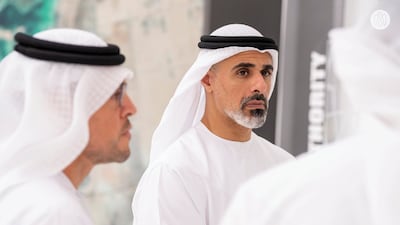
Sheikh Khaled bin Mohamed, Crown Prince of Abu Dhabi, tours the expansion of Al Falah housing project, developed by Abu Housing Authority and stakeholders, which has provided 899 new homes for citizens in Abu Dhabi. All photos: -

Sheikh Khaled bin Mohamed, Crown Prince of Abu Dhabi, tours the expansion of Al Falah housing project, developed by Abu Housing Authority and stakeholders, which has provided 899 new homes for citizens in Abu Dhabi -
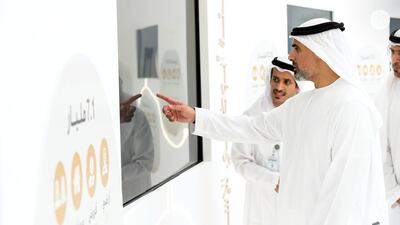
Sheikh Khaled bin Mohamed, Crown Prince of Abu Dhabi, tours the expansion of Al Falah housing project, developed by Abu Housing Authority and stakeholders, which has provided 899 new homes for citizens in Abu Dhabi -
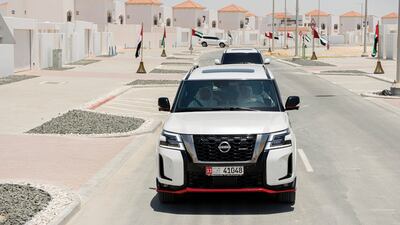
Sheikh Khaled bin Mohamed, Crown Prince of Abu Dhabi, tours the expansion of Al Falah housing project, developed by Abu Housing Authority and stakeholders, which has provided 899 new homes for citizens in Abu Dhabi -
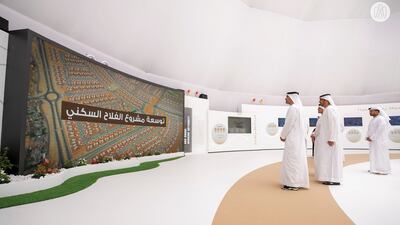
Sheikh Khaled bin Mohamed, Crown Prince of Abu Dhabi, tours the expansion of Al Falah housing project, developed by Abu Housing Authority and stakeholders, which has provided 899 new homes for citizens in Abu Dhabi -
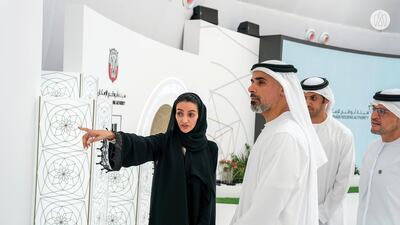
Sheikh Khaled bin Mohamed, Crown Prince of Abu Dhabi, tours the expansion of Al Falah housing project, developed by Abu Housing Authority and stakeholders, which has provided 899 new homes for citizens in Abu Dhabi -
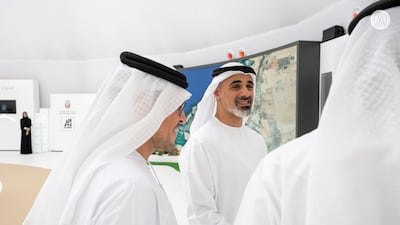
Sheikh Khaled bin Mohamed, Crown Prince of Abu Dhabi, tours the expansion of Al Falah housing project, developed by Abu Housing Authority and stakeholders, which has provided 899 new homes for citizens in Abu Dhabi -
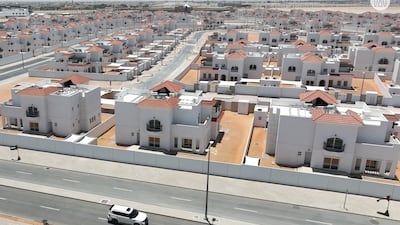
Al Falah housing project, developed by Abu Housing Authority and stakeholders, has provided 899 new homes for citizens in Abu Dhabi



