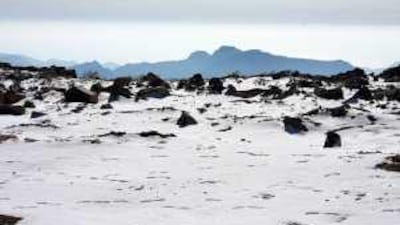
• Heavy snowfall on the heights of Jebel Al Lawz in Tabuk, Saudi Arabia. SPA
    Heavy snowfall on the heights of Jebel Al Lawz in Tabuk, Saudi Arabia. SPA
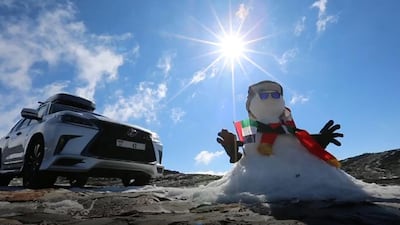
  • The cold weather made for a perfect opportunity to build a snowman on Jebel Jais. The mercury hit -0.1 °C in January 2020, leaving the UAE's highest peak under a blanket of snow. Courtesy: Ahmed Al Bedwawi
    The cold weather made for a perfect opportunity to build a snowman on Jebel Jais. The mercury hit -0.1 °C in January 2020, leaving the UAE's highest peak under a blanket of snow. Courtesy: Ahmed Al Bedwawi
  • Snow falls in Ras Al Khaimah on January 25, 2009. Courtesy Mike Charlton
    Snow falls in Ras Al Khaimah on January 25, 2009. Courtesy Mike Charlton
  • Snowfall on Jebel Jais mountain in Ras al Khaimah in January and December, 2017. Courtesy: Mike Charlton
    Snowfall on Jebel Jais mountain in Ras al Khaimah in January and December, 2017. Courtesy: Mike Charlton
  • Snow blankets cars in January 2020 in Tabuk, Saudi Arabia. SPA
    Snow blankets cars in January 2020 in Tabuk, Saudi Arabia. SPA
  • Tabuk, Saudi Arabia, is turned into a winder wonderland by a snow blizzard, in January 2020. SPA
    Tabuk, Saudi Arabia, is turned into a winder wonderland by a snow blizzard, in January 2020. SPA
  • Saudis walk over snow after a heavy snowstorm in the desert near Tabuk, northwest of Riyadh in February 2015. Reuters
    Saudis walk over snow after a heavy snowstorm in the desert near Tabuk, northwest of Riyadh in February 2015. Reuters
  • People play with snow after a heavy snowstorm in Amman in January 2015. Reuters
    People play with snow after a heavy snowstorm in Amman in January 2015. Reuters
  • A Syrian man clears snow off his tent at a refugee camp in Lebanon's eastern Bekaa valley on January 16, 2019. AFP
    A Syrian man clears snow off his tent at a refugee camp in Lebanon's eastern Bekaa valley on January 16, 2019. AFP
  • A Syrian man tries to warm himself as snow falls in the Terbol tented settlement in the Bekaa Valley, Lebanon, on 11 December 2013. UNHCR
    A Syrian man tries to warm himself as snow falls in the Terbol tented settlement in the Bekaa Valley, Lebanon, on 11 December 2013. UNHCR
  • Syrian refugees play with snow during a winter storm in Zahle, in the Bekaa Valley in Lebanon. Reuters
    Syrian refugees play with snow during a winter storm in Zahle, in the Bekaa Valley in Lebanon. Reuters
  • A Palestinian man cleans snow from his car in the West Bank city of Ramallah in December 2013 after a snowstorm. Reuters
    A Palestinian man cleans snow from his car in the West Bank city of Ramallah in December 2013 after a snowstorm. Reuters
  • Palestinians walk on snow in the West Bank town of Nablus in December 2013. AP
    Palestinians walk on snow in the West Bank town of Nablus in December 2013. AP
  • Palestinians play with snow outside the Al Aqsa mosque compound in the old city of Jerusalem in January 2013. AFP
    Palestinians play with snow outside the Al Aqsa mosque compound in the old city of Jerusalem in January 2013. AFP
  • A boy makes a print of his hand on a car windscreen covered with snow before clearing it, during stormy weather in the Druze village of Majdal Shams on the Golan Heights in January 2013. Reuters
    A boy makes a print of his hand on a car windscreen covered with snow before clearing it, during stormy weather in the Druze village of Majdal Shams on the Golan Heights in January 2013. Reuters

Ice in the desert: does it snow in the Middle East?


Chris Maxwell
  • English
  • Arabic

As the adage goes, there are only two types of weather to be found in the Middle East – hot and even hotter.

But although much of the region is blessed with year-round sunshine – with temperatures regularly soaring beyond 40°C – there are plenty of examples to pour cold water, and even a flurry of snow, on this ill-founded theory.

Does it ever snow in the Middle East?

While the region is known for its hot weather, snow is not unusual in some areas. For example, the snow-capped slopes of Lebanon's Mzaar and Iran's Shemshak ski resorts are famed.

But an icy snap in the deserts of the Gulf, where temperatures plunged to a bone-chilling minus 5°C near Al Ain on January 11, is much less usual. Residents even had to scrape ice from cars and icicles formed on trees and plants.

Even more unusual was the sight of camels crossing snow-covered desert sands in Saudi Arabia in 2020.

Historically, the Middle East has faced some severe snow storms, including brutal blizzards that devastated Iran in 1972.

Here, The National takes a glimpse at the times when the Middle East faced bleak winters - and look at why residents can sometimes find themselves caught in the snow.

Snow in Saudi Arabia

We all know camels are far more comfortable ambling over hot sands, but a herd of the beloved creatures were forced to dash over a thin layer of snow in Saudi Arabia in November 2020.

In the sand dunes near Ash Shuqayq, in the north of Saudi Arabia, Khalid Al Hawawi captured the unusual sight of a herd of camels galloping over a thin layer of snow on video.

Mr Al Hawawi said he enjoys filming in inclement weather, and is used to rain occurring in the area.

The slow motion footage, including a baby camel, was a hit online.

Snow on UAE's Jebel Jais 

The UAE's highest mountain, Jebel Jais, is the place to be for those keen on some diverse weather.

In January 2020, the formidable peak was blanketed in snow during a spell of particularly cold weather.

Travel enthusiasts build a snowman on Jebel Jais. The mercury hit -0.1 °C in January 2020, leaving the UAE's highest peak under a blanket of snow. Courtesy: Ahmed Al Bedwawi

Ski slopes in Lebanon

You may not associate the traditional winter sport with the Middle East, but Lebanon is home to the region's largest ski resort.

Mzaar Ski Resort boasts 80 kilometres of ski tracks, with its three peaks ranging from 1,850 metres to 2,465m. There are also 18 ski lifts.

Skiers ride a lift at the Mzaar Ski Resort, one hour from Beirut, Lebanon. Getty Images

Authentic Lebanese food and a heated indoor pool with snow-covered views make it a great place to unwind after a day on the slopes.

The 1972 blizzards in Iran

In February, 1972 Iran was devastated by a series of brutal blizzards as temperatures fell to at least minus 13°.

About 4,000 people are believed to have died during the week-long storms as deep layers of snow covered rural areas of the country.

The UAE's great storm of 1963

While there's no record of snow, November 22, 1963, has gone down in history for one of the most destructive storms ever to hit the UAE.

From Sharjah to Abu Dhabi, torrential rain and winds close to hurricane force devastated the region.

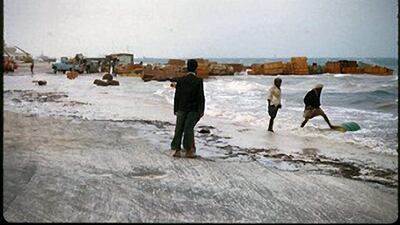
Flimsy palm-frond homes were ripped apart, boats sank at their moorings and wind-driven waves pushed deep inland.

The death toll was not recorded but must have been considerable.

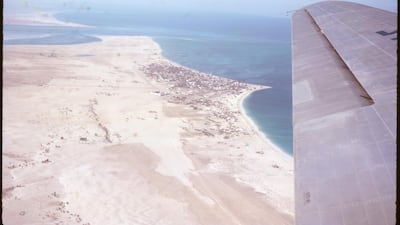
Courtesy of Vic Cozens

The storm was especially damaging because Abu Dhabi had no port at the time. Instead, goods were unloaded from ships directly on to the beach. Unprotected, the sea swept them away.

But it was in Dubai where the storm hit hardest. Those homes not destroyed were left knee-deep in floodwater. At the new Dubai International Airport, some light aircraft and gliders were tossed around like toys.

UAE battered by extreme weather in 2020

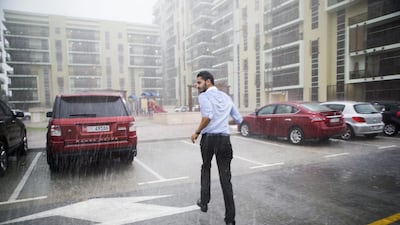
  • People run for cover during the March 9, 2016 storm in Khalifa City, Abu Dhabi, when strong winds and driving rain caused chaos across the UAE. Christopher Pike / The National
    People run for cover during the March 9, 2016 storm in Khalifa City, Abu Dhabi, when strong winds and driving rain caused chaos across the UAE. Christopher Pike / The National
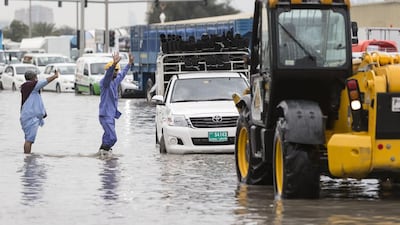
  • City streets were inundated with water, such as here on 8th Street in Abu Dhabi. Antonie Robertson / The National
    City streets were inundated with water, such as here on 8th Street in Abu Dhabi. Antonie Robertson / The National
  • While the rain and winds caused major damage they brought smiles of glee for some of the younger residents of Abu Dhabi. Delores Johnson / The National
    While the rain and winds caused major damage they brought smiles of glee for some of the younger residents of Abu Dhabi. Delores Johnson / The National
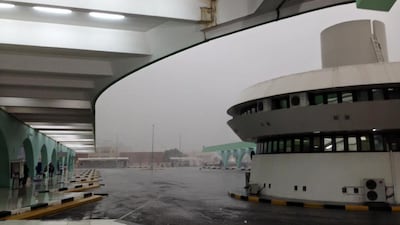
  • The sky darkened from early on March 9, 2016. The view from Abu Dhabi's main bus station is of murky skies. Jonathan Raymond / The National
    The sky darkened from early on March 9, 2016. The view from Abu Dhabi's main bus station is of murky skies. Jonathan Raymond / The National
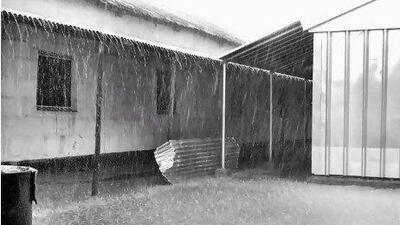
  • However, storms have always been a feature of the weather here, such as this squall on Abu Dhabi's Corniche taken at some point between 1962 and 1964. Photo: David Riley
    However, storms have always been a feature of the weather here, such as this squall on Abu Dhabi's Corniche taken at some point between 1962 and 1964. Photo: David Riley
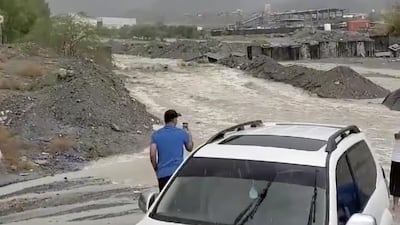
  • Flooding is seen in Fujairah following heavy rainfall. Photo: Storm Centre UAE
    Flooding is seen in Fujairah following heavy rainfall. Photo: Storm Centre UAE
  • Floodwater often inundated Abu Dhabi island during the 1960s as defences had yet to be built. Photo: David Riley
    Floodwater often inundated Abu Dhabi island during the 1960s as defences had yet to be built. Photo: David Riley
  • A huge storm that swept through the region in 1963 left the Sharjah Airbase flooded, as this photograph shows. Photo: Vic Cozens
    A huge storm that swept through the region in 1963 left the Sharjah Airbase flooded, as this photograph shows. Photo: Vic Cozens
  • Snow can also be common in the winter. Snowmen are often built, such as this one in Jebel Jais in January, 2020. Photo: Ahmed Al Bedwawi
    Snow can also be common in the winter. Snowmen are often built, such as this one in Jebel Jais in January, 2020. Photo: Ahmed Al Bedwawi
  • Snow also fell on Jebel Jais mountain in Ras al Khaimah in January and December 2017. Photo: Mike Charlton
    Snow also fell on Jebel Jais mountain in Ras al Khaimah in January and December 2017. Photo: Mike Charlton
  • Most of Jebel Jais was blanketed in a pristine layer of snow. Photo: Ahmed Al Bedwawi
    Most of Jebel Jais was blanketed in a pristine layer of snow. Photo: Ahmed Al Bedwawi
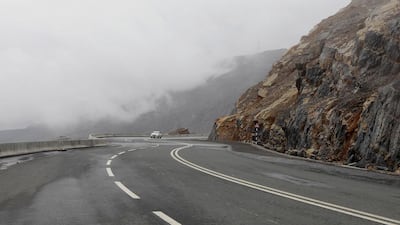
  • Dense fog is also common in the mountains, as this 2015 shot from Jebel Jais shows. Jeffrey E Biteng / The National
    Dense fog is also common in the mountains, as this 2015 shot from Jebel Jais shows. Jeffrey E Biteng / The National
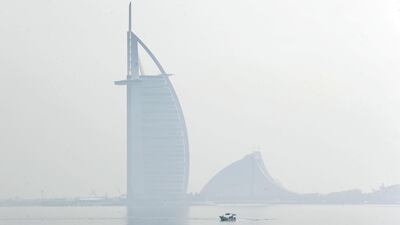
  • Fog and mist cover the Burj Al Arab. Chris Whiteoak / The National
    Fog and mist cover the Burj Al Arab. Chris Whiteoak / The National
  • Early morning fog in Discovery Gardens, Dubai in April, 2020. Pawan Singh / The National
    Early morning fog in Discovery Gardens, Dubai in April, 2020. Pawan Singh / The National
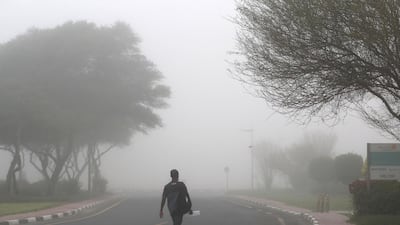
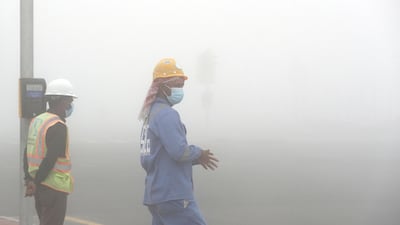
  • Dense fog is common during winter, reducing visibility on the roads. Pawan Singh / The National
    Dense fog is common during winter, reducing visibility on the roads. Pawan Singh / The National
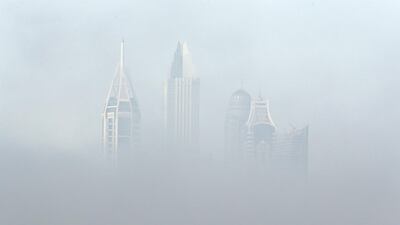
  • Dubai Media City enveloped in fog. Pawan Singh / The National
    Dubai Media City enveloped in fog. Pawan Singh / The National
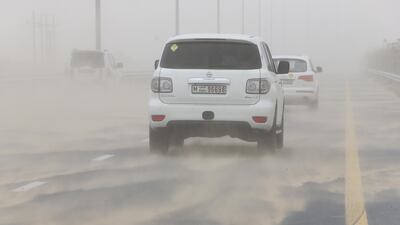
  • Dust storms are also common, causing havoc on the roads such as this one from March, 2017 in Dubai. Pawan Singh / The National
    Dust storms are also common, causing havoc on the roads such as this one from March, 2017 in Dubai. Pawan Singh / The National
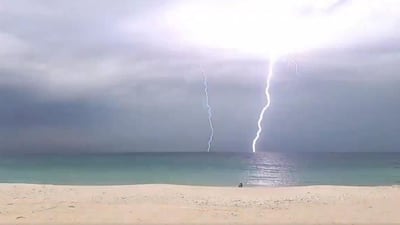
  • A lightening strike in Umm Al Quwain. Photo: Storm Centre UAE
    A lightening strike in Umm Al Quwain. Photo: Storm Centre UAE
  • Another dust storm from 2018. Antonie Robertson / The National
    Another dust storm from 2018. Antonie Robertson / The National
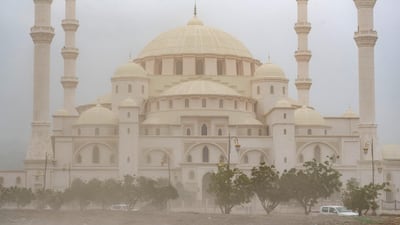
  • A dust storm passes by the Sheikh Zayed Mosque in Fujairah, April, 2020. Chris Whiteoak / The National
    A dust storm passes by the Sheikh Zayed Mosque in Fujairah, April, 2020. Chris Whiteoak / The National
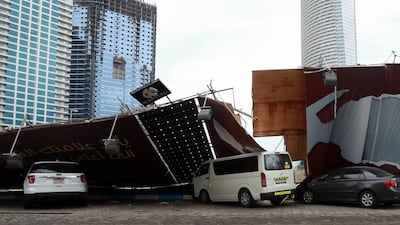
  • Rain storms can cause the most chaos, however, as the March 2016 one did. A construction barrier fell onto parked cars in Abu Dhabi. AFP
    Rain storms can cause the most chaos, however, as the March 2016 one did. A construction barrier fell onto parked cars in Abu Dhabi. AFP
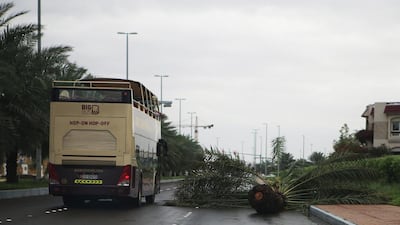
  • Trees were uprooted on 29th Street in Abu Dhabi during the same storm. Ravindranath K / The National
    Trees were uprooted on 29th Street in Abu Dhabi during the same storm. Ravindranath K / The National

More than half a century on from the events of 1963, the UAE was hit by another barrage of damaging weather.

In January last year, about a year’s worth of rain fell on some parts of the country in the course of a weekend, forcing a number of schools to shut in Dubai and Abu Dhabi owing to damage as a result of the three-day deluge.

Nature's role in cold weather in the desert

The landscape of the Middle East – complete with rugged mountains and vast deserts – plays a significant part in turning down the heat.

Desert conditions are usually scorching during the day, but temperatures drop drastically during the night because the air is so dry that heat rapidly escapes.

Another factor is sand, which does not retain heat, so when the sun sets there is no heat for the surface to absorb.

What goes up must come down, in temperature that is, when it comes to the mountainous terrain of the Middle East.

As air rises it expands and cools, making a mountain top a tough spot for those not wrapped up warm.

A version of this story was first published on January 12, 2021.

Company%20profile
%3Cp%3E%3Cstrong%3ECompany%20name%3A%3C%2Fstrong%3E%20Fasset%0D%3Cbr%3E%3Cstrong%3EStarted%3A%20%3C%2Fstrong%3E2019%0D%3Cbr%3E%3Cstrong%3EFounders%3A%3C%2Fstrong%3E%20Mohammad%20Raafi%20Hossain%2C%20Daniel%20Ahmed%0D%3Cbr%3E%3Cstrong%3EBased%3A%3C%2Fstrong%3E%20Dubai%0D%3Cbr%3E%3Cstrong%3ESector%3A%20%3C%2Fstrong%3EFinTech%0D%3Cbr%3E%3Cstrong%3EInitial%20investment%3A%3C%2Fstrong%3E%20%242.45%20million%0D%3Cbr%3E%3Cstrong%3ECurrent%20number%20of%20staff%3A%3C%2Fstrong%3E%2086%0D%3Cbr%3E%3Cstrong%3EInvestment%20stage%3A%3C%2Fstrong%3E%20Pre-series%20B%0D%3Cbr%3E%3Cstrong%3EInvestors%3A%3C%2Fstrong%3E%20Investcorp%2C%20Liberty%20City%20Ventures%2C%20Fatima%20Gobi%20Ventures%2C%20Primal%20Capital%2C%20Wealthwell%20Ventures%2C%20FHS%20Capital%2C%20VN2%20Capital%2C%20local%20family%20offices%3C%2Fp%3E%0A
THE CLOWN OF GAZA

Director: Abdulrahman Sabbah 

Starring: Alaa Meqdad

Rating: 4/5

UPI facts

More than 2.2 million Indian tourists arrived in UAE in 2023
More than 3.5 million Indians reside in UAE
Indian tourists can make purchases in UAE using rupee accounts in India through QR-code-based UPI real-time payment systems
Indian residents in UAE can use their non-resident NRO and NRE accounts held in Indian banks linked to a UAE mobile number for UPI transactions

Mercer, the investment consulting arm of US services company Marsh & McLennan, expects its wealth division to at least double its assets under management (AUM) in the Middle East as wealth in the region continues to grow despite economic headwinds, a company official said.

Mercer Wealth, which globally has $160 billion in AUM, plans to boost its AUM in the region to $2-$3bn in the next 2-3 years from the present $1bn, said Yasir AbuShaban, a Dubai-based principal with Mercer Wealth.

Within the next two to three years, we are looking at reaching $2 to $3 billion as a conservative estimate and we do see an opportunity to do so,” said Mr AbuShaban.

Mercer does not directly make investments, but allocates clients’ money they have discretion to, to professional asset managers. They also provide advice to clients.

“We have buying power. We can negotiate on their (client’s) behalf with asset managers to provide them lower fees than they otherwise would have to get on their own,” he added.

Mercer Wealth’s clients include sovereign wealth funds, family offices, and insurance companies among others.

From its office in Dubai, Mercer also looks after Africa, India and Turkey, where they also see opportunity for growth.

Wealth creation in Middle East and Africa (MEA) grew 8.5 per cent to $8.1 trillion last year from $7.5tn in 2015, higher than last year’s global average of 6 per cent and the second-highest growth in a region after Asia-Pacific which grew 9.9 per cent, according to consultancy Boston Consulting Group (BCG). In the region, where wealth grew just 1.9 per cent in 2015 compared with 2014, a pickup in oil prices has helped in wealth generation.

BCG is forecasting MEA wealth will rise to $12tn by 2021, growing at an annual average of 8 per cent.

Drivers of wealth generation in the region will be split evenly between new wealth creation and growth of performance of existing assets, according to BCG.

Another general trend in the region is clients’ looking for a comprehensive approach to investing, according to Mr AbuShaban.

“Institutional investors or some of the families are seeing a slowdown in the available capital they have to invest and in that sense they are looking at optimizing the way they manage their portfolios and making sure they are not investing haphazardly and different parts of their investment are working together,” said Mr AbuShaban.

Some clients also have a higher appetite for risk, given the low interest-rate environment that does not provide enough yield for some institutional investors. These clients are keen to invest in illiquid assets, such as private equity and infrastructure.

“What we have seen is a desire for higher returns in what has been a low-return environment specifically in various fixed income or bonds,” he said.

“In this environment, we have seen a de facto increase in the risk that clients are taking in things like illiquid investments, private equity investments, infrastructure and private debt, those kind of investments were higher illiquidity results in incrementally higher returns.”

The Abu Dhabi Investment Authority, one of the largest sovereign wealth funds, said in its 2016 report that has gradually increased its exposure in direct private equity and private credit transactions, mainly in Asian markets and especially in China and India. The authority’s private equity department focused on structured equities owing to “their defensive characteristics.”