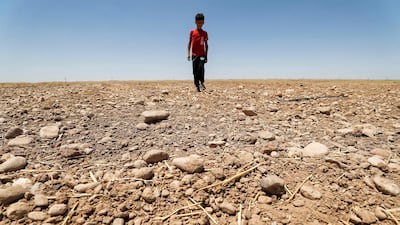
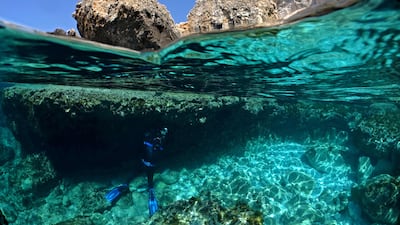
Some of the planet’s most stunning creatures, including giraffes and parrots, are at risk from global warming and other human-induced environmental change, the UN has warned.
One million species are threatened, a new report has said. Familiar plant species, including dozens of types of oak, are at risk, along with mammals, birds and other animals.
Despite the scale of the issues facing the planet, the UN has said that governments are spending half a trillion dollars a year supporting agriculture, fisheries and fossil fuel industries in ways that harm nature.
We’re trying to fix deep wounds without the tools to do so. We’re stuck trying to save the last few species from extinction
Dr Alexander Lees,
conservation biologist
In a statement released this week, the UN highlighted the stark findings of a recent report from the Intergovernmental Science-Policy Platform on Biodiversity and Ecosystem Services, an organisation set up to deal with issues related to biodiversity loss.
The UN cited International Union for Conservation of Nature figures that around 31 per cent of the world’s 430 oak species were threatened with extinction.
Tree species are facing several threats including an increase in the frequency of wildfires due to climate change, and deforestation because of industry, agriculture and firewood.
To prevent species extinctions from continuing on a mass scale, Dr Alexander Lees, a reader and conservation biologist at Manchester Metropolitan University, said “transformative change” was needed.
Climate change around the world - in pictures
While the setting up of nature reserves, for example, is valuable, he cautioned that people were sometimes engaged in “band aid conservation”.
“We’re trying to fix deep wounds without the tools to do so,” he said.
“We’re stuck trying to save the last few species from extinction. We’re not stopping this huge flow of species on to the global red list [of threatened species] … We’re beyond the simple stuff, where we can protect species x with patch of habitat y.”
It was important to think more about how to use land and to engage in “pre-emptive decision-making” to take action before further deterioration.
Many problems stemmed, he said, from global patterns of consumption and “the endless rush to acquire more stuff”.
The world is often seen as being in the midst of the sixth mass extinction since life emerged about four billion years ago. The most recent previous mass extinction took place about 66 million years ago, wiping out most dinosaurs.
A separate study released by researchers at the University of Sheffield in the UK found that unusual bird species were likely to be among the most heavily threatened by the destruction of the natural world.
Looking at nearly 8,500 bird species, the scientists found that those with “unique traits” were more likely to be at risk of extinction.
Some analysts have concluded that, as a result, the likes of toucans, puffins and hummingbirds may face particularly uncertain futures.
There would probably be, the researchers wrote in the journal Current Biology, a “decline of species with unique traits and their replacement with more widespread generalist species”.
Dr Lees, who was not connected to the new study, said it was likely to be the case among other organisms, not only birds, that more unusual species were at greater risk in the Anthropocene ― the current, human-dominated, geological age.
“Specialisation, when you’re getting odd lineages evolving odd morphologies [physical traits] to do something very specific, in the Anthropocene that’s often not a winning hand to play, because environments are being changed, land uses are being changed, the climate is changing,” he said.
“If you’re a real specialist and you’ve evolved to do one thing in one location, and that location changes, then you’re in trouble.
“So it does favour the generalist wildlife and we end up getting this homogenisation, not just of species, but also of functional traits. We end up with species that look more similar to each other.”
Responding to the IPBES report, the United Nations Environment Programme warned there would be significant consequences for people if biodiversity was not conserved.
Susan Gardner, director of the organisation’s ecosystems division, said that wild species were “an indispensable source of food, shelter and income for hundreds of millions”.
“By continuing to use these resources unsustainably, we are not just risking the loss and damage of these species’ populations; we are affecting our own health and well-being and that of the next generation,” she said.
Echoing this, Dr Lees said nature was important to people in multiple ways, with impacts on “human health, human well-being and dietary resilience” likely to follow if nature is not conserved.
“And beyond that, why should we care?” he said. “There are probably lots of species that it would be very difficult to say, ‘This species, this incredible beetle here, is fundamental for humankind.’ It probably isn’t at all.
“But conservations biologists like myself think it’s unethical for us to eliminate species … [And] many of us take great pleasure in seeing wild nature.
“There’s myriad reasons why the general public should be interested and should be worried if we end up haemorrhaging this biodiversity.”
The IPBES report emphasises the importance of protecting the rights of indigenous people, because they have a long history of managing areas sustainably.

Killing of Qassem Suleimani
Indoor cricket in a nutshell
Indoor Cricket World Cup - Sept 16-20, Insportz, Dubai
16 Indoor cricket matches are 16 overs per side
8 There are eight players per team
9 There have been nine Indoor Cricket World Cups for men. Australia have won every one.
5 Five runs are deducted from the score when a wickets falls
4 Batsmen bat in pairs, facing four overs per partnership
Scoring In indoor cricket, runs are scored by way of both physical and bonus runs. Physical runs are scored by both batsmen completing a run from one crease to the other. Bonus runs are scored when the ball hits a net in different zones, but only when at least one physical run is score.
Zones
A Front net, behind the striker and wicketkeeper: 0 runs
B Side nets, between the striker and halfway down the pitch: 1 run
C Side nets between halfway and the bowlers end: 2 runs
D Back net: 4 runs on the bounce, 6 runs on the full
The President's Cake
Director: Hasan Hadi
Starring: Baneen Ahmad Nayyef, Waheed Thabet Khreibat, Sajad Mohamad Qasem
Rating: 4/5
Key figures in the life of the fort
Sheikh Dhiyab bin Isa (ruled 1761-1793) Built Qasr Al Hosn as a watchtower to guard over the only freshwater well on Abu Dhabi island.
Sheikh Shakhbut bin Dhiyab (ruled 1793-1816) Expanded the tower into a small fort and transferred his ruling place of residence from Liwa Oasis to the fort on the island.
Sheikh Tahnoon bin Shakhbut (ruled 1818-1833) Expanded Qasr Al Hosn further as Abu Dhabi grew from a small village of palm huts to a town of more than 5,000 inhabitants.
Sheikh Khalifa bin Shakhbut (ruled 1833-1845) Repaired and fortified the fort.
Sheikh Saeed bin Tahnoon (ruled 1845-1855) Turned Qasr Al Hosn into a strong two-storied structure.
Sheikh Zayed bin Khalifa (ruled 1855-1909) Expanded Qasr Al Hosn further to reflect the emirate's increasing prominence.
Sheikh Shakhbut bin Sultan (ruled 1928-1966) Renovated and enlarged Qasr Al Hosn, adding a decorative arch and two new villas.
Sheikh Zayed bin Sultan (ruled 1966-2004) Moved the royal residence to Al Manhal palace and kept his diwan at Qasr Al Hosn.
Sources: Jayanti Maitra, www.adach.ae
RESULTS
Bantamweight:
Zia Mashwani (PAK) bt Chris Corton (PHI)
Super lightweight:
Flavio Serafin (BRA) bt Mohammad Al Khatib (JOR)
Super lightweight:
Dwight Brooks (USA) bt Alex Nacfur (BRA)
Bantamweight:
Tariq Ismail (CAN) bt Jalal Al Daaja (JOR)
Featherweight:
Abdullatip Magomedov (RUS) bt Sulaiman Al Modhyan (KUW)
Middleweight:
Mohammad Fakhreddine (LEB) bt Christofer Silva (BRA)
Middleweight:
Rustam Chsiev (RUS) bt Tarek Suleiman (SYR)
Welterweight:
Khamzat Chimaev (SWE) bt Mzwandile Hlongwa (RSA)
Lightweight:
Alex Martinez (CAN) bt Anas Siraj Mounir (MAR)
Welterweight:
Jarrah Al Selawi (JOR) bt Abdoul Abdouraguimov (FRA)
ICC T20 Rankings
1. India - 270 ranking points
2. England - 265 points
3. Pakistan - 261 points
4. South Africa - 253 points
5. Australia - 251 points
6. New Zealand - 250 points
7. West Indies - 240 points
8. Bangladesh - 233 points
9. Sri Lanka - 230 points
10. Afghanistan - 226 points
UAE currency: the story behind the money in your pockets
57%20Seconds
%3Cp%3E%3Cstrong%3EDirector%3A%3C%2Fstrong%3E%20Rusty%20Cundieff%0D%3Cbr%3E%3Cstrong%3EStars%3A%20%3C%2Fstrong%3EJosh%20Hutcherson%2C%20Morgan%20Freeman%2C%20Greg%20Germann%2C%20Lovie%20Simone%0D%3Cbr%3E%3Cstrong%3ERating%3A%20%3C%2Fstrong%3E2%2F5%0D%3Cbr%3E%0D%3Cbr%3E%3C%2Fp%3E%0A
The%20Mandalorian%20season%203%20episode%201
%3Cp%3E%3Cstrong%3EDirector%3A%20%3C%2Fstrong%3ERick%20Famuyiwa%3C%2Fp%3E%0A%3Cp%3E%3Cstrong%3EStars%3A%20%3C%2Fstrong%3EPedro%20Pascal%20and%20Katee%20Sackhoff%3C%2Fp%3E%0A%3Cp%3E%3Cstrong%3ERating%3A%20%3C%2Fstrong%3E4%2F5%C2%A0%3C%2Fp%3E%0A
THE BIO
Favourite place to go to in the UAE: The desert sand dunes, just after some rain
Who inspires you: Anybody with new and smart ideas, challenging questions, an open mind and a positive attitude
Where would you like to retire: Most probably in my home country, Hungary, but with frequent returns to the UAE
Favorite book: A book by Transilvanian author, Albert Wass, entitled ‘Sword and Reap’ (Kard es Kasza) - not really known internationally
Favourite subjects in school: Mathematics and science
ALRAWABI%20SCHOOL%20FOR%20GIRLS
%3Cp%3ECreator%3A%20Tima%20Shomali%3C%2Fp%3E%0A%3Cp%3EStarring%3A%C2%A0Tara%20Abboud%2C%C2%A0Kira%20Yaghnam%2C%20Tara%20Atalla%3C%2Fp%3E%0A%3Cp%3ERating%3A%204%2F5%3C%2Fp%3E%0A
Drivers’ championship standings after Singapore:
1. Lewis Hamilton, Mercedes - 263
2. Sebastian Vettel, Ferrari - 235
3. Valtteri Bottas, Mercedes - 212
4. Daniel Ricciardo, Red Bull - 162
5. Kimi Raikkonen, Ferrari - 138
6. Sergio Perez, Force India - 68
Graduated from the American University of Sharjah
She is the eldest of three brothers and two sisters
Has helped solve 15 cases of electric shocks
Enjoys travelling, reading and horse riding
The specs: Volvo XC40
Price: base / as tested: Dh185,000
Engine: 2.0-litre, turbocharged in-line four-cylinder
Gearbox: Eight-speed automatic
Power: 250hp @ 5,500rpm
Torque: 350Nm @ 1,500rpm
Fuel economy, combined: 10.4L / 100km
NATIONAL%20SELECTIONS
%3Cp%3E6.00pm%3A%20Heros%20de%20Lagarde%3Cbr%3E6.35pm%3A%20City%20Walk%3Cbr%3E7.10pm%3A%20Mimi%20Kakushi%3Cbr%3E7.45pm%3A%20New%20Kingdom%3Cbr%3E8.20pm%3A%20Siskany%3Cbr%3E8.55pm%3A%20Nations%20Pride%3Cbr%3E9.30pm%3A%20Ever%20Given%3C%2Fp%3E%0A
The specs
Engine: 4.0-litre V8
Power: 503hp at 6,000rpm
Torque: 685Nm at 2,000rpm
Transmission: 8-speed auto
Price: from Dh850,000
On sale: now
Guide to intelligent investing
Investing success often hinges on discipline and perspective. As markets fluctuate, remember these guiding principles:
- Stay invested: Time in the market, not timing the market, is critical to long-term gains.
- Rational thinking: Breathe and avoid emotional decision-making; let logic and planning guide your actions.
- Strategic patience: Understand why you’re investing and allow time for your strategies to unfold.
Like a Fading Shadow
Antonio Muñoz Molina
Translated from the Spanish by Camilo A. Ramirez
Tuskar Rock Press (pp. 310)
Tom Fletcher on 'soft power'
The specS: 2018 Toyota Camry
Price: base / as tested: Dh91,000 / Dh114,000
Engine: 3.5-litre V6
Gearbox: Eight-speed automatic
Power: 298hp @ 6,600rpm
Torque: 356Nm @ 4,700rpm
Fuel economy, combined: 7.0L / 100km
Who's who in Yemen conflict
Houthis: Iran-backed rebels who occupy Sanaa and run unrecognised government
Yemeni government: Exiled government in Aden led by eight-member Presidential Leadership Council
Southern Transitional Council: Faction in Yemeni government that seeks autonomy for the south
Habrish 'rebels': Tribal-backed forces feuding with STC over control of oil in government territory
Fight card
Preliminaries:
Nouredine Samir (UAE) v Sheroz Kholmirzav (UZB); Lucas Porst (SWE) v Ellis Barboza (GBR); Mouhmad Amine Alharar (MAR) v Mohammed Mardi (UAE); Ibrahim Bilal (UAE) v Spyro Besiri (GRE); Aslamjan Ortikov (UZB) v Joshua Ridgwell (GBR)
Main card:
Carlos Prates (BRA) v Dmitry Valent (BLR); Bobirjon Tagiev (UZB) v Valentin Thibaut (FRA); Arthur Meyer (FRA) v Hicham Moujtahid (BEL); Ines Es Salehy (BEL) v Myriame Djedidi (FRA); Craig Coakley (IRE) v Deniz Demirkapu (TUR); Artem Avanesov (ARM) v Badreddine Attif (MAR); Abdulvosid Buranov (RUS) v Akram Hamidi (FRA)
Title card:
Intercontinental Lightweight: Ilyass Habibali (UAE) v Angel Marquez (ESP)
Intercontinental Middleweight: Amine El Moatassime (UAE) v Francesco Iadanza (ITA)
Asian Featherweight: Zakaria El Jamari (UAE) v Phillip Delarmino (PHI)
The specs: 2018 Range Rover Velar R-Dynamic HSE
Price, base / as tested: Dh263,235 / Dh420,000
Engine: 3.0-litre supercharged V6
Power 375hp @ 6,500rpm
Torque: 450Nm @ 3,500rpm
Transmission: Eight-speed automatic
Fuel consumption, combined: 9.4L / 100kms
Mercer, the investment consulting arm of US services company Marsh & McLennan, expects its wealth division to at least double its assets under management (AUM) in the Middle East as wealth in the region continues to grow despite economic headwinds, a company official said.
Mercer Wealth, which globally has $160 billion in AUM, plans to boost its AUM in the region to $2-$3bn in the next 2-3 years from the present $1bn, said Yasir AbuShaban, a Dubai-based principal with Mercer Wealth.
“Within the next two to three years, we are looking at reaching $2 to $3 billion as a conservative estimate and we do see an opportunity to do so,” said Mr AbuShaban.
Mercer does not directly make investments, but allocates clients’ money they have discretion to, to professional asset managers. They also provide advice to clients.
“We have buying power. We can negotiate on their (client’s) behalf with asset managers to provide them lower fees than they otherwise would have to get on their own,” he added.
Mercer Wealth’s clients include sovereign wealth funds, family offices, and insurance companies among others.
From its office in Dubai, Mercer also looks after Africa, India and Turkey, where they also see opportunity for growth.
Wealth creation in Middle East and Africa (MEA) grew 8.5 per cent to $8.1 trillion last year from $7.5tn in 2015, higher than last year’s global average of 6 per cent and the second-highest growth in a region after Asia-Pacific which grew 9.9 per cent, according to consultancy Boston Consulting Group (BCG). In the region, where wealth grew just 1.9 per cent in 2015 compared with 2014, a pickup in oil prices has helped in wealth generation.
BCG is forecasting MEA wealth will rise to $12tn by 2021, growing at an annual average of 8 per cent.
Drivers of wealth generation in the region will be split evenly between new wealth creation and growth of performance of existing assets, according to BCG.
Another general trend in the region is clients’ looking for a comprehensive approach to investing, according to Mr AbuShaban.
“Institutional investors or some of the families are seeing a slowdown in the available capital they have to invest and in that sense they are looking at optimizing the way they manage their portfolios and making sure they are not investing haphazardly and different parts of their investment are working together,” said Mr AbuShaban.
Some clients also have a higher appetite for risk, given the low interest-rate environment that does not provide enough yield for some institutional investors. These clients are keen to invest in illiquid assets, such as private equity and infrastructure.
“What we have seen is a desire for higher returns in what has been a low-return environment specifically in various fixed income or bonds,” he said.
“In this environment, we have seen a de facto increase in the risk that clients are taking in things like illiquid investments, private equity investments, infrastructure and private debt, those kind of investments were higher illiquidity results in incrementally higher returns.”
The Abu Dhabi Investment Authority, one of the largest sovereign wealth funds, said in its 2016 report that has gradually increased its exposure in direct private equity and private credit transactions, mainly in Asian markets and especially in China and India. The authority’s private equity department focused on structured equities owing to “their defensive characteristics.”
The specs
Engine: 2.7-litre 4-cylinder Turbomax
Power: 310hp
Torque: 583Nm
Transmission: 8-speed automatic
Price: From Dh192,500
On sale: Now
The specs: Macan Turbo
Engine: Dual synchronous electric motors
Power: 639hp
Torque: 1,130Nm
Transmission: Single-speed automatic
Touring range: 591km
Price: From Dh412,500
On sale: Deliveries start in October
AUSTRALIA SQUAD
Aaron Finch, Matt Renshaw, Brendan Doggett, Michael Neser, Usman Khawaja, Shaun Marsh, Mitchell Marsh, Tim Paine (captain), Travis Head, Marnus Labuschagne, Nathan Lyon, Jon Holland, Ashton Agar, Mitchell Starc, Peter Siddle