
The UAE is set to enjoy a rise in temperatures on Sunday, but there are prospects of rain next week.
The mercury could exceed 30°C in both Abu Dhabi and Dubai during the day, the National Centre of Meteorology said.
Sunday started with sunshine and clear skies after bouts of foggy weather in recent days.
There could be a return of hazy conditions and a drop in temperatures on Monday, the NCM's five-day bulletin shows.
Higher winds could also prompt scattered dust storms on Monday.
Meanwhile, the weather experts forecast light rain in northern parts of the country along with cloud and another drop in temperatures.
But temperatures are predicted to rise again on both Wednesday and Thursday, with humidity on the increase during the evenings.
Rain in the UAE - in pictures
-
A rainbow at Expo 2020 Dubai on a cloudy, rainy day for much of the country from Abu Dhabi city to the Northern Emirates on Sunday, January 16. Chris Whiteoak / The National -
A worker shelters beneath an umbrella in Dubai. Chris Whiteoak / The National -
Downtown Dubai awoke to rain. Chris Whiteoak / The National -
Showers in Jumeirah, Dubai, made a day at the beach unappetising. Ruel Pableo for The National -
Cyclists brave the weather in Deira. Ruel Pableo for The National -
A car park in Dubai. Chris Whiteoak / The National -

Showers in Abu Dhabi on Sunday morning. Victor Besa / The National -
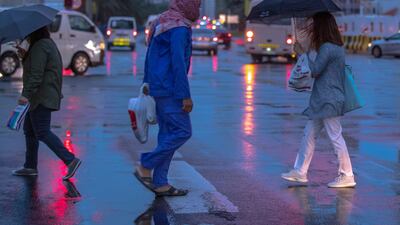
Police urged drivers to take care on the roads as rain fell across the UAE. Victor Besa / The National -
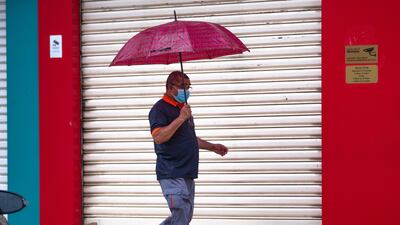
Temperatures were expected to reach a maximum of 26°C in Abu Dhabi. Victor Besa / The National -
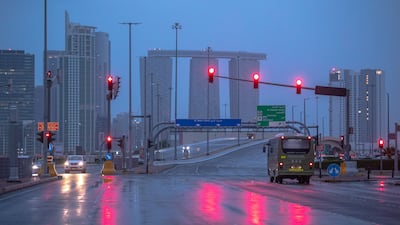
Rain on Al Reem Island in Abu Dhabi. Victor Besa / The National -

Showers fell on various parts of Abu Dhabi before sunrise. Victor Besa / The National -

People make their way to work during the rain on Sunday morning. Victor Besa / The National -
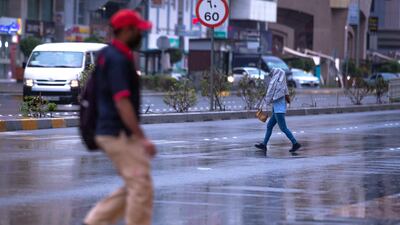
Forecasters said it would rain throughout the day. Victor Besa / The National -
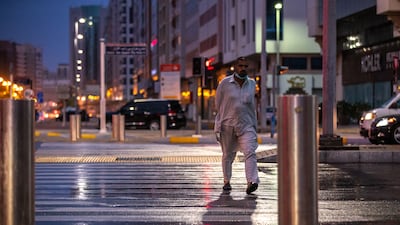
It has been an exceptionally wet start to 2022 for the UAE, with more than 18 months' worth of rain falling in only a few days earlier in the month. Victor Besa / The National -
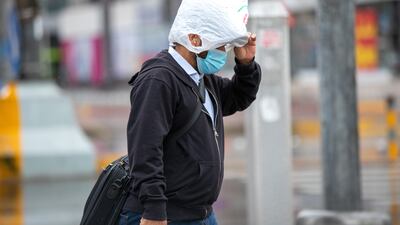
Almost the entire Abu Dhabi emirate was blanketed in dense fog at the weekend. Victor Besa / The National -
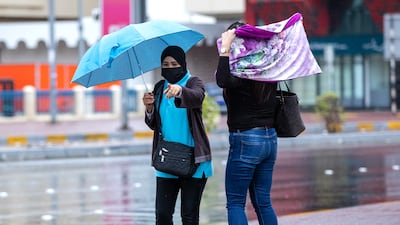
People make their way on a street in Abu Dhabi. Victor Besa / The National -
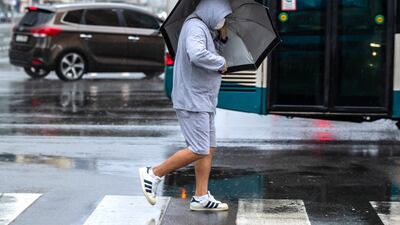
A man crosses a road in the capital. Victor Besa / The National -
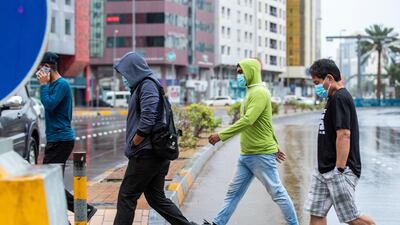
Many people were wearing warm clothes, as chilly temperatures accompanied the rains. Victor Besa / The National -
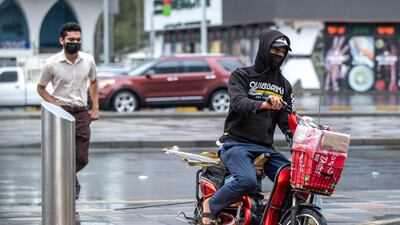
A man rides an electric bike in the rain. Victor Besa / The National -
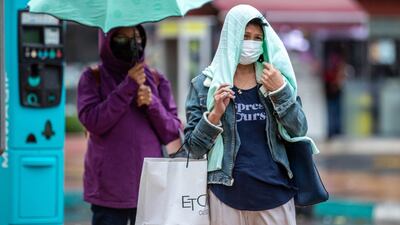
Women make their way amid the rains. Victor Besa / The National -
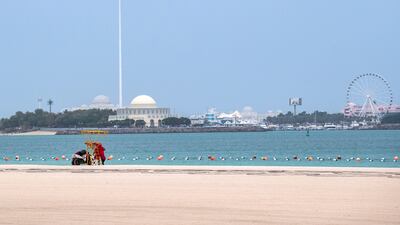
An almost deserted beach in Abu Dhabi during the wet weather. Victor Besa / The National
It
Director: Andres Muschietti
Starring: Bill Skarsgard, Jaeden Lieberher, Sophia Lillis, Chosen Jacobs, Jeremy Ray Taylor
Three stars
KILLING OF QASSEM SULEIMANI
National Editorial: Suleimani has been killed, now we must de-escalate
Mina Al Oraibi: Air strike casts a long shadow over the decade ahead
Jack Moore: Why the assassination is such a monumental gamble
Matthew Levitt: Iran retains its ability to launch terror attacks
Damien McElroy: A CEO tasked with spreading Iran's influence
Hussein Ibish: Trump's order on solid constitutional ground
Simon Waldman: Cautious Israel keeping a low profile
Rashmee Roshan Lall: Sound of silence in South Asia
Fanar Haddad: The Iranian response will be gradual
Mercer, the investment consulting arm of US services company Marsh & McLennan, expects its wealth division to at least double its assets under management (AUM) in the Middle East as wealth in the region continues to grow despite economic headwinds, a company official said.
Mercer Wealth, which globally has $160 billion in AUM, plans to boost its AUM in the region to $2-$3bn in the next 2-3 years from the present $1bn, said Yasir AbuShaban, a Dubai-based principal with Mercer Wealth.
“Within the next two to three years, we are looking at reaching $2 to $3 billion as a conservative estimate and we do see an opportunity to do so,” said Mr AbuShaban.
Mercer does not directly make investments, but allocates clients’ money they have discretion to, to professional asset managers. They also provide advice to clients.
“We have buying power. We can negotiate on their (client’s) behalf with asset managers to provide them lower fees than they otherwise would have to get on their own,” he added.
Mercer Wealth’s clients include sovereign wealth funds, family offices, and insurance companies among others.
From its office in Dubai, Mercer also looks after Africa, India and Turkey, where they also see opportunity for growth.
Wealth creation in Middle East and Africa (MEA) grew 8.5 per cent to $8.1 trillion last year from $7.5tn in 2015, higher than last year’s global average of 6 per cent and the second-highest growth in a region after Asia-Pacific which grew 9.9 per cent, according to consultancy Boston Consulting Group (BCG). In the region, where wealth grew just 1.9 per cent in 2015 compared with 2014, a pickup in oil prices has helped in wealth generation.
BCG is forecasting MEA wealth will rise to $12tn by 2021, growing at an annual average of 8 per cent.
Drivers of wealth generation in the region will be split evenly between new wealth creation and growth of performance of existing assets, according to BCG.
Another general trend in the region is clients’ looking for a comprehensive approach to investing, according to Mr AbuShaban.
“Institutional investors or some of the families are seeing a slowdown in the available capital they have to invest and in that sense they are looking at optimizing the way they manage their portfolios and making sure they are not investing haphazardly and different parts of their investment are working together,” said Mr AbuShaban.
Some clients also have a higher appetite for risk, given the low interest-rate environment that does not provide enough yield for some institutional investors. These clients are keen to invest in illiquid assets, such as private equity and infrastructure.
“What we have seen is a desire for higher returns in what has been a low-return environment specifically in various fixed income or bonds,” he said.
“In this environment, we have seen a de facto increase in the risk that clients are taking in things like illiquid investments, private equity investments, infrastructure and private debt, those kind of investments were higher illiquidity results in incrementally higher returns.”
The Abu Dhabi Investment Authority, one of the largest sovereign wealth funds, said in its 2016 report that has gradually increased its exposure in direct private equity and private credit transactions, mainly in Asian markets and especially in China and India. The authority’s private equity department focused on structured equities owing to “their defensive characteristics.”
RESULTS
ONCE UPON A TIME IN GAZA
Starring: Nader Abd Alhay, Majd Eid, Ramzi Maqdisi
Directors: Tarzan and Arab Nasser
Rating: 4.5/5


