

Sheikha Shamma bint Sultan has called for stronger laws and carbon tax policies to combat environmental pollution around the world.
The great-granddaughter of Founding Father Sheikh Zayed said she was a “strong supporter of the ‘polluter pays the principle’ theory”.
“Those who pollute should bear the expenses of preventing and controlling it to ensure that the environment is in an acceptable state,” she told The National.
“It’s the only way we can effectively move towards a circular economy that tackles global challenges like climate change, biodiversity loss, waste, and pollution.
“It’s an area that I’ve been championing for the past few years and is very close to my heart.”
Sheikha Shamma, chief executive of Alliances for Global Sustainability, said a carbon waste tax can encourage recycling and sustainable practices.
“We need to have the right policies and legislation in place to support sustainable initiatives, as well as active efforts from all stakeholders, including government entities, regulators, corporates and, of course, the public,” she said.
“But a change in mindset is imperative for us to see any long-term and lasting progress.
“And it is certainly one of our biggest hurdles. We have to educate people about the consequences of our actions, many of which we are already witnessing, such as climate change.”
Last year, Sheikha Shamma became the first person from the Middle East and North Africa to be named as a member of the Yale Centre for Environmental Law and Policy.
The University of Cambridge graduate is working to drive change and is involved initiatives that aim to highlight the work done by the UAE.
“I’ve often found that the West is unaware of the great strides that countries like the UAE have made in the field,” she said.
“So my hope is to share insight and knowledge on the region that can drive potential global collaboration and partnerships.
“The Yale Centre has done exceptional work with Prof Daniel C. Esty, leading it and the primary report used to benchmark countries as part of the environmental performance index.
“I’m very proud of the progress the UAE has made in improving its environmental benchmarks."
-
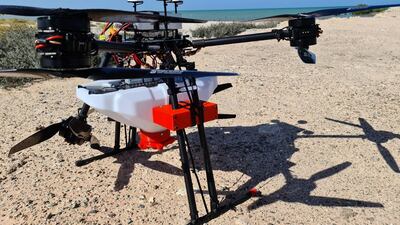
One of the drones that drops mangrove seed balls. Mangrove seed balls dropped on among mangrove seedlings in Al Dhafra. Courtesy: Environment Agency Abu Dhabi -
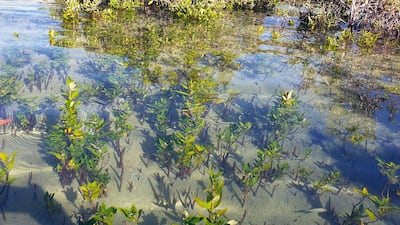
Underwater mangrove seedlings. Courtesy: Environment Agency Abu Dhabi -
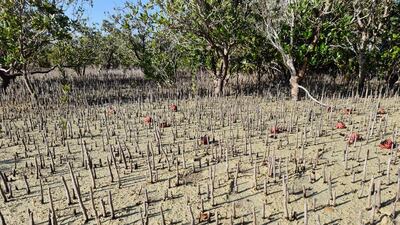
Mangrove seed balls dropped on among mangrove seedlings in Al Dhafra. Courtesy: Environment Agency Abu Dhabi -
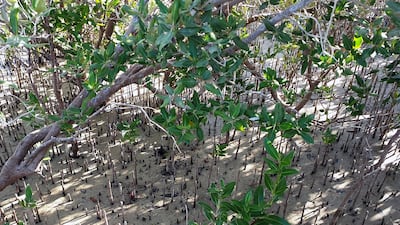
Mangrove seed balls dropped on the shoreline in Al Dhafra. Courtesy: Environment Agency Abu Dhabi


She mentioned the UAE's use of innovative agricultural technologies to grow local produce in desert conditions as an example of how far the country has come.
“Not only do these technologies provide relief in terms of food security, but they present an opportunity to diversify the economy, opening new channels for GDP," she added.
“We have all seen how the UAE pioneered economic diversification and moved away from oil dependency more than four decades ago, introducing new sectors such as trade, aviation, tourism and finance.”
In 2015, the UAE adopted the UN Sustainable Development Goals and the 2030 Agenda for Sustainable Development. Six years into the journey, Sheikha Shamma is proud of the country’s achievements.
“We are creating and maintaining a sustainable environment and infrastructure, which remains a core pillar of the UAE’s national agenda. It’s important that we ensure sustainable development while preserving the environment,” she said.
“We strike a balance between economic and social development. We’ve had a very, very clear set of KPIs [key performance indicators] that focus predominantly on clean energy, water, and productivity, as well as the reduction of carbon emissions and energy intensity."
To tackle these, she said, the UAE has committed more than $814 million to renewable energy in more than 30 countries.
"In addition, a number of key initiatives have been launched over the last six years which contribute to these goals.”
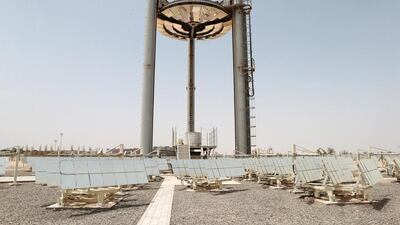
She said the Ghantoot Desalination Pilot Plant, which was launched by Masdar in 2013, was another example of using renewable energy to power critical technologies.
-
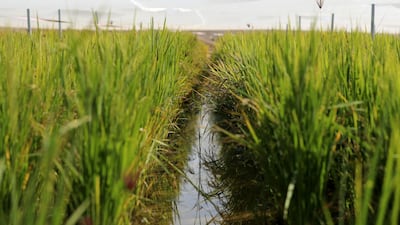
Emirati and Korean scientists have successfully grown rice crops in a remote Sharjah desert. All photos: Chris Whiteoak / The National -
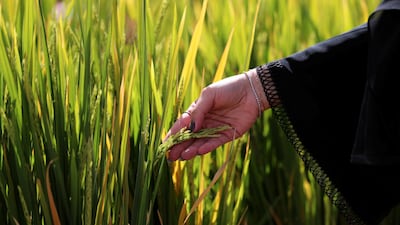
In 2020, 763 kilograms of crops were harvested. -
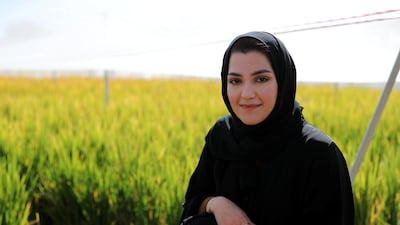
Amal Al Ahmadi, head of agricultural research section at Ministry of Climate Change and Environment, said the efforts are part of a research project to enhance the UAE's food security. -
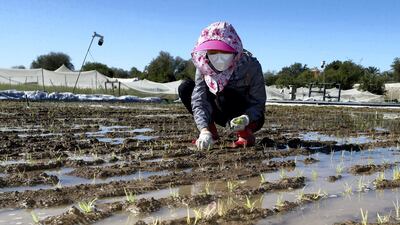
The UAE is one of the largest importers of rice. Due to the country's hot climate, rice is difficult to cultivate and is better suited for nations with high rainfall. -
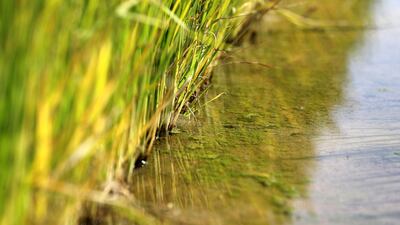
The ministry has partnered with South Korea's Rural Development Administration to create innovative ways to grow rice. -
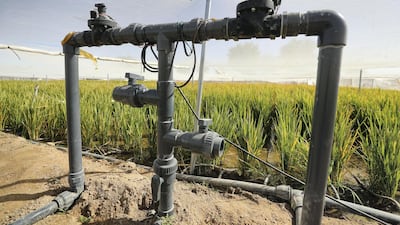
An underground drop irrigation system is used to water the crops. There are four methods used, including drip and furrows (canals with drips), normal drip system, flooding with a protective layer and flooding in furrows. -
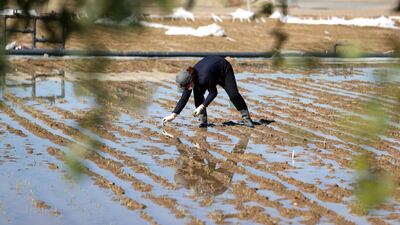
Korean scientists are at the farm nearly every day to monitor the crops. -
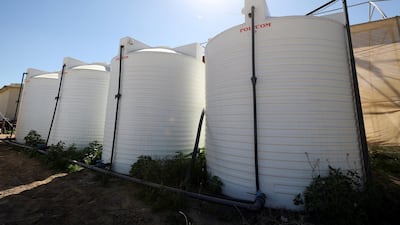
The goal is to grow the crops in a sustainable way by using 50 per cent less water than what would be required. Pictured are water tanks that are used for farming. -
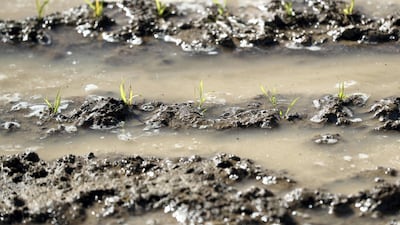
Technology is also used to help monitor the crops' health, including cameras, sensors and weather systems. -
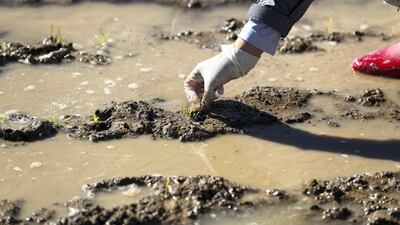
The main challenge have been seed-eating birds that damage the crops. -
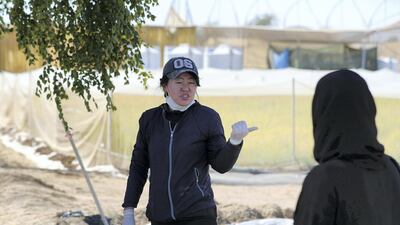
The Asemi variety of rice has been the most successful out of the two main ones that were tested, but there are 33 other types that are also being researched in smaller patches. -
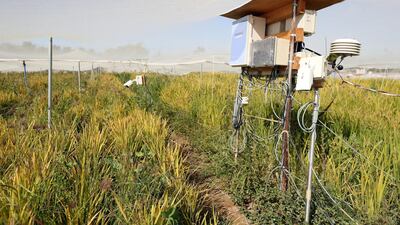
The project is also meant to help farmers grow rice sustainably in the future. -
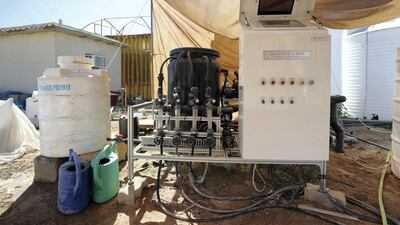
A machine designed to distribute nutrients to the plants at the rice farm. -
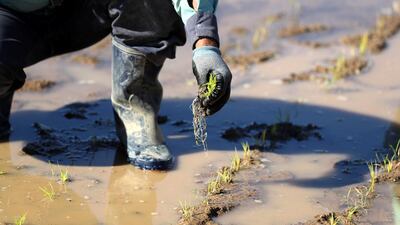
The rice is only for research purposes and will not be available for commercial use.


Although the UAE has made "significant headway", there is still much to be done to tackle climate change, said Sheikha Shamma.
“If we are to make any real headway in tackling climate change and having a real impact on sustainable development, we need to look at implementing long-term solutions.”
Last month, the UAE announced its intention to reach net zero carbon by 2050 – the first country in the Gulf to make this commitment. The plan will mean Dh600 billion being invested in clean and renewable energy sources in the next three decades.
For the Year of the 50th, which commemorates the UAE's formation in 1971, Sheikha Shamma is turning her attention to expanding some of the major initiatives being driven by Alliances for Global Sustainability.
Her time will also be spent on her social enterprise Mangroves for Mankind, which aims to combat climate change by conserving mangrove ecosystems in coastal cities around the world.
This includes restoration, and educating indigenous communities living in mangrove areas to support their livelihoods.
Sheikha Shamma also plans to continue work on Aurora50, an initiative she co-founded to empower women company directors by giving them the necessary tools to excel in the workplace.
She is also an author, and said her favourite among the books she has written is The Tangled Tale.
“It’s about saving our bees, protecting our mangroves and reducing air pollution," she said.
“It’s a journey of discovery to untangle a web of problems affecting our world."
Sheikha Shamma said saving the environment is a collective responsibility.
“The legacy built by our Founding Father Sheikh Zayed bin Sultan is far-reaching and shows us how much can be achieved through hard work and determination,” she said.
“As we look to the future, my message is that sustainable development is critical for our country, the region and the world.
“Each of us has a responsibility to respect and integrate sustainable practices into our daily lives and to keep this at the forefront of decision making.”
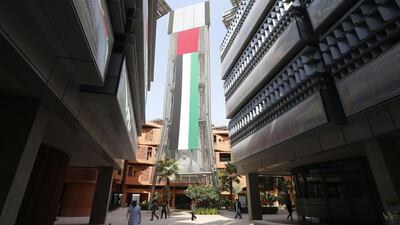
Masdar's achievement in past decade — in pictures
-
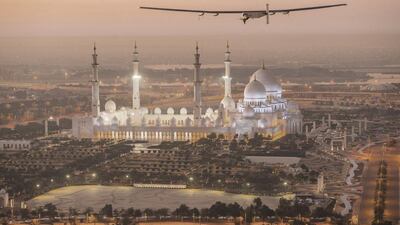
-
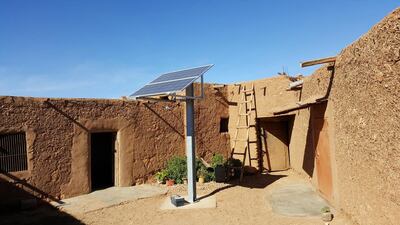
Courtesy Masdar -

Courtesy Masdar Institute of Science and Technology, Abu Dhabi -
Christopher Pike / The National -

Mona Al Marzooqi / The National -

Philip Cheung / Crown Prince Court — Abu Dhabi -
Karim Sahib / AFP -

Ali Haider / EPA -

Courtesy Masdar -

Cristina Quicler / EPA



