• Sean Lee, director of Smart Acres, at the hydroponics farm at the Armed Forces Officers Club, Abu Dhabi, which produces lettuce and leafy greens for sale in UAE supermarkets. Victor Besa / The National
    Sean Lee, director of Smart Acres, at the hydroponics farm at the Armed Forces Officers Club, Abu Dhabi, which produces lettuce and leafy greens for sale in UAE supermarkets. Victor Besa / The National
  • Lettuce is grown in converted shipping containers. Victor Besa / The National
    Lettuce is grown in converted shipping containers. Victor Besa / The National
  • The produce grown using hydroponics. Victor Besa / The National
    The produce grown using hydroponics. Victor Besa / The National
  • Sean Lee, director of the Smart Acres hydroponics farm. We want it to be commercially viable, he said.Victor Besa / The National
    Sean Lee, director of the Smart Acres hydroponics farm. We want it to be commercially viable, he said.Victor Besa / The National
  • The farm is spread across eight converted shipping containers. Victor Besa / The National
    The farm is spread across eight converted shipping containers. Victor Besa / The National
  • The UAE’s newest vertical farm, Smart Acres, has started operation. All photos courtesy Smart Acres
    The UAE’s newest vertical farm, Smart Acres, has started operation. All photos courtesy Smart Acres
  • The company collaborated with n.thing, a Korean-based technology company, to design the farm modules.
    The company collaborated with n.thing, a Korean-based technology company, to design the farm modules.
  • Smart Acres grows fresh produce for UAE residents and businesses.
    Smart Acres grows fresh produce for UAE residents and businesses.
  • Smart Acres says its system not only consumes less resources but generates ultra-high quality crops.
    Smart Acres says its system not only consumes less resources but generates ultra-high quality crops.
  • Smart Acres was founded to improve food security in the UAE and develop the country’s farming capabilities.
    Smart Acres was founded to improve food security in the UAE and develop the country’s farming capabilities.
  • Smart Acres is in talks with hypermarkets and government entities to expand their distribution of produce across the country.
    Smart Acres is in talks with hypermarkets and government entities to expand their distribution of produce across the country.

Abu Dhabi launches sustainable agriculture plan to boost local farming


Georgia Tolley
  • English
  • Arabic

A new agricultural development plan aimed at increasing the efficiency of sustainable farming has been launched by Abu Dhabi Agriculture and Food Safety Authority.

It is designed to encourage all of the emirate’s farmers to adopt a climate-smart approach.

“The comprehensive plan for agricultural sustainability supports the UAE’s Net Zero by 2050 strategic Initiative, and is in line with global trends to promote climate-smart agriculture and the food production,” said Sheikh Mansour bin Zayed, Deputy Prime Minister and Minister of Presidential Affairs, and chairman of the board of directors of Adafsa.

“The climate neutrality initiative contributes to promoting sustainable development and supports innovation, technology localisation, the development of modern farming techniques, food security, and the conservation of natural resources.”

The objective of climate-smart agriculture is to increase productivity and economic return from farming, while adapting to climate change and reducing greenhouse gas emissions.

By integrating the way farms operate in Abu Dhabi, Adafsa hopes to improve water usage in the emirate and reduce reliance on its finite supply of groundwater.

Farmers will be encouraged to use recycled or desalinated water sources and to cultivate crops that consume less water and are more resilient to the hot, salty climate of the UAE.

Laws governing water consumption will also be introduced.

Organic farming

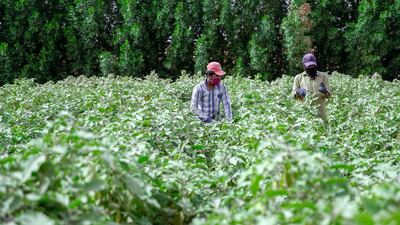
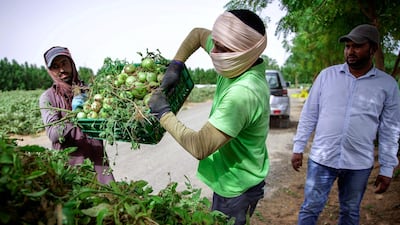
  • Farmers pick out ripe eggplants from the field. All photos by Victor Besa / The National
    Farmers pick out ripe eggplants from the field. All photos by Victor Besa / The National
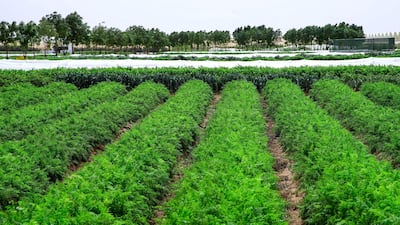
  • The massive organic farm in the middle of the Al Ain desert.
    The massive organic farm in the middle of the Al Ain desert.
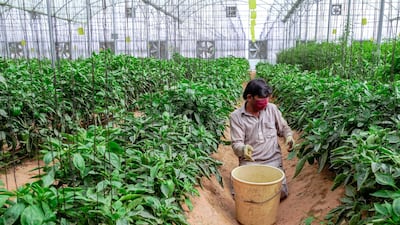
  • A farmer carries a bucket to harvest organic green capsicums.
    A farmer carries a bucket to harvest organic green capsicums.
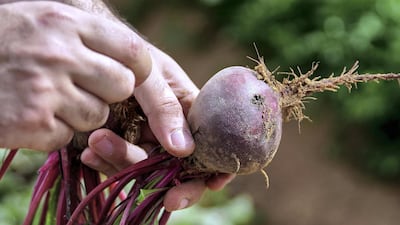
  • Organic beetroot is harvested.
    Organic beetroot is harvested.
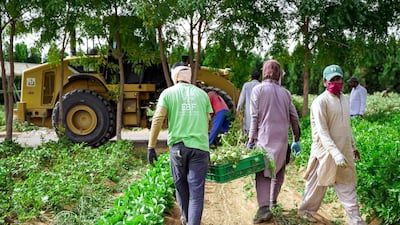
  • Farmers clear the tomato field to give way to a new planting season at Emirates Bio Farm.
    Farmers clear the tomato field to give way to a new planting season at Emirates Bio Farm.
  • Farmers clear the tomato field to give way to a new planting season.
    Farmers clear the tomato field to give way to a new planting season.
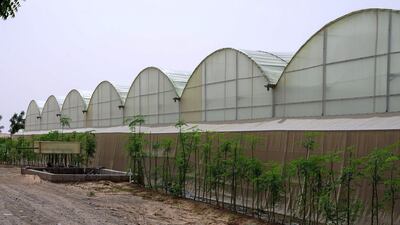
  • One of the greenhouses at the farm.
    One of the greenhouses at the farm.
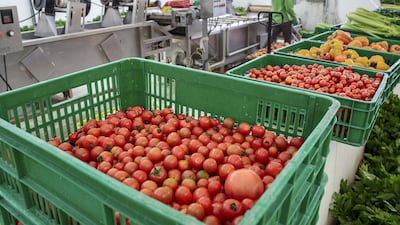
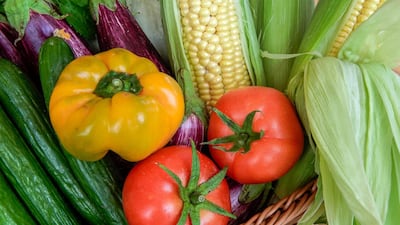
  • Assorted organic vegetables after being washed before sent to the packing station.
    Assorted organic vegetables after being washed before sent to the packing station.
  • Assorted organic vegetables at the shop.
    Assorted organic vegetables at the shop.
  • Organic dried tomatoes in olive oil being packed for delivery.
    Organic dried tomatoes in olive oil being packed for delivery.
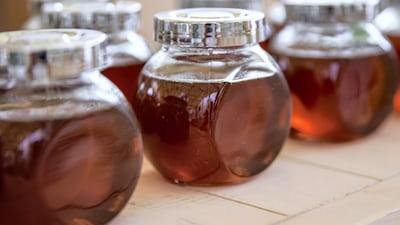
  • Organic honey from the farm.
    Organic honey from the farm.
  • Freshly baked whole wheat organic bread with pumpkin seeds from the organic kitchen.
    Freshly baked whole wheat organic bread with pumpkin seeds from the organic kitchen.
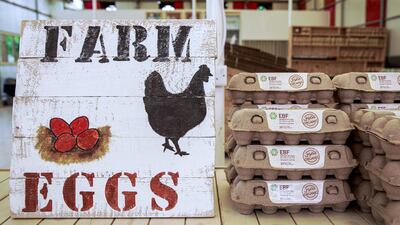
  • Organic fresh farm eggs at the EBF store.
    Organic fresh farm eggs at the EBF store.
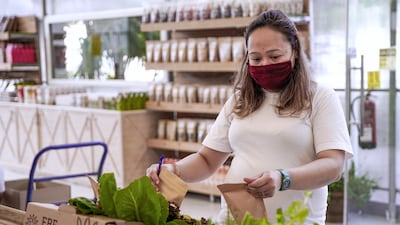
  • A store worker arranges online orders for delivery.
    A store worker arranges online orders for delivery.

Farmers in Abu Dhabi have already been encouraged to shift towards organic agriculture, and 75 farms have made the transition.

Adafsa’s research stations are also investigating the viability of various smart farming techniques, including vertical farms that can produce five to 10 times the yields of traditional agriculture, and drip irrigation techniques to improve water efficiency.

Researchers are also exploring ways to identify and predict epidemics and animal diseases by using integrated algorithms.

Adafsa has prepared its agriculture plan in collaboration with the Food and Agriculture Organisation of the United Nations.

The Authority has recently launched the Abu Dhabi Gap programme, a local version of the Global Gap Global Agricultural Practices Programme, which applies standards of quality agricultural production to ensure food safety, sustainable environmental management and the health of workers in its production.

Farms applying these standards are granted a globally recognised certificate.

So far, 550 farms in Abu Dhabi have received it, a number expected to rise to about 1,500 by the end of next year.

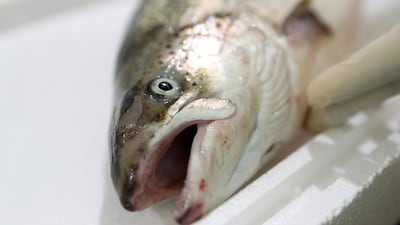
UAE fish farm - in pictures

  • Bader Bin Mubarak, the chief executive of Fish Farm: 'We’ve made salmon in the desert, it’s pretty remarkable.' All photos by Pawan Singh / The National
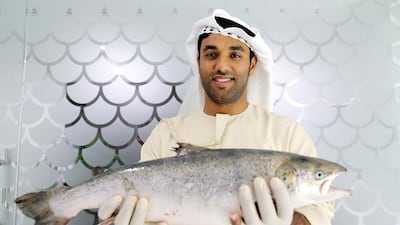
    Bader Bin Mubarak, the chief executive of Fish Farm: 'We’ve made salmon in the desert, it’s pretty remarkable.' All photos by Pawan Singh / The National
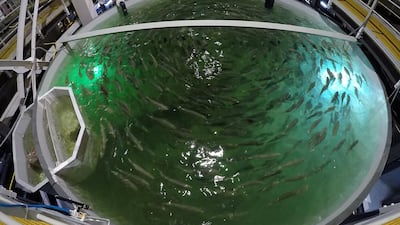
  • A tank of UAE-reared salmon at Dubai-based company Fish Farm's facility in Jebel Ali Free Zone. In November 2017, Fish Farm relocated some 40,000 baby salmon to Dubai from remote seas off Scotland.
    A tank of UAE-reared salmon at Dubai-based company Fish Farm's facility in Jebel Ali Free Zone. In November 2017, Fish Farm relocated some 40,000 baby salmon to Dubai from remote seas off Scotland.
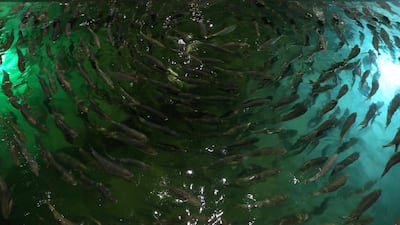
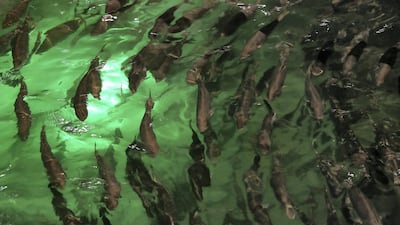
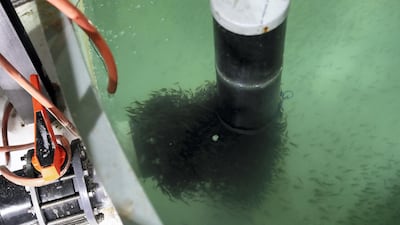
  • Hundreds of salmon swim inside one of the tanks at Fish Farm's base in Dubai. The company, which also produces hammour, sea bream, sea bass and shrimp, has 34 tanks at its Jebel Ali facility, four of which are used for salmon.
    Hundreds of salmon swim inside one of the tanks at Fish Farm's base in Dubai. The company, which also produces hammour, sea bream, sea bass and shrimp, has 34 tanks at its Jebel Ali facility, four of which are used for salmon.
  • The salmon is farmed to market size, which is 3-5 kilograms.
    The salmon is farmed to market size, which is 3-5 kilograms.
  • From 2020, Fish Farm will sell the first salmon that are 100 per cent born and bred in the UAE, as eggs from the current stock have hatched and the fish are being reared to market size.
    From 2020, Fish Farm will sell the first salmon that are 100 per cent born and bred in the UAE, as eggs from the current stock have hatched and the fish are being reared to market size.
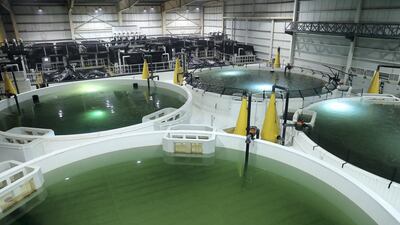
  • Fish Farm has created artificial habitats for the fish to thrive – from a freshwater ‘river’ tank three metres deep, to a six-metre-deep saltwater ‘ocean’, with automatic transfer pumps connecting each tank.
    Fish Farm has created artificial habitats for the fish to thrive – from a freshwater ‘river’ tank three metres deep, to a six-metre-deep saltwater ‘ocean’, with automatic transfer pumps connecting each tank.
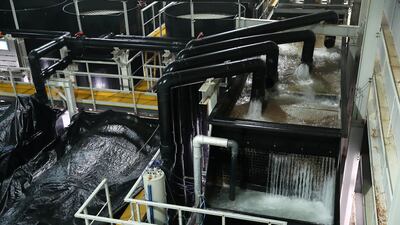
  • A water treatment plant at Fish Farm's facility. The company has invested in technology and infrastructure to control water salinity, depth and temperature, and even introduce currents and artificial weather conditions in the tanks.
    A water treatment plant at Fish Farm's facility. The company has invested in technology and infrastructure to control water salinity, depth and temperature, and even introduce currents and artificial weather conditions in the tanks.
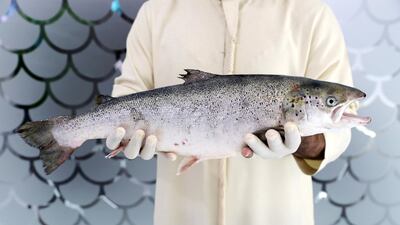
  • Bader Al Mubarak, chief executive of Dubai’s Fish Farm, holds a salmon fish at the company's headquarters in Jebel Ali. Mr Al Mubarak is also deputy chairman of Dubai Council for Marine and Maritime Industries.
    Bader Al Mubarak, chief executive of Dubai’s Fish Farm, holds a salmon fish at the company's headquarters in Jebel Ali. Mr Al Mubarak is also deputy chairman of Dubai Council for Marine and Maritime Industries.
  • Salmon is one of the top four most popular types of fish consumed in the UAE, along with hammour, sea bream and sea bass.
    Salmon is one of the top four most popular types of fish consumed in the UAE, along with hammour, sea bream and sea bass.

Mercer, the investment consulting arm of US services company Marsh & McLennan, expects its wealth division to at least double its assets under management (AUM) in the Middle East as wealth in the region continues to grow despite economic headwinds, a company official said.

Mercer Wealth, which globally has $160 billion in AUM, plans to boost its AUM in the region to $2-$3bn in the next 2-3 years from the present $1bn, said Yasir AbuShaban, a Dubai-based principal with Mercer Wealth.

Within the next two to three years, we are looking at reaching $2 to $3 billion as a conservative estimate and we do see an opportunity to do so,” said Mr AbuShaban.

Mercer does not directly make investments, but allocates clients’ money they have discretion to, to professional asset managers. They also provide advice to clients.

“We have buying power. We can negotiate on their (client’s) behalf with asset managers to provide them lower fees than they otherwise would have to get on their own,” he added.

Mercer Wealth’s clients include sovereign wealth funds, family offices, and insurance companies among others.

From its office in Dubai, Mercer also looks after Africa, India and Turkey, where they also see opportunity for growth.

Wealth creation in Middle East and Africa (MEA) grew 8.5 per cent to $8.1 trillion last year from $7.5tn in 2015, higher than last year’s global average of 6 per cent and the second-highest growth in a region after Asia-Pacific which grew 9.9 per cent, according to consultancy Boston Consulting Group (BCG). In the region, where wealth grew just 1.9 per cent in 2015 compared with 2014, a pickup in oil prices has helped in wealth generation.

BCG is forecasting MEA wealth will rise to $12tn by 2021, growing at an annual average of 8 per cent.

Drivers of wealth generation in the region will be split evenly between new wealth creation and growth of performance of existing assets, according to BCG.

Another general trend in the region is clients’ looking for a comprehensive approach to investing, according to Mr AbuShaban.

“Institutional investors or some of the families are seeing a slowdown in the available capital they have to invest and in that sense they are looking at optimizing the way they manage their portfolios and making sure they are not investing haphazardly and different parts of their investment are working together,” said Mr AbuShaban.

Some clients also have a higher appetite for risk, given the low interest-rate environment that does not provide enough yield for some institutional investors. These clients are keen to invest in illiquid assets, such as private equity and infrastructure.

“What we have seen is a desire for higher returns in what has been a low-return environment specifically in various fixed income or bonds,” he said.

“In this environment, we have seen a de facto increase in the risk that clients are taking in things like illiquid investments, private equity investments, infrastructure and private debt, those kind of investments were higher illiquidity results in incrementally higher returns.”

The Abu Dhabi Investment Authority, one of the largest sovereign wealth funds, said in its 2016 report that has gradually increased its exposure in direct private equity and private credit transactions, mainly in Asian markets and especially in China and India. The authority’s private equity department focused on structured equities owing to “their defensive characteristics.”

The specs: 2019 Audi A8

Price From Dh390,000

Engine 3.0L V6 turbo

Gearbox Eight-speed automatic

Power 345hp @ 5,000rpm

Torque 500Nm @ 1,370rpm

Fuel economy, combined 7.5L / 100km

Skoda Superb Specs

Engine: 2-litre TSI petrol

Power: 190hp

Torque: 320Nm

Price: From Dh147,000

Available: Now

Updated: November 08, 2021, 5:45 AM