


A new agricultural development plan aimed at increasing the efficiency of sustainable farming has been launched by Abu Dhabi Agriculture and Food Safety Authority.
It is designed to encourage all of the emirate’s farmers to adopt a climate-smart approach.
“The comprehensive plan for agricultural sustainability supports the UAE’s Net Zero by 2050 strategic Initiative, and is in line with global trends to promote climate-smart agriculture and the food production,” said Sheikh Mansour bin Zayed, Deputy Prime Minister and Minister of Presidential Affairs, and chairman of the board of directors of Adafsa.
“The climate neutrality initiative contributes to promoting sustainable development and supports innovation, technology localisation, the development of modern farming techniques, food security, and the conservation of natural resources.”
The objective of climate-smart agriculture is to increase productivity and economic return from farming, while adapting to climate change and reducing greenhouse gas emissions.
By integrating the way farms operate in Abu Dhabi, Adafsa hopes to improve water usage in the emirate and reduce reliance on its finite supply of groundwater.
Farmers will be encouraged to use recycled or desalinated water sources and to cultivate crops that consume less water and are more resilient to the hot, salty climate of the UAE.
Laws governing water consumption will also be introduced.
Organic farming
-
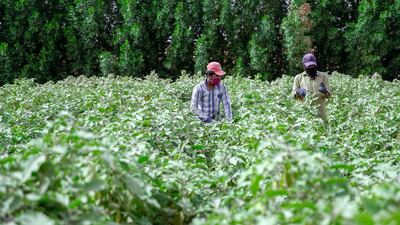
Farmers pick out ripe eggplants from the field. All photos by Victor Besa / The National -
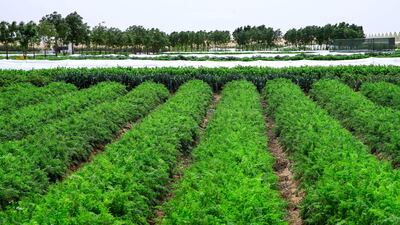
The massive organic farm in the middle of the Al Ain desert. -
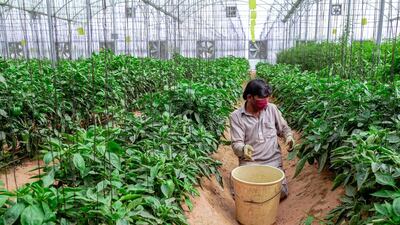
A farmer carries a bucket to harvest organic green capsicums. -
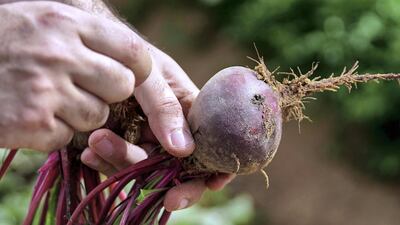
Organic beetroot is harvested. -
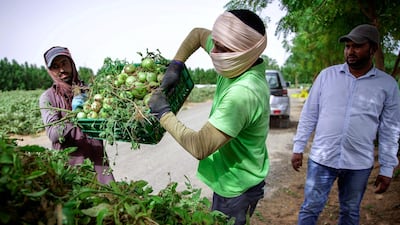
Farmers clear the tomato field to give way to a new planting season at Emirates Bio Farm. -
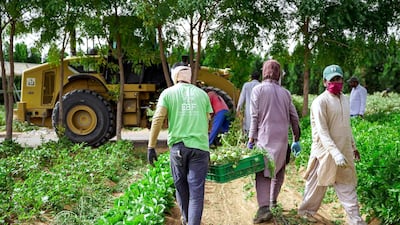
Farmers clear the tomato field to give way to a new planting season. -
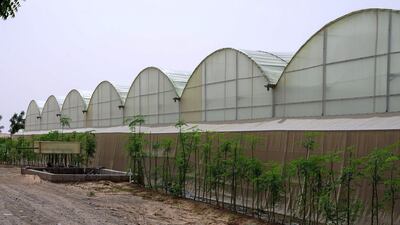
One of the greenhouses at the farm. -
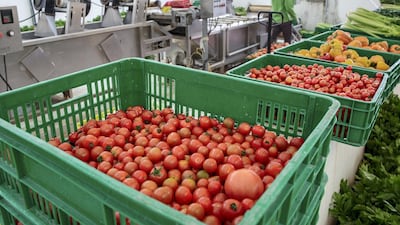
Assorted organic vegetables after being washed before sent to the packing station. -
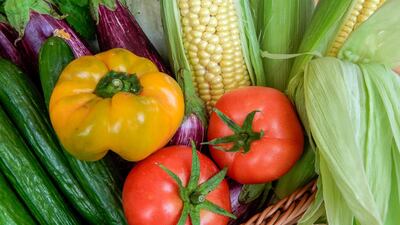
Assorted organic vegetables at the shop. -
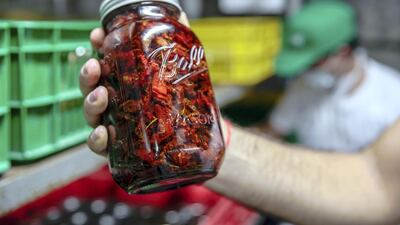
Organic dried tomatoes in olive oil being packed for delivery. -
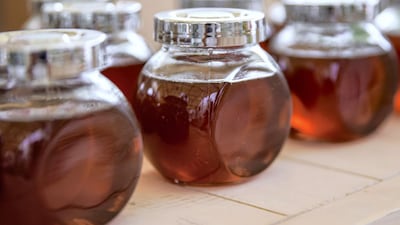
Organic honey from the farm. -

Freshly baked whole wheat organic bread with pumpkin seeds from the organic kitchen. -
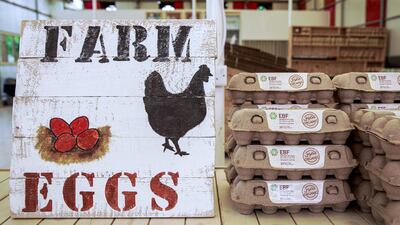
Organic fresh farm eggs at the EBF store. -
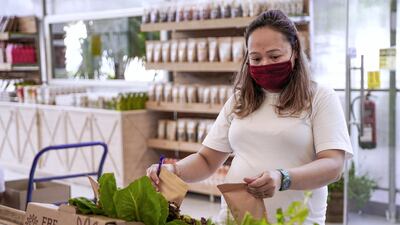
A store worker arranges online orders for delivery.


Farmers in Abu Dhabi have already been encouraged to shift towards organic agriculture, and 75 farms have made the transition.
Adafsa’s research stations are also investigating the viability of various smart farming techniques, including vertical farms that can produce five to 10 times the yields of traditional agriculture, and drip irrigation techniques to improve water efficiency.
Researchers are also exploring ways to identify and predict epidemics and animal diseases by using integrated algorithms.
Adafsa has prepared its agriculture plan in collaboration with the Food and Agriculture Organisation of the United Nations.
The Authority has recently launched the Abu Dhabi Gap programme, a local version of the Global Gap Global Agricultural Practices Programme, which applies standards of quality agricultural production to ensure food safety, sustainable environmental management and the health of workers in its production.
Farms applying these standards are granted a globally recognised certificate.
So far, 550 farms in Abu Dhabi have received it, a number expected to rise to about 1,500 by the end of next year.
UAE fish farm - in pictures
-

Bader Bin Mubarak, the chief executive of Fish Farm: 'We’ve made salmon in the desert, it’s pretty remarkable.' All photos by Pawan Singh / The National -

A tank of UAE-reared salmon at Dubai-based company Fish Farm's facility in Jebel Ali Free Zone. In November 2017, Fish Farm relocated some 40,000 baby salmon to Dubai from remote seas off Scotland. -
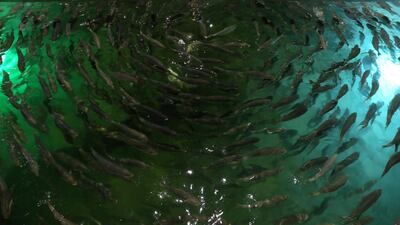
Hundreds of salmon swim inside one of the tanks at Fish Farm's base in Dubai. The company, which also produces hammour, sea bream, sea bass and shrimp, has 34 tanks at its Jebel Ali facility, four of which are used for salmon. -

The salmon is farmed to market size, which is 3-5 kilograms. -

From 2020, Fish Farm will sell the first salmon that are 100 per cent born and bred in the UAE, as eggs from the current stock have hatched and the fish are being reared to market size. -

Fish Farm has created artificial habitats for the fish to thrive – from a freshwater ‘river’ tank three metres deep, to a six-metre-deep saltwater ‘ocean’, with automatic transfer pumps connecting each tank. -

A water treatment plant at Fish Farm's facility. The company has invested in technology and infrastructure to control water salinity, depth and temperature, and even introduce currents and artificial weather conditions in the tanks. -
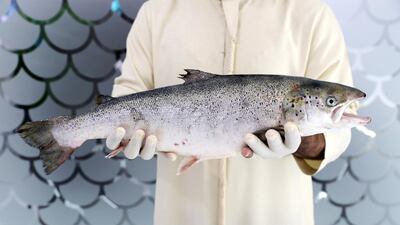
Bader Al Mubarak, chief executive of Dubai’s Fish Farm, holds a salmon fish at the company's headquarters in Jebel Ali. Mr Al Mubarak is also deputy chairman of Dubai Council for Marine and Maritime Industries. -

Salmon is one of the top four most popular types of fish consumed in the UAE, along with hammour, sea bream and sea bass.



