Signed-up drivers will have four black points automatically deducted from their licence if they obey the traffic safety laws on Monday. Chris Whiteoak / The National

Accident-Free Day: UAE drivers eagerly embrace initiative to clear four black points


Ali Al Shouk
  • English
  • Arabic

The UAE police campaign that offers to wipe four black points from driving licences has prompted the enthusiastic participation of motorists from across the country.

Accident-Free Day, launched by the Federal Traffic Council, says that if drivers sign an online pledge black points will be taken off their licence.

Drivers must avoid accidents and not break traffic regulations on Monday, the first day of term at many UAE schools.

The initiative aims to reduce accidents and improve road safety.

Participating drivers are expected to avoid speeding, maintain safe distances, and exercise caution while changing lanes and overtaking.

If successful, drivers may be rewarded with an improved removed record.

Brig Hussain Al Harthy, chairman of the Federal Traffic Council, said wiping of black points will happen automatically in the traffic system for all pledged drivers, if they avoid accidents and offences on Monday.

"Drivers do not need to visit service centres in traffic departments. The removal of the black points will happen automatically," Brig Al Harthy told The National.

"The Ministry of Interior and police departments will check the eligible drivers as per the data generated from the traffic systems and remove the black points from the driver's record."

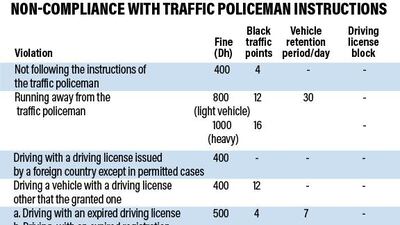
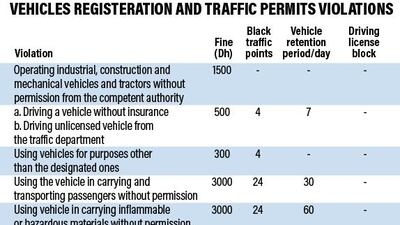
Mahmoud Al Saeed, a 34-year-old Egyptian, has eight black points on his licence. He received four and a Dh500 fine for driving without a valid licence and insurance after a traffic stop in Ajman in March.

He told The National that he joined the initiative to demonstrate that he is a responsible driver.

"It is a great initiative and gave me hope. I have eight black points and was worried about my licence being revoked," he said.

He said he will be "100 per cent focusing while driving on Monday" to remove the black points.

Mr Al Saeed, who works in Dubai and lives in Ajman, said the initiative will encourage him to obey traffic rules.

"It is not only rewarding but it will also encourage drivers to follow traffic rules," he said.

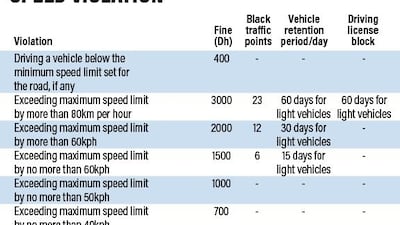
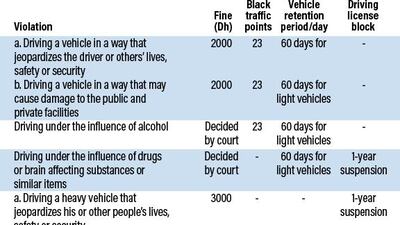
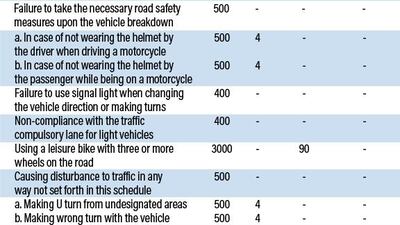
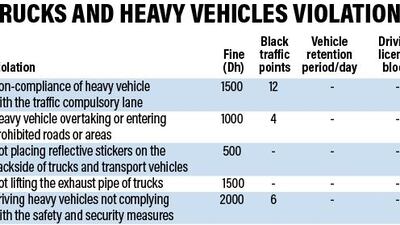
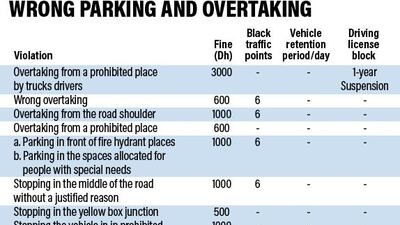
Black points remain on a driver's record for one year.

However, licences can be revoked if the points exceed 24.

The licence suspension period ranges from three to six months under traffic law.

Other drivers have also announced their participation of Accident-Free Day by sharing their participation certificates on social media.

Mohammed Al Sahi, an Emirati, wrote on X, formerly Twitter: "It is a great idea to have a day without accidents.

"I wished it would be for the entire year to avoid accidents, especially the one related to run-over incidents for students stepping outside the buses and crossing the roads," he wrote, sharing an image of his pledge certificate.

Brig Al Harthy reminded drivers about the importance of following traffic laws.

"I call all on people in the UAE to consider this day as a reminder and an awareness opportunity," he said.

"By doing so, it can become a nationwide campaign that contributes to achieving the UAE's vision to be the safest country in the world."

In 2019, as part of the same campaign, motorists in Dubai who signed an online pledge to take better care on the roads were offered a 50 per cent discount on vehicle confiscation fees.

How to pledge for Accident-Free Day

Drivers can register on the Ministry of Interior website.

After registering with the Emirates ID, motorists must log in to the account and sign a pledge that they will acknowledge and obey traffic laws, honouring measures such as leaving a safe distance with vehicles ahead, buckling up seatbelts, respecting the speed limit and not using a mobile phone while driving.

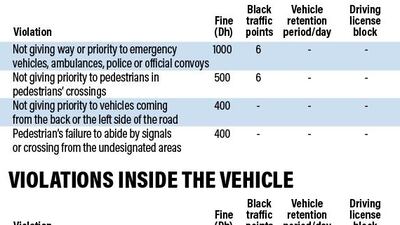
Other pledges include giving away to emergency vehicles and pedestrians crossing the road.

After motorists agree to honour all the traffic safety rules, they submit the form to receive their participation certificate by email.

If they prove successful on August 28, four black points will automatically be deducted from their record.

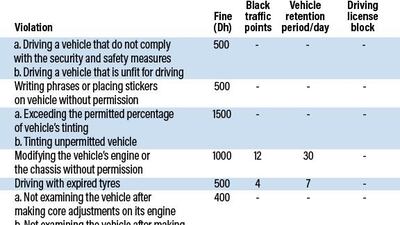
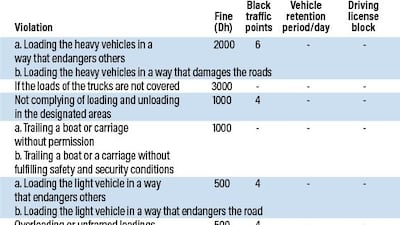
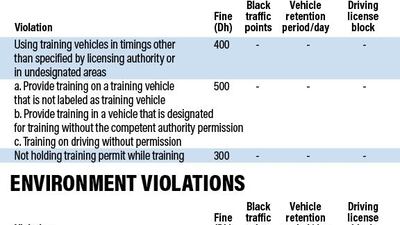
UAE traffic offences and penalties – in pictures

  • ‎
  • ‎
  • ‎
  • ‎
  • ‎
  • ‎
  • ‎
  • ‎
  • ‎
  • ‎
  • ‎
  • ‎
The burning issue

The internal combustion engine is facing a watershed moment – major manufacturer Volvo is to stop producing petroleum-powered vehicles by 2021 and countries in Europe, including the UK, have vowed to ban their sale before 2040. The National takes a look at the story of one of the most successful technologies of the last 100 years and how it has impacted life in the UAE.

Part three: an affection for classic cars lives on

Read part two: how climate change drove the race for an alternative 

Read part one: how cars came to the UAE

Ten tax points to be aware of in 2026

1. Domestic VAT refund amendments: request your refund within five years

If a business does not apply for the refund on time, they lose their credit.

2. E-invoicing in the UAE

Businesses should continue preparing for the implementation of e-invoicing in the UAE, with 2026 a preparation and transition period ahead of phased mandatory adoption. 

3. More tax audits

Tax authorities are increasingly using data already available across multiple filings to identify audit risks. 

4. More beneficial VAT and excise tax penalty regime

Tax disputes are expected to become more frequent and more structured, with clearer administrative objection and appeal processes. The UAE has adopted a new penalty regime for VAT and excise disputes, which now mirrors the penalty regime for corporate tax.

5. Greater emphasis on statutory audit

There is a greater need for the accuracy of financial statements. The International Financial Reporting Standards standards need to be strictly adhered to and, as a result, the quality of the audits will need to increase.

6. Further transfer pricing enforcement

Transfer pricing enforcement, which refers to the practice of establishing prices for internal transactions between related entities, is expected to broaden in scope. The UAE will shortly open the possibility to negotiate advance pricing agreements, or essentially rulings for transfer pricing purposes. 

7. Limited time periods for audits

Recent amendments also introduce a default five-year limitation period for tax audits and assessments, subject to specific statutory exceptions. While the standard audit and assessment period is five years, this may be extended to up to 15 years in cases involving fraud or tax evasion. 

8. Pillar 2 implementation 

Many multinational groups will begin to feel the practical effect of the Domestic Minimum Top-Up Tax (DMTT), the UAE's implementation of the OECD’s global minimum tax under Pillar 2. While the rules apply for financial years starting on or after January 1, 2025, it is 2026 that marks the transition to an operational phase.

9. Reduced compliance obligations for imported goods and services

Businesses that apply the reverse-charge mechanism for VAT purposes in the UAE may benefit from reduced compliance obligations. 

10. Substance and CbC reporting focus

Tax authorities are expected to continue strengthening the enforcement of economic substance and Country-by-Country (CbC) reporting frameworks. In the UAE, these regimes are increasingly being used as risk-assessment tools, providing tax authorities with a comprehensive view of multinational groups’ global footprints and enabling them to assess whether profits are aligned with real economic activity. 

Contributed by Thomas Vanhee and Hend Rashwan, Aurifer

The five pillars of Islam

1. Fasting 

2. Prayer 

3. Hajj 

4. Shahada 

5. Zakat 

Walls

Louis Tomlinson

3 out of 5 stars

(Syco Music/Arista Records)

Updated: August 28, 2023, 1:34 PM