• Afghan men assess the damage to a house destroyed by an earthquake in Gayan village, in Paktika province, Afghanistan. Reuters
    Afghan men assess the damage to a house destroyed by an earthquake in Gayan village, in Paktika province, Afghanistan. Reuters
  • An Afghan girl carries empty water containers in Gayan village after the quake. Reuters
    An Afghan girl carries empty water containers in Gayan village after the quake. Reuters
  • A Taliban helicopter takes off after bringing aid to Gayan. Reuters
    A Taliban helicopter takes off after bringing aid to Gayan. Reuters
  • A Gayan villager carries a sack of food aid. Reuters
    A Gayan villager carries a sack of food aid. Reuters
  • Afghan men receive bread in Gayan village. Reuters
    Afghan men receive bread in Gayan village. Reuters
  • Rescuers search for survivors amid the ruins of a house in Gayan village. Reuters
    Rescuers search for survivors amid the ruins of a house in Gayan village. Reuters
  • Afghans dig a common grave for their relatives killed by the earthquake in Gayan village. AP
    Afghans dig a common grave for their relatives killed by the earthquake in Gayan village. AP
  • Afghan children stand in front of a tent in Gayan village after the earthquake destroyed several homes. AP
    Afghan children stand in front of a tent in Gayan village after the earthquake destroyed several homes. AP
  • A child walks amidst the ruins of damaged houses after an earthquake struck Bernal district in Paktika province. AFP
    A child walks amidst the ruins of damaged houses after an earthquake struck Bernal district in Paktika province. AFP
  • A child walks amid the debris of a house damaged by an earthquake in Bernal district. AFP
    A child walks amid the debris of a house damaged by an earthquake in Bernal district. AFP
  • Rescue workers and local residents survey a damaged house after an earthquake hit the village of Gayan in Paktia province, Afghanistan. EPA
    Rescue workers and local residents survey a damaged house after an earthquake hit the village of Gayan in Paktia province, Afghanistan. EPA
  • A resident surveys the damage. EPA
    A resident surveys the damage. EPA
  • Ambulances and cars transport the injured to hospital. EPA
    Ambulances and cars transport the injured to hospital. EPA
  • Afghans walk by a destroyed house in the village of Gyan. AP
    Afghans walk by a destroyed house in the village of Gyan. AP
  • An Afghan child is treated in hospital. AFP
    An Afghan child is treated in hospital. AFP
  • Afghan people queue up to donate blood to earthquake victims. AFP
    Afghan people queue up to donate blood to earthquake victims. AFP
  • Houses have been reduced to rubble. AFP
    Houses have been reduced to rubble. AFP
  • An Afghan girl stands near a house damaged by the earthquake. AP
    An Afghan girl stands near a house damaged by the earthquake. AP
  • An Afghan man sits near what's left of his house. AP
    An Afghan man sits near what's left of his house. AP
  • Injured children rest inside a hospital in the city of Sharan. AFP
    Injured children rest inside a hospital in the city of Sharan. AFP
  • Afghan boys site near their damaged house that was destroyed in an earthquake in the Spera District of the southwestern part of Khost Province, Afghanistan. AP
    Afghan boys site near their damaged house that was destroyed in an earthquake in the Spera District of the southwestern part of Khost Province, Afghanistan. AP
  • An Afghan villager sits near his damaged house that was destroyed in an earthquake in the Spera District of the southwestern part of Khost Province, Afghanistan. AP
    An Afghan villager sits near his damaged house that was destroyed in an earthquake in the Spera District of the southwestern part of Khost Province, Afghanistan. AP
  • An Afghan villager collects his belongings from under the rubble of his home that was destroyed in an earthquake in the Spera District of the southwestern part of Khost Province, Afghanistan. AP
    An Afghan villager collects his belongings from under the rubble of his home that was destroyed in an earthquake in the Spera District of the southwestern part of Khost Province, Afghanistan. AP
  • A government helicopter evacuates injured people in Gayan district. AP
    A government helicopter evacuates injured people in Gayan district. AP
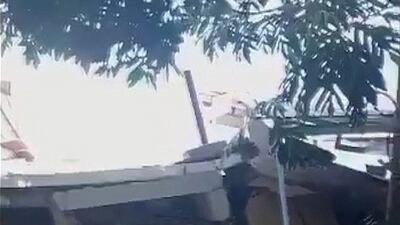
  • Dwellings in many rural areas of Afghanistan are unstable or poorly built, increasing the damage caused by earthquakes. Bakhtar News Agency
    Dwellings in many rural areas of Afghanistan are unstable or poorly built, increasing the damage caused by earthquakes. Bakhtar News Agency
  • Many houses were destroyed in Paktika.
    Many houses were destroyed in Paktika.
  • The body of a child is recovered following the quake, which was also felt in Pakistan and India.
    The body of a child is recovered following the quake, which was also felt in Pakistan and India.

Why are earthquakes so deadly in some countries and not others?


Daniel Bardsley
  • English
  • Arabic

Wednesday’s 5.9-magnitude earthquake in Afghanistan has, along with aftershocks, killed more than 1,000 people, making it the deadliest event of its kind in the country in two decades.

Poor infrastructure and services made dealing with the tragedy particularly difficult for the country’s Taliban authorities, who have appealed for international assistance.

A few days before the earthquake in Afghanistan, the UAE experienced a much smaller event, a 2.4-magnitude quake in Sharjah.

As reported by The National, the June 18 quake — which officials said was not felt by residents — is the latest in a series of infrequent and mostly small tremors felt in the UAE.

So why is Afghanistan — along with neighbours such as Pakistan — vulnerable to deadlier earthquakes?

How are earthquakes classified and what damage can they cause?

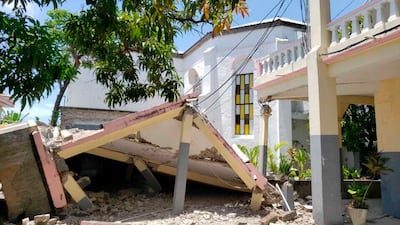
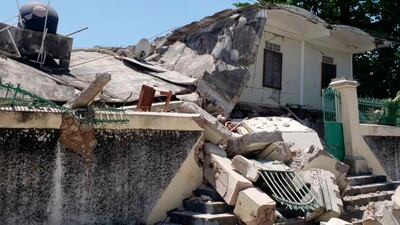
  • The Sacred Heart Church in Les Cayes, Haiti, was damaged by an earthquake.
    The Sacred Heart Church in Les Cayes, Haiti, was damaged by an earthquake.
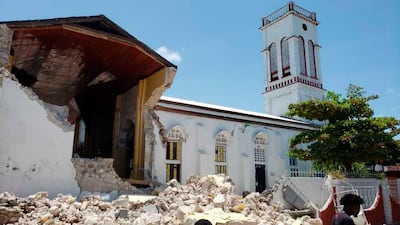
  • The Sacred Heart Church in Les Cayes, Haiti, was damaged by an earthquake.
    The Sacred Heart Church in Les Cayes, Haiti, was damaged by an earthquake.
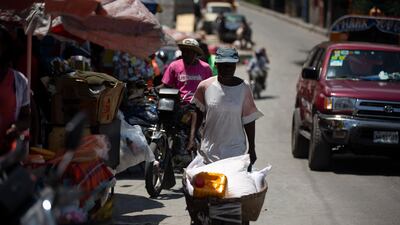
  • A man pushes a wheelbarrow in Port-au-Prince, Haiti. A 7.2-magnitude earthquake struck the country on Saturday.
    A man pushes a wheelbarrow in Port-au-Prince, Haiti. A 7.2-magnitude earthquake struck the country on Saturday.
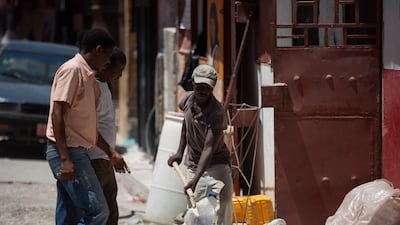
  • A worker shovels sands at a construction site in Port-au-Prince. The earthquake’s epicentre was about 125 kilometres west of the Haitian capital, the US Geological Survey said.
    A worker shovels sands at a construction site in Port-au-Prince. The earthquake’s epicentre was about 125 kilometres west of the Haitian capital, the US Geological Survey said.
  • The residence of the Catholic bishop in Les Cayes was damaged by the earthquake.
    The residence of the Catholic bishop in Les Cayes was damaged by the earthquake.
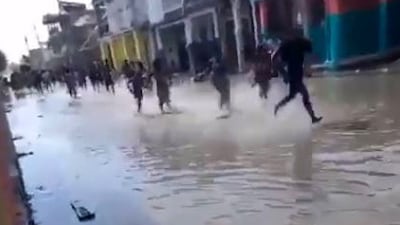
  • A handout picture made available by Jean David Geneste shows people running in a street after the earthquake.
    A handout picture made available by Jean David Geneste shows people running in a street after the earthquake.
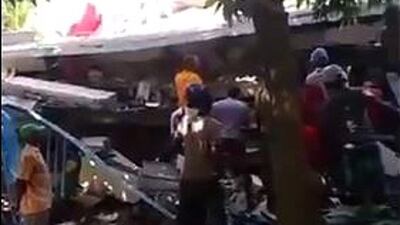
  • A handout picture made available by Jean David Geneste shows people next to rubble after the earthquake.
    A handout picture made available by Jean David Geneste shows people next to rubble after the earthquake.
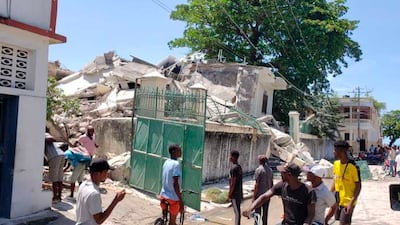
  • People stand outside the residence of the Catholic bishop after it was damaged by the earthquake.
    People stand outside the residence of the Catholic bishop after it was damaged by the earthquake.
  • A handout photo made available by Jean David Geneste shows rubble after the earthquake. It struck at 8.29am local time, or 12.29 GMT, north-east of Saint-Louis du Sud, and had a depth of 10 kilometres, according to the US Geological Survey.
    A handout photo made available by Jean David Geneste shows rubble after the earthquake. It struck at 8.29am local time, or 12.29 GMT, north-east of Saint-Louis du Sud, and had a depth of 10 kilometres, according to the US Geological Survey.

A key measure is the magnitude of the quake, which reflects the size of the waves the event produces.

The Richter scale classifies quakes between 1.0 and 2.9 as “micro”, 3.0 to 3.9 as “minor”, 4.0 to 4.9 as “light”, 5.0 to 5.9 as “moderate”, 6.0 to 6.9 as “strong”, 7.0 to 7.9 as “major” and 8.0 and above as “great”.

Micro earthquakes, such as the kind the UAE experienced this month, occur more than 100,000 times a year and are typically detected by local instruments — but not people.

The Afghanistan earthquake was at the upper end of the moderate category and there are between about 200 and 2,000 such events each year.

These usually cause damage only to poorly constructed buildings, which helps to explain the devastation seen in Afghanistan, as many houses and other buildings in the country are not built to survive earthquakes.

“There’s no reinforcement. There’s not even any cement [in some buildings],” said Peter Styles, professor emeritus of applied and environmental geophysics at Keele University in the UK, who has seen first-hand the damage earthquakes have caused in countries such as Pakistan.

“Unfortunately, there’s very little we can do in terms of stopping these earthquakes. The buildings fall down and you build them up again.”

By contrast, in the Gulf, building codes are more stringent, Mr Styles said, so even if an earthquake of a high magnitude were to occur, the consequences would not be as severe.

“If you have sufficient money, you can withstand a magnitude six without problems,” Mr Styles said.

Why does Afghanistan suffer more severe earthquakes?

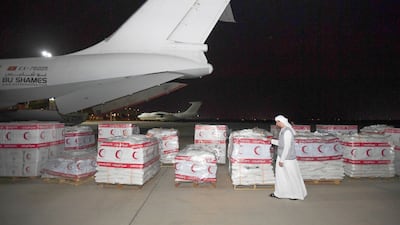
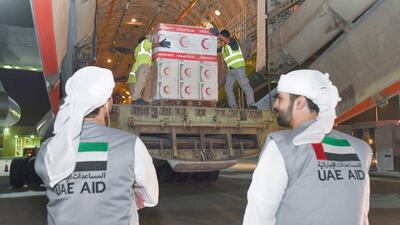
  • The UAE has sent a plane carrying 30 tonnes of food, aid and medical supplies to Afghanistan for earthquake victims. All photos: Wam
    The UAE has sent a plane carrying 30 tonnes of food, aid and medical supplies to Afghanistan for earthquake victims. All photos: Wam
  • The supplies were sent after President Sheikh Mohamed ordered that an air bridge be established to provide relief.
    The supplies were sent after President Sheikh Mohamed ordered that an air bridge be established to provide relief.
  • An officer inspects the relief aid.
    An officer inspects the relief aid.
  • Supplies are loaded into the aircraft.
    Supplies are loaded into the aircraft.

To understand why Afghanistan, and neighbouring Pakistan, are at risk of earthquakes, it is necessary to look to India.

The earth has more than a dozen major tectonic plates and the area around Afghanistan lies close to the border of three of them — the Arabian Plate, the Indian Plate and the Eurasian Plate. The Indian Plate is moving north and colliding with the Eurasian Plate.

“India is trying to move northwards,” Mr Styles said. “It’s shaped like a gigantic wedge; it’s forcing its way into Asia. That’s why we have the Himalayas, the Hindu Kush [mountain ranges].

“These earthquakes are on the main Himalayan fault. [Afghanistan and Pakistan] are on a major tectonic boundary.”

The area that was hit is part of the Alpide Belt, which stretches all the way to the Atlantic and is one of the most seismically active regions in the world.

By contrast, the UAE's location means it is not as vulnerable to movements of tectonic plates.

“The Arabian Plate is mostly being pushed sideways because of the opening of the Red Sea. That’s a slightly different process,” Mr Styles said.

“Arabia was joined to Africa, although in the last 30 million years, Arabia has slid northwards.”

Jordan, Palestine, Israel and Syria are more likely than the UAE to experience tremors because they lie close to the border of the Arabian Plate and the African Plate. Both are migrating northwards, but the movement of the Arabian Plate is faster.

The UAE and surrounding states are “not anywhere near as vulnerable as even the western part of Saudi Arabia", Mr Styles said.

“Arabia and the Gulf states are slightly protected because the whole block is moving northwards,” he added.

Iran, however, lies in the region where the Arabian Plate and the Eurasian Plate meet, putting it at risk of earthquakes. Like Afghanistan, it is on the Alpide Belt.

This month, Iran experienced a 5.9-magnitude quake, which was felt in the Emirates.

Who's who in Yemen conflict

Houthis: Iran-backed rebels who occupy Sanaa and run unrecognised government

Yemeni government: Exiled government in Aden led by eight-member Presidential Leadership Council

Southern Transitional Council: Faction in Yemeni government that seeks autonomy for the south

Habrish 'rebels': Tribal-backed forces feuding with STC over control of oil in government territory

On Instagram: @WithHopeUAE

Although social media can be harmful to our mental health, paradoxically, one of the antidotes comes with the many social-media accounts devoted to normalising mental-health struggles. With Hope UAE is one of them.
The group, which has about 3,600 followers, was started three years ago by five Emirati women to address the stigma surrounding the subject. Via Instagram, the group recently began featuring personal accounts by Emiratis. The posts are written under the hashtag #mymindmatters, along with a black-and-white photo of the subject holding the group’s signature red balloon.
“Depression is ugly,” says one of the users, Amani. “It paints everything around me and everything in me.”
Saaed, meanwhile, faces the daunting task of caring for four family members with psychological disorders. “I’ve had no support and no resources here to help me,” he says. “It has been, and still is, a one-man battle against the demons of fractured minds.”
In addition to With Hope UAE’s frank social-media presence, the group holds talks and workshops in Dubai. “Change takes time,” Reem Al Ali, vice chairman and a founding member of With Hope UAE, told The National earlier this year. “It won’t happen overnight, and it will take persistent and passionate people to bring about this change.”

Company profile

Date started: Founded in May 2017 and operational since April 2018

Founders: co-founder and chief executive, Doaa Aref; Dr Rasha Rady, co-founder and chief operating officer.

Based: Cairo, Egypt

Sector: Health-tech

Size: 22 employees

Funding: Seed funding 

Investors: Flat6labs, 500 Falcons, three angel investors

2025 Fifa Club World Cup groups

Group A: Palmeiras, Porto, Al Ahly, Inter Miami.

Group B: Paris Saint-Germain, Atletico Madrid, Botafogo, Seattle.

Group C: Bayern Munich, Auckland City, Boca Juniors, Benfica.

Group D: Flamengo, ES Tunis, Chelsea, Leon.

Group E: River Plate, Urawa, Monterrey, Inter Milan.

Group F: Fluminense, Borussia Dortmund, Ulsan, Mamelodi Sundowns.

Group G: Manchester City, Wydad, Al Ain, Juventus.

Group H: Real Madrid, Al Hilal, Pachuca, Salzburg.

What vitamins do we know are beneficial for living in the UAE

Vitamin D: Highly relevant in the UAE due to limited sun exposure; supports bone health, immunity and mood.Vitamin B12: Important for nerve health and energy production, especially for vegetarians, vegans and individuals with absorption issues.Iron: Useful only when deficiency or anaemia is confirmed; helps reduce fatigue and support immunity.Omega-3 (EPA/DHA): Supports heart health and reduces inflammation, especially for those who consume little fish.

Yahya Al Ghassani's bio

Date of birth: April 18, 1998

Playing position: Winger

Clubs: 2015-2017 – Al Ahli Dubai; March-June 2018 – Paris FC; August – Al Wahda

HIJRA

Starring: Lamar Faden, Khairiah Nathmy, Nawaf Al-Dhufairy

Director: Shahad Ameen

Rating: 3/5

Understand What Black Is

The Last Poets

(Studio Rockers)

In-demand jobs and monthly salaries
  • Technology expert in robotics and automation: Dh20,000 to Dh40,000 
  • Energy engineer: Dh25,000 to Dh30,000 
  • Production engineer: Dh30,000 to Dh40,000 
  • Data-driven supply chain management professional: Dh30,000 to Dh50,000 
  • HR leader: Dh40,000 to Dh60,000 
  • Engineering leader: Dh30,000 to Dh55,000 
  • Project manager: Dh55,000 to Dh65,000 
  • Senior reservoir engineer: Dh40,000 to Dh55,000 
  • Senior drilling engineer: Dh38,000 to Dh46,000 
  • Senior process engineer: Dh28,000 to Dh38,000 
  • Senior maintenance engineer: Dh22,000 to Dh34,000 
  • Field engineer: Dh6,500 to Dh7,500
  • Field supervisor: Dh9,000 to Dh12,000
  • Field operator: Dh5,000 to Dh7,000
VEZEETA PROFILE

Date started: 2012

Founder: Amir Barsoum

Based: Dubai, UAE

Sector: HealthTech / MedTech

Size: 300 employees

Funding: $22.6 million (as of September 2018)

Investors: Technology Development Fund, Silicon Badia, Beco Capital, Vostok New Ventures, Endeavour Catalyst, Crescent Enterprises’ CE-Ventures, Saudi Technology Ventures and IFC

SCHEDULE FOR SHOW COURTS

Centre Court - from 4pm (UAE time)
Angelique Kerber (1) v Irina Falconi 
Martin Klizan v Novak Djokovic (2)
Alexandr Dolgopolov v Roger Federer (3)

Court One - from 4pm
Milos Raonic (6) v Jan-Lennard Struff
Karolina Pliskova (3) v Evgeniya Rodina 
Dominic Thiem (8) v Vasek Pospisil

Court Two - from 2.30pm
Juan Martin Del Potro (29) v Thanasi Kokkinakis
Agnieszka Radwanska (9) v Jelena Jankovic
Jeremy Chardy v Tomas Berdych (11)
Ons Jabeur v Svetlana Kuznetsova (7)

How Apple's credit card works

The Apple Card looks different from a traditional credit card — there's no number on the front and the users' name is etched in metal. The card expands the company's digital Apple Pay services, marrying the physical card to a virtual one and integrating both with the iPhone. Its attributes include quick sign-up, elimination of most fees, strong security protections and cash back.

What does it cost?

Apple says there are no fees associated with the card. That means no late fee, no annual fee, no international fee and no over-the-limit fees. It also said it aims to have among the lowest interest rates in the industry. Users must have an iPhone to use the card, which comes at a cost. But they will earn cash back on their purchases — 3 per cent on Apple purchases, 2 per cent on those with the virtual card and 1 per cent with the physical card. Apple says it is the only card to provide those rewards in real time, so that cash earned can be used immediately.

What will the interest rate be?

The card doesn't come out until summer but Apple has said that as of March, the variable annual percentage rate on the card could be anywhere from 13.24 per cent to 24.24 per cent based on creditworthiness. That's in line with the rest of the market, according to analysts

What about security? 

The physical card has no numbers so purchases are made with the embedded chip and the digital version lives in your Apple Wallet on your phone, where it's protected by fingerprints or facial recognition. That means that even if someone steals your phone, they won't be able to use the card to buy things.

Is it easy to use?

Apple says users will be able to sign up for the card in the Wallet app on their iPhone and begin using it almost immediately. It also tracks spending on the phone in a more user-friendly format, eliminating some of the gibberish that fills a traditional credit card statement. Plus it includes some budgeting tools, such as tracking spending and providing estimates of how much interest could be charged on a purchase to help people make an informed decision. 

* Associated Press 

Our legal consultants

Name: Hassan Mohsen Elhais

Position: legal consultant with Al Rowaad Advocates and Legal Consultants.

Avatar: Fire and Ash

Director: James Cameron

Starring: Sam Worthington, Sigourney Weaver, Zoe Saldana

Rating: 4.5/5

The five pillars of Islam

1. Fasting 

2. Prayer 

3. Hajj 

4. Shahada 

5. Zakat 

Bert van Marwijk factfile

Born: May 19 1952
Place of birth: Deventer, Netherlands
Playing position: Midfielder

Teams managed:
1998-2000 Fortuna Sittard
2000-2004 Feyenoord
2004-2006 Borussia Dortmund
2007-2008 Feyenoord
2008-2012 Netherlands
2013-2014 Hamburg
2015-2017 Saudi Arabia
2018 Australia

Major honours (manager):
2001/02 Uefa Cup, Feyenoord
2007/08 KNVB Cup, Feyenoord
World Cup runner-up, Netherlands

Updated: June 25, 2022, 8:29 AM