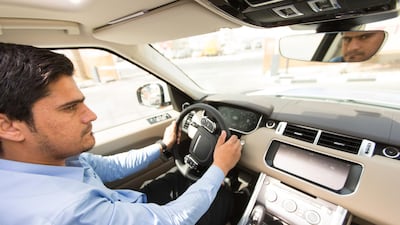
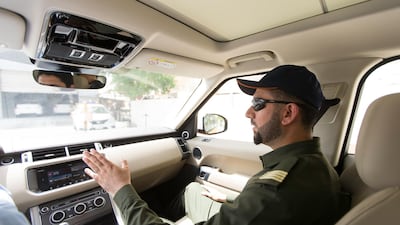
Road accidents caused the deaths of 381 people in the UAE last year and injured 2,620 others, compared with 256 deaths and 2,437 injuries in 2020, Ministry of Interior figures show.
The number of crashes also increased in 2021 — to 3,488 up from 2,931 in 2020.
Distracted driving, sudden swerving and failing to maintain safe distance between vehicles caused the majority of traffic accidents.
During 2020 many of the roads were quieter due to stay at home measures at the height of the pandemic. While there was an increase in deaths last year, the long term trends in the UAE have been falling road fatalities.
A breakdown of the ministry figures meanwhile, which have been made publicly available on its website, showed that distracted driving caused 1,031 collisions last year, up from 816 in 2020.
Sudden swerving was the cause of 548 accidents in 2021 compared with 492 in 2020, while not keeping a safe distance between cars caused 484 crashes last year and 413 the year before.
Thomas Edelmann, managing director of Road Safety UAE, said while the death toll was still below the global trend every motorist had a role to play in making the roads safer.
“We all — not only Government — have to contribute to making drivers understand that they play a vital role in the context of road safety,” he told The National.
"This is for all motorists driving cars, trucks, e-scooters, motorcycles and for other people like pedestrians and every person participating in road safety. They have to look after their own safety and that of others and think about it like a captain of an aircraft and how it is their responsibility to look after the safety of their passengers and people around them. They must be at a very high degree of safe discipline.”
Mr Edelmann said although road deaths have dropped over the years from 525 in 2017, there was no room for complacency.
“We still see misbehaviour on the roads and every single road death is one too many and we must avoid it,” he said.
About 94 per cent of accidents are happening because of human error, he said.
The UAE has made huge efforts over the past few years to improve road safety through its system of motorway radars, fines, improving priority for pedestrians and public awareness campaigns to educate motorists about road safety.
Abu Dhabi Police regularly post CCTV video showing incidents on the emirate's roads to warn drivers of potential dangers.
The force on May 6 released video of a collision involving a number of vehicles to highlight the dangers of distracted driving and in February the force released footage highlighting the risks of motorists switching lanes without indicating.
Brig Gen Muhammad Al Hamiri, Director of Abu Dhabi Police’s Traffic and Patrols Directorate in the Central Operations Sector, said: “Abu Dhabi Police continues to raise awareness among motorists to reduce causes of traffic accidents that result in deaths and severe injuries.
“We urge motorists to avoid wrong behaviour when they are driving, such as negligence, distraction, turning around to talk to passengers, or taking photos."
Who has lived at The Bishops Avenue?
- George Sainsbury of the supermarket dynasty, sugar magnate William Park Lyle and actress Dame Gracie Fields were residents in the 1930s when the street was only known as ‘Millionaires’ Row’.
- Then came the international super rich, including the last king of Greece, Constantine II, the Sultan of Brunei and Indian steel magnate Lakshmi Mittal who was at one point ranked the third richest person in the world.
- Turkish tycoon Halis Torprak sold his mansion for £50m in 2008 after spending just two days there. The House of Saud sold 10 properties on the road in 2013 for almost £80m.
- Other residents have included Iraqi businessman Nemir Kirdar, singer Ariana Grande, holiday camp impresario Sir Billy Butlin, businessman Asil Nadir, Paul McCartney’s former wife Heather Mills.
Hunting park to luxury living
- Land was originally the Bishop of London's hunting park, hence the name
- The road was laid out in the mid 19th Century, meandering through woodland and farmland
- Its earliest houses at the turn of the 20th Century were substantial detached properties with extensive grounds
The design
The protective shell is covered in solar panels to make use of light and produce energy. This will drastically reduce energy loss.
More than 80 per cent of the energy consumed by the French pavilion will be produced by the sun.
The architecture will control light sources to provide a highly insulated and airtight building.
The forecourt is protected from the sun and the plants will refresh the inner spaces.
A micro water treatment plant will recycle used water to supply the irrigation for the plants and to flush the toilets. This will reduce the pavilion’s need for fresh water by 30 per cent.
Energy-saving equipment will be used for all lighting and projections.
Beyond its use for the expo, the pavilion will be easy to dismantle and reuse the material.
Some elements of the metal frame can be prefabricated in a factory.
From architects to sound technicians and construction companies, a group of experts from 10 companies have created the pavilion.
Work will begin in May; the first stone will be laid in Dubai in the second quarter of 2019.
Construction of the pavilion will take 17 months from May 2019 to September 2020.
Abu Dhabi traffic facts
Drivers in Abu Dhabi spend 10 per cent longer in congested conditions than they would on a free-flowing road
The highest volume of traffic on the roads is found between 7am and 8am on a Sunday.
Travelling before 7am on a Sunday could save up to four hours per year on a 30-minute commute.
The day was the least congestion in Abu Dhabi in 2019 was Tuesday, August 13.
The highest levels of traffic were found on Sunday, November 10.
Drivers in Abu Dhabi lost 41 hours spent in traffic jams in rush hour during 2019
In numbers
1,000 tonnes of waste collected daily:
- 800 tonnes converted into alternative fuel
- 150 tonnes to landfill
- 50 tonnes sold as scrap metal
800 tonnes of RDF replaces 500 tonnes of coal
Two conveyor lines treat more than 350,000 tonnes of waste per year
25 staff on site
COMPANY%20PROFILE
%3Cp%3E%3Cstrong%3EName%3A%20%3C%2Fstrong%3EShaffra%3Cbr%3E%3Cstrong%3EStarted%3A%20%3C%2Fstrong%3E2023%3Cbr%3E%3Cstrong%3EBased%3A%20%3C%2Fstrong%3EDIFC%20Innovation%20Hub%3Cbr%3E%3Cstrong%3ESector%3A%20%3C%2Fstrong%3Emetaverse-as-a-Service%20(MaaS)%3Cbr%3E%3Cstrong%3EInvestment%3A%20%3C%2Fstrong%3Ecurrently%20closing%20%241.5%20million%20seed%20round%3Cbr%3E%3Cstrong%3EInvestment%20stage%3A%20%3C%2Fstrong%3Epre-seed%3Cbr%3E%3Cstrong%3EInvestors%3A%20%3C%2Fstrong%3EFlat6Labs%20Abu%20Dhabi%20and%20different%20PCs%20and%20angel%20investors%20from%20Saudi%20Arabia%3Cbr%3E%3Cstrong%3ENumber%20of%20staff%3A%20%3C%2Fstrong%3Enine%3C%2Fp%3E%0A
Ten tax points to be aware of in 2026
1. Domestic VAT refund amendments: request your refund within five years
If a business does not apply for the refund on time, they lose their credit.
2. E-invoicing in the UAE
Businesses should continue preparing for the implementation of e-invoicing in the UAE, with 2026 a preparation and transition period ahead of phased mandatory adoption.
3. More tax audits
Tax authorities are increasingly using data already available across multiple filings to identify audit risks.
4. More beneficial VAT and excise tax penalty regime
Tax disputes are expected to become more frequent and more structured, with clearer administrative objection and appeal processes. The UAE has adopted a new penalty regime for VAT and excise disputes, which now mirrors the penalty regime for corporate tax.
5. Greater emphasis on statutory audit
There is a greater need for the accuracy of financial statements. The International Financial Reporting Standards standards need to be strictly adhered to and, as a result, the quality of the audits will need to increase.
6. Further transfer pricing enforcement
Transfer pricing enforcement, which refers to the practice of establishing prices for internal transactions between related entities, is expected to broaden in scope. The UAE will shortly open the possibility to negotiate advance pricing agreements, or essentially rulings for transfer pricing purposes.
7. Limited time periods for audits
Recent amendments also introduce a default five-year limitation period for tax audits and assessments, subject to specific statutory exceptions. While the standard audit and assessment period is five years, this may be extended to up to 15 years in cases involving fraud or tax evasion.
8. Pillar 2 implementation
Many multinational groups will begin to feel the practical effect of the Domestic Minimum Top-Up Tax (DMTT), the UAE's implementation of the OECD’s global minimum tax under Pillar 2. While the rules apply for financial years starting on or after January 1, 2025, it is 2026 that marks the transition to an operational phase.
9. Reduced compliance obligations for imported goods and services
Businesses that apply the reverse-charge mechanism for VAT purposes in the UAE may benefit from reduced compliance obligations.
10. Substance and CbC reporting focus
Tax authorities are expected to continue strengthening the enforcement of economic substance and Country-by-Country (CbC) reporting frameworks. In the UAE, these regimes are increasingly being used as risk-assessment tools, providing tax authorities with a comprehensive view of multinational groups’ global footprints and enabling them to assess whether profits are aligned with real economic activity.
Contributed by Thomas Vanhee and Hend Rashwan, Aurifer
COMPANY%20PROFILE
%3Cp%3E%3Cstrong%3EName%3A%20%3C%2Fstrong%3ESmartCrowd%0D%3Cbr%3E%3Cstrong%3EStarted%3A%20%3C%2Fstrong%3E2018%0D%3Cbr%3E%3Cstrong%3EFounder%3A%20%3C%2Fstrong%3ESiddiq%20Farid%20and%20Musfique%20Ahmed%0D%3Cbr%3E%3Cstrong%3EBased%3A%20%3C%2Fstrong%3EDubai%0D%3Cbr%3E%3Cstrong%3ESector%3A%20%3C%2Fstrong%3EFinTech%20%2F%20PropTech%0D%3Cbr%3E%3Cstrong%3EInitial%20investment%3A%20%3C%2Fstrong%3E%24650%2C000%0D%3Cbr%3E%3Cstrong%3ECurrent%20number%20of%20staff%3A%3C%2Fstrong%3E%2035%0D%3Cbr%3E%3Cstrong%3EInvestment%20stage%3A%20%3C%2Fstrong%3ESeries%20A%0D%3Cbr%3E%3Cstrong%3EInvestors%3A%20%3C%2Fstrong%3EVarious%20institutional%20investors%20and%20notable%20angel%20investors%20(500%20MENA%2C%20Shurooq%2C%20Mada%2C%20Seedstar%2C%20Tricap)%3C%2Fp%3E%0A