


A social enterprise that provides all women with early access to breast cancer diagnosis and treatment and a project selling excess solar power to the grid are among this year's winners of the 2022 Zayed Sustainability Prize.
The 10 initiatives were chosen from among 30 finalists competing in five categories – health, food, water, energy and global high schools – and announced at a ceremony held at Expo 2020 Dubai on Monday, the opening day of Abu Dhabi Sustainability Week.
In the health, food, energy and water categories, each winner receives $600,000 (Dh2.2 million).
The global high schools category has six winners, with each receiving up to $100,000.
The $3 million annual prize, which was launched in 2008, supports sustainable projects that are kind to the environment.
The winners in the health, food, energy and water categories were:
Mamotest
Category: Health
What they do: provide all women with the opportunity to access high quality breast cancer early diagnosis and treatment, regardless of their geographic, social, or economic background.
“Since our establishment in 2011, Mamotest’s focus has been to reach more and more women and democratise access to early breast cancer diagnosis and treatment in order to defeat it,” said Camila de Pamphilis, chief operating officer.
“Women are at the centre of our solution. We know that each one of them has a unique story behind them. Every member of our team shares the culture and values that are needed to accomplish our goals. We don’t fear change, we create it.”
Speaking before the ceremony, she said winning the prize would position Mamotest as one of the few social impact organisations worldwide ready to scale exponentially.
“It would mean being at centre stage and attracting supporters of all types such as partners, allies and investors to help us accomplish that difficult but not impossible challenge,” she added.
Where: Argentina
S4S Technologies
Category: Food
What they do: Empower rural women with new technology to process unwanted produce, reduce food waste, and increase their income.
The SME invented the solar conduction dryer, a solar-powered food processing technology that produces preservative-free, nutrition-rich food. It prevents 22,500 tonnes of produce each year from going to waste and 300,000 tonnes of carbon dioxide from entering the atmosphere.
Dr Vaibhav Tidke, chief executive of S4S Technologies and UN Environment Leadership Awardee, invented and patented the solar conduction dryer.
“As a leader in sustainability, recognition from the prize is a dream,” he said.
Winning the prize will help S4S scale their impact further to 800 women entrepreneurs and 12,000 farmers. The global recognition would also help S4S tap into the global market and strengthen their supply chain.
Where: India
-
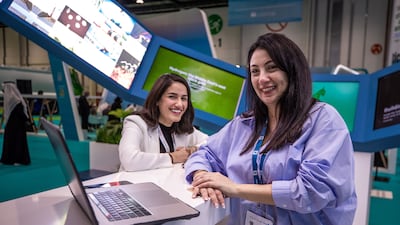
The National display at World Future Energy Summit at ADNEC. All photos by Victor Besa / The National -
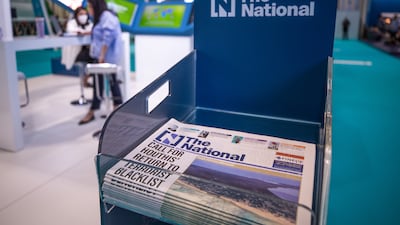
The National display at World Future Energy Summit at ADNEC. -
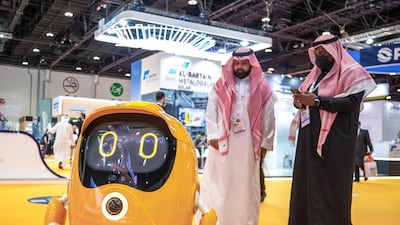
The Opti Robot, official mascot of Expo 2020 Dbai visits the Future Energy Summit in ADNEC. -
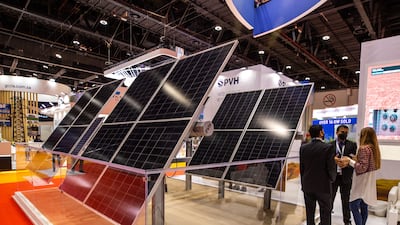
The PVH stall at the World Future Energy Summit in ADNEC -

The Sungrow display at World Future Energy Summit in ADNEC. -

The Hawido water valves display at World Future Energy Summit at ADNEC. -
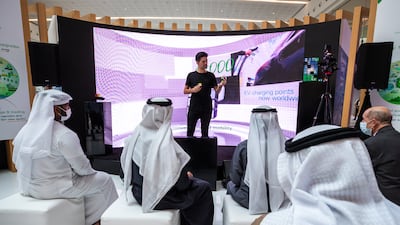
The BP display at World Future Energy Summit at ADNEC. -
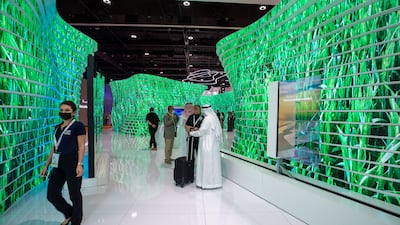
The NEOM stall at the World Future Energy Summit at ADNEC -

The National display at World Future Energy Summit at ADNEC. -

Roll-Royce SMR display at World Future Energy Summit at ADNEC -
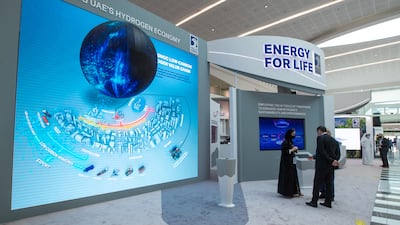
Adnoc stall at the Future Energy Summit in ADNEC. -
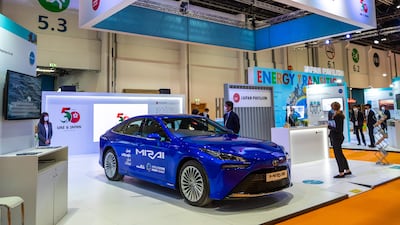
The Japan Pavilion at the World Future Energy Summit in ADNEC -
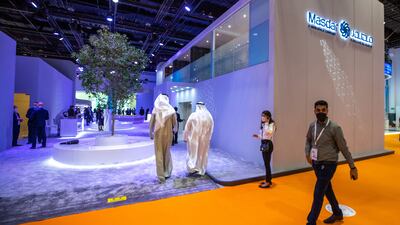
The Masdar stall at the World Future Energy Summit at ADNEC -

The Taqa stand at Abu Dhabi Sustainability Week, held at Adnec. All photos: Victor Besa / The National -

The International Renewable Energy Agency stall -

Visitors at display by Taqa, the Abu Dhabi National Energy Company -
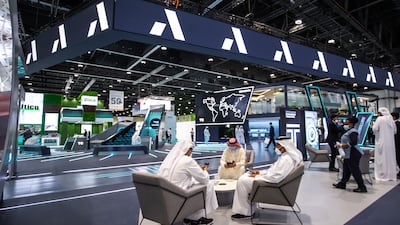
Taqa is Arabic for ‘energy’ -
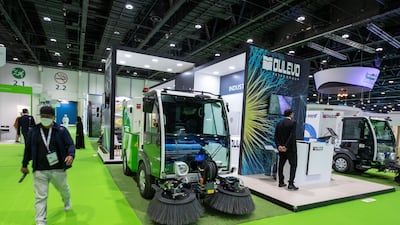
The stand of Terberg, a Dutch manufacturer of specialist vehicles -
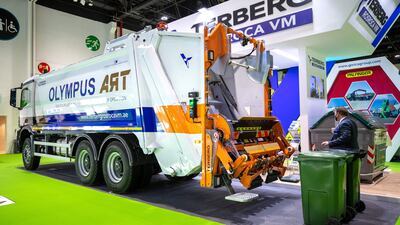
Jeremy James operates the Terberg RosRoca, which is used in waste management and recycling -
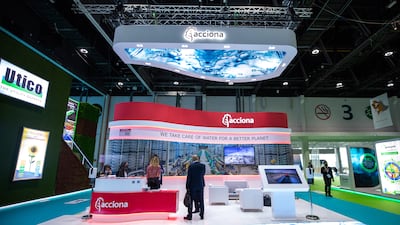
The stall of the Spanish infrastructure company Acciona -

The event is held in tandem with the World Future Energy Summit -
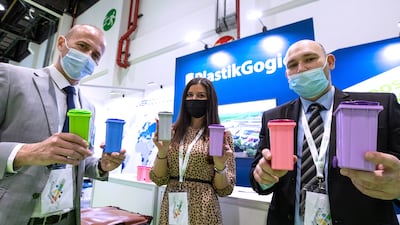
Zarco Bogovac, left, and his team at Serbia’s Plastik Gogic hold miniatures of their colourful bins -
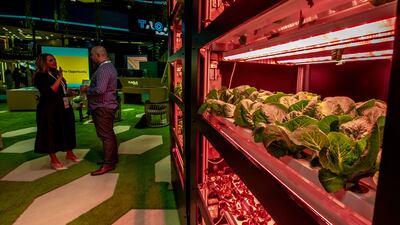
The Aldar Environmental Cafe -
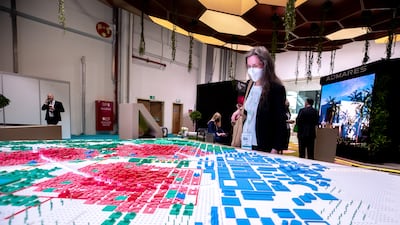
The Sustainable City Yas Island stall -

The Sustainable City Yas Island stall -
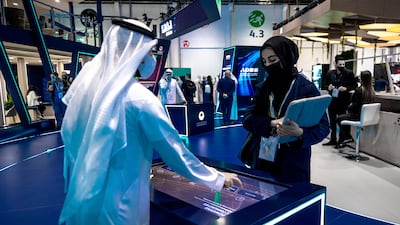
Abu Dhabi Sustainability Week -

Safety measures are in place at the event


SOLshare
Category: Energy
What they do: Peer-to-peer energy trading to monetise solar energy for rural development and empowerment.
The SOLshare system enables households with solar home systems to sell their excess power to others through a microgrid, or sell it back to the national electric grid.
They do that by using the ‘SOLbox,’ an internet-of-things device that allows users to monitor their electricity consumption and sell excess electricity using their mobile phones.
The SME was founded by Dr Sebastian Groh, managing director, in 2014, after previously consulting on energy systems. He was intrigued by Bangladesh’s solar home systems programme, the largest in the world, which serves close to 6 million households.
So far, SOLshare has connected nearly 2,000 households and microbusinesses, benefiting about 10,000 people, 60 per cent of whom are women and children, and 500 entrepreneurs, a quarter of whom are women.
He said winning the prize would help take the company's work a long way.
“It will help further develop our technology and provide the means for SOLshare to expand beyond the borders of Bangladesh and move into other off-grid communities that need energy,” he said.
“As we continue to scale up our solutions for electric vehicle charging and solar peer-to-peer grids, we can truly provide energy security, energy equity and environmental sustainability through our work.”
Where: Bangladesh
Wateroam
Category: Water
What they do: Provide water filter solutions to serve disaster-hit and rural communities.
The Wateroam system has been used in more than 38 countries, providing safe drinking water to more than 150,000 people, including in Vanuatu, to assist in the aftermath of Cyclone Harold and in Indonesia, following an earthquake; in addition to Nepal, the Philippines, Malaysia, Bangladesh and Cambodia.
Its lightweight portable system produces high-quality safe drinking water at a speed of 2,400 litres a day, without depending on electricity. It can be sent quickly to hard-to-reach locations.
The SME aims to provide 30 million people globally with safe drinking water, while aiming to develop a complementary software product that includes simple-to-use kits that enable quick water testing.
The company is led by David Pong, a social entrepreneur who serves as co-founder and chief executive.
He said winning the prize would help to propel the recognition of the work that is being done at Wateroam, “so the world can also join hands in tackling this global water crisis together and strive towards universal, equal access to clean drinking water”.
Where: Singapore
Global high school winners
The Americas
Instituto Iberia, the Dominican Republic:
The school plans to convert used cooking oil into biodiesel and use it to power its generator. Pupils hope to positively impact the environment and inspire community members to make more sustainable choices.
Europe and Central Asia
Liceo Europeo, Spain:
The school’s proposed project, LivingEnergy, uses micro-organisms to generate power from used face masks. It aims to eliminate up to 19 kilograms of face masks from polluted waters each year.
Middle East and North Africa
Eastern Mediterranean International School, Israel:
Pupils have devised a student-led engineering initiative, called Project Oasis, that aims to collect electricity and water from the air, simultaneously. It hopes to produce 6 kilowatts of energy and 1,000 litres of water every day from every machine built. The school plans to mass produce the technology.
Sub-Saharan Africa
Sayidina Abubakar Secondary School, Uganda:
Female pupils in this rural school face a lack of access to sanitary products. The school’s project proposes to harvest raw plant materials from local farms to produce sanitary products, simultaneously improving girls’ health and boosting school attendance. The project is expected to benefit 500,000 young women.
South Asia
Hira School, Maldives:
The school depends on well water and asks pupils to bring their own drinking water from home each day. Pupils hope to harvest rainwater for the treatment, storage, and reuse of water. They estimate the project could provide two litres of consumable water per person per day, totalling 30,720 litres per month, and 368,640 litres per year.
East Asia and Pacific
UWC ISAK Japan, Japan:
The school hopes to become the most sustainable school in Japan by using a variety of renewable sources including a biomass boiler, solar panels and a rainwater collection system.
As part of the project, it plans to use wood chips from lumber yards, co-operating with local non-profit organisations for energy supply, and sustainable food production. It estimates 520 pupils will be involved in the first five years.
Surge in entries for 2022 prize
The 2022 cycle considered 4,000 applications from 151 countries – a 68.5 per cent increase in entries compared to the previous year.
Most entries for this year's prize focused on the resilience of the ecosystem and affordability of solutions using technologies such as artificial intelligence and the Internet of Things to drive impact.
Launched by Sheikh Mohamed bin Zayed, Crown Prince of Abu Dhabi and Deputy Supreme Commander of the Armed Forces, it was earlier referred to as the Zayed Future Energy Prize, a tribute to his late father Sheikh Zayed.
In 2018, its name was changed to the Zayed Sustainability Prize to reflect its broader scope and encourage more applicants from wider fields to apply.
The prize has transformed the lives of more than 352 million people in 150 countries since 2008.
The jury comprises former heads of state, government ministers and international business figures.

