


An asteroid with a diameter longer than the Burj Khalifa will make its closest approach towards Earth next week.
Known as asteroid (7482) 1994 PC1, the space rock measures 1.05 kilometres across, while the world’s tallest building in Dubai stands at 0.83km.
It will safely pass by the planet from a distance of 1.9 million km, at a speed of approximately 76,192kph, in the late hours of January 18.
Nasa has been tracking the space rock since it was discovered by Scottish-Australian astronomer Robert McNaught in 1994.
According to a report by the European Space Agency, the asteroid is expected to fly over the UAE from a safe distance, and would be visible using a telescope.
Its closest approach towards Earth would be on January 19, at 1.49am, local time.
-
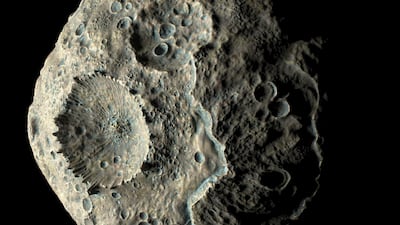
A rendering of the Psyche asteroid -

Hills are covered with fallen and burnt trees after a meteorite hit in 1908. Getty -
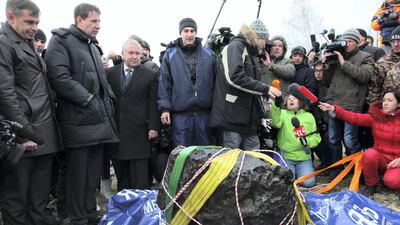
People look at what scientists believe to be a chunk of the Chelyabinsk meteor in 2013. AP -
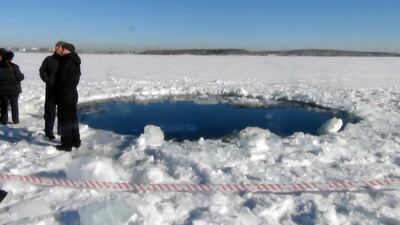
People standing near a six-metre hole in the ice of a frozen lake, reportedly the site of a meteor fall, outside the town of Chebakul in central Russia. AFP -
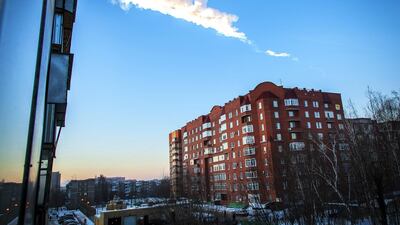
A meteorite trail is seen above a residential apartment block in the Urals city of Chelyabinsk in 2013. AFP -
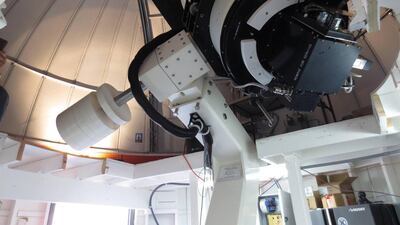
The Asteroid Terrestrial-impact Last Alert System (Atlas), pictured in Hawaii. -
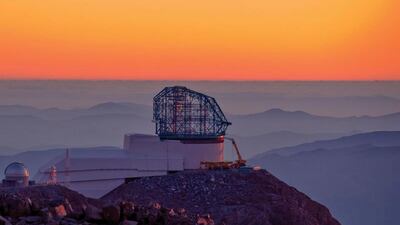
The Vera C. Rubin Observatory, under construction in 2019, promises to reveal more objects faster than any previous telescope. Photo: LSST -
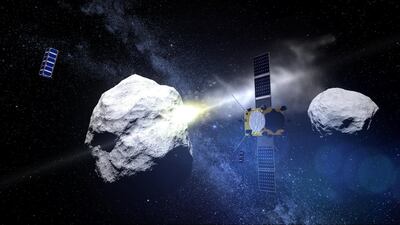
Nasa has been tracking the space rock since it was discovered by Scottish-Australian astronomer Robert McNaught in 1994. AFP -
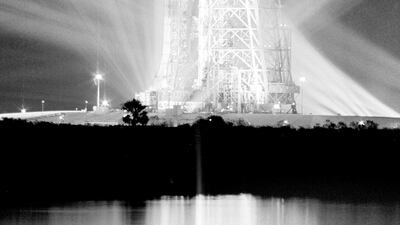
Spotlights illuminate the Saturn V booster rocket on the launch pad at the Kennedy Space Centre in Florida carrying the Apollo 8 spacecraft and its crew of three astronauts, on December 19, 1968. AP


Asteroids are rocky leftovers from the formation of the early system. More than 1.1 million have been found but many remain undiscovered.
While an asteroid crashing into Earth any time soon is unlikely, it is not impossible.
In 2013, an asteroid crashed into the Russian city of Chelyabinsk. It exploded after entering Earth’s atmosphere and released energy equivalent to 500 kilotonnes of TNT.
The incident caused more than 3,600 apartment windows to shatter, injuring about 1,000 people.
To test Earth’s defences against any future threats from these space rocks, Nasa launched a spacecraft last year that would intentionally crash into an asteroid to see if it could be deflected off course.
The Double Asteroid Redirection Test (Dart) mission will involve Didymos and Dimorphos, a binary asteroid system about 11 million km from Earth.
Dimorphos will be struck by the spacecraft between September and October with the aim of changing its path.
If successful, the mission could help the agency secure technology to be used against asteroids that pose a danger to the planet.
Nasa's asteroid mission: in pictures
-
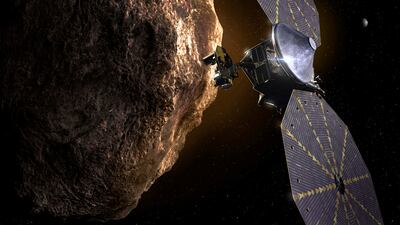
This image provided by the Southwest Research Institute depicts the 'Lucy' spacecraft approaching an asteroid. It will be the first space mission to explore a diverse population of small bodies known as the Jupiter Trojan asteroids. AP Photo -
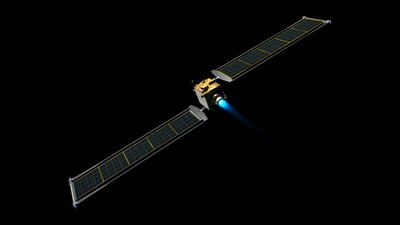
Nasa's Double Asteroid Redirection Test 'Dart' spacecraft will crash into an asteroid as part of a planetary defence experiment. The launch is scheduled for November 23. Photo: Nasa -
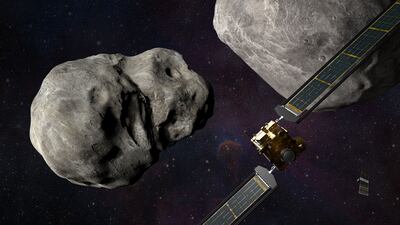
This artist's illustration obtained from Nasa shows the 'Dart' spacecraft and the Italian Space Agency’s LICIACube prior to impact at the Didymos binary system. AFP -
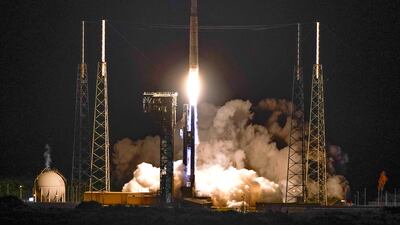
A United Launch Alliance Atlas V rocket carrying the 'Lucy' spacecraft lifts off from Launch Complex 41 at the Cape Canaveral Space Force Station. AP Photo -
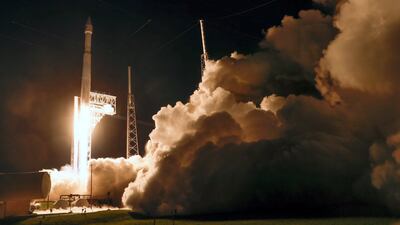
'Lucy' will observe Trojan asteroids, a unique family of asteroids that orbit the sun in front of and behind Jupiter. AP Photo -
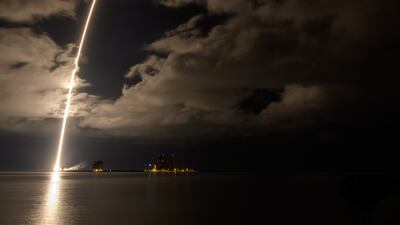
The United Launch Alliance Atlas V rocket with the 'Lucy' spacecraft takes off. EPA



