



A majority of UAE residents would welcome artificial intelligence devices into their homes – but most would not accept automated doctors or teachers.
A YouGov poll found broad acceptance when it it came to installing smart home devices and automated transport, in particular.
More respondents than not said they would accept the prospect of automated news and media – rather than human-led – by 36 per cent to 25 per cent.
But close to half said teaching, family medicine and specialist medicine and surgery should be led by people.
A separate metric found close to one in three said they felt acceptance, hope and optimism towards artificial intelligence.
In contrast, 48 per cent of consumers surveyed showed some level of fear, confusion and "scepticism and concern around the development of AI".
Despite heavy criticism of the role tech platforms such as Twitter and Facebook play in global society, respondents tended to trust big, established companies with ethical automated decisions more than smaller companies and governments.
"Among UAE residents, even though the big technology companies (46 per cent) are trusted the most with this responsibility, the trust in government is also high and is above the global average (33 per cent vs 16 per cent)," YouGov's authors wrote.
These were the key findings of the International Technology Report 2021, which explores sentiments to AI across 17 geographies and 19,000 consumers, including more than 1,000 in the Emirates. YouGov's authors said the study aims to help public and private sector organisations plan, while acknowledging human concerns.
"One could argue that understanding of AI in general is limited, as humans straddle belief systems ranging from deep scepticism to bubbling enthusiasm for its potential ramifications for humankind," the report's authors wrote.
-
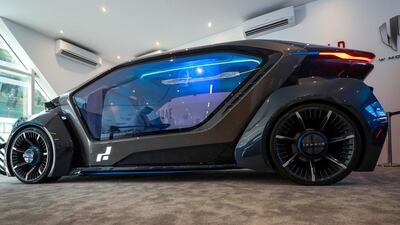
The W Motors self-driving vehicle prototype, on display at the International Defence Exhibition and Conference in Abu Dhabi. Victor Besa / The National -
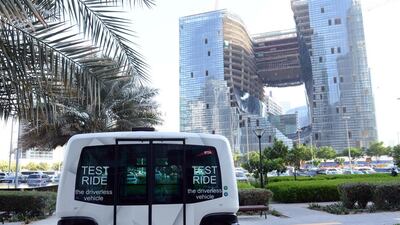
The 10-seater smart driverless car tested by the Roads and Transport Authority, in Business Bay, Dubai. Courtesy RTA. -
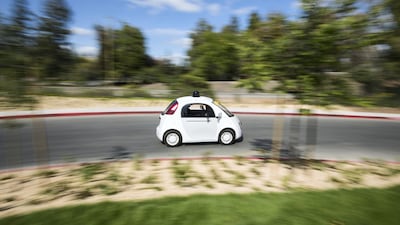
Google’s self-driving car at the Google X labs in Mountain View, California. Getty -
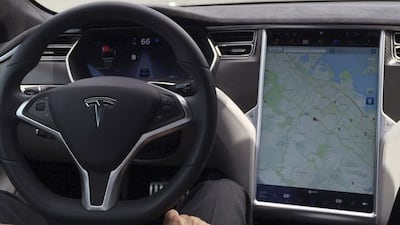
The interior of a Tesla Model S in autopilot mode. Alexandria Sage / Reuters -
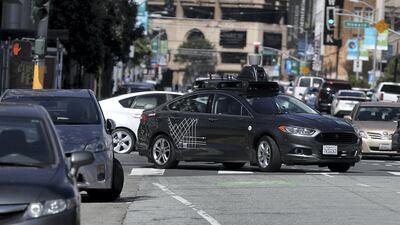
An Uber self-driving car travels down a street in San Francisco, California. AFP / Getty Images -
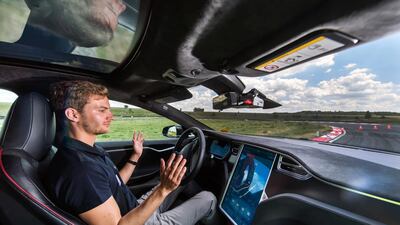
A Tesla Model S car with driverless technology. Bloomberg -
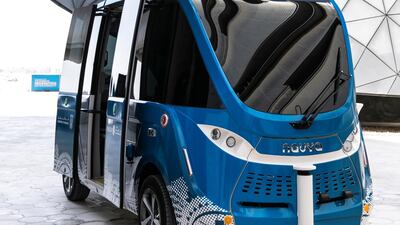
The Navya shuttle has launched at Masdar City - a driverless bus to ferry residents and workers between town and the car park. Reem Mohammed / The National -
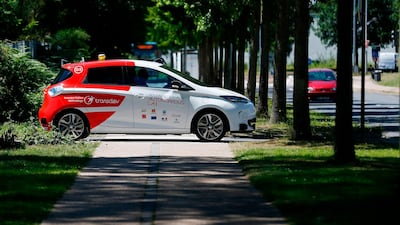
An autonomous car drives past during a press presentation in the north-western French city of Sotteville-lès-Rouen, near Rouen. AFP -

An Uber driverless car in San Francisco. The firm has ramped up spending on the technology. AP -
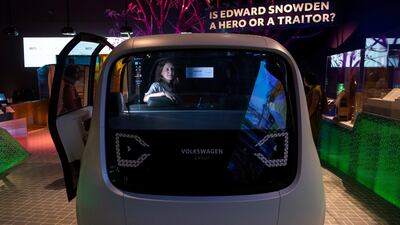
Volkswagen's boxy Sedric concept is a likely face of driverless transport in the near term. EPA -
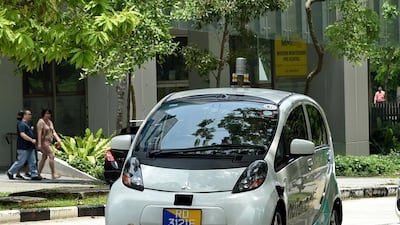
A driverless car seen during testing in Singapore. AFP -
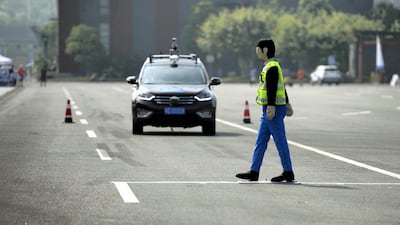
An unmanned automobile competes in the i-VISTA (Intelligent Vehicle Integrated Systems Test Area) Autonomous Driving Challenge in Chongqing, China. Getty


Polarised attitudes between East and West
Authors said consumers in western markets were overwhelmingly sceptical whereas eastern and emerging markets skewed more towards positive feelings, such as acceptance and optimism.
Consumers polled in France and the United States had the lowest acceptance of AI and automation with just 7 per cent and 14 per cent and the highest scepticism, 37 per cent and 39 per cent, in a multiple-choice question.
China, India, Hong Kong, Singapore and the Emirates were among the most accepting of the 17 nations and territories surveyed. Chinese consumers were eight times more likely to be positive than negative.
More broadly, the report's authors found that some of the greatest concerns were around "fear of losing control", with job losses to automated manufacturing an already much-debated issue in many societies.
Some of the main benefits concerned improving the ease of daily life and improving society, YouGov's authors said.

