

There is a famous viral video of Novak Djokovic, where he yells out “creatinaaaa” at his box during the 2023 Cincinnati final against Carlos Alcaraz.
That match was a brutal 3hr 49min affair and during the changeovers, Djokovic had subtly asked his team to bring him a creatine drink to the court. When they didn’t understand him, he ultimately screamed it out loud for them to hear him. The Serb eventually won the match.
Creatine is a chemical found naturally in the body but is commonly consumed in supplement form by athletes to provide immediate energy bursts during intense workouts or matches, and to increase muscle growth. Additionally, it can speed up muscle recovery and improve muscle cells hydration.
It is just one of a wide range of nutritional supplements consumed by tennis players, who are all looking for that extra one per cent that could give them an edge over their opponents in a sport that has become increasingly physical over the years.
During a match, players typically need carbohydrates to maintain their blood glucose levels and meet their muscles’ demand for energy. They take various forms of protein or amino acids – such as BCAAs, creatine and taurine – for building and repairing muscles.
They eat food high in sugar, such as bananas or dates, for bursts of energy and hydrate by consuming isotonic drinks, which have a similar concentration to blood and can quickly replenish the fluid an athlete is losing through sweat by providing a boost of carbs and electrolytes. Sodium encourages fluid intake and is one of the key components in isotonic drinks.
Off the court, most players also heavily rely on supplements; be it magnesium, calcium, vitamin D, omega-3… each individual has their own needs and follows a specific regimen that can help them endure the taxing 11-month tennis season, with the travel and time zone changes that come with it.
The world of nutritional supplements in sport has been growing exponentially and, according to Straits Research, the global sports nutrition market size was valued at $49.60 billion in 2024 and is projected to reach $94.30 billion by 2033.
The 'magic potion'
Djokovic, the most successful tennis player of all time, struggled with his fitness early in his career before he grew fascinated by the science behind nutrition, hydration and supplementation to become one of the fittest athletes on the planet.
At the Paris Masters in November of 2022, a video showing Djokovic’s physiotherapist mixing a sports drink on the sidelines during a match, with members of the Serb’s team huddling around to cover him did the rounds on social media. Djokovic later joked it was his “magic potion” and implied he was working on something special that would soon be revealed.
While some found it odd that Djokovic was being secretive about what he’s taking, most physiotherapists or fitness trainers will tell you they are just as protective over their methodology.
“I remember when I first started working on the tennis tour, I was constantly looking at what other physios and fitness trainers were giving their athletes for recovery,” a strength and conditioning coach working with a top WTA player told The National last month.
“One time a fitness trainer went to the toilet and he forgot to keep the drinks with him and he threw them away in the bin. I looked in the bin when he was gone to see what his player was taking. It’s an important part of what gives your player an edge.”
In January 2024, Djokovic officially launched SILA, a line of electrolyte hydration cubes which is described on the official website as “the most advanced supplementation system in the world”. Djokovic worked on developing his product when he felt he couldn’t find or trust what was already available in the market.
Contamination risk
Trust has become a serious issue in tennis, given the rise in contamination cases that have led to players falling foul to stringent anti-doping rules. Former world No 1 Simona Halep was slapped with a four-year doping ban, which was eventually reduced by CAS to nine months, because a Keto MCT supplement she consumed was contaminated with the prohibited substance Roxadustat. The now-retired Romanian has sued the Canadian company that produced the supplement related to her suspension.
Current world No 2 Iga Swiatek failed a doping test last year because the melatonin she bought over-the-counter in Poland as a sleep aid was contaminated with the banned substance trimetazidine (TMZ). The Pole was deemed not at fault and ultimately received a one-month suspension.
Given the risk of contamination, some might argue that players are better off relying on their food diet to get all the nutrients and minerals they need to succeed. But fitness trainers and physiotherapists have explained that athletes exert themselves more than an average human being and must take supplements to replenish everything they are burning or sweating.
“Tennis is so beautiful because its players have to train for both: explosivity and endurance,” said the aforementioned fitness trainer. “Supplements can offer much more than what you get from your food diet.”
Swiatek, a five-time grand slam champion, says taking supplements is a key part of her fitness regime and it’s what has helped her become one of the fittest players on tour.
“I take care of everything. It's my responsibility to do that. I think [supplements are] kind of necessary to perform well because it's just much easier to get injured when your body is not fuelled in a proper way,” she told reporters in Dubai last month.
“It's just a matter of picking them wisely, doing research in terms of which ones have certificates and are tested. But since 2019 I've been kind of taking the same supplements until my case. Now I'm kind of changing a bit, but not too much because as you can see, I've been the one that physically could perform really well in tournaments.”
‘I would die on court without supplements’
When details of Swiatek’s case were publicised, it was revealed the Pole listed 14 different supplements on her doping declaration form.
Some tennis fans questioned why a healthy 23-year-old would need so many supplements but the truth is that number is considered normal by many of her fellow top players.
“It's not a lot,” ex-world No 1 Daniil Medvedev told The National when asked about Swiatek’s supplements intake. “Look, you get sick in tennis. In normal life, you take one paracetamol, it's fine. In tennis, you get sick, you have a match the next day, you try to take vitamin C, vitamin D, vitamin B, paracetamol, whatever helps you. Here you go, 10 just because of being sick.
“So I think I'm not surprised if I see 30. I'm not surprised if I see 13. I would actually be surprised if I see someone at the top put like four supplements [on their declaration form]. I would be really shocked.”
Medvedev did not take anything when he was younger but says he now “would die on the court” if he didn’t take supplements. He admits the current landscape has got him worried about contamination.
“Paranoid is one of the right words, but the other word is scared because whatever you take, you basically just don't know,” said the Russian.
“We all take protein, like someone takes creatine, BCAA, omega-3. It's a basic thing that many normal people take, which just helps your health. And you never know what's going to happen with them. Like some guy in some laboratory, I don't even know where they are made, just made a mistake. And for a normal person, they wouldn't care. And for someone else, can ruin his life. So yeah, you're stressed.”
World No 1 Aryna Sabalenka and No 6 Jasmine Paolini have said eating or drinking anything has become more and more “scary”.
Besides Swiatek, top-ranked Jannik Sinner failed two doping tests because the banned substance clostebol entered his system via an over-the-counter cream that was used by his physiotherapist to treat a wound on his hand. The physio then touched Sinner, transferring tiny traces of clostebol into the Italian’s body. Sinner has accepted a three-month ban, and will return to the tour in May.
“This thing gets to your head that if someone uses the cream on you and you get tested positive, they are going to go for you. You just become, like, too scared of the system. I don't see how I can trust the system,” said Sabalenka.
“I think when these two cases come up with Iga and Jannik. I don't really believe that they did something, but I just believe that you have to be overprotective of whatever stuff is around you.”
Ons Jabeur and Paula Badosa have both said they felt “paranoid” over the supplements they are taking with the former saying she worries even when she sticks to certified products.
There are certifications like NSF or Informed Sport which guarantee that a supplement has been tested by a third party and is free of contamination.
“I’m telling you the level of paranoia that I’m in, even if it’s certified, I’m still paranoid. So that’s kind of scary for me,” said Jabeur.
-
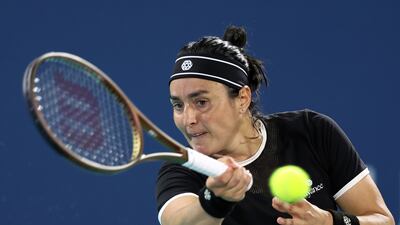
Ons Jabeur during her straight-sets win over Jeļena Ostapenko in the Mubadala Abu Dhabi Open first round at the International Tennis Centre, Zayed Sports City, on February 4, 2025. Chris Whiteoak / The National -

Ons Jabeur shakes hands with Jeļena Ostapenko after the Tunisian's 7-6, 7-5 win in Abu Dhabi. Chris Whiteoak / The National -

Ons Jabeur will take on Japanese teenager Sonobe Wakana in the last 16. Chris Whiteoak / The National -

Action from Ons Jabeur against Jeļena Ostapenko at the International Tennis Centre in Zayed Sports City. Chris Whiteoak / The National -
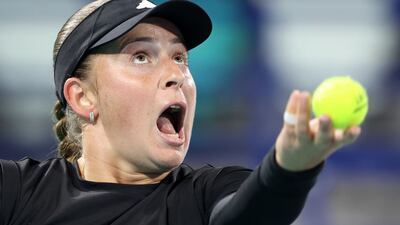
Latvian seventh seed Jeļena Ostapenko during her defeat against Ons Jabeyr. Chris Whiteoak / The National -
Belinda Bencic during her Mubadala Abu Dhabi Open first-round win against Rebecca Sramkova at Zayed Sports City on February 4, 2025. EPA -

Belinda Bencic in action during her 6-2, 3-6, 6-1 win over Rebecca Sramkova at Zayed Sports City. Chris Whiteoak / The National -

Marketa Vondrousova defeated Emma Raducanu 6-3, 6-4 at Zayed Sports City. Chris Whiteoak / The National -

Markéea Vondrouaova shakes hands with Emma Raducanu after sealing victory in Abu Dhabi. Chris Whiteoak / The National -

Emma Raducanu during her straight-sets defeat by Marketa Vondrousva. Chris Whiteoak / The National -

Marketa Vondrousova defeated Emma Raducanu in one hour and 35 minutes in Abu Dhabi. Chris Whiteoak / The National -

British player and former US Open champion Emma Raducanu during her defeat against Marketa Vondrousova. Chris Whiteoak / The National -

Fans watching first-round action at the Mubadala Abu Dhabi Open.


The WTA has had a partnership in place since 2006 with USANA to provide vitamins, minerals and other nutritional supplements to players, free of charge. USANA guarantees that the products supplied are free of substances on the WADA prohibited list.
Jabeur and many other players try to rely on USANA but have said they have to search elsewhere for products that aren’t offered by the WTA partner.
The ATP has two partnerships in the sports nutrition space. One is with Waterdrop, a ‘Microdrink’ described as “a small, convenient cube that enriches water with natural fruits and plant extracts, setting a new standard for hydration”.
The men’s tour also signed a deal last year with FitLine, which has become the official sports nutrition and energy bar partner of the ATP. The current agreement runs through 2026.
Vital for immune system
Jessica Pegula, the world No 4 and US Open finalist, is a big fan of supplements and believes introducing them to her regimen helped her breakthrough on to the professional circuit.
“I love learning about that stuff. I think it’s really great,” said the American. “With any sports science doctor, or person that you work with, it can really help you. Especially if you’re compromised.
“Some people get really bad allergies, some people get sick all the time, you see girls with autoimmune diseases that get really rundown really quickly. So when you’re putting on stress, travel, time changes, and you get older and your body changes and you’re going through hormonal changes, it can be really beneficial. So I’m a fan.”
She added: “I definitely have had to take supplements. That’s actually something that really helped me. Right before I broke through top 100, when I was probably 24, 25-ish, I was just getting sick all the time, getting hurt all the time, could not stay healthy.
“And I went and saw this doctor and he was talking about how a lot of women athletes struggle with kind of like an adrenal fatigue, so just a constant stress. And he said that people with a pretty weak immune system, it could be really tough.
“So I actually started taking supplements and they really helped me. Knock on wood, I barely get sick any more. So it’s something I had to change and it helped me tremendously.”
Pegula has found that a lot of companies only certify certain supplements that they know are popular with most athletes, but won’t certify their entire line because it’s too expensive to pay for third-party testing.
She only takes supplements that are certified, or come from manufacturers who have other products that are certified.
“I just tell myself, if I do everything I can and something happens, what can you do?” she said of the risk involved.
“It’s really helped me, especially with my immune system. I kind of just say, if something happens, I’ll just sue somebody and peace out I guess, I don’t know,” she added with a chuckle. “I tried my best. I’m trying to do everything right.”
One player who tries to avoid supplements altogether – outside of isotonic drinks – is Coco Gauff. The 21-year-old can often be seen during her matches eating fruit out of Tupperware prepared by her mother, which gives her the energy boost she needs on court.
“Me personally, I'm not on any supplements or vitamins,” said Gauff last month.
“I'm not saying I would never take any in the future, but because I was on tour at 15 and there was a lot of people wanting me to take supplements, not like medical professionals, just coaches and things like that. And my parents were like, ‘No, the doctor doesn't recommend it for her. And she's 15. Let her grow, let her mature, let her just do things naturally’.
“Obviously, some people do it because they have a deficiency or some things like that. Luckily for me, I haven't had that result yet. So that's personally why I just decide not to, because I feel like it won't give me that much help in any way.”
Gauff says she gets scared taking any medicine and sticks to Advil if she gets sick. She recalls one time she contacted the relevant department on tour to see if she could take a certain medication and only got a response two or three days later, when she no longer needed it.
“I definitely think the process needs to be a bit more up to date,” said Gauff.

