


Still buoyant after their comeback at Southampton, Manchester United can land a heavy blow in the Champions League on a team alarmingly vulnerable to comebacks. Paris Saint-Germain visit Old Trafford on the back of letting a lead slip at home to Bordeaux and a two-goal advantage turn into a defeat at Monaco.
And that’s just the domestic hinterland, a chill shadow from recent results in a French league that, as PSG’s Neymar put it after Saturday’s 2-2 draw with Bordeaux, “is a competition where we are used to winning a lot of games.” Naturally, PSG having been winning enough to still be top of a Ligue 1 table where they have been champions seven times out of the last eight attempts. But in Europe their margin for error is much slimmer.
Defeat on Wednesday, coupled with a victory in Group H for RB Leipzig at bottom club Istanbul Basaksehir, would leave PSG at the uncomfortable mercy of the German and English teams on the final matchday. Even if PSG were to beat Basaksehir next week, they could only leapfrog Leipzig if United, who would have qualified already, win in East Germany.
“I’m not worried about the United game,” declared Thomas Tuchel, the PSG head coach, ahead of the expedition to Manchester. He has already given off plenty of signals of deep concern. Against Bordeaux, the two senior components of his defence were rested, with the D-day at Old Trafford in mind. Keylor Navas, the goalkeeper, should return against United, but the match-fitness of defender Marquinhos, who has been struggling with a thigh problem, remains a minor doubt.
Tuchel also articulated his specific worries about recent form. His players, he said, have fallen short in attitude, in effort and in discipline. “I usually defend my team, but I can’t do that here. We cannot play against United like we did against Bordeaux or Monaco, and we all have to take responsibility, me included.” Tuchel is well aware that his employers will be ready to hold him to that.
-

Marcus Rashford celebrates scoring the winner against Paris Saint Germain. Reuters -

Marcus Rashford celebrates the winner. Reuters -
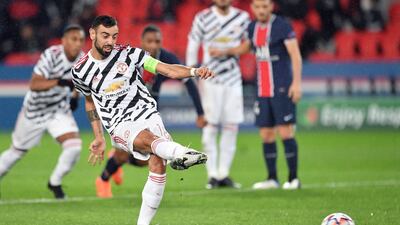
Bruno Fernandes scores from a penalty. PA -

Bruno Fernandes of Manchester United celebrates his goal. PA -

Bruno Fernandes (R) celebrates with teammate Alex Telles after scoring the first goal from a penalty. EPA -

Manchester United's Anthony Martial scores an own goal and the first for Paris St Germain. Reuters -

Paris St Germain players celebrate after Manchester United's Anthony Martial scored an own goal. Reuters -
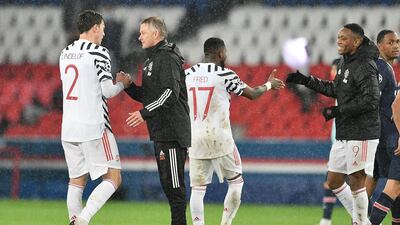
Manchester United manager Ole Gunnar Solskjaer shakes hands with Victor Lindelof at the end of the match. PA -
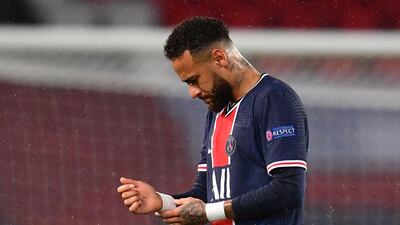
Paris Saint-Germain's Brazilian forward Neymar at the final whistle. AFP -

Kylian Mbappe and Manchester United's Axel Tuanzebe battle for the ball. PA -
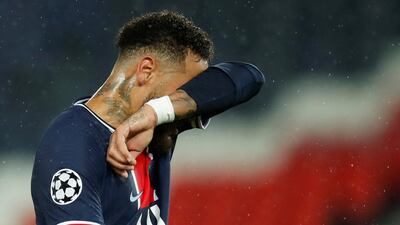
Neymar had a frustrating night. Reuters -

Kylian Mbappe shakes hands with Manchester United's French forward Anthony Martial. AFP -
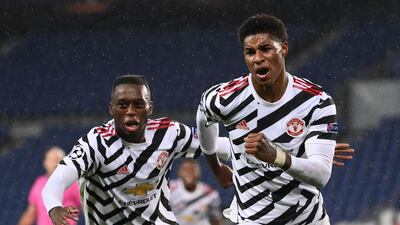
Marcus Rashford celebrates his late goal. AFP


One hundred and one days ago, Tuchel, his left foot encased in a protective medical boot, was issuing instructions to the first PSG side to have reached a Champions League final. It was a breakthrough moment for a club who have invested more heavily than any other in individual superstars to establish themselves as part of Europe’s elite. The narrow defeat in the Lisbon final, 1-0 to Bayern Munich, hardly undermined predictions that the club of Neymar and Kylian Mbappe would soar higher now they had taken part in club’s football’s showpiece event.
Tuchel’s ankle is well recovered and he can again bring all his wiry energy to the technical area. Fixtures against United tend to raise his pulse. In a very short time, the duel between PSG, a club propelled by new money, and United, a traditional grandee of the European Cup, has developed into a modern classic, a nail-biter overseen by two young coaches, both 47, who came to the profession via very distinct routes. One, Tuchel, has been a manager by vocation since his 20s; the other Ole Gunnar Solskjaer draws on an association with United rooted in a long, heroic playing career.
Solskjaer the coach tends to peak against PSG. There was the dramatic turnaround in Paris in 2018/19, when United reversed a 2-0 first leg last-16 stage deficit thanks to an injury-time Marcus Rashford penalty, controversially awarded for Presnel Kimpembe’s handball. There was October’s near-repeat, 2-1 to United at the Parc des Princes, with a late Rashford winner giving Solskjaer impetus in his first group phase as a manager. Since then United have beaten Leipzig 5-0 and taken three points from six against Basaksehir.
____________________________
Southampton v Manchester United ratings
-
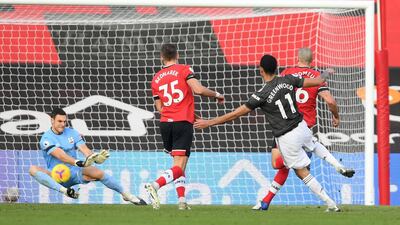
SOUTHAMPTON RATINGS: Alex McCarthy - 7: Charged off his line after five minutes and rounded by Greenwood but relieved to see United attacker put ball in side netting. Brilliant double save to deny Greenwood and Fernandes. Important stop from Rashford early in second half. Might be disappointed with positioning for United winner. Getty -
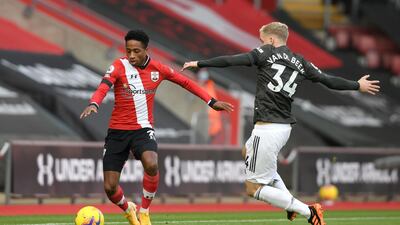
Kyle Walker-Peters - 7: An important cog in the Southampton machine, the former Spurs right-back did well but looked shattered by end. PA -
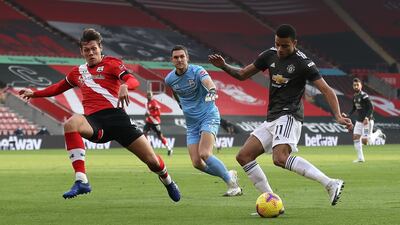
Jannik Vestergaard - 6: Seemed to completely lose his bearings while awaiting a call from McCarthy after five minutes and allowed Greenwood in on goal. Recovered and looked solid but was only defender sitting deep to play Cavani onside for his opening goal. PA -

Jan Bednarek - 6: Glancing header from Ward-Prowse corner in crowded penalty area to put Saints in front with their first real attempt on goal after 24 minutes. Like fellow centre-back Vestergaard, found Cavani a handful when the Uruguayan came on in second half. Reuters -
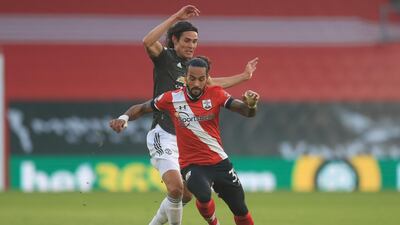
Ryan Bertrand - 7: Dangerous partnership with Djenepo down left but was caught in possession at start of move for United’s first goal. Vital sliding challenge prevented United counter-attacking with a numerical advantage near the end. AP -
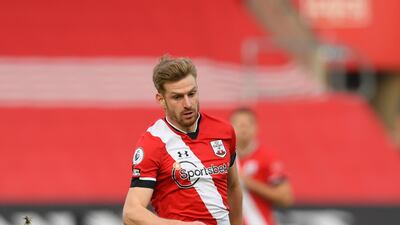
Stuart Armstrong - 6: First touch let him down with goal at his mercy after De Gea saved from Djenepo as he fluffed opportunity to make it 3-0 in first half. Never gave United players chance to relax in possession but, like rest of his teammates, looked shattered in last 10 minutes. Getty -
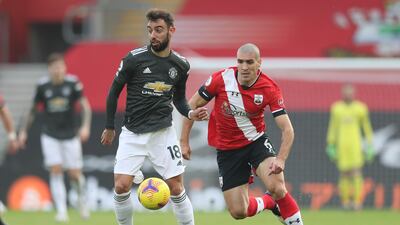
Oriol Romeu – 7: Lucky to escape booking for first-half challenge on Fernandes but was relentless in his pressuring of United players. Tired pass intercepted by United in the last 10 minutes gifted chance to United. EPA -
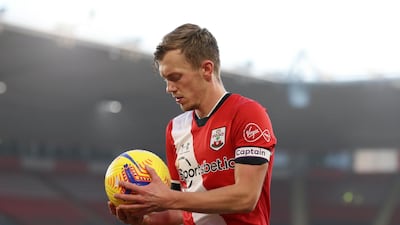
James Ward-Prowse - 8: Now officially crowned as new king of the dead ball – appropriate against David Beckham’s old club. It was his whipped in corner that set up Bednarek goal, then hit trademark free-kick past despairing dive of De Gea to make it 2-0. Fabulous technique. AP -
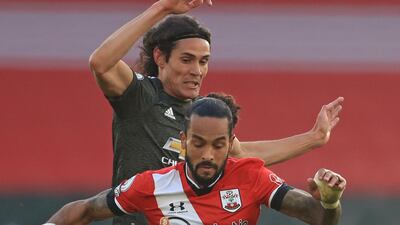
Theo Walcott - 6: Quieter game than his recent efforts. Found a bit of space in box just after break but shot comfortably saved by Henderson. Another effort straight at keeper minutes later. AFP -

Moussa Djenepo – 8: A constant danger to United producing some lovely stepovers and change of pace. Brought down on edge of box on one of his runs to hand free-kick chance to Ward-Prowse for second goal. Had low drive from edge of box well saved by De Gea. Ran out of steam in second half. AFP -

Che Adams - 7: Beautiful crossfield ball to set Djenepo off on attack just after half hour, left limping before break after being caught on follow through by Fred challenge. Brought high ball down brilliantly after 78 minutes but pulled shot just wide. Good performance up front. AFP -
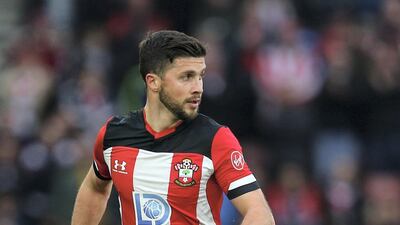
SUBS: Shane Long (No live image) - (On for Djenepo 72') 5: Came on with United in the ascendency and no chance to make impact. Getty -
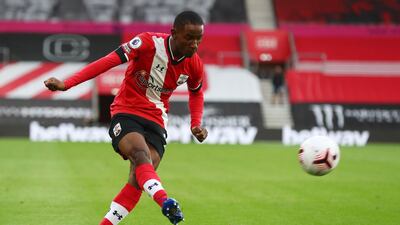
Ibrahima Diallo – (On for Armstrong 89’) N/A. Reuters -
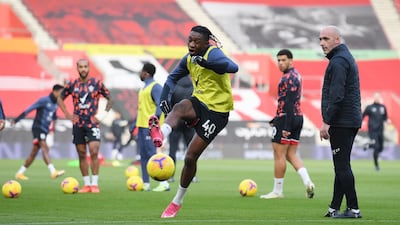
Daniel N'Lundulu – (On for Walker-Peters 90+4) N/A. Reuters -

David de Gea - 5: Neither goal reflected well on him, though he wasn’t totally responsible for either. Got his hand to Ward Prowse’s free-kick. Off injured at half-time. -
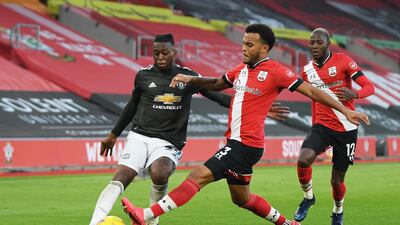
Aaron Wan-Bissaka - 6: Tough time against Djenepo in first half, better in second and floated a ball in for Cavani who nearly equalised in a taste of what was coming. Reuters -
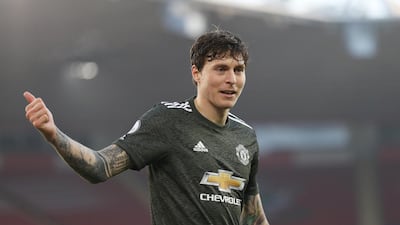
Victor Lindelof - 6: Didn’t deserve to be 2-0 down at half time. Five in the first half, seven in the second, but passed accurately in both. Reuters -
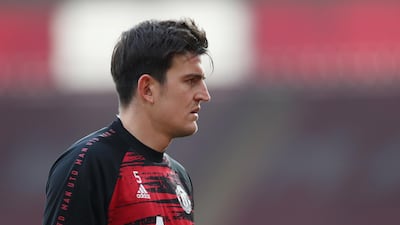
Harry Maguire - 6: Said United had given away two soft goals and wasn’t wrong. Side he captained lost shape in first half but showed immense character against a team who’d drawn four of their last five games against United.. Reuters -
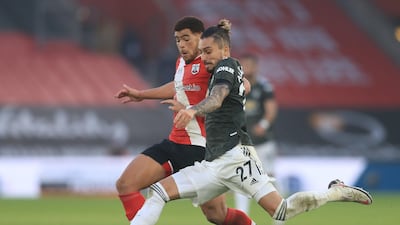
Alex Telles - 7: First Premier League away game. Good going forward and, unlike his teammates, with corners. Most involved and best defender for second successive game. Getty -

Fred - 7: Gave away free-kick in dangerous position which led to second. Teed-up Fernandes to shoot which led to goal and, like his team, improved in the second and got right forward. More touches than any other player. AP -
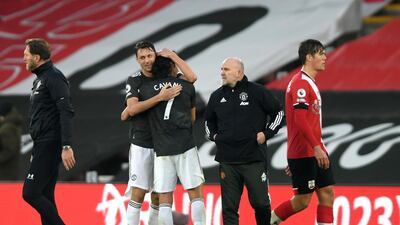
Nemanja Matic - 7: Started well, faded as Southampton struck twice, then solid in second half. Getty -
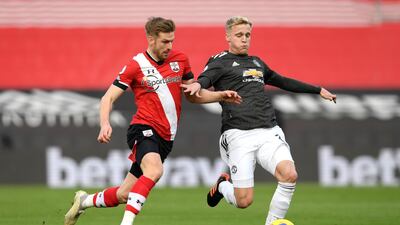
Donny van de Beek - 7: Not quite as bright in the diamond as he had been versus Istanbul, but impressive combining with Fernandes in his first away league start against a very decent opponent. PA -
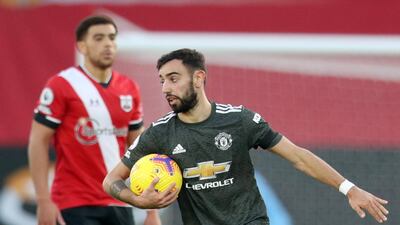
Bruno Fernandes - 8: Clattered by Romeu, then shot wide as United started well. Beaten by Djenepo after United fell behind. Rightly disappointed after 30th minute effort when should’ve scored. Struck a dreadful corner but scored a minute later. Set up Cavani for 2-2. A goal and assist machine and at the heart of United’s creativity. Reuters -
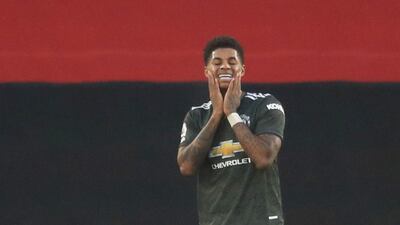
Marcus Rashford - 6: Switched with Greenwood in a front two. Unable to stop Bednarek for first goal. Still far from his best but superb cross for Cavani’s winner on a day when he was more effective in build-ups. Reuters -
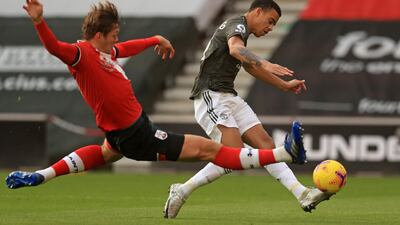
Mason Greenwood - 5: Sharp start and shot wide from tight angle when should have scored. Played more on right and struggled into a two up front as barely touch ball. Hooked at half-time. AFP -
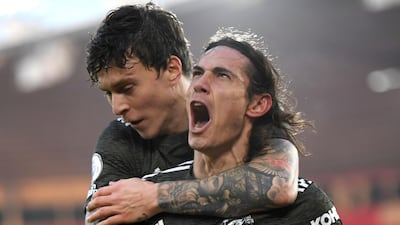
SUBS: Edinson Cavani - (On for Greenwood 46') 9: Took time to lace his boots, started brightly, shot over and then smartly picked out Fernandes for United’s first before heading the equaliser and he wasn’t finished. Full of energy, movement, anticipation and presence. PA -
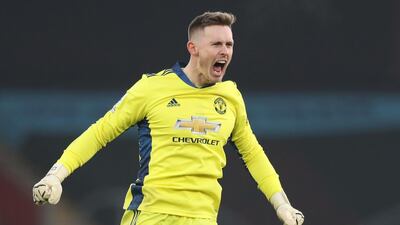
Dean Henderson - (On for De Gea 46') 7: Did well, though he wasn’t required as much as De Gea. reuters -
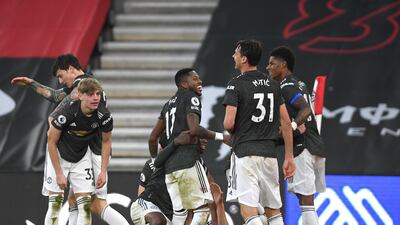
Brandon Williams - (On for Telles 84') N/A. Getty


____________________________
Since the opening matchday in France, Edinson Cavani, the former PSG striker signed in October, has begun to prove his value for United, too, although the Uruguayan has been the focus of unwelcome attention after a post on his social media account after Sunday's 3-2 comeback win at Southampton included a Spanish term that can be interpreted as offensive. The English Football Association have opened an investigation. A breach of its social media rules can carry a three-match ban.
Cavani, who helped set up a goal and scored two after Southampton had taken a 2-0 lead, apologised for what he said had been "intended as an affectionate greeting to a friend". Solskjaer added, "he is really sorry for the mistake he's made, with no malicious intent at all. We support him, but we also support the FA. We want to be in the fight against discrimination. I'm sure Edinson has learned the hard way."
Cavani is available to face the club for whom, over seven seasons he scored 200 goals, more than any PSG player in history, and Solskjaer reports he has a full-strength United squad, with David de Gea fit after withdrawing at Southampton with a sore knee.

