

The 2026 Fifa World Cup has been among the most unique finals in recent memory, with record crowds attending one of the largest football events ever. And more changes are in the pipeline.
The current World Cup finals have been played across three countries. The next one in 2030 will be spread across six from three continents: Spain, Portugal and Morocco as the principal hosts, with one-off games in Uruguay, Argentina and Paraguay to celebrate the 100th anniversary of the finals.
That's not all. A further expansion is being considered with the number of participating teams increased to 64, up from the current 48-team tournament which was already the biggest ever.
This idea was proposed last year to Fifa by influential South American football leaders. Fifa president Gianni Infantino has indicated he would consider the expansion, saying: “It is definitely an issue that will be examined and discussed in the relevant committees after this World Cup”.
Critics have said the move will devalue the tournament if 30 per cent of Fifa members reach the finals. Similar views were expressed before the 48-team expansion.
However, it is likely to happen. More games means more money. Infantino has already said that the tournament was “for the whole world, not just Europe.” For context, of the final eight teams in the 2026 World Cup, seven are virtually adjacent on the map, with Argentina the outlier.

Can the 2030 World Cup accommodate 64 teams?
A larger format would not be a problem for Spain, where multiple cities pitched to stage World Cup game. And, across Spain and Morocco, construction activities are going on.
Portugal already has modern stadiums which were built for the 2004 European championships. They need minimal upgrading. The venues include the home grounds of Benfica (68,000), Sporting (52,095) and Porto (50,033).
In South America, River Plate’s stadium has been redeveloped into the biggest (87,000 and going up to 100,000) and best in the continent. A roof will follow. In Uruguay, Montevideo’s Centenario, which staged the inaugural World Cup, is going through a much-needed modernisation for what will be a capacity of 62,782. A new 46,000 venue is being built in Asuncion, Paraguay.
Morocco has seen a boom in stadium construction, with some fine venues successfully showcased in Afcon at the start of this year. From Rabat (69,500) to Tangiers (75,500), giant stadiums have gone up that are fit to be compared with the best. Six will be used in Agadir, Casablanca, Fez, Marrakesh, Rabat and Tangier.
Morocco football stadiums - in pictures
-
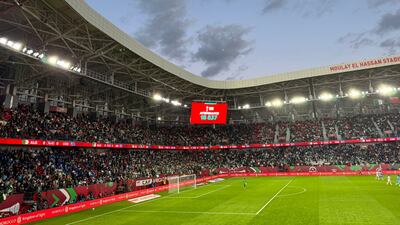
The Moulay El Hassan stadium in Rabat is at par with similar venues in Europe. All photos Andy Mitten for The National -
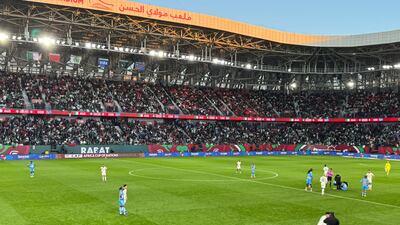
The Moulay El Hassan stadium in Rabat -
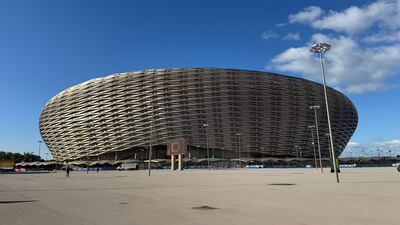
The Prince Moulay Abdellah Sports Complex in Rabat -

The Prince Moulay Abdellah Sports Complex was built within two years -
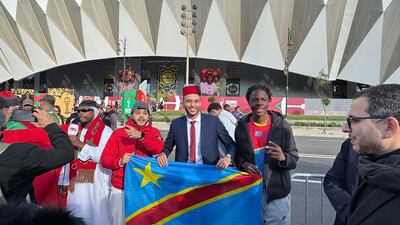
Fans in Morocco now have some of the best venues in world football


Currently being constructed on the outskirts of Casablanca, Morocco’s biggest city is the Hassan II Stadium which will seat 115,000, making it the biggest football stadium on the planet. Moroccans hope this will stage the 2030 World Cup final. With Barcelona’s Camp Nou and Madrid's Bernabeu stadium also in contention, competition will be fierce.
Camp Nou will seat 105,000 and become Europe’s biggest football stadium when it is completed next year. The Bernabeu (83,186) may be smaller but can lay claim to being the finest in the continent thanks to its city location and steep stands.
Heat maybe an issue, though. The competition will be staged in June and July. Spain, Portugal and Morocco have already endured heatwaves this year. The Bernabeu is the only venue which has a roof to control the temperature inside, if needed.
Spain’s other venues are the already completed homes of Espanyol in Barcelona (40,500), Athletic Club in Bilbao (53,331), Atletico Madrid (70,692), Real Sociedad in San Sebastian (42,300) and Seville’s Cartuja (70,000) which currently hosts Spain’s cup finals and some internationals.
Vigo’s Balaidos has undergone a decade-long reconstruction and will seat 44,000, while work on Valencia’s Nou Mestalla commenced in 2008, then paused for 16 years and restarted this year.
Venues for the 2030 Fifa World Cup - in pictures
-

The Prince Moulay Abdellah Stadium in Rabat, Morocco, hosted the 2025 Afcon final. Reuters -
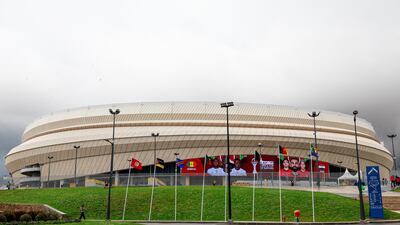
The Grand Stadium in Tangiers hosted the Afcon semi-final between Senegal and Egypt. AFP -

The Estadio da Luz in Lisbon, Portugal, is set to host matches at the 2030 World Cup. EPA -
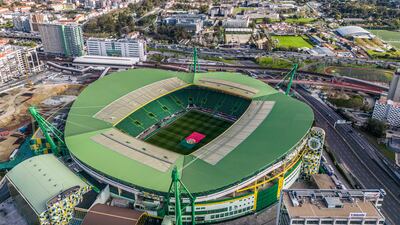
The Estadio Jose Alvalade in Lisbon, Portugal. Getty Images -

The Estadio do Dragao in Porto, Portugal, is set to be one of the venues for the 2030 World Cup. Reuters -
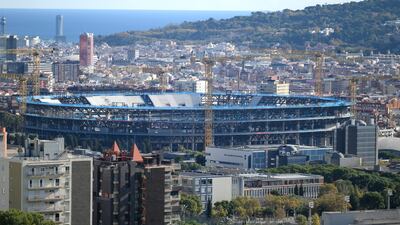
The iconic Camp Nou in Barcelona is set to be a centre piece of the 2030 finals. Getty Images -
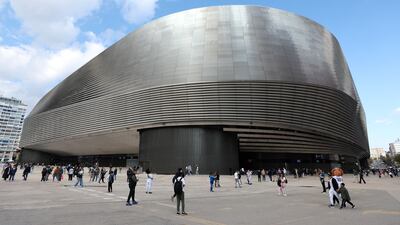
The stunning Santiago Bernabeu in Madrid. Getty Images -
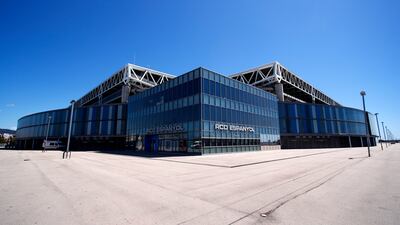
The RCDE Stadium in Barcelona will be one of the many venues hosting the 2030 finals. Getty Images -
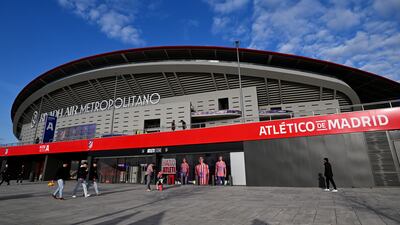
The Metropolitano in Madrid, Spain. Getty Images


The renewed impetus came from the realisation that Spain would look a little incongruous if its third biggest, and football crazy, city of Valencia didn’t stage games. The new Mestalla will seat 70,044, but it sadly means that the current Mestalla, one of Europe’s most distinct and daring stadiums, will be demolished.
In Zaragoza, Spain’s fifth biggest city, a new Romareda Stadium will become a 43,110 home for its persistently failing football club, Real Zaragoza.
Challenges
Spain boasts Europe’s most extensive high-speed rail network and the country is used to welcoming guests, given it is the second most popular tourist destination on the planet after France. But football matches bring individual challenges.
Bilbao, for example, was not prepared logistically to stage the 2025 Europa League final between Tottenham Hotspur and Manchester United with a shortage of accommodation and almost no post-match transport leaving fans stranded.
Morocco won the right to stage this World Cup after five failed attempts between 1994 and 2026. But they have shown ability to stage major tournaments. Afcon was a success and not only because of the stadiums. Morocco has constructed a modern high-speed rail network between its biggest cities.
Its green energy initiatives are world leading and the country’s economy is doing well, its hotel stock is increasing. However, staging a World Cup will bring international scrutiny on regional and political matters.
The 2030 World Cup is going to football crazy countries with superb stadiums and transport facilities. However, Fifa will not be able to replicate the pricing structure of the 2026 tournament, since average wages are far lower in all the countries compared to the US.
Fans were routinely paying over $1000 for this week’s semi-finals in Los Angeles and Atlanta. That’s a month’s wages for many in countries staging the next World Cup. Everything else is likely to be as good as one can hope.

