


Having been an international football manager for seven years now, Paulo Bento is surely used to the rhythms of the job. Still, it must have its frustrations.
A couple of weeks of intense work, followed by months of fallow time, when he has merely a watching brief. Contact with his players might be limited to the odd WhatsApp message here and there, while they are the responsibility of their club coaches, instead.
Over the course of stints with South Korea and, since 2023, the UAE, there have likely been few times when he would have wanted to keep hold of his players more than last November.
It was then that the Portuguese coach’s UAE side delivered on their promise in spectacular fashion, with a pair of results that breathed life into their 2026 World Cup qualifying hopes.
Until that point, the campaign had been fitful. A nice surprise on opening night in the third round of Asia’s byzantine qualifying process, as they won in Qatar. A narrow loss to Iran a few days later, then dropped points against North Korea and a loss – despite a plucky performance – in Uzbekistan.
Their hopes of making one of the two automatic qualifying berths in the group theirs seemed to be fading. Then they muddled their way through to beat Kyrgyzstan, then thrashed double Asian champions Qatar 5-0, in one of the great nights for UAE football.
Optimism was soaring. Goodwill was such that, when four-goal hero Fabio De Lima was spotted at a McDonald’s drive-thru late that night, supporters were queuing up to pay for his order. It was a very, very Happy Meal, presumably.
Then everyone went their separate ways, gathering again together only for a tepid reunion in the Gulf Cup in December, when they failed to get out of the group. All the positivity risked being dissolved.
Four months after that trouncing of Qatar, they are back on the World Cup qualification trail. They face group leaders Iran, in Tehran, on Thursday evening, then travel to Riyadh to face North Korea on Tuesday. Sitting in third place, they are attempting to make up the three-point gap on second-placed Uzbekistan.
The national team flew to Tehran on Wednesday morning, with one training session at the Azadi Sports Complex planned for that same evening.
Ahead of that, Bento has tried to get back some of the feelings from November during a training camp in Jebel Ali in Dubai.
He will also have had to introduce some of the players to each other, given a number of new arrivals in the team.
There are a variety of new faces in the squad. It is a sign of the evolving face of the national team that 40 per cent of the 27-man squad for the two qualifiers were born abroad.
Eight of those are Brazilians who have been outstanding performers in the Adnoc Pro League for several seasons now, and have become naturalised citizens.
One of the new recruits, Caio Lucas, is on a grand tour all on his own. The forward was born in Brazil, then later educated in Japan, which is where he made his debut in professional football.
He had a brief stint with Portuguese giants Benfica, between spells with two of the UAE’s biggest clubs, Al Ain and Sharjah, and attained UAE citizenship last year.
He is joined in the squad by his colleague in the Sharjah forward line, Luanzinho, who once played representative football for Brazil at age-group level.
A third attacker of Brazilian origin, Al Wasl winger Jonatas Santos, is also in line for a debut. The trio will give Bento the sort of variety of attacking options which have been thin on the ground in the past.
-

Fabio De Lima of the UAE during a World Cup qualifier against Iraq at the Zabeel Stadium in Dubai. Chris Whiteoak / The National -

UAE's forward Caio Canedo after scoring during a World Cup qualifier against Australia in Qatar. AFP -

Caio Lucas with his son after the President's Cup final at the Hazza bin Zayed Stadium in Al Ain. Victor Besa / The National -
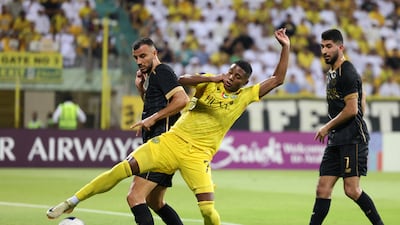
UAE and Al Wasl player Jonatas Santos. Chris Whiteoak / The National -

Bruno de Oliveira of UAE during a World Cup qualifying match against North Korea in Al Ain. Chris Whiteoak / The National -

UAE player Mackenzie Hunt during a World Cup qualifier against Kyrgyzstan in Abu Dhabi. Ruel Pableo for The National -

Kouame Autonne goes for a header during a World Cup qualifying match against North Korea. Chris Whiteoak / The National -

Marcus Meloni in action against North Korea. Chris Whiteoak / The National


The UAE are not the only side who have become increasingly resourceful in expanding their player pool to include players like the Brazilians, as well as England-born Mackenzie Hunt, who spent his formative years in Dubai.
It has become a growing trend among countries trying to make it into the newly expanded 48-team World Cup.
Elsewhere in Asian qualifying, for example, an Indonesia side now managed by former Netherlands international Patrick Kluivert, have 18 out of 29 players in their squad who were born in Europe.
Overseas experience is something Iran are not short of, albeit all of their players were raised at home, and their professional careers earned them moves abroad.
A number of their leading players have experience of playing in foreign leagues, including two key players who will be known only too well to the UAE players.
Mehdi Ghayedi, Team Melli’s playmaker, scored the goal that separated the two sides when they met in Al Ain at the start of this group stage. He plays his clubs football for Ittihad Kalba on the UAE’s east coast.
And Sardar Azmoun has been blazing a trail in UAE football this season. The Iran striker’s goals have helped Shabab Al Ahli to the top of the Pro League.
Only three of the 27 players in the UAE’s extended squad are from Azmoun’s club, but Bento should have some decent intel on how to stop the prolific former Roma and Bayer Leverkusen forward.
Shabab Al Ahli’s rise in the UAE league has been overseen by Paulo Sousa, who is a compatriot and former Portugal teammate of Bento’s.
Thwarting the UAE-based duo will be vital to the national team’s prospects in Iran. Victory will be a tough task, given the table toppers are unbeaten so far in the group, but the UAE will believe it is possible if they can channel the spirit of last November.

