



Tottenham boss Antonio Conte has told Mikel Arteta to stop complaining and focus on his team after the Arsenal manager appeared to blame referee Paul Tierney for Wednesday's heavy North London defeat.
Fifth-placed Spurs closed the gap on their bitter rivals to one point with a comfortable 3-0 win to keep alive hopes of stealing the final Champions League berth.
A Harry Kane double and a Son Heung-min strike did the damage while Arsenal's miserable visit to the Tottenham Hotspur Stadium was compounded by Rob Holding's sending off.
Holding’s red card was sandwiched between Kane’s goals as the Arsenal defender came out second-best in a tussle with Son.
Speaking after the game, Arteta would not be drawn on his thoughts on the match official, saying: ”I cannot say what I think or I will be suspended.”
He would not add to his opinion but, when asked about Arteta’s take on the decisions from the officials, Conte did not hold back.
“He complains a lot,” the Italian said of Arteta. “He has to focus more on his team. He has to focus more on his work. He has to continue to work because he’s a very good [coach]. To hear someone complain all the time is not so good.
“At Liverpool [on Saturday] do you hear me complain about Fabinho and all the fouls? No. He can take my advice if he wants, but if not I don’t care.
“I listen and he complains a lot. I think that he has to be more focussed on his team and not to complain because he has just started his work. He has to be calm and try to continue to work. To listen to a coach complain a lot of the time is not good.”
Spurs v Arsenal ratings
-
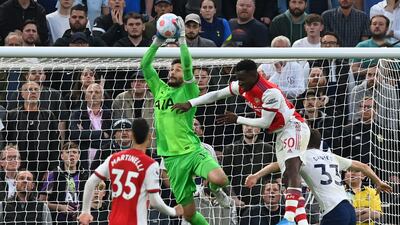
TOTTENHAM RATINGS: Hugo Lloris - 7: Needed a few attempts to gather a cross after 25 minutes but not called into action again until he turned Nketiah shot over bar just before break. No serious saves to make in second half. AFP -
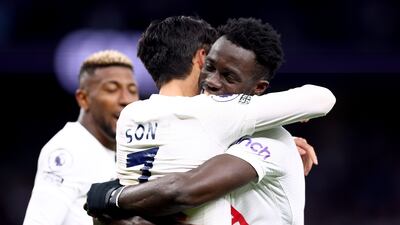
Davinson Sanchez - 7: Defender’s first start for three months with Cristian Romero out injured and, after coming under some early pressure, enjoyed a stress-free night in defence. Getty -
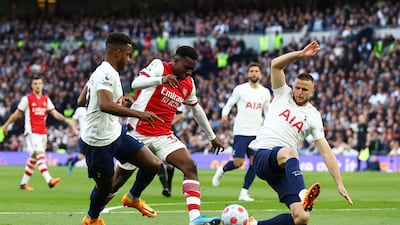
Eric Dier - 8: Well-timed sliding challenge to prevent Nketiah getting through on goal in opening two minutes. His long ball forward heading for Son resulted in Holding’s challenge and a red card for the Gunner. Reuters -
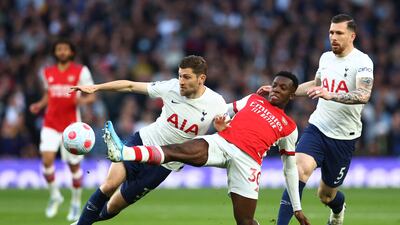
Ben Davies - 7: Early booking for tripping Saka but that was only blot on copybook. Flying block on Saka effort early in second half but Spurs were three up by then. Standing ovation when taken off late on. Reuters -
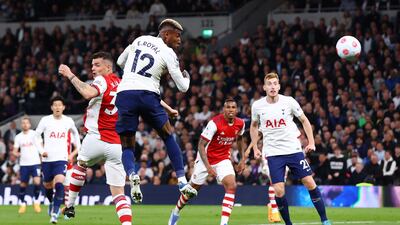
Emerson Royal - 7: A couple of first-half chance but failed to find target with either strike. Saw header saved brilliantly by Ramsdale just before hour mark. Getty -
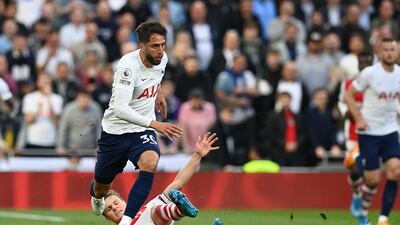
Rodigo Bentancur - 7: Uruguayan’s flicked header supplied assist for Kane’s second goal and helped Tottenham dominate midfield. AFP -
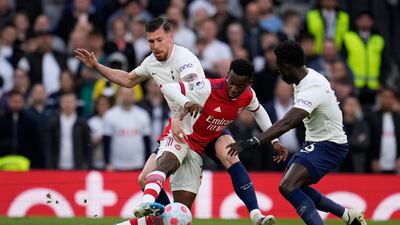
Pierre-Emile Hojbjerg - 7: Rock solid in middle of park as attacking players ran riot in front of him. Good night’s work from Dane who never wasted a pass. AP -

Ryan Sessegnon - 7: Mixed bag with his delivery but one lovely curling cross from left set-up chance for Emerson who couldn’t finish. Teed-up another opportunity for Son who scuffed shot over. Getty -
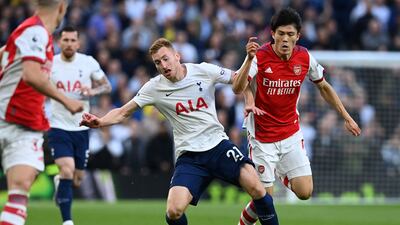
Dejan Kulusevski - 8: Swede’s cross into box resulted in Spurs’ winning penalty that Kane dispatched and helped Spurs cause Arsenal defence constant problems. Has been key player for Conte's team since his January arrival. AFP -
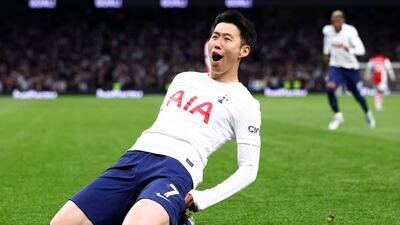
Son Heung-min - 9: Took some heavy treatment from Holding that ended with Arsenal man sent-off. Earned Spurs penalty when barged over by Soares. Poked home third after good work from Kane and ballooned another chance over bar. Fuming at substitution when he clearly wanted more goals. Getty -
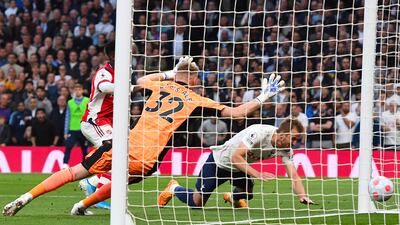
Harry Kane - 9: Side-footed confident penalty into bottom corner to put Spurs in front then headed second from a metre out for his 12th and 13th goals against Arsenal. Denied hat-trick when swerving shot from distance saved by Ramsdale. EPA -
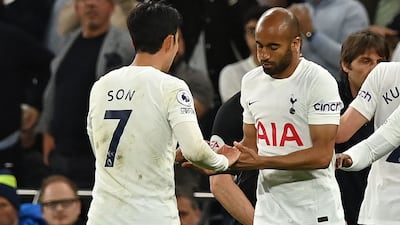
SUBS: Lucas Moura – (On for Kulusevski 72’) 7: Pace caused immediate problems and resulted in two Arsenal players being booked for fouls trying to stop him. AFP -
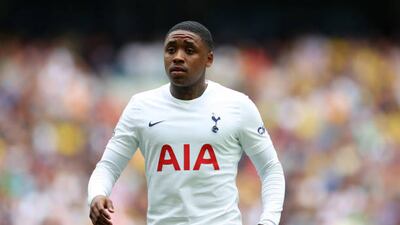
Steven Bergwijn – (On for Son 72’) 6: Joined with party in full swing and Spurs in total control. Getty Joe Rodon – (On for Davies 82’) N/A. -
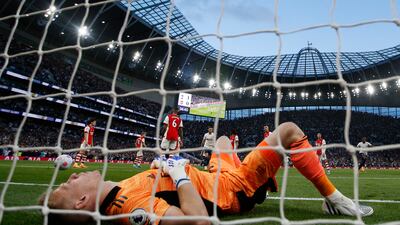
ARSENAL RATINGS: Aaron Ramsdale - 7: Not to blame for any of the goals as defence imploded in front of him. Fabulous one-handed stop to stop Emerson making it four. Reuters -
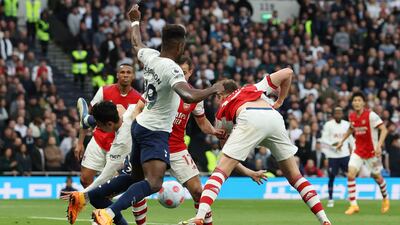
Cedric Soares - 4: Clumsy shove on Son after getting on wrong side of attacker gave away first-half penalty. Gifted ball to Spurs that lead to another Kane scoring opportunity. Redeemed himself slightly with vital challenge to deny a lurking Kane. Reuters -
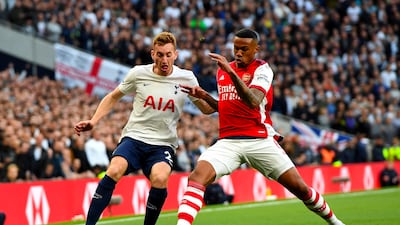
Gabriel - 6: Left short-handed at back when defensive partner saw red and manager Arteta should have brought on another defender immediately. Rolled by Kane and ended up poking ball straight to Son for third goal. Limped off injured with 15 minutes to go. EPA -
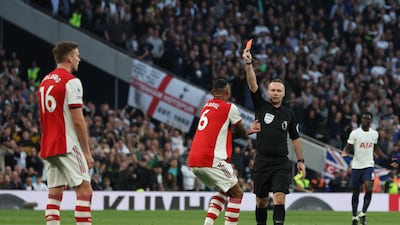
Rob Holding - 1: Absolutely brainless performance from defender in such a crucial game. Third needless challenge on Son in opening half hour resulted in yellow card and red followed not long after for arm/shoulder in South Korean’s face. Reuters -
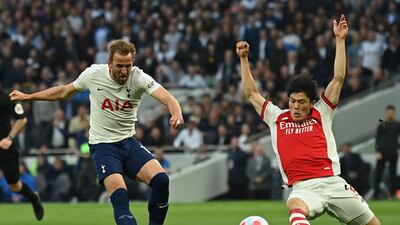
Takehiro Tomiyasu - 6: Brilliant defending to block Kane chance that would have made it 2-0 in first half. One of Arsenal’s better defender’s on night. AFP -
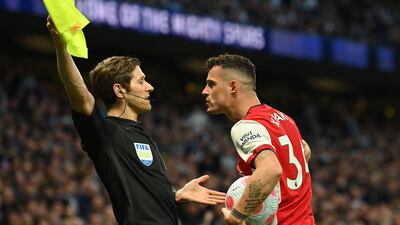
Granit Xhaka - 5: Shot high and wide from way out just before half-hour mark and looked like he was starting to lose his head after Holding’s red card. Ended up in defence due to sending-off and injured teammates. Booked late on which had been coming. AFP -
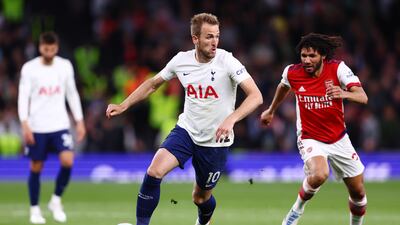
Mohamed Elneny - 6: Given job of blocking balls heading into path of Kane and was doing fine until first goal then England captain stepped up a gear, Gunners went down to 10 men and gameplan went out of window. Getty -
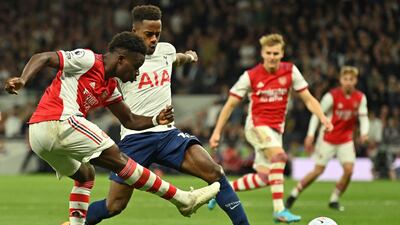
Bukayo Saka - 5: Gunners attacker couldn’t get foothold in game with Spurs dominating at other end and didn’t have chance to score until just after half-time when had shot blocked. AFP -
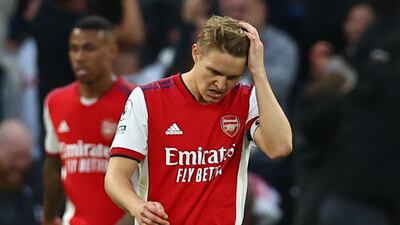
Martin Odegaard - 5: Had game’s first shot on goal straight at keeper from distance but in-form midfielder saw his influence kept to minimum. Should have pulled back to 3-1 but side-footed straight to Lloris. Booked for fouling Moura. Reuters -
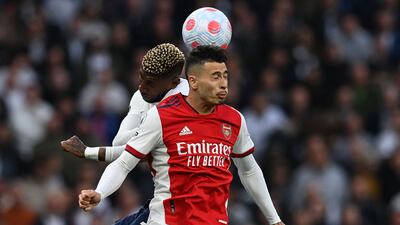
Gabriel Martinelli - 6: Ran Leeds ragged at weekend and looked a threat early on here until Spurs scored and Holding was sent off, turning game on head. Good run and ball supplied chance for Saka after break. AFP -
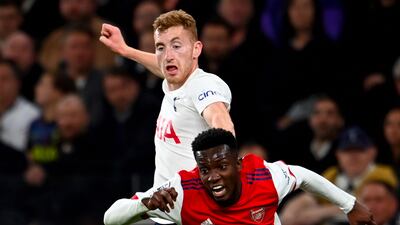
Eddie Nketiah - 5: Lost Kane ahead of Spurs’ attacker’s second goal with Arsenal a defender down due to Holding’s stupidity. Saw curling shot palmed over bar by Lloris just before half-time. EPA -
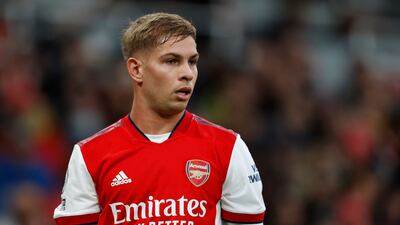
SUBS: Emile Smith Rowe – (On for Martinelli 64’) 5: Not the greatest time to come on with team down to ten men and three goals down. Booked for pulling back Moura. AFP -
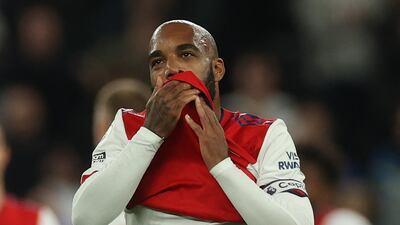
Alexandre Lacazette – (On for Nketiah 73’) 5: No chance to change game that was already lost. Reuters -
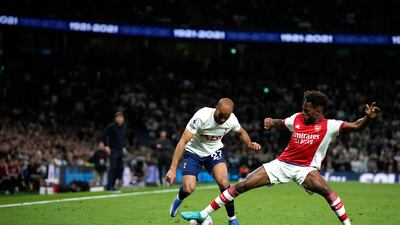
Nuno Tavares – (On for Gabriel 75’) 5: Came on due another defensive injury for Gunners. AP


Both teams now have two games remaining as the fixture came at a crucial stage of the season, having been rescheduled after Arsenal successfully appealed to the Premier League.
Conte has been unhappy about the postponement and once again hit out at the call as he continued to criticise his North London rivals.
“He [Arteta] complained about the fixtures and that was after Arsenal had an unbelievable postponement with just one Covid case,” he added.
“Now we’re playing at 12pm on Sunday and they don’t play until Monday. We can’t always complain.”
Holding replaced Ben White in the heart of defence, who could only settle for a place among the substitutes following a hamstring injury. The red card now means Holding will be suspended for the vital Monday trip to Newcastle.
Should Tottenham win at home to Burnley on Sunday afternoon, Arsenal will go into the clash trailing their rivals.
Arsenal end their season at home against Frank Lampard’s Everton, while Spurs travel to East Anglia to take on already-relegated Norwich City.

