


When trying to maintain an extended run in any cricket team, there are a few hard and fast rules to live by. Chief among them is obvious: don’t run the captain out.
In the case of the UAE, that is even more acute. Few sides anywhere are quite so reliant on their leader as the national team are on the magnificent Muhammad Waseem.
On Monday, the opener moved into second place in the list of sixes hit in a T20 international career. Rohit Sharma, the Indian World Cup winner, is the only player ahead of him. Jos Buttler, Nicholas Pooran and Glenn Maxwell are just some of those trailing in his wake.
Against an Afghanistan attack including the likes of Rashid Khan, Mujeeb ur Rahman and Fazalhaq Farooqi, Waseem blazed 67 from 37 balls.
Two nights earlier, against Pakistan, he had been in similarly destructive form – only to be cut off in his prime by a run out. It happened via a mix up with the youngest player in the team.
“He asked me if there was a run there and I told him that, at that time, I didn’t think it was,” Ethan D’Souza said of his role in the dismissal. “But next time I'll probably run those.”
So, as well as everything else he has going for him, D’Souza is clearly a quick learner.
Age 19, the Abu Dhabi-born and raised batter has played 12 times for the national team, having debuted in an ODI over two years ago.
He is on his longest run in the team so far, and – quirks of national team selection notwithstanding – should be here to stay.
After learning the game at Zayed Cricket Academy in the capital, his talent has been clear for years. He was snapped up by Team Abu Dhabi in T10 when he was just 16, and he was a star of UAE age-group cricket.
Waseem, for one, is likely to appreciate the promise of his young teammate, as they attempt to build a team to challenge at the Asia Cup this month and then for T20 World Cup qualification.
The captain picked the teen out as a player to watch before the tri-series, and is unlikely to hold the run out against him.
“At the time it was a bit uncomfortable,” D’Souza said of the mix-up. “But after the game, once I spoke to him, it was all clear.
“I ran very well with him in the practice games and in Uganda [earlier this summer], but it just happened to be a run out here. I’m trying not to think of it too much.”
-
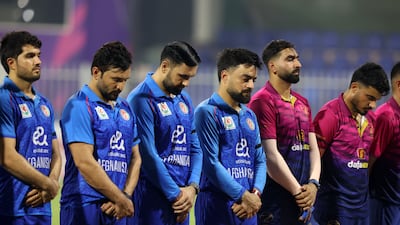
There was a minute’s silence before the start of the match between Afghanistan and UAE in respect for the victims of the earthquake in Afghanistan on Sunday, which centred in the east of the country, in which at least 800 people were confirmed dead. All photos: Chris Whiteoak / The National -
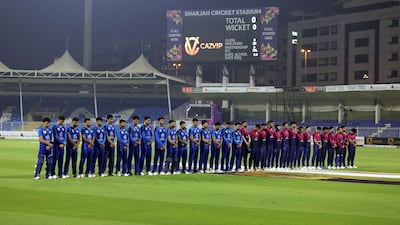
Afghanistan continued to play despite the backdrop of disaster in their homeland as they beat UAE by 38 runs in the tri-nations series in Sharjah. -
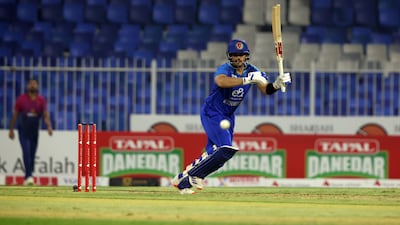
Darwish Rasooli of Afghanistan plays a shot during the Tri-series match against UAE at Sharjah Cricket Stadium. -
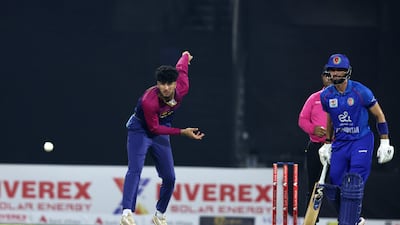
UAE bowler Dhruv Parashar in action. The UAE restricted Afghanistan to 188 for four from their 20 overs. -
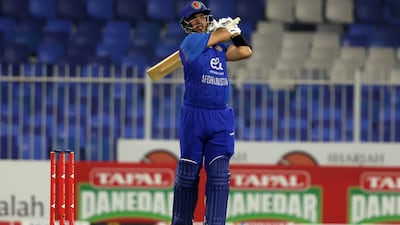
Darwish Rasooli of Afghanistan plays a shot. -
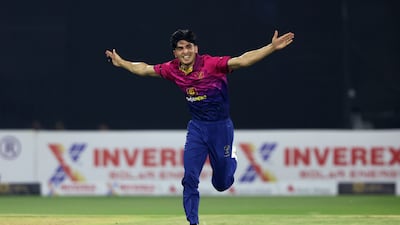
Muhammad Rohid was highly impressive. The national team have been waiting to unveil the left-arm swing bowler on international cricket. -
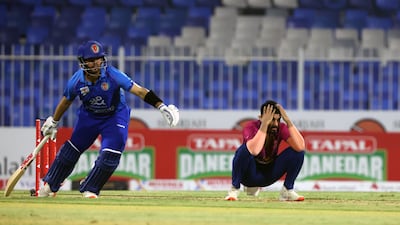
Haider Ali of the UAE looks dejected as Afghanistan pile on the runs in Sharjah. -

Rahul Chopra, wicketkeeper of the UAE, looks on as the ball sails over the boundary. -

Afghanistan head coach Jonathan Trott. -
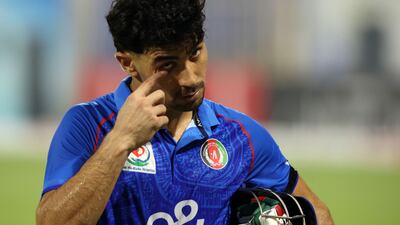
Mohammed Rohid of the UAE takes the wicket of Afghanistan's Rahmanullah Gurbaz. -

Mohammad Rohid of the UAE celebrates the wicket of Afghanistan's Darwish Rasooli. -

UAE captain Muhammad Waseem took the fight to Afghanistan. -
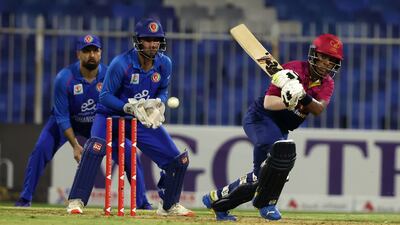
Ethan D'Souza of the UAE plays a shot against Afghanistan. -
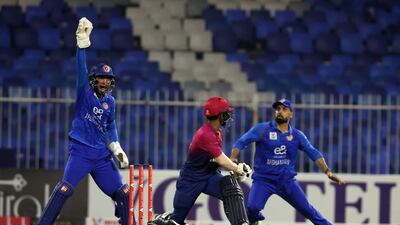
Afghanistan's Rashid Khan takes the wicket of Ethan D'Souza of the UAE. -

Afghanistan's Rashid Khan appeals to the umpire.


There was another drawback from the dismissal: at the non-striker’s end, D’Souza had the best view in the house of one of international cricket’s most watchable batters.
“There are a few shots where you think, it's crazy how he hit that shot,” D’Souza said of Waseem.
“It shows the skill he has and the leadership qualities he has. Even if he does hit sixes at one end, he’ll make sure to come and tell you what you need to do, what the bowler is doing, and he’ll always feed you information. These are things you need as a youngster.”
D’Souza has been entrusted with batting in the pivotal No 3 role so far in the tri-series. He says the plan has been “situation dependent”, and it has meant him getting a good look at bowlers of the class of Rashid Khan, Mujeeb and Farooqi.
“You plan playing bowlers like this, and obviously we do know that there are some great bowlers,” D’Souza said.

“But what we say in our practice sessions and our planning meetings is that we have got to play the ball, not the bowler. That's what we try to do.
“Obviously, some days it will come off and some days it won't. But that's something we try to focus on and hopefully comes together in the next few months.”
While he has yet to make a game-changing impact with the bat in the series, D’Souza’s excellence in his other main suit has been obvious.
Despite only having played a handful of times for the national team, he could already be regarded as the best fielder the UAE have ever had – as shown by his brilliant boundary line catch to dismiss Pakistan’s Mohammed Nawaz.
“It's one of the highest catches I've seen,” he said. “I just had to be calm under the ball because in the time that the ball went up, I thought of so many things.
“And once I caught that, you’re able to be proud of yourself for catching it. When you take catches like that, you try to keep a level head and just keep moving on.
“Because you'll have good days in the field and you'll have bad days. And even if you're one of the best fielders, you will have bad days.
“Even the best fielders in the world, they just take one game at a time and give 100 per cent in the field.”

