Up until the middle of last year, India were one of the most dangerous sides in the longest format – invincible at home and highly competitive away.
Then, inside six months, reality hit so hard it made the head of India fans spin. Firstly, the unthinkable happened as India lost a Test series at home – to New Zealand, and that too by 3-0 margin.
With a full-strength squad at their disposal, India could only watch as an under-staffed New Zealand side not only ended their decade-long unbeaten run at home, but also handed them their first whitewash in their backyard.
It made life suddenly very difficult for India as they now had to win the subsequent five-match Test series against Australia to make it to the World Test Championship final, which they had qualified for the previous two editions.
India somehow won the opening Test, under the makeshift captaincy of Jasprit Bumrah. Then, Rohit Sharma returned as captain. Bumrah got injured, Rohit dropped himself from the team and India lost the series 3-1. With that, they were also knocked out of the race for the WTC final.
Those two defeats hit the foundations of Indian cricket. Off-spinner Ravichandran Ashwin hastened his retirement, while veteran batters Rohit and Virat Kohli announced their exits from the Test format abruptly, even though they had hinted at extending their red-ball careers.
Ahead of the five-match Test series in England that was to mark the beginning of a new Test cycle, India were without their regular captain, premier batter and leading spinner.
Still, it was hoped that the team had enough talent and international experience to put up a fight, especially since England too were now without their main threats – seamers James Anderson and Stuart Broad.
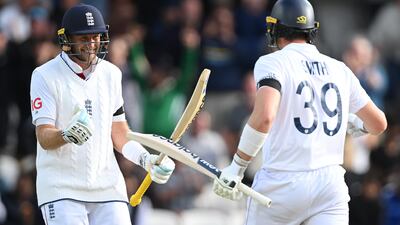
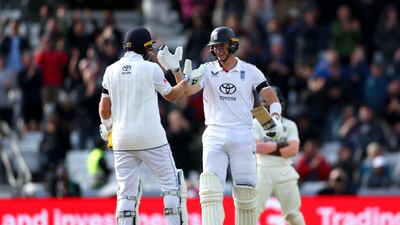
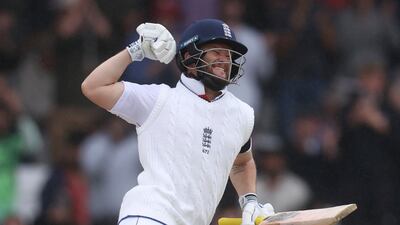
The first Test at Leeds was going along quite well for India for most of the first four days. They hit five centuries and saw Bumrah pick up five wickets. On the final day, England chased down 371 with ease to complete a record win.
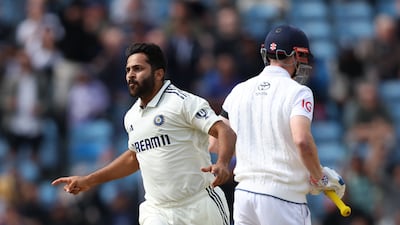
It was a rough start to Shubman Gill’s stint as the new Test captain. Not only did he have to watch his team drop close to 10 chances in the match, but he also had to contend with his leading bowlers – Bumrah and Mohammad Siraj – go wicketless during the chase.
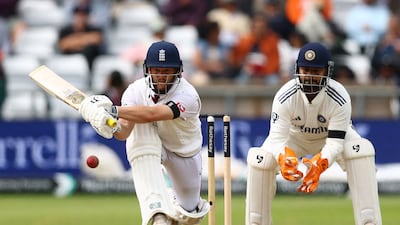
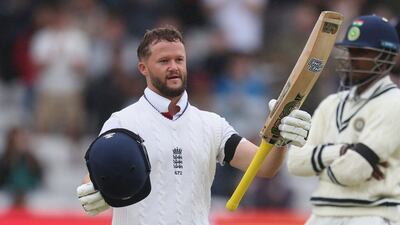
On the final day, as Ben Duckett smashed India’s bowlers to all parts and reverse-swept spinner Ravindra Jadeja out of the attack, Gill was searching for answers. Senior players KL Rahul and Rishabh Pant were marshalling the field for most of the day. It was a bit embarrassing seeing Kohli and Rohit's successor looking around for pointers.
Since it was his first match in charge, Gill will be given some leeway. But comparisons with Kohli during his captaincy debut will be inevitable; Kohli always was in complete control of the team – in victory and defeat.
The person who is unlikely to be shielded from criticism is coach Gautam Gambhir. After taking over from the widely regarded Rahul Dravid as India coach, Gambhir has overseen one of the worst runs in Test cricket for India this century.
Under Gambhir’s watch, India have lost seven out of 11 matches. That is a staggering record for a team that prides itself in its recent Test accomplishments.
There were questions about Gambhir's ability to steer the red-ball team as his accomplishments as coach are limited to white-ball cricket – IPL titles as captain and coach, and the Champions Trophy title earlier this year with the national team.
The shortcomings in the Test team are too obvious – no quality back-up for Bumrah, limited ability to take 20 wickets, delay in bringing in the next generation of spinners, and a captain who does not seem at home leading the Test side.
Then there are those strangely caustic replies from Gambhir to straightforward questions during press conferences, which show that the pressure is probably getting to the coach.
Which is why the second Test that starts in Edgbaston on Wednesday will be more crucial for Gambhir than Gill.
Sure, Gill wants a win under his belt and to draw level in the five-match series. It won't be easy, as India are likely to have pace ace Bumrah only for two out of the next four Tests, with the rest of the attack looking fairly listless. Plus, England will have Jofra Archer and maybe even Mark Wood to call on at some point.
Still, Gill has the backing of the Indian cricket establishment and will be given enough time to grow into the role of a leader. And he did most things right on his first day at the job. Gambhir, however, will find it difficult to hold on to his post, at least in Tests, if India lose the England series as well. If greats Kohli and Rohit can be steered towards the exit after a gradual decline in form and runs, Gambhir should not be surprised if he too finds a target on his back.

THE SPECS
Engine: 1.5-litre
Transmission: 6-speed automatic
Power: 110 horsepower
Torque: 147Nm
Price: From Dh59,700
On sale: now
Short-term let permits explained
Homeowners and tenants are allowed to list their properties for rental by registering through the Dubai Tourism website to obtain a permit.
Tenants also require a letter of no objection from their landlord before being allowed to list the property.
There is a cost of Dh1,590 before starting the process, with an additional licence fee of Dh300 per bedroom being rented in your home for the duration of the rental, which ranges from three months to a year.
Anyone hoping to list a property for rental must also provide a copy of their title deeds and Ejari, as well as their Emirates ID.
Ten tax points to be aware of in 2026
1. Domestic VAT refund amendments: request your refund within five years
If a business does not apply for the refund on time, they lose their credit.
2. E-invoicing in the UAE
Businesses should continue preparing for the implementation of e-invoicing in the UAE, with 2026 a preparation and transition period ahead of phased mandatory adoption.
3. More tax audits
Tax authorities are increasingly using data already available across multiple filings to identify audit risks.
4. More beneficial VAT and excise tax penalty regime
Tax disputes are expected to become more frequent and more structured, with clearer administrative objection and appeal processes. The UAE has adopted a new penalty regime for VAT and excise disputes, which now mirrors the penalty regime for corporate tax.
5. Greater emphasis on statutory audit
There is a greater need for the accuracy of financial statements. The International Financial Reporting Standards standards need to be strictly adhered to and, as a result, the quality of the audits will need to increase.
6. Further transfer pricing enforcement
Transfer pricing enforcement, which refers to the practice of establishing prices for internal transactions between related entities, is expected to broaden in scope. The UAE will shortly open the possibility to negotiate advance pricing agreements, or essentially rulings for transfer pricing purposes.
7. Limited time periods for audits
Recent amendments also introduce a default five-year limitation period for tax audits and assessments, subject to specific statutory exceptions. While the standard audit and assessment period is five years, this may be extended to up to 15 years in cases involving fraud or tax evasion.
8. Pillar 2 implementation
Many multinational groups will begin to feel the practical effect of the Domestic Minimum Top-Up Tax (DMTT), the UAE's implementation of the OECD’s global minimum tax under Pillar 2. While the rules apply for financial years starting on or after January 1, 2025, it is 2026 that marks the transition to an operational phase.
9. Reduced compliance obligations for imported goods and services
Businesses that apply the reverse-charge mechanism for VAT purposes in the UAE may benefit from reduced compliance obligations.
10. Substance and CbC reporting focus
Tax authorities are expected to continue strengthening the enforcement of economic substance and Country-by-Country (CbC) reporting frameworks. In the UAE, these regimes are increasingly being used as risk-assessment tools, providing tax authorities with a comprehensive view of multinational groups’ global footprints and enabling them to assess whether profits are aligned with real economic activity.
Contributed by Thomas Vanhee and Hend Rashwan, Aurifer
The five pillars of Islam
Padmaavat
Director: Sanjay Leela Bhansali
Starring: Ranveer Singh, Deepika Padukone, Shahid Kapoor, Jim Sarbh
3.5/5
Key figures in the life of the fort
Sheikh Dhiyab bin Isa (ruled 1761-1793) Built Qasr Al Hosn as a watchtower to guard over the only freshwater well on Abu Dhabi island.
Sheikh Shakhbut bin Dhiyab (ruled 1793-1816) Expanded the tower into a small fort and transferred his ruling place of residence from Liwa Oasis to the fort on the island.
Sheikh Tahnoon bin Shakhbut (ruled 1818-1833) Expanded Qasr Al Hosn further as Abu Dhabi grew from a small village of palm huts to a town of more than 5,000 inhabitants.
Sheikh Khalifa bin Shakhbut (ruled 1833-1845) Repaired and fortified the fort.
Sheikh Saeed bin Tahnoon (ruled 1845-1855) Turned Qasr Al Hosn into a strong two-storied structure.
Sheikh Zayed bin Khalifa (ruled 1855-1909) Expanded Qasr Al Hosn further to reflect the emirate's increasing prominence.
Sheikh Shakhbut bin Sultan (ruled 1928-1966) Renovated and enlarged Qasr Al Hosn, adding a decorative arch and two new villas.
Sheikh Zayed bin Sultan (ruled 1966-2004) Moved the royal residence to Al Manhal palace and kept his diwan at Qasr Al Hosn.
Sources: Jayanti Maitra, www.adach.ae
UAE v Gibraltar
What: International friendly
When: 7pm kick off
Where: Rugby Park, Dubai Sports City
Admission: Free
Online: The match will be broadcast live on Dubai Exiles’ Facebook page
UAE squad: Lucas Waddington (Dubai Exiles), Gio Fourie (Exiles), Craig Nutt (Abu Dhabi Harlequins), Phil Brady (Harlequins), Daniel Perry (Dubai Hurricanes), Esekaia Dranibota (Harlequins), Matt Mills (Exiles), Jaen Botes (Exiles), Kristian Stinson (Exiles), Murray Reason (Abu Dhabi Saracens), Dave Knight (Hurricanes), Ross Samson (Jebel Ali Dragons), DuRandt Gerber (Exiles), Saki Naisau (Dragons), Andrew Powell (Hurricanes), Emosi Vacanau (Harlequins), Niko Volavola (Dragons), Matt Richards (Dragons), Luke Stevenson (Harlequins), Josh Ives (Dubai Sports City Eagles), Sean Stevens (Saracens), Thinus Steyn (Exiles)
LIVERPOOL%20TOP%20SCORERS
%3Cp%3E(Premier%20League%20only)%3Cbr%3EMohamed%20Salah%20129%3Cbr%3ERobbie%20Fowler%20128%3Cbr%3ESteven%20Gerrard%20120%3Cbr%3EMichael%20Owen%20118%3Cbr%3ESadio%20Mane%2090%3Cbr%3E%3C%2Fp%3E%0A
The Word for Woman is Wilderness
Abi Andrews, Serpent’s Tail
Lexus LX700h specs
Engine: 3.4-litre twin-turbo V6 plus supplementary electric motor
Power: 464hp at 5,200rpm
Torque: 790Nm from 2,000-3,600rpm
Transmission: 10-speed auto
Fuel consumption: 11.7L/100km
On sale: Now
Price: From Dh590,000