

New India coach Gautam Gambhir has laid out the roadmap for the immediate future, stating that veteran batsmen Rohit Sharma and Virat Kohli will certainly be part of his plans until the 2027 World Cup provided they remain fit.
Rohit, 37, and Kohli, 35, announced their retirements from T20 Internationals last month after helping India lift the T20 World Cup title following a thrilling win over South Africa in the final in Barbados.
However, both are available for ODIs and Tests. The next major assignments for the Indian team are the four-Test tour of Australia and the 50-over Champions Trophy next year. The following two years have a T20 World Cup and a 50-over World Cup. Which means the star batsmen can expect to play until 2027, if they remain in form and are fit.
Speaking in his first press conference since replacing Rahul Dravid at the helm of the national team, Gambhir said both senior players still had plenty to offer.
"I think they've shown what they can deliver on the big stage, whether it's the T20 World Cup or the (2023) 50-over World Cup," Gambhir said ahead of his first assignment - three T20 Internationals and three ODIs in Sri Lanka that start on Saturday in Pallekele.
"One thing I can be very clear of is that both those guys have a lot of cricket left in them. More importantly, with the Champions Trophy (in 2025) and a big tour of Australia (from November 2024), obviously they would be motivated enough.
"Then, hopefully, if they can keep their fitness, the 2027 World Cup as well. But this is a very personal decision. I can't say (for sure) how much cricket is left in them. Ultimately it's up to the players how much they can contribute to the team's success.
"Ultimately, it's the team that's important. But looking at what Virat and Rohit can deliver, I think they still have a lot of cricket. They're world class players and any team would want to have both of them for as long as possible."
The other main talking point from the selection of the Indian teams for the tour of Sri Lanka was the appointment of Suryakumar Yadav as T20 captain in place of all-rounder Hardik Pandya, who had a very good T20 World Cup and was the next in line to take over from Rohit.
Chief selector Ajit Agarkar revealed that Pandya lost out on India's T20 captaincy to Suryakumar because of concerns over his availability after frequent injury absences.
"Fitness has been something that he's struggled with," Agarkar said in Mumbai.
"As selectors, it becomes difficult then. The thought behind it was that we want someone who is likely to be available more."
Pandya reportedly opted out of the three-match ODI series, which is possibly another reason why he was overlooked. Young batsman Shubman Gill was named vice-captain for both T20s and ODIs.
Pandya is "still a very important player," Agarkar said. "And that's what we want him to be, those skill sets are hard to find."
-
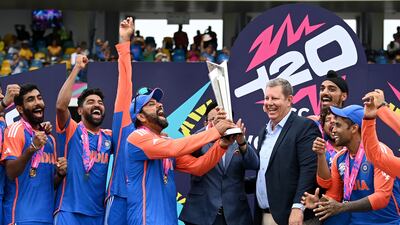
India captain Rohit Sharma lifts the T20 World Cup trophy after a seven-run win over South Africa in the final at the Kensington Oval in Bridgetown, Barbados, on Saturday, June 29, 2024. Getty Images -
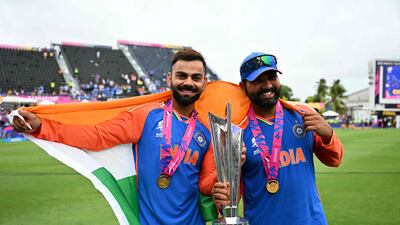
India's Virat Kohli and captain Rohit Sharma celebrate with the T20 World Cup trophy in Barbados. AFP -
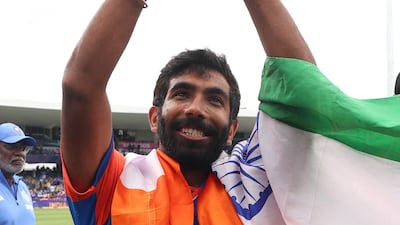
India pacer Jasprit Bumrah was the player of the tournament. Reuters -
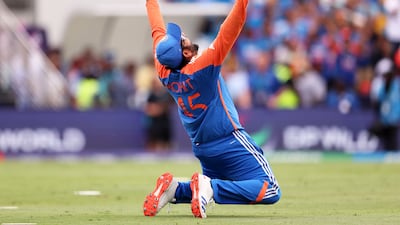
India captain Rohit Sharma celebrates after winning the T20 World Cup final against South Africa by seven runs at the Kensington Oval. Getty Images -

Hardik Pandya starred with the ball for India, picking up three wickets in a tense victory. Getty Images -
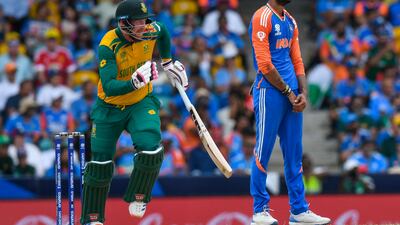
South Africa's Heinrich Klaasen smashed 52 from 27 balls and took his team close to victory. AFP -
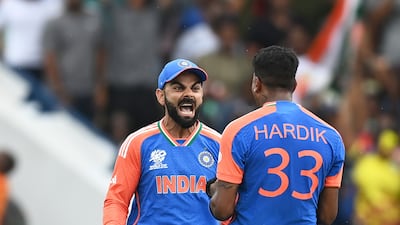
Hardik Pandya celebrates with Virat Kohli after dismissing David Miller. Getty Images -
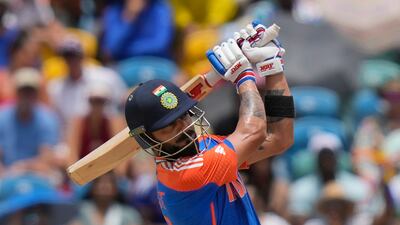
Virat Kohli held India's inning together with a timely knock of 76. AP -
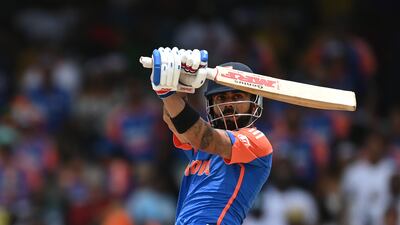
Virat Kohli made 76 from 59 balls to help India reach 176-7. Getty Images -
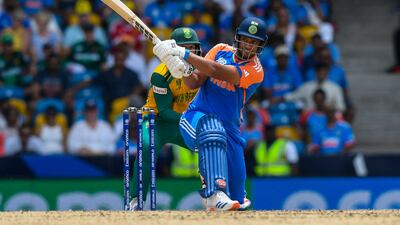
Shivam Dube gave good support to Kohli, hitting 27 from 16 at the Kensington Oval in Barbados. AFP -

Anrich Nortje of South Africa celebrates after dismissing Shivam Dube. Getty Images -
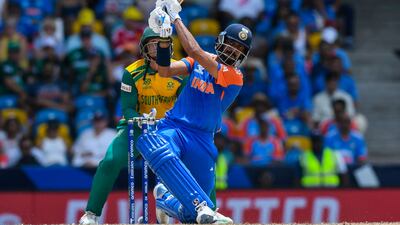
Axar Patel rescued India's innings with 47 from 31 balls. AFP -

Quinton de Kock celebrates with teammates after running Axar Patel out. Getty Images -
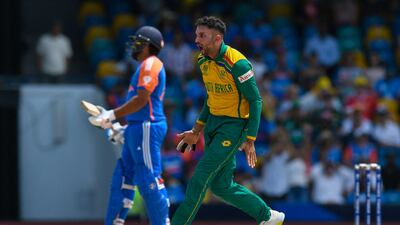
South Africa's Keshav Maharaj dismissed India captain Rohit Sharma in his first over. AFP -

South Africa's Keshav Maharaj got Rishabh Pant out for a duck. AFP



