

At the beginning of this year's holy month, the UAE embarked on a mission to feed disadvantaged people across the region: 100 million meals across 20 countries was the target to ensure the most vulnerable did not go hungry during Ramadan. That the goal would be met was only to be expected but remarkably, it more than doubled and the UAE provided 216 million meals to impoverished households with the support of 385,000 donors from 51 countries
Sheikh Mohammed bin Rashid, Vice President and Ruler of Dubai, said: “The objectives of 100 Million Meals were ambitious to match the magnitude of hardship that Covid-19 has brought to vulnerable populations across the world.”
Among the recipients of the 100 million meal packages were refugees, low-income families, orphans and widows in beneficiary countries such as Jordan, Egypt and Pakistan.
The nature and scope of the campaign also underpinned a long-term humanitarian goal. Zero hunger by 2030 is the second UN Sustainable Development Goal (no poverty is the first). For the international community, it's a steep climb to meet that deadline, given that globally 820 million people are undernourished, of which 52 million live in the Mena region.
Since launching the campaign on April 11, the UAE has given generously. Donations poured in with such magnanimity that more than half of the required target – 78 per cent of the total amount – was achieved in the first week. Since then, 10 more countries were added to the roster, as a result of which, thousands more people were able to eat a meal.
What the UAE achieved in this campaign goes beyond charity. Giving is integral to the ethos of this country. To widen that foundational vision and include the people who live in the UAE is an inclusive strategy with a heartening ripple effect: it benefits underprivileged persons in the most stricken nations of our wider neighbourhood.
To address the ravages of hunger, in the UAE, humanitarian associations, companies, businessmen and philanthropists all came together. People donated varying sums of money via text messages and the 100 million meals website. Fund-raisers and art auctions were held. A single-digit car plate, AA9, raised Dh38 million ($10.4m). Media coverage of the campaign reached 136.1 million views. The campaign's videos got 350 million views.
To gain such unanimous support for a cause as enormous and urgent as fighting hunger on a global scale is already a huge task. But to harness the good in people and their will to give is tougher still when viewed in the much graver context of a pandemic, during which – it bears repetition – countless people lost lives, jobs, faced personal losses, took salary cuts and continue to be affected in numerous ways.
Under these circumstances, that thousands of people in the UAE did their bit for the benefit of millions of others living elsewhere bears acknowledgement. This culture of charity and inclusion matters because it asserts our common humanity and our willingness to step up for the neediest.
The devastation caused by Covid-19 has set people back by generations, in some cases. In too many thousands of families across the world, the assurance of jobs and three square meals no longer exists. It becomes imperative then for the fortunate to give. The UAE, with its ethos of giving, did just that.
Thanking the 385,000 participants, Sheikh Mohammed said at the conclusion of the 28-days-long campaign: "This is the UAE."
As families come together at the end of Ramadan, humanitarian drives such as these remind us of the values we must adhere to round the year. To shine a light on the importance of giving is immeasurably worthy in an unequal world. It is a light the world can do with as the most privileged of us count our blessings this Eid.
-
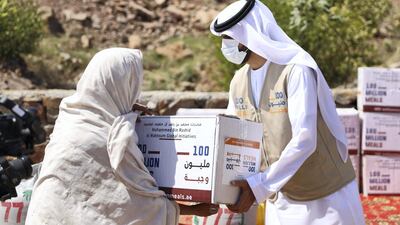
The 100 Million Meals campaign raised enough funds to provide 216 million meals around the world. -
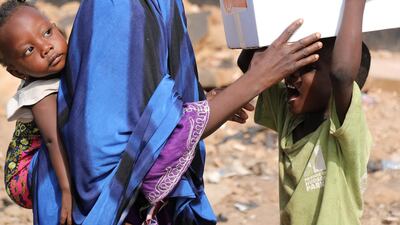
As part of the campaign, 12 food banks and nine humanitarian organisations are distributing the food parcels in 30 countries -
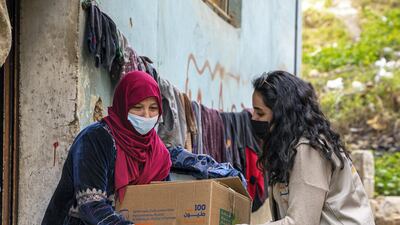
Twenty per cent of the parcels have been allocated to people in need in Palestine and refugees in Jordan and Bangladesh. -
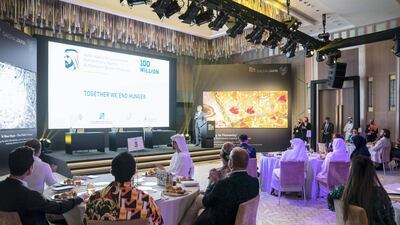
Charity auctions played an important role in helping raise money for the campaign. -
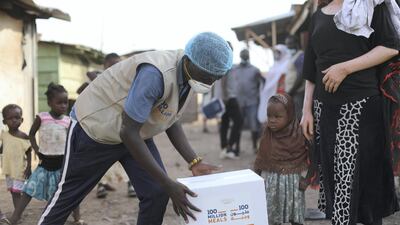
The 100 Million Meals campaign will benefit people in 30 countries. -
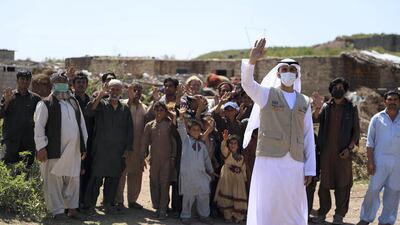
Mohammed bin Rashid Global Initiatives partnered with several humanitarian organisations to deliver food parcels to people’s doorsteps. UAE Government Media Office -

Groups involved include the World Food Programme, the Food Banking Regional Network and Mohammed bin Rashid Al Maktoum Humanitarian and Charity Establishment. -

Food aid will reach beneficiaries in countries across the Middle East, Africa, Asia, Europe and South America. -
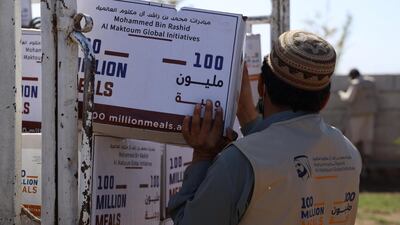
MBRGI partnered with several humanitarian organisations to deliver food parcels. -
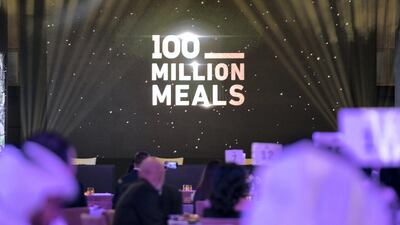
Charity auctions also played an important role in helping raise funds for the campaign. -

The ‘Most Noble Numbers’ charity auction auctioned off a prestigious single-digit car plate, AA9, for Dh38 million. -
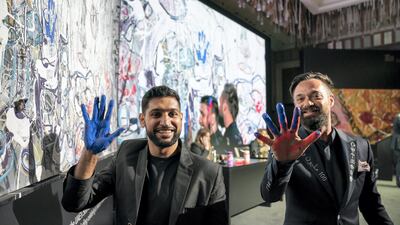
An international charity art auction was organised for the campaign. -
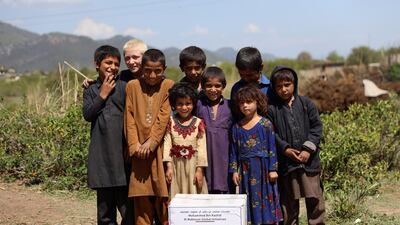
A total of 385,000 donors from 51 countries supported the humanitarian drive. Money for 20 million meals was secured through text message and website donations, while cash for 70 million meals was raised from private-sector contributions.



