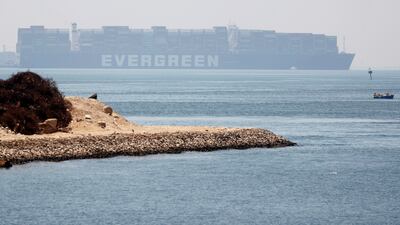
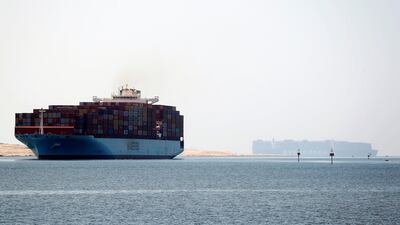
For a global transport network that carries 90 per cent of the world’s traded goods, international shipping is – surprisingly – somewhat out of sight, out of mind. Most people go about their daily lives oblivious to the thousands of ships that carry millions of containers across oceans and seas, 24 hours a day, seven days a week. It is only when this carefully calibrated supply chain breaks down that most people truly appreciate just how essential shipping is.
When the Singapore-flagged container vessel Dali hit a major bridge in the eastern US city of Baltimore, Maryland, on Tuesday, the world sat up and took notice. The moment of the Francis Scott Key Bridge’s collapse was caught on camera and endlessly replayed. In addition to the tragic loss of six people who were carrying out maintenance work on the bridge when it came down, the crash looks set have a cascade effect on jobs, businesses, trade and transport not just in the US north-east, but internationally.
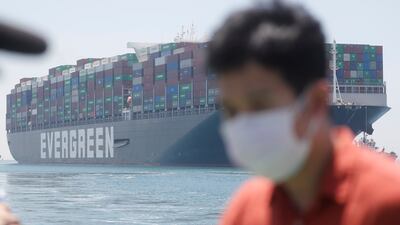
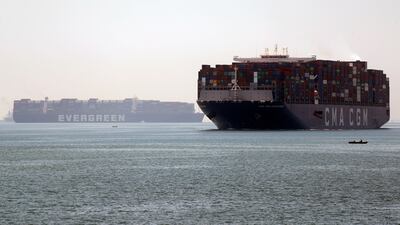
Countries in the Middle East, home to some of the most strategic waterways in the world, are acutely aware of what can happen when shipping runs aground. Almost exactly three years ago, the Panama-flagged vessel Ever Given, operated by Evergreen Marine Corp, blocked Egypt’s Suez Canal for nearly a week. The enormous cargo ship was released in a difficult salvage operation but not before costing the world billions in lost trade. Elsewhere in the region, the continuing disruption in the Red Sea caused by Houthi attacks on international shipping is not just costing companies millions in expensive rerouting and higher insurance costs, it is also hurting the flow of humanitarian aid to war-torn Sudan.
Major accidents in shipping are relatively rare; according to a 2023 report from German insurers Allianz, 38 large ships were lost worldwide last year, down by more than a third year-on-year and the lowest total in the report’s history. But when things go wrong, the environment is often the first to suffer and the last to be put right. In May 2020, the MV X-Press Pearl container ship caught fire and sank off the coast of Sri Lanka, releasing chemical pollution that became the country’s worst ecological disaster. In January 2007, the MSC Napoli suffered catastrophic hull damage in the English Channel; the salvage operation took a colossal 924 days to complete.
Given the serious consequences of collision or fire at sea, how can shipping’s reputation for safety be improved? Plenty of ideas are in the mix. According to maritime software manufacturer BASSnet, advanced digital systems can ensure that vessels comply with shipping’s seven main international safety codes, and offer systematic and detailed records of audits, inspections and risk assessments. Best-in-class technology can also automate navigation and route planning, reducing risks and allowing seafarers to concentrate on other tasks.
Technology offers myriad ways to make shipping safer, but it is the world’s 1.9 million seafarers that must take centre stage in a culture of competence and accountability. For that to happen, crews’ mental and physical health must take priority; this can be done by improving ways of tracking work and rest hours to prevent fatigue from setting in.
Creating a safety culture that reaches from the boardroom to the engine room is essential. This was recently highlighted in another indispensable transport network – aviation. This week, Tim Clark, the president of Emirates Airlines, told The National that under-fire aircraft manufacturer Boeing needed to establish a governance model that prioritises safety and quality.
Accidents will happen and Baltimores is not an isolated incident; last month a container vessel rammed a bridge in Guangzhou, China, killing two people. But given shipping’s central place in both national and international economies, the margin for error is small. This is why Baltimore should sound an alarm for the industry as a whole to build on the progress it has already made.

Match info
Australia 580
Pakistan 240 and 335
Result: Australia win by an innings and five runs
UAE currency: the story behind the money in your pockets
Match info
Uefa Champions League Group C
Liverpool v Napoli, midnight
Roll of honour 2019-2020
Dubai Rugby Sevens
Winners: Dubai Hurricanes
Runners up: Bahrain
West Asia Premiership
Winners: Bahrain
Runners up: UAE Premiership
UAE Premiership
}Winners: Dubai Exiles
Runners up: Dubai Hurricanes
UAE Division One
Winners: Abu Dhabi Saracens
Runners up: Dubai Hurricanes II
UAE Division Two
Winners: Barrelhouse
Runners up: RAK Rugby
Name: Peter Dicce
Title: Assistant dean of students and director of athletics
Favourite sport: soccer
Favourite team: Bayern Munich
Favourite player: Franz Beckenbauer
Favourite activity in Abu Dhabi: scuba diving in the Northern Emirates
How England have scored their set-piece goals in Russia
Three Penalties
v Panama, Group Stage (Harry Kane)
v Panama, Group Stage (Kane)
v Colombia, Last 16 (Kane)
Four Corners
v Tunisia, Group Stage (Kane, via John Stones header, from Ashley Young corner)
v Tunisia, Group Stage (Kane, via Harry Maguire header, from Kieran Trippier corner)
v Panama, Group Stage (Stones, header, from Trippier corner)
v Sweden, Quarter-Final (Maguire, header, from Young corner)
One Free-Kick
v Panama, Group Stage (Stones, via Jordan Henderson, Kane header, and Raheem Sterling, from Tripper free-kick)
Sole survivors
- Cecelia Crocker was on board Northwest Airlines Flight 255 in 1987 when it crashed in Detroit, killing 154 people, including her parents and brother. The plane had hit a light pole on take off
- George Lamson Jr, from Minnesota, was on a Galaxy Airlines flight that crashed in Reno in 1985, killing 68 people. His entire seat was launched out of the plane
- Bahia Bakari, then 12, survived when a Yemenia Airways flight crashed near the Comoros in 2009, killing 152. She was found clinging to wreckage after floating in the ocean for 13 hours.
- Jim Polehinke was the co-pilot and sole survivor of a 2006 Comair flight that crashed in Lexington, Kentucky, killing 49.
Visit Abu Dhabi culinary team's top Emirati restaurants in Abu Dhabi
Yadoo’s House Restaurant & Cafe
For the karak and Yoodo's house platter with includes eggs, balaleet, khamir and chebab bread.
Golden Dallah
For the cappuccino, luqaimat and aseeda.
Al Mrzab Restaurant
For the shrimp murabian and Kuwaiti options including Kuwaiti machboos with kebab and spicy sauce.
Al Derwaza
For the fish hubul, regag bread, biryani and special seafood soup.
Fixtures
%3Cp%3E%3Cstrong%3EWednesday%2C%20April%203%3C%2Fstrong%3E%3C%2Fp%3E%0A%3Cp%3EArsenal%20v%20Luton%20Town%2C%2010.30pm%20(UAE)%3C%2Fp%3E%0A%3Cp%3EManchester%20City%20v%20Aston%20Villa%2C%2011.15pm%20(UAE)%3C%2Fp%3E%0A%3Cp%3E%3Cstrong%3EThursday%2C%20April%204%3C%2Fstrong%3E%3C%2Fp%3E%0A%3Cp%3ELiverpool%20v%20Sheffield%20United%2C%2010.30pm%20(UAE)%3C%2Fp%3E%0A
Mercer, the investment consulting arm of US services company Marsh & McLennan, expects its wealth division to at least double its assets under management (AUM) in the Middle East as wealth in the region continues to grow despite economic headwinds, a company official said.
Mercer Wealth, which globally has $160 billion in AUM, plans to boost its AUM in the region to $2-$3bn in the next 2-3 years from the present $1bn, said Yasir AbuShaban, a Dubai-based principal with Mercer Wealth.
“Within the next two to three years, we are looking at reaching $2 to $3 billion as a conservative estimate and we do see an opportunity to do so,” said Mr AbuShaban.
Mercer does not directly make investments, but allocates clients’ money they have discretion to, to professional asset managers. They also provide advice to clients.
“We have buying power. We can negotiate on their (client’s) behalf with asset managers to provide them lower fees than they otherwise would have to get on their own,” he added.
Mercer Wealth’s clients include sovereign wealth funds, family offices, and insurance companies among others.
From its office in Dubai, Mercer also looks after Africa, India and Turkey, where they also see opportunity for growth.
Wealth creation in Middle East and Africa (MEA) grew 8.5 per cent to $8.1 trillion last year from $7.5tn in 2015, higher than last year’s global average of 6 per cent and the second-highest growth in a region after Asia-Pacific which grew 9.9 per cent, according to consultancy Boston Consulting Group (BCG). In the region, where wealth grew just 1.9 per cent in 2015 compared with 2014, a pickup in oil prices has helped in wealth generation.
BCG is forecasting MEA wealth will rise to $12tn by 2021, growing at an annual average of 8 per cent.
Drivers of wealth generation in the region will be split evenly between new wealth creation and growth of performance of existing assets, according to BCG.
Another general trend in the region is clients’ looking for a comprehensive approach to investing, according to Mr AbuShaban.
“Institutional investors or some of the families are seeing a slowdown in the available capital they have to invest and in that sense they are looking at optimizing the way they manage their portfolios and making sure they are not investing haphazardly and different parts of their investment are working together,” said Mr AbuShaban.
Some clients also have a higher appetite for risk, given the low interest-rate environment that does not provide enough yield for some institutional investors. These clients are keen to invest in illiquid assets, such as private equity and infrastructure.
“What we have seen is a desire for higher returns in what has been a low-return environment specifically in various fixed income or bonds,” he said.
“In this environment, we have seen a de facto increase in the risk that clients are taking in things like illiquid investments, private equity investments, infrastructure and private debt, those kind of investments were higher illiquidity results in incrementally higher returns.”
The Abu Dhabi Investment Authority, one of the largest sovereign wealth funds, said in its 2016 report that has gradually increased its exposure in direct private equity and private credit transactions, mainly in Asian markets and especially in China and India. The authority’s private equity department focused on structured equities owing to “their defensive characteristics.”
Jetour T1 specs
Engine: 2-litre turbocharged
Power: 254hp
Torque: 390Nm
Price: From Dh126,000
Available: Now
UAE SQUAD
Omar Abdulrahman (Al Hilal), Ali Khaseif, Ali Mabkhout, Salem Rashed, Khalifa Al Hammadi, Khalfan Mubarak, Zayed Al Ameri, Mohammed Al Attas (Al Jazira), Khalid Essa, Ahmed Barman, Ryan Yaslam, Bandar Al Ahbabi (Al Ain), Habib Fardan, Tariq Ahmed, Mohammed Al Akbari (Al Nasr), Ali Saleh, Ali Salmin (Al Wasl), Adel Al Hosani, Ali Hassan Saleh, Majed Suroor (Sharjah), Ahmed Khalil, Walid Abbas, Majed Hassan, Ismail Al Hammadi (Shabab Al Ahli), Hassan Al Muharrami, Fahad Al Dhahani (Bani Yas), Mohammed Al Shaker (Ajman)
57%20Seconds
%3Cp%3E%3Cstrong%3EDirector%3A%3C%2Fstrong%3E%20Rusty%20Cundieff%0D%3Cbr%3E%3Cstrong%3EStars%3A%20%3C%2Fstrong%3EJosh%20Hutcherson%2C%20Morgan%20Freeman%2C%20Greg%20Germann%2C%20Lovie%20Simone%0D%3Cbr%3E%3Cstrong%3ERating%3A%20%3C%2Fstrong%3E2%2F5%0D%3Cbr%3E%0D%3Cbr%3E%3C%2Fp%3E%0A
COMPANY%20PROFILE
%3Cp%3E%3Cstrong%3ECompany%20name%3C%2Fstrong%3E%3A%20ASI%20(formerly%20DigestAI)%3C%2Fp%3E%0A%3Cp%3E%3Cstrong%3EStarted%3A%3C%2Fstrong%3E%202017%3C%2Fp%3E%0A%3Cp%3E%3Cstrong%3EFounders%3A%3C%2Fstrong%3E%20Quddus%20Pativada%3C%2Fp%3E%0A%3Cp%3E%3Cstrong%3EBased%3A%3C%2Fstrong%3E%20Dubai%2C%20UAE%3C%2Fp%3E%0A%3Cp%3E%3Cstrong%3EIndustry%3A%3C%2Fstrong%3E%20Artificial%20intelligence%2C%20education%20technology%3C%2Fp%3E%0A%3Cp%3E%3Cstrong%3EFunding%3A%3C%2Fstrong%3E%20%243%20million-plus%3C%2Fp%3E%0A%3Cp%3E%3Cstrong%3EInvestors%3A%3C%2Fstrong%3E%20GSV%20Ventures%2C%20Character%2C%20Mark%20Cuban%3C%2Fp%3E%0A
Lexus LX700h specs
Engine: 3.4-litre twin-turbo V6 plus supplementary electric motor
Power: 464hp at 5,200rpm
Torque: 790Nm from 2,000-3,600rpm
Transmission: 10-speed auto
Fuel consumption: 11.7L/100km
On sale: Now
Price: From Dh590,000
MATCH INFO
Uefa Champions League semi-final, first leg
Bayern Munich v Real Madrid
When: April 25, 10.45pm kick-off (UAE)
Where: Allianz Arena, Munich
Live: BeIN Sports HD
Second leg: May 1, Santiago Bernabeu, Madrid
The biog
Title: General Practitioner with a speciality in cardiology
Previous jobs: Worked in well-known hospitals Jaslok and Breach Candy in Mumbai, India
Education: Medical degree from the Government Medical College in Nagpur
How it all began: opened his first clinic in Ajman in 1993
Family: a 90-year-old mother, wife and two daughters
Remembers a time when medicines from India were purchased per kilo
Global state-owned investor ranking by size
|
1.
|
United States
|
|
2.
|
China
|
|
3.
|
UAE
|
|
4.
|
Japan
|
|
5
|
Norway
|
|
6.
|
Canada
|
|
7.
|
Singapore
|
|
8.
|
Australia
|
|
9.
|
Saudi Arabia
|
|
10.
|
South Korea
|
TEAMS
EUROPE:
Justin Rose, Francesco Molinari, Tyrrell Hatton, Tommy Fleetwood, Jon Rahm, Rory McIlroy, Alex Noren, Thorbjorn Olesen, Paul Casey, Sergio Garcia, Ian Poulter, Henrik Stenson
USA:
Brooks Koepka, Justin Thomas, Dustin Johnson, Patrick Reed, Bubba Watson, Jordan Spieth, Rickie Fowler, Webb Simpson, Tiger Woods, Phil Mickelson, Bryson DeChambeau ( 1 TBC)
MATCH RESULT
Al Jazira 3 Persepolis 2
Jazira: Mabkhout (52'), Romarinho (77'), Al Hammadi (90' 6)
Persepolis: Alipour (42'), Mensha (84')
Ten tax points to be aware of in 2026
1. Domestic VAT refund amendments: request your refund within five years
If a business does not apply for the refund on time, they lose their credit.
2. E-invoicing in the UAE
Businesses should continue preparing for the implementation of e-invoicing in the UAE, with 2026 a preparation and transition period ahead of phased mandatory adoption.
3. More tax audits
Tax authorities are increasingly using data already available across multiple filings to identify audit risks.
4. More beneficial VAT and excise tax penalty regime
Tax disputes are expected to become more frequent and more structured, with clearer administrative objection and appeal processes. The UAE has adopted a new penalty regime for VAT and excise disputes, which now mirrors the penalty regime for corporate tax.
5. Greater emphasis on statutory audit
There is a greater need for the accuracy of financial statements. The International Financial Reporting Standards standards need to be strictly adhered to and, as a result, the quality of the audits will need to increase.
6. Further transfer pricing enforcement
Transfer pricing enforcement, which refers to the practice of establishing prices for internal transactions between related entities, is expected to broaden in scope. The UAE will shortly open the possibility to negotiate advance pricing agreements, or essentially rulings for transfer pricing purposes.
7. Limited time periods for audits
Recent amendments also introduce a default five-year limitation period for tax audits and assessments, subject to specific statutory exceptions. While the standard audit and assessment period is five years, this may be extended to up to 15 years in cases involving fraud or tax evasion.
8. Pillar 2 implementation
Many multinational groups will begin to feel the practical effect of the Domestic Minimum Top-Up Tax (DMTT), the UAE's implementation of the OECD’s global minimum tax under Pillar 2. While the rules apply for financial years starting on or after January 1, 2025, it is 2026 that marks the transition to an operational phase.
9. Reduced compliance obligations for imported goods and services
Businesses that apply the reverse-charge mechanism for VAT purposes in the UAE may benefit from reduced compliance obligations.
10. Substance and CbC reporting focus
Tax authorities are expected to continue strengthening the enforcement of economic substance and Country-by-Country (CbC) reporting frameworks. In the UAE, these regimes are increasingly being used as risk-assessment tools, providing tax authorities with a comprehensive view of multinational groups’ global footprints and enabling them to assess whether profits are aligned with real economic activity.
Contributed by Thomas Vanhee and Hend Rashwan, Aurifer
Duterte Harry: Fire and Fury in the Philippines
Jonathan Miller, Scribe Publications
The National in Davos
We are bringing you the inside story from the World Economic Forum's Annual Meeting in Davos, a gathering of hundreds of world leaders, top executives and billionaires.
The%20specs
%3Cp%3E%3Cstrong%3EEngine%3A%3C%2Fstrong%3E%206.5-litre%20V12%20and%20three%20electric%20motors%0D%3Cbr%3E%3Cstrong%3EPower%3A%20%3C%2Fstrong%3E1%2C015hp%0D%3Cbr%3E%3Cstrong%3ETorque%3A%20%3C%2Fstrong%3E1%2C500Nm%20(estimate)%0D%3Cbr%3E%3Cstrong%3ETransmission%3A%3C%2Fstrong%3E%20Eight-speed%20dual-clutch%20auto%0D%3Cbr%3E%3Cstrong%3EOn%20sale%3A%3C%2Fstrong%3E%20Early%202024%0D%3Cbr%3E%3Cstrong%3EPrice%3A%20%3C%2Fstrong%3EFrom%20Dh2%20million%20(estimate)%3C%2Fp%3E%0A
UAE currency: the story behind the money in your pockets
What is the FNC?
The Federal National Council is one of five federal authorities established by the UAE constitution. It held its first session on December 2, 1972, a year to the day after Federation.
It has 40 members, eight of whom are women. The members represent the UAE population through each of the emirates. Abu Dhabi and Dubai have eight members each, Sharjah and Ras al Khaimah six, and Ajman, Fujairah and Umm Al Quwain have four.
They bring Emirati issues to the council for debate and put those concerns to ministers summoned for questioning.
The FNC’s main functions include passing, amending or rejecting federal draft laws, discussing international treaties and agreements, and offering recommendations on general subjects raised during sessions.
Federal draft laws must first pass through the FNC for recommendations when members can amend the laws to suit the needs of citizens. The draft laws are then forwarded to the Cabinet for consideration and approval.
Since 2006, half of the members have been elected by UAE citizens to serve four-year terms and the other half are appointed by the Ruler’s Courts of the seven emirates.
In the 2015 elections, 78 of the 252 candidates were women. Women also represented 48 per cent of all voters and 67 per cent of the voters were under the age of 40.