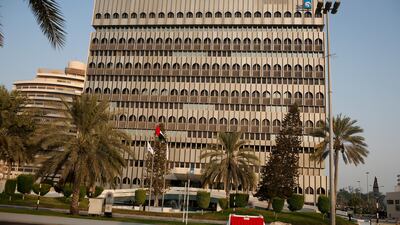
Zayed Sports City is just one of 64 sites and buildings in Abu Dhabi that have been identified as requiring 'immediate and unconditional protection'. Andrew Watkins / Zayed Sports City


Protecting buildings is about more than bricks and mortar


  • English
  • Arabic

July 27, 2023

When it comes to the meaningful work of preserving the bricks-and-mortar history of our towns and cities, saving old bus depots, vegetable markets or fire stations can be as important as efforts to maintain ancient places of worship or striking heritage houses. Civic heritage comes in many forms, and buildings from our recent past are more than capable of holding value and meaning.

Embracing this concept is the Modern Heritage Conservation Initiative in Abu Dhabi that is adding 64 locations in the emirate to a list of buildings and sites earmarked as requiring "immediate and unconditional protection".

On the list are high-profile entries of major cultural, religious or political significance – such as the National Theatre and Al Manhal Palace, where the UAE flag was raised after the country joined the UN in 1971. But there is also the Abu Dhabi Bus Terminal and Taxi Stand, Al Ain Vegetable and Fish Market, and Zayed Al Awwal Secondary School. Because of the diverse nature of these listed sites, many of them places that people visit every day, the initiative from the Department of Culture and Tourism – Abu Dhabi will help to create an invaluable, living repository of the daily lives of the millions of people who have lived in the emirate. Essentially, it is about people and community as much as architectural heritage.

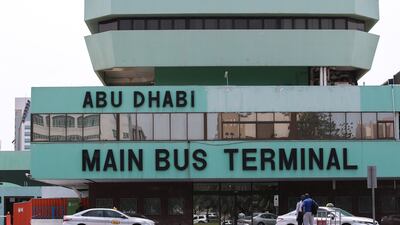
  • Abu Dhabi Bus Terminal and Taxi Stand is one of 64 sites identified by DCT Abu Dhabi as requiring 'unconditional protection'. Victor Besa / The National
    Abu Dhabi Bus Terminal and Taxi Stand is one of 64 sites identified by DCT Abu Dhabi as requiring 'unconditional protection'. Victor Besa / The National
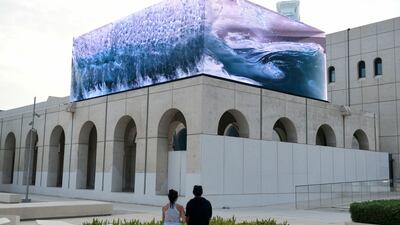
  • The Cultural Foundation. Khushnum Bhandari / The National
    The Cultural Foundation. Khushnum Bhandari / The National
  • The National Theatre. Khushnum Bhandari / The National
    The National Theatre. Khushnum Bhandari / The National
  • Zayed Sports City. Delores Johnson / The National
    Zayed Sports City. Delores Johnson / The National
  • Radisson Blu Resort Al Ain (formerly Hilton Al Ain). Photo: Radisson
    Radisson Blu Resort Al Ain (formerly Hilton Al Ain). Photo: Radisson
  • Al Khalidiyah Park. Silvia Razgova / The National
    Al Khalidiyah Park. Silvia Razgova / The National
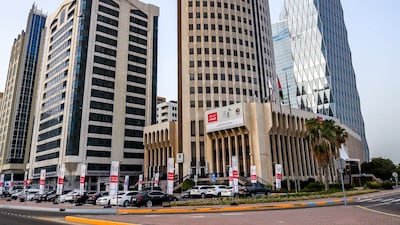
  • Abu Dhabi Chamber of Commerce and Industry Tower. Victor Besa / The National
    Abu Dhabi Chamber of Commerce and Industry Tower. Victor Besa / The National
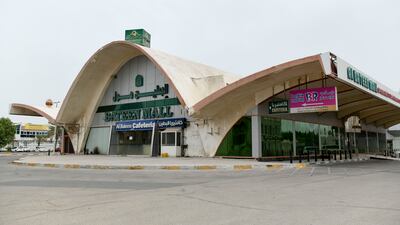
  • Al Bateen Mall. Khushnum Bhandari / The National
    Al Bateen Mall. Khushnum Bhandari / The National
  • The Radisson Blu Hotel & Resort Abu Dhabi Corniche. Photo: Radisson
    The Radisson Blu Hotel & Resort Abu Dhabi Corniche. Photo: Radisson
  • The headquarters of Abu Dhabi National Oil Company. Photo: Andrew Henderson / The National
    The headquarters of Abu Dhabi National Oil Company. Photo: Andrew Henderson / The National
  • Etisalat Headquarters in Abu Dhabi. Victor Besa / The National
    Etisalat Headquarters in Abu Dhabi. Victor Besa / The National

Indeed, few places have developed as quickly as the UAE capital, and its urban landscape is a unique and eye-catching mix of contributions from an array of international architects spanning many decades. But preserving this diverse modern heritage is far from being a mere museum project. Carefully managed preservation can pay economic dividends, as historic districts can increase property values. Preservation work also creates employment and, by making use of existing sites, champions sustainability. Abu Dhabi has been able to strike a balance between preservation and development, such as major renovation work on the waterfront near the Eastern Mangroves district that instead of simply erasing what went before retained many much-loved architectural elements.

The Abu Dhabi approach of valuing all kinds of heritage also complements the UAE’s well-established efforts to preserve Arab and Islamic heritage, both at home and abroad. The country has carried out significant work in Iraq in partnership with Unesco as part of the Spirit of Mosul project. This was launched in 2018 to rebuild some of the city’s historic landmarks that were destroyed by ISIS or damaged in fighting to expel the militants. These landmarks included the Al Nuri mosque complex, as well as two nearby churches, Al Saa’a and Al Tahera, and involved $50 million in funding from the UAE.

On Tuesday, 100 restored historic homes in Mosul were handed over to their owners to commemorate the sixth anniversary of the city's liberation from its ISIS occupiers. The hard work put into this restoration project – and many others – demonstrates the importance of saving and preserving buildings that are a repository of human history and development, and the stage upon which people act out their lives, whether these be religious sites frequented by generations of worshippers or everyday markets around which entire communities revolved.


THE SPECS

Engine: AMG-enhanced 3.0L inline-6 turbo with EQ Boost and electric auxiliary compressor

Transmission: nine-speed automatic

Power: 429hp

Torque: 520Nm​​​​​​​

Price: Dh360,200 (starting)

Who was Alfred Nobel?

The Nobel Prize was created by wealthy Swedish chemist and entrepreneur Alfred Nobel.

  • In his will he dictated that the bulk of his estate should be used to fund "prizes to those who, during the preceding year, have conferred the greatest benefit to humankind".
  • Nobel is best known as the inventor of dynamite, but also wrote poetry and drama and could speak Russian, French, English and German by the age of 17. The five original prize categories reflect the interests closest to his heart.
  • Nobel died in 1896 but it took until 1901, following a legal battle over his will, before the first prizes were awarded.
RedCrow Intelligence Company Profile

Started: 2016

Founders: Hussein Nasser Eddin, Laila Akel, Tayeb Akel 

Based: Ramallah, Palestine

Sector: Technology, Security

# of staff: 13

Investment: $745,000

Investors: Palestine’s Ibtikar Fund, Abu Dhabi’s Gothams and angel investors

The specs

Engine: 2.0-litre 4-cylinder turbo hybrid

Transmission: eight-speed automatic

Power: 390bhp

Torque: 400Nm

Price: Dh340,000 ($92,579

Ten tax points to be aware of in 2026

1. Domestic VAT refund amendments: request your refund within five years

If a business does not apply for the refund on time, they lose their credit.

2. E-invoicing in the UAE

Businesses should continue preparing for the implementation of e-invoicing in the UAE, with 2026 a preparation and transition period ahead of phased mandatory adoption. 

3. More tax audits

Tax authorities are increasingly using data already available across multiple filings to identify audit risks. 

4. More beneficial VAT and excise tax penalty regime

Tax disputes are expected to become more frequent and more structured, with clearer administrative objection and appeal processes. The UAE has adopted a new penalty regime for VAT and excise disputes, which now mirrors the penalty regime for corporate tax.

5. Greater emphasis on statutory audit

There is a greater need for the accuracy of financial statements. The International Financial Reporting Standards standards need to be strictly adhered to and, as a result, the quality of the audits will need to increase.

6. Further transfer pricing enforcement

Transfer pricing enforcement, which refers to the practice of establishing prices for internal transactions between related entities, is expected to broaden in scope. The UAE will shortly open the possibility to negotiate advance pricing agreements, or essentially rulings for transfer pricing purposes. 

7. Limited time periods for audits

Recent amendments also introduce a default five-year limitation period for tax audits and assessments, subject to specific statutory exceptions. While the standard audit and assessment period is five years, this may be extended to up to 15 years in cases involving fraud or tax evasion. 

8. Pillar 2 implementation 

Many multinational groups will begin to feel the practical effect of the Domestic Minimum Top-Up Tax (DMTT), the UAE's implementation of the OECD’s global minimum tax under Pillar 2. While the rules apply for financial years starting on or after January 1, 2025, it is 2026 that marks the transition to an operational phase.

9. Reduced compliance obligations for imported goods and services

Businesses that apply the reverse-charge mechanism for VAT purposes in the UAE may benefit from reduced compliance obligations. 

10. Substance and CbC reporting focus

Tax authorities are expected to continue strengthening the enforcement of economic substance and Country-by-Country (CbC) reporting frameworks. In the UAE, these regimes are increasingly being used as risk-assessment tools, providing tax authorities with a comprehensive view of multinational groups’ global footprints and enabling them to assess whether profits are aligned with real economic activity. 

Contributed by Thomas Vanhee and Hend Rashwan, Aurifer

Tamkeen's offering
  • Option 1: 70% in year 1, 50% in year 2, 30% in year 3
  • Option 2: 50% across three years
  • Option 3: 30% across five years 
How to help

Call the hotline on 0502955999 or send "thenational" to the following numbers:

2289 - Dh10

2252 - Dh50

6025 - Dh20

6027 - Dh100

6026 - Dh200

Updated: July 27, 2023, 11:27 AM