


In 1953, scientists Francis Crick and James Watson discovered how DNA carries genetic information, easily one of the most important scientific achievements in history. Announcing it to his colleagues at Cambridge University, Crick famously walked into The Eagle pub and declared that they had “found the secret of life”.
Now, as it has done many times already, the science that the pair enabled is bringing life and hope to some of the most ill in society. This week, researchers at the UAE-backed Zayed Centre for Research into Rare Disease in Children in London made breakthroughs in gene editing that pave the way for more effective, targeted treatment of leukaemia. The centre is also using genetic research to help sufferers of early onset epilepsy. Prompt diagnosis means patients can be moved into tailored treatment more quickly, giving children the best chance to deal with the illness.
Also this week, The National has written about the work of Dante Labs’ work in Dubai’s Silicon Oasis. The company offers customers Dh999 saliva testing kits, which create a genetic profile that can identify vulnerabilities to illnesses, such as diabetes and cancer.
These are examples of the many scientific and medical frontiers being explored in 2022. But they do not mask a number of deeply troubling setbacks.
Parts of the Middle East are buckling under the pressure of lethal diseases. In Iraq, the World Health Organisation has just shipped urgent medical supplies to the city of Sulaymaniyah, as it battles a troubling outbreak of cholera. The disease is highly contagious and more cases would pile pressure on the country’s already struggling health system. Iraq’s fragile water supply is a likely cause of the outbreak. Instability has led to poorly maintained and unhygienic infrastructure, and dwindling water sources due to climate change and mismanagement are driving people to more polluted sources. Many hoped that cholera was largely confined to the past. The WHO recorded a 60 per cent decrease in global incidence of the disease in 2018. The fact it is now resurgent in parts of the world is a cause for serious concern.
-
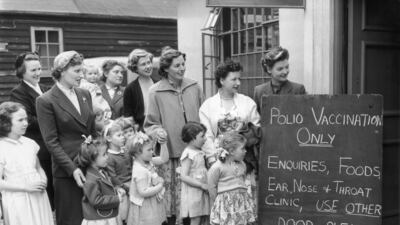
A group of mothers with their children wait outside Middlesex County Council Clinic for the first polio vaccinations in May 1956. All photos: Getty Images -

A polio vaccine being tested at the Glaxo Laboratories in Sefton Park, Buckinghamshire, in 1956. -
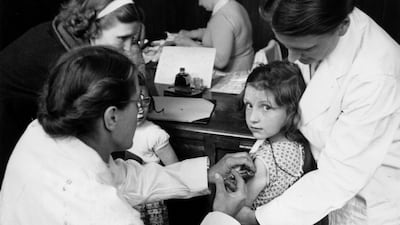
A child is injected with a vaccine against polio in 1956, the first stage of the biggest vaccination programme ever undertaken in Britain at the time. -
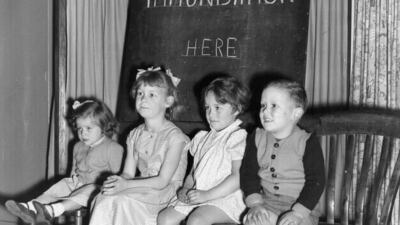
Four young children wait for injections against polio at the Fairfield Welfare Clinic in Wandsworth, south London, in 1956. -
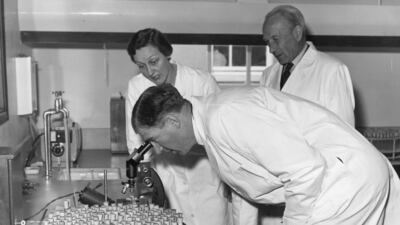
Health minister Dennis Vosper examining the polio virus in 1957, during the production of Polivirin, Britain's anti-poliomyletis vaccine, at Glaxo's Virus Research Laboratories in Stoke Poges. -

A queue of factory workers waiting to receive polio vaccinations in one of the new London Mobile Immunisation Clinics at Highbury Grove in 1959. -

Junior members of staff at the Ministry of Health on Saville Row, London, line up to receive their inoculation against polio in 1959. -

Nurses in one of the many emergency polio vaccination clinics in Hull read the latest reports on the health scare in 1961.


And it is not the only historically devastating disease making a comeback. This week, the UK detected a possible polio outbreak in London. It has not been found in the country for almost 40 years. The risk to public health is low – most people in the UK have been vaccinated against it – but authorities are urgently calling people who have not been inoculated to do so.
Such setbacks in a year when scientists are making major breakthroughs show that achieving better overall global health is neither straightforward nor inevitable with the passage of time. Work done in cutting-edge labs does not compensate for the need for basic education around the importance of vaccination, hygiene, healthy lifestyles and awareness of where food and drink come from.
Indeed, doctors in the UAE are stressing the importance of continued testing and taking of precautions to battle Covid-19. The scientific realities of new variants and waning immunity from vaccinations are also playing a part, and they are impossible for the individual to control. But Covid-19 reminded the world that personal action is pivotal, too. The advanced work of scientists might make headlines, but individual responsibility could be even more consequential for managing global health, especially in today’s complex epidemiological landscape.

