• A Google map of Sheikh Zayed Bridge. Courtesy Google Maps
    A Google map of Sheikh Zayed Bridge. Courtesy Google Maps
  • A model of the Sheikh Zayed Bridge on display at City Scape in Abu Dhabi in April 2010. Sammy Dallal for The National
    A model of the Sheikh Zayed Bridge on display at City Scape in Abu Dhabi in April 2010. Sammy Dallal for The National
  • Construction of the Sheikh Zayed Bridge before its inauguration in November 2010. Jaime Puebla for The National
    Construction of the Sheikh Zayed Bridge before its inauguration in November 2010. Jaime Puebla for The National
  • Construction of the Sheikh Zayed Bridge before its inauguration in November 2010. Jaime Puebla for The National
    Construction of the Sheikh Zayed Bridge before its inauguration in November 2010. Jaime Puebla for The National
  • Construction of the Sheikh Zayed Bridge before its inauguration in November 2010. Sammy Dallal for The National
    Construction of the Sheikh Zayed Bridge before its inauguration in November 2010. Sammy Dallal for The National
  • Construction of the Sheikh Zayed Bridge before its inauguration in November 2010.
    Construction of the Sheikh Zayed Bridge before its inauguration in November 2010.
  • Construction of the Sheikh Zayed Bridge before its inauguration in November 2010.
    Construction of the Sheikh Zayed Bridge before its inauguration in November 2010.
  • Construction of the Sheikh Zayed Bridge before its inauguration in November 2010. Jaime Puebla for The National
    Construction of the Sheikh Zayed Bridge before its inauguration in November 2010. Jaime Puebla for The National
  • Construction of the Sheikh Zayed Bridge before its inauguration in November 2010.
    Construction of the Sheikh Zayed Bridge before its inauguration in November 2010.
  • Construction of the Sheikh Zayed Bridge before its inauguration in November 2010.
    Construction of the Sheikh Zayed Bridge before its inauguration in November 2010.
  • Construction of the Sheikh Zayed Bridge before its inauguration in November 2010.
    Construction of the Sheikh Zayed Bridge before its inauguration in November 2010.
  • A different view of the Sheikh Zayed Bridge. The National
    A different view of the Sheikh Zayed Bridge. The National
  • The bridge is the late architect Zaha Hadid’s signature piece. Andrew Henderson / The National
    The bridge is the late architect Zaha Hadid’s signature piece. Andrew Henderson / The National
  • The bridge was designed to connect people and build a literal pathway between communities. Seven Media
    The bridge was designed to connect people and build a literal pathway between communities. Seven Media

Sheikh Zayed Bridge is a reminder of the transformational power of progress


Nick March
  • English
  • Arabic

Abu Dhabi marks two key development moments this month, one with a bang and the other with a quiet nod to a decade ago.

The sound and the fury will be heard on the Corniche this weekend when the Mina Plaza Towers are finally demolished on Friday to make way for redevelopment. Long-term residents will be familiar with much of the story of the towers: construction on the site began in 2007 but was halted several times over the years.

In February, it was announced they would be demolished to make way for a redevelopment of the neighbourhood’s souqs and a regeneration of the seafront area.

The towers have stood for years as concrete reminders of a future not quite realised and serve as a brooding bookend at one end of the Corniche, far away from the glasswork statement made by the Etihad Towers at the opposite end of the popular coastal road.

If redevelopment should broadly aim to balance preservation and progress, the demolition of the Mina Plaza Towers represents a step forward. Few will mourn the passing of a construction project that never came close to fruition.

The demolition of the Mina Plaza Towers represents a step forward. Few will mourn the passing of a construction project that never came close to fruition. Victor Besa / The National
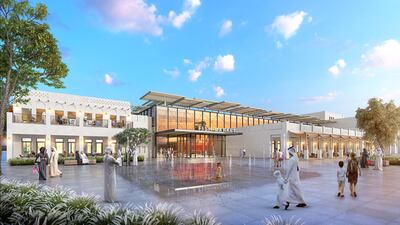
  • The new fish market is being built beside the old one. Courtesy: Department of Municipalities / Modon
    The new fish market is being built beside the old one. Courtesy: Department of Municipalities / Modon
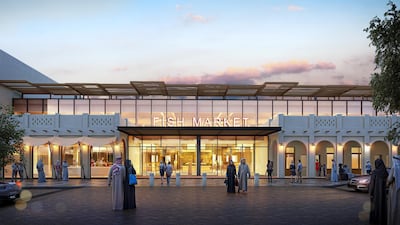
  • The entrance to Mina Zayed's new fish market. Courtesy: Department of Municipalities / Modon
    The entrance to Mina Zayed's new fish market. Courtesy: Department of Municipalities / Modon
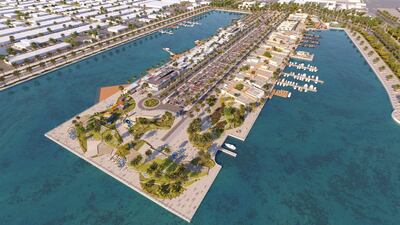
  • Construction is underway to transform Mina Zayed into a top tourist and commercial destination. Courtesy: Department of Municipalities / Modon
    Construction is underway to transform Mina Zayed into a top tourist and commercial destination. Courtesy: Department of Municipalities / Modon
  • Construction is underway to transform Mina Zayed into a top tourist and commercial destination. Courtesy: Department of Municipalities / Modon
    Construction is underway to transform Mina Zayed into a top tourist and commercial destination. Courtesy: Department of Municipalities / Modon

At the other end of Abu Dhabi island, the Sheikh Zayed Bridge, a monument of form and function, marks its 10th anniversary this month.

The late Zaha Hadid’s shape-shifting, wave-inspired work was years in the making and opened to traffic in November 2010, the same month Queen Elizabeth II arrived in the UAE on a state visit from the UK.

At a ceremony during her trip, the UK monarch and Sheikh Mohammed bin Rashid, Vice President and Ruler of Dubai, went on to unveil the plans for the Zayed National Museum, designed by Foster and Partners.

Ten years later, that "starchitect" moment – the inelegant portmanteau that is used to describe the world’s most famous architects – framed by the realisation of Hadid’s vision and the announcement of another piece of the huge Saadiyat puzzle, still seems breathtaking.

The bridge was one of the great works of Abu Dhabi’s early 21st-century development, as the city transformed into a destination city, economic powerhouse and cultural hub.

It is easy to underplay the bridge’s agile, weightless beauty now that Hadid’s signature piece is such a regular part of our lives.

Viewed from the roadway it offers commanding views of the channel that runs between Abu Dhabi island and the mainland, leaving most of its workings unseen. The perspective from Maqta Bridge tells another story, revealing Hadid’s futuristic swoops and sculptured curves that stretch over hundred of metres of land, air and water.

Rene Padirayon on top of the main arch in autumn 2009. Work on the Sheikh Zayed Bridge helped thousands of employees build better lives for the families they had left behind to go to work. Courtesy Roy Lengweiler
Construction of Sheikh Zayed Bridge in progress. Roy Lengweiler

Roy Lengweiler was one of the first employees on site when the project began to be brought to life in January 2003. An engineer by trade, he was there when it opened, too. A career bridge builder, he would always say he was only one part of a much bigger effort to bring Hadid’s drawings into reality. He would, however, end up playing a unique role in the build.

Mr Lengweiler spent around 2,000 days on site, taking a camera with him most of the time to record work in progress, so that he could use those images in meetings convened to discuss this project of intense detail.

By the time I met him in late 2010 he had amassed thousands of images, which detailed every part of the construction process from start to finish. It took a few rounds of cajoling and pleading to persuade him to let us tell his story and to publish his pictures, which were later the subject of a temporary exhibition at a gallery in the city. The images are now held by Akkasah, the New York University Abu Dhabi's collection of regional photographs.

Swiss civil engineer and photographer Roy Lengweiler's 2012 photo exhibition at the Ghaf Gallery in Abu Dhabi was titled 'Sheikh Zayed Bridge – The Human Angle'. Silvia Razgova for The National
If redevelopment should broadly aim to balance preservation and progress, the demolition of the Mina Plaza Towers represents a step forward. Few will mourn the passing of a construction project that never came close to fruition

Looking back, it is not hard to see why his pictures struck a chord. Mr Lengweiler’s images weren’t just snapshots of a work in progress, they also painted a picture of vast human endeavour.

The process of bridge-building became an altogether more lyrical narrative in those frames. As thousands of workers toiled away on a project that was designed to connect people and build a literal pathway between communities, the work itself also helped those same employees build better lives for the families they had left behind to go to work. Each part of the bridge’s structure seemed to support and enhance the next one, just like the photographs themselves.

A call to Mr Lengweiler this week at his home in Switzerland to speak about the bridge and his photographs offered a chance for both of us to catch up. We hadn’t spoken in years. Even today he says Hadid’s work is “unparalleled in complexity”.

Our conversation also served as a chance to reflect and think about the scale of the Sheikh Zayed Bridge and the transformational power of development and progress.

Abu Dhabi residents will be reminded of that power once again on Friday when the Mina Zayed Towers are levelled to make way for the start of another new chapter in the city’s story.

Nick March is an assistant editor-in-chief at The National

Timeline

2012-2015

The company offers payments/bribes to win key contracts in the Middle East

May 2017

The UK SFO officially opens investigation into Petrofac’s use of agents, corruption, and potential bribery to secure contracts

September 2021

Petrofac pleads guilty to seven counts of failing to prevent bribery under the UK Bribery Act

October 2021

Court fines Petrofac £77 million for bribery. Former executive receives a two-year suspended sentence 

December 2024

Petrofac enters into comprehensive restructuring to strengthen the financial position of the group

May 2025

The High Court of England and Wales approves the company’s restructuring plan

July 2025

The Court of Appeal issues a judgment challenging parts of the restructuring plan

August 2025

Petrofac issues a business update to execute the restructuring and confirms it will appeal the Court of Appeal decision

October 2025

Petrofac loses a major TenneT offshore wind contract worth €13 billion. Holding company files for administration in the UK. Petrofac delisted from the London Stock Exchange

November 2025

180 Petrofac employees laid off in the UAE

The specs

Price, base / as tested Dh12 million

Engine 8.0-litre quad-turbo, W16

Gearbox seven-speed dual clutch auto

Power 1479 @ 6,700rpm

Torque 1600Nm @ 2,000rpm 0-100kph: 2.6 seconds 0-200kph: 6.1 seconds

Top speed 420 kph (governed)

Fuel economy, combined 35.2L / 100km (est)

Conflict, drought, famine

Estimates of the number of deaths caused by the famine range from 400,000 to 1 million, according to a document prepared for the UK House of Lords in 2024.
It has been claimed that the policies of the Ethiopian government, which took control after deposing Emperor Haile Selassie in a military-led revolution in 1974, contributed to the scale of the famine.
Dr Miriam Bradley, senior lecturer in humanitarian studies at the University of Manchester, has argued that, by the early 1980s, “several government policies combined to cause, rather than prevent, a famine which lasted from 1983 to 1985. Mengistu’s government imposed Stalinist-model agricultural policies involving forced collectivisation and villagisation [relocation of communities into planned villages].
The West became aware of the catastrophe through a series of BBC News reports by journalist Michael Buerk in October 1984 describing a “biblical famine” and containing graphic images of thousands of people, including children, facing starvation.

Band Aid

Bob Geldof, singer with the Irish rock group The Boomtown Rats, formed Band Aid in response to the horrific images shown in the news broadcasts.
With Midge Ure of the band Ultravox, he wrote the hit charity single Do They Know it’s Christmas in December 1984, featuring a string of high-profile musicians.
Following the single’s success, the idea to stage a rock concert evolved.
Live Aid was a series of simultaneous concerts that took place at Wembley Stadium in London, John F Kennedy Stadium in Philadelphia, the US, and at various other venues across the world.
The combined event was broadcast to an estimated worldwide audience of 1.5 billion.

UPI facts

More than 2.2 million Indian tourists arrived in UAE in 2023
More than 3.5 million Indians reside in UAE
Indian tourists can make purchases in UAE using rupee accounts in India through QR-code-based UPI real-time payment systems
Indian residents in UAE can use their non-resident NRO and NRE accounts held in Indian banks linked to a UAE mobile number for UPI transactions

It Was Just an Accident

Director: Jafar Panahi

Stars: Vahid Mobasseri, Mariam Afshari, Ebrahim Azizi, Hadis Pakbaten, Majid Panahi, Mohamad Ali Elyasmehr

Rating: 4/5

EMIRATES'S%20REVISED%20A350%20DEPLOYMENT%20SCHEDULE
%3Cp%3E%3Cstrong%3EEdinburgh%3A%3C%2Fstrong%3E%20November%204%20%3Cem%3E(unchanged)%3C%2Fem%3E%3C%2Fp%3E%0A%3Cp%3E%3Cstrong%3EBahrain%3A%3C%2Fstrong%3E%20November%2015%20%3Cem%3E(from%20September%2015)%3C%2Fem%3E%3B%20second%20daily%20service%20from%20January%201%3C%2Fp%3E%0A%3Cp%3E%3Cstrong%3EKuwait%3A%3C%2Fstrong%3E%20November%2015%20%3Cem%3E(from%20September%2016)%3C%2Fem%3E%3C%2Fp%3E%0A%3Cp%3E%3Cstrong%3EMumbai%3A%3C%2Fstrong%3E%20January%201%20%3Cem%3E(from%20October%2027)%3C%2Fem%3E%3C%2Fp%3E%0A%3Cp%3E%3Cstrong%3EAhmedabad%3A%3C%2Fstrong%3E%20January%201%20%3Cem%3E(from%20October%2027)%3C%2Fem%3E%3C%2Fp%3E%0A%3Cp%3E%3Cstrong%3EColombo%3A%3C%2Fstrong%3E%20January%202%20%3Cem%3E(from%20January%201)%3C%2Fem%3E%3C%2Fp%3E%0A%3Cp%3E%3Cstrong%3EMuscat%3A%3C%2Fstrong%3E%3Cem%3E%20%3C%2Fem%3EMarch%201%3Cem%3E%20(from%20December%201)%3C%2Fem%3E%3C%2Fp%3E%0A%3Cp%3E%3Cstrong%3ELyon%3A%3C%2Fstrong%3E%20March%201%20%3Cem%3E(from%20December%201)%3C%2Fem%3E%3C%2Fp%3E%0A%3Cp%3E%3Cstrong%3EBologna%3A%3C%2Fstrong%3E%20March%201%20%3Cem%3E(from%20December%201)%3C%2Fem%3E%3C%2Fp%3E%0A%3Cp%3E%3Cem%3ESource%3A%20Emirates%3C%2Fem%3E%3C%2Fp%3E%0A
Continental champions

Best Asian Player: Massaki Todokoro (Japan)

Best European Player: Adam Wardzinski (Poland)

Best North & Central American Player: DJ Jackson (United States)

Best African Player: Walter Dos Santos (Angola)

Best Oceanian Player: Lee Ting (Australia)

Best South American Player: Gabriel De Sousa (Brazil)

Best Asian Federation: Saudi Jiu-Jitsu Federation

FIGHT CARD

Fights start from 6pm Friday, January 31

Catchweight 82kg
Piotr Kuberski (POL) v Ahmed Saeb (IRQ)

Women’s bantamweight
Cornelia Holm (SWE) v Corinne Laframboise (CAN)

Welterweight
Omar Hussein (JOR) v Vitalii Stoian (UKR)

Welterweight
Josh Togo (LEB) v Ali Dyusenov (UZB)

Flyweight
Isaac Pimentel (BRA) v Delfin Nawen (PHI)

Catchweight 80kg​​​​​​​
Seb Eubank (GBR) v Mohamed El Mokadem (EGY)

Lightweight
Mohammad Yahya (UAE) v Ramadan Noaman (EGY)

Lightweight
Alan Omer (GER) v Reydon Romero (PHI)

Welterweight
Ahmed Labban (LEB) v Juho Valamaa (FIN)

Featherweight
Elias Boudegzdame (ALG) v Austin Arnett (USA)

Super heavyweight
Roman Wehbe (LEB) v Maciej Sosnowski (POL)

Common OCD symptoms and how they manifest

Checking: the obsession or thoughts focus on some harm coming from things not being as they should, which usually centre around the theme of safety. For example, the obsession is “the building will burn down”, therefore the compulsion is checking that the oven is switched off.

Contamination: the obsession is focused on the presence of germs, dirt or harmful bacteria and how this will impact the person and/or their loved ones. For example, the obsession is “the floor is dirty; me and my family will get sick and die”, the compulsion is repetitive cleaning.

Orderliness: the obsession is a fear of sitting with uncomfortable feelings, or to prevent harm coming to oneself or others. Objectively there appears to be no logical link between the obsession and compulsion. For example,” I won’t feel right if the jars aren’t lined up” or “harm will come to my family if I don’t line up all the jars”, so the compulsion is therefore lining up the jars.

Intrusive thoughts: the intrusive thought is usually highly distressing and repetitive. Common examples may include thoughts of perpetrating violence towards others, harming others, or questions over one’s character or deeds, usually in conflict with the person’s true values. An example would be: “I think I might hurt my family”, which in turn leads to the compulsion of avoiding social gatherings.

Hoarding: the intrusive thought is the overvaluing of objects or possessions, while the compulsion is stashing or hoarding these items and refusing to let them go. For example, “this newspaper may come in useful one day”, therefore, the compulsion is hoarding newspapers instead of discarding them the next day.

Source: Dr Robert Chandler, clinical psychologist at Lighthouse Arabia

LILO & STITCH

Starring: Sydney Elizebeth Agudong, Maia Kealoha, Chris Sanders

Director: Dean Fleischer Camp

Rating: 4.5/5