

George Floyd was killed a year ago today. His family will need no reminder. But May 25 last year took on a larger symbolism. It became the tipping point when civil society in America had had enough of the repeated cases of racist police brutality.
The injustice that led to the deaths of young African Americans earlier in 2020 – of Ahmaud Arbery and Breonna Taylor, among others – pushed race relations to the brink. It propelled the Black Lives Matter Movement forward, gave rise to hundreds of protests and caused a shift in the consciousness of more than 330 million people who live in the most powerful country in the world.
The effects of that shift were felt beyond the US – not least because statues of imperialists were felled in other continents. Within the US and outside, it is fair to say that something changed.
The writer Ta-Nehisi Coates says in Between the World and Me, his book that is in the form of a letter to his son about the experience of being a black man in America: "What was required was a new story, a new history told through the lens of our struggle."
Seen in that context, to mark May 25 as the point that led to the conviction of a white police officer in such a public and cathartic way, is to underline the day when a new story and a new history began to be told.
-
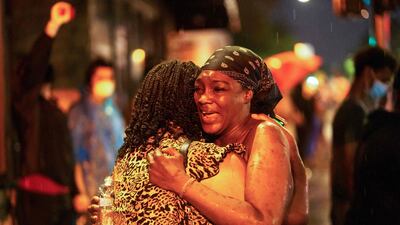
Shawanda Hill (R), the girlfriend of George Floyd reacts near the spot where he died while in custody of the Minneapolis Police in Minneapolis, Minnesota. AFP -
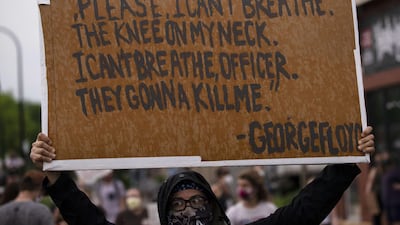
A protester holds a sign while demonstrating against the death of George Floyd outside the 3rd Precinct Police Precinct in Minneapolis, Minnesota. AFP -
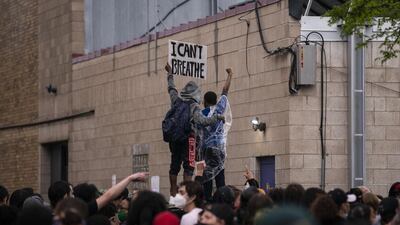
Protesters demonstrate against the death of George Floyd outside the 3rd Precinct Police Precinct in Minneapolis, Minnesota. AFP -
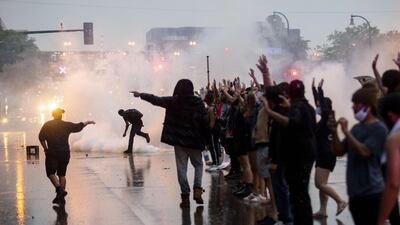
Tear gas is fired as protesters clash with police while demonstrating against the death of George Floyd outside the 3rd Precinct Police Precinct in Minneapolis, Minnesota. AFP -
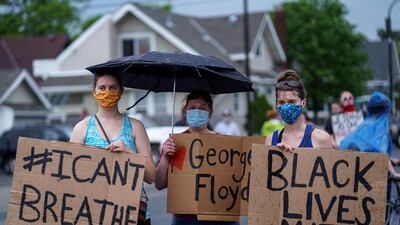
Women hold signs while protesting near the area where a Minneapolis Police Department officer allegedly killed George Floyd, in Minneapolis, Minnesota. AFP -

A police car drives by as protesters clash with police while demonstrating against the death of George Floyd outside the 3rd Precinct Police Precinct in Minneapolis, Minnesota. AFP -
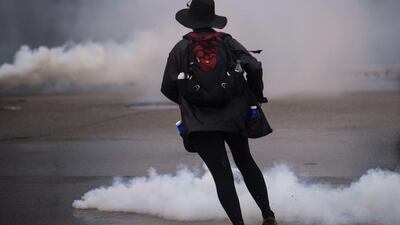
A protesters runs through tear gas while demonstrating against the death of George Floyd outside the 3rd Precinct Police Precinct in Minneapolis, Minnesota. AFP -
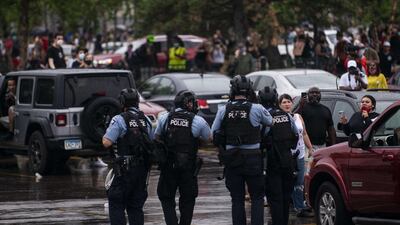
Police dressed in tactical gear attempt to disperse crowds gathered to protest the death of George Floyd outside the 3rd Precinct Police Station in Minneapolis, Minnesota. AFP -
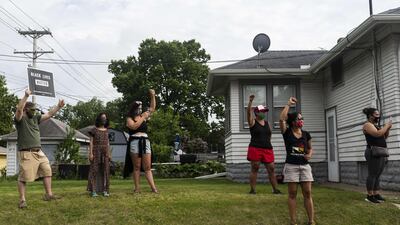
People stand with raised fists as protesters march by while demonstrating against the death of George Floyd in Minneapolis, Minnesota. AFP -
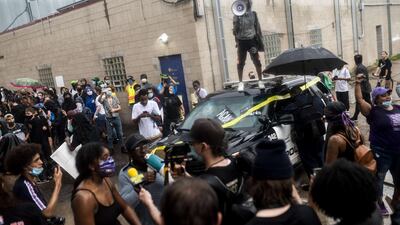
Protesters demonstrate against the death of George Floyd outside the 3rd Precinct Police Precinct in Minneapolis, Minnesota. AFP -
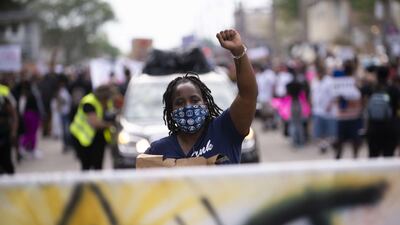
Protesters march through the streets while demonstrating against the death of George Floyd in Minneapolis, Minnesota. AFP -
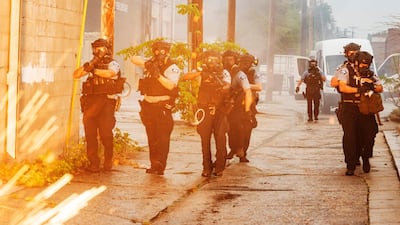
Police officers deploy to disperse protesters gathered for George Floyd in Minneapolis. AP -
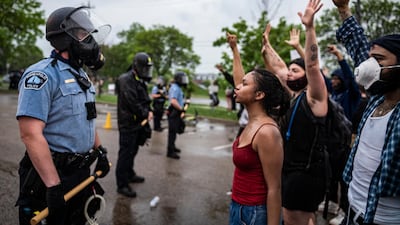
Protesters and police face each other during a rally for George Floyd in Minneapolis. AP -
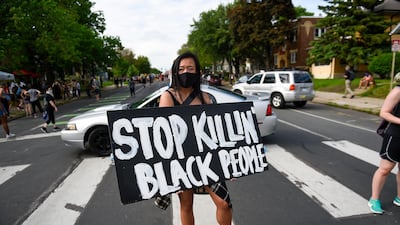
Amy Gee of Minneapolis holds a sign near the scene of the arrest of George Floyd, who later died in police custody, in Minneapolis, Minnesota, USA. EPA


Why we care about dates and anniversaries, however, is a fair question.
In our personal lives, anniversaries conjure up occasions of all sorts, the happy and the not-so-happy. They nudge us to look at the plot points in our lives and to take stock of how long something has existed – or been gone for. They are handy crutches for our memory. Often they are our memories.
They mark the duration of a relationship; years spent at a job; how long it has been since we immigrated from our home countries, whether out of choice or impelled by conflict; how long it has been that a set of circumstances beyond our control forbade us to return to those countries we left behind. Anniversaries can sum up aspects of ourselves – how far we've come or even how far gone we are.
In the world outside they work perhaps on a more expansive scale. They can bind people living through a common moment in history to a single narrative.
In America, May 25 carries weight for the Floyd family, but the day's significance carries beyond their door.
Two years ago, there were few headlines about white policemen in America getting convicted for killing unarmed black men. Now there is one burnt into the modern American experience. An anniversary puts a time stamp on that. It lends perspective to how long ago something happened and whether in the time since, anything changed.
This year's December anniversary of the first case of Covid-19 will similarly lend perspective on how the world has fared, how much has been endured and lost.
Anniversaries, the big public ones, can remind us also of collective failings. August 4 will feel devastating all over again for families of those killed in the Beirut port blast. Timelines of apathy, featuring the dismissal of judges, will appear. People will continue to demand accountability, one year on, and continue to pay tribute every year after.
When the day of a tragedy is marked, a wound is reopened. That could be an argument against marking them but the nature of grief is more complex. And some people cope with double griefs – of the loss of a loved one, and of never knowing what happened, how that loss came to be.

March 4 and the period leading up to the disappearance that day in 2014 of the Malaysia Airlines flight MH370 must be harrowing still for loved ones who are left not knowing what happened, the loss compounded by missing certainty.
It must be harrowing on other days as well, but by marking the date the plane went off the radar, those of us unaffected personally by the tragedy can at least empathise with the bereaved and attempt, even from a distance, to stanch a wound.
There are countless, quiet griefs every day that are not marked publicly but are indelible nonetheless. The loss of a parent, the loss of a child – in the normal course of life, but also to bombs, to car crashes, to cancer, to a lack of oxygen.
For years to come, the months of April and May and beyond will see a bleak harvest of obituaries in national dailies, in India, at least. I see them already, the "deeply missed" or "forever in our hearts", followed by names of the aggrieved family members. By December, when Covid-19 turns two, an optimist can only hope that vaccination rates in the most stricken countries should have improved.

Anniversaries have other names, too. The UN has a list of commemorative days every month of the year. There is a broadening of the mind in perusing causes that a major international abody deems worthy of being commemorated. It is a given though that some of these days will have more pull than others.
So Earth Day in June will tee off write-ups and conferences on climate change because climate change will affect all of us. It will be noted more than, say, a day to create awareness about the problems women may face after childbirth – May 23 was International Day to End Obstetric Fistula.
The intention behind marking these international days is similar to the big event-based anniversaries. They draw attention, however disparate, to a cause, and doing so is often just nice.
On May 12, International Nurses Day, people had kind words to offer healthcare workers, as is fitting. Maybe tomorrow or the day after we would not express them because it might not occur to us, simply because we were not reminded.
There is some meaning in making, if not a big deal then a little deal, of these reminders like those on the UN calendar. It is a given that some of these dates will be meaningful only to a fraction of people, than those affected by racism, Covid-19 and climate disasters.
Does one or the other date really matter though? Perhaps not.
A more “woke” view might argue the significance of a date should be relevant on any day of the year. Yes, it should be, ideally. But to marshal collective attention on one day is useful. It brings it to the headlines, stirs up its importance on social media and leads people in the public domain to talk about it.
Still, why should we care so much about anniversaries?
We may have different answers. But maybe a common thread is that they are occasions to pause and pay homage to what altered us. Anniversaries keep us from forgetting. And while they don't all matter equally, many of them are precious because they keep something of our humanity alive.
Nivriti Butalia is an assistant comment editor at The National

