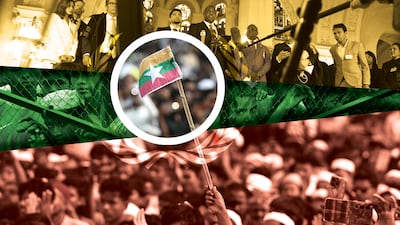

There were cheers, tears and prayers across the world’s largest refugee settlement in Cox’s Bazar when the International Court of Justice pronounced Myanmar responsible for genocide against the Rohingya. Who can grudge their moment after what they have endured?
It is a bitter-sweet moment, nevertheless. To have the wrongs against them acknowledged reaffirms their basic humanity. However, alongside comes the stigma of victimhood, as with other recognised genocide victims such as European Jews, Rwandan Tutsi, Bosnian Muslims, Sudanese Darfuris and Iraqi Yazidis.
The recovery path from genocide is long, fraught and uncertain. How successfully that is traversed depends not on formal judicial announcements but what they change. That is what the Rohingya ask as celebrations fade, and lawyers and campaigners move beyond self-congratulations.

What the Rohingya seek from the country where they have dwelled for generations is restorative justice: recognition of their identity alongside equal citizenship; return home with security guarantees; restitution, reparation and rehabilitation. They also want their tormenters prosecuted and punished.
How does the ICJ verdict measure against these demands?
The court recognised the Rohingya as a distinct ethnic group that deserved protection under the Genocide Convention. But it did not rule that they are indigenous to Myanmar.
That is problematic because, although the judges found that stripping the Rohingya of nationality was central to their genocidal persecution, they declined to order restoration even after two judges warned that without equal citizenship, the court’s remedies could be void of substance. In short, people rendered stateless in order to be destroyed still remain stateless after their destruction has been proved.
How can the Rohingya risk going home with no citizenship rights, despite the court ordering Myanmar to allow safe, voluntary and dignified returns? Who is entitled to return? The order is explicit only about those harmed by the Myanmar military’s 2017 “clearance operations”. It says nothing about earlier purges in 1978, 1991-92, 2012 and 2016, and renewed violence that uprooted 150,000 since 2024. And what rights attach to about 300,000 Rohingya children born in exile?
The complications of applying the court’s remedy only to a part of the aggrieved population are self-evident. And rendered moot because the ICJ order addresses a government that no longer controls the Rohingya homeland in Rakhine state. This is now under the Arakan Army, which has been accused of its own abuses against the Rohingya.

Meanwhile, the Rohingya have long endured discrimination from the majority Bamar ethnic group and risk further reprisals. Because a perverse aspect of genocide determination is to rally crude nationalist sentiments against foreign court findings.
Thus, the practical conditions for safe Rohingya returns do not prevail and are unlikely to emerge amid Myanmar’s continuing internal turmoil. This also makes external parties such as the Association of South-East Asian Nations – or Asean – or the UN reluctant to enter with security for returning Rohingya.
On compensation, no sum has been set. Although Myanmar has two years to tell the court what it proposes, it is unlikely to be forthcoming or plead poverty. An externally financed package will be needed but aid funds are short. Besides, a serious dilemma for future genocide prevention is raised if outsiders were to foot the bill for Myanmar’s crimes against its own people.
On accountability, the gap is wider still. The ICJ does not judge people, and no perpetrators stood in the dock. That is the business of the International Criminal Court whose judges have announced no decision two years after its prosecutor sought an arrest warrant for the then-military chief, now head of state, for crimes against humanity.
Nor is enforcement likely to come from elsewhere. Although ICJ judgments are binding, they rely on the UN Security Council to oblige compliance. However, this is the first time that the court has found a state responsible for genocide and some veto-holding Security Council members are wary of establishing precedents that are politically inconvenient, for example, with the ongoing genocide case around Gaza. Collective measures taken by the Security Council, such as economic and diplomatic sanctions and arms embargoes, will be difficult to pass.
That leaves individual states to act, as the UK has just done with targeted sanctions. But the impact of several other western sanctions, asset freezes and travel bans has been limited, while non-UN sanctions are legitimately bypassed by Myanmar’s nearby trading partners.
Meanwhile, Security Council members who get irked by international norms note the nine-to-six division among the ICJ judges in relation to a crime of universal significance, and also the 17 individual judicial opinions and declarations that accompanied the ruling.
As courts without armies rely on persuasion, a court so divided as to be unable to speak with a common voice is bound to persuade less. Had two judges voted the other way, the same 10,000 dead and 1,834 raped Rohingya, along with their 400 destroyed villages, would have signified something less than genocide.
That says more about the political weight loaded on to one word rather than Rohingya suffering that was the same, regardless of the label applied. Even the dissenting judges, including one appointed by Myanmar, did not deny that grave crimes were committed.
It is inevitable that, as the world court’s judges are elected through a political process, that shapes how their rulings are received. Especially at a time when ICJ orders have been ignored elsewhere, from Ukraine to Gaza and its ICC neighbour is under American sanctions.
Are Rohingya celebrations premature if ICJ remedies do not find expression because prevailing circumstances make that impractical? Unfortunately, it looks that way. This is because, although the ruling strengthens the protection case for not pushing exiled Rohingya back to a state that committed genocide against them, the major refugee hosts see an opportunity for repatriation.
Thus, Bangladesh that hosts 1.2 million Rohingya talks of a 12-18-month return timetable but hedges that with conditions in Myanmar being rendered safe through international efforts. That creates a chicken-or-egg-first conundrum. India, with 22,000 Rohingya (but many more unregistered), is not a signatory to the 1951 UN Refugee Convention and has avoided talking of genocide while engaging with Naypyidaw on security concerns across their shared border.
Malaysia is home to 125,000 Rohingya, many of whom survived the Andaman Sea that took the lives of hundreds of others. It has also not signed the Refugee Convention and asked the UN Refugee Agency to stop registrations while deporting thousands, reportedly including Rohingya, back to Myanmar. Other Asean countries such as Indonesia and Thailand host smaller numbers and give muted responses.

For context, note the million or so previous Rohingya exiles, many without papers, living in several countries, especially Pakistan and Saudi Arabia. The overall global diaspora numbers about two to three million. The halving of Rohingya numbers within Myanmar to about 500,000 means that they now make up less than one per cent of the country’s 55 million inhabitants.
Does that suggest that Myanmar’s ethnic “clearance” project dating back decades is already substantively complete? History suggests that comparable expulsions, such as of Germans from post-Second World War Eastern Europe, or from the 1947 India-Pakistan partition and post-1948 Palestine, have never been reversed. Reversals that happened – Rwanda, East Timor and the Balkans – required armed interventions. That is improbable in Myanmar.
The world’s highest court has done its job by ending deniability of the Rohingya genocide and signposting a path to justice. It requires the rest of the world to walk down it. But this will be an arduous trek. Along the way, greater international assistance – currently a miserly dollar a day for refugees in Bangladesh – can provide some respite.
But no humanitarian support, however generous, can substitute for the delayed justice that risks becoming justice denied for the Rohingya.

