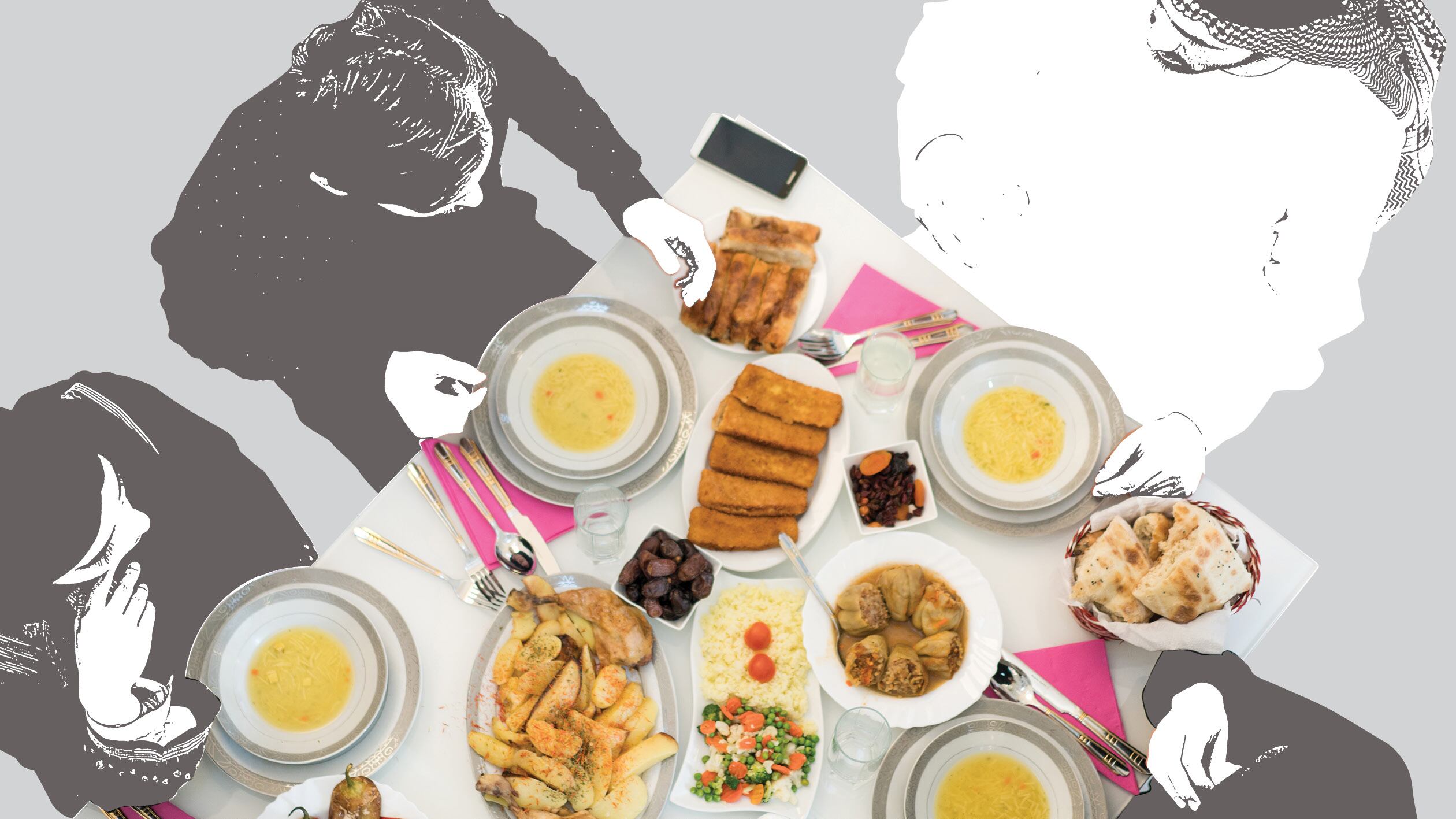

Ramadan has always carried a sense of calm with it, a month that quietly reshapes our routines, softens our pace and reminds us of what really matters. Yet in recent years, I’ve noticed something different in the weeks leading up to it: a rising sense of tension in many homes.
Long grocery lists, overflowing trolleys, last-minute shopping trips and now even social media filled with “Ramadan freezer prep” schedules and colour-coded containers. What was once about preparing the heart has slowly shifted towards preparing months’ worth of meals in advance. It made me wonder when exactly Ramadan, a month built on simplicity, became a season of excess.
Part of this shift comes from something we don’t often say out loud: the fear of falling short. Many of us grew up with a deeply rooted belief that generosity must be visible, that hospitality is measured by how full the table is and that anything less reflects a kind of lacking. It is an idea inherited with love, not criticism, but it carries practical weight in a world where life moves faster than our traditions were designed for.
Today’s families juggle far more than previous generations ever had to manage: long working hours, school demands, social obligations and an always-on digital world. Adding the pressure of a “perfect Ramadan table” to that mix only intensifies the emotional load.
Social media amplifies that pressure in ways we’re still trying to understand. Ramadan content appears earlier every year, filled with colour-coordinated tables, multi-course meals and elaborate home decor. These images create a quiet comparison, one that pushes families, especially mothers, to feel that they must live up to a standard that was never meant to exist in the first place.
What once was a spiritual pause has slowly begun to resemble a production, a nightly performance that leaves many women exhausted long before the month is halfway through.
I’ve spoken to several mothers over the past week, and their stories echoed one another. Many shared that Ramadan is the month they look forward to most and yet, paradoxically, the month that drains them the most. The hours spent cooking, planning and co-ordinating meals take away from the reflective, peaceful experience they hope to have. Some admitted feeling guilty if they served only one or two dishes, even though they knew the family didn’t need more.
That guilt is not personal; it’s cultural. It’s the lingering belief that hospitality must be abundant, even when abundance leads to exhaustion.
This excess doesn’t only affect parents; it shapes how children experience Ramadan. When children grow up seeing tables filled with five or six dishes every night, they internalise that image as the norm. Their expectations rise quietly each year and the sense of gratitude, the ability to appreciate “enough”, becomes harder to cultivate.
Recent research from the Harvard Parenting Research Collaborative notes that repeated exposure to overconsumption lowers a child’s appreciation for simpler routines and raises their baseline for what feels “normal”. Ramadan is meant to teach restraint and gratitude, but overconsumption can unintentionally teach the opposite.

Beyond the home, the economic consequences are significant. Consumer surveys in the UAE consistently show a noticeable rise in household food spending during Ramadan, driven largely by bulk purchasing and promotional activity. And despite the increased spending, a large portion of food still goes to waste.
According to the UAE’s Nema Food Loss and Waste initiative, food waste rises sharply during Ramadan every year, a contradiction to the values of the month. When the food we prepare exceeds what we can reasonably consume, the loss is not only financial but environmental and ethical as well.
Yet amid all this, I’ve seen something hopeful too: families beginning to question the pace; mothers deciding to simplify their tables; fathers sharing more of the load; and parents talking openly with their children about gratitude, moderation and the true meaning of Ramadan. These small shifts matter because they quietly redefine what a meaningful Ramadan looks like today, not the Ramadan of our grandparents, nor the curated Ramadan of social media, but a realistic version that fits our modern rhythm.
Perhaps the change we need doesn’t require dramatic steps. It may simply start with choosing fewer dishes and longer conversations; turning off screens during iftar; sharing responsibilities more intentionally; approaching the month not as a performance to be perfected but as a chance to breathe as a family. A reminder that the beauty of Ramadan has never depended on the number of plates on a table, but on the presence we bring to one another.
Ramadan invites us every year to return to ourselves, to slow down, to recalibrate, to honour the intention behind our actions. And maybe one of the most meaningful intentions we can carry into this year is the decision to simplify without guilt. To treat restraint as a strength, not a compromise. To recognise that consuming less does not mean caring less.
If there is one lesson this month that continues to teach us, it is that the deepest sense of fulfilment often comes from what we remove, not what we add. And perhaps this year, the most generous thing we can offer our families, and ourselves, is a Ramadan that feels lighter, quieter and closer to its true spirit.