


Across the Arab world, Gulf leadership has already saved hundreds of thousands of lives by supporting the fight against Aids, tuberculosis and malaria. Yet the fight against the world’s deadliest infectious diseases is far from over.
Since 2002, the Global Fund partnership has reduced the combined death rate from these diseases by 63 per cent and saved more than 70 million lives. It has also strengthened health systems in more than 100 countries – the first line of defence against future pandemics. But today, decades of progress are at risk.
Funding cuts are colliding with new threats: rising resistance to frontline malaria drugs, an invasive mosquito species spreading in urban areas, and the growing toll of climate change, debt crises and conflict. These forces could reverse years of progress, with millions of lives – many of them children’s – at risk.
For the Middle East, this is not an abstract challenge. In Arab League member states alone, more than 738,000 lives have been saved since 2002. Yet this crisis also highlights what is at stake.
HIV treatment coverage has soared from 1 per cent in 2002 to 75 per cent in 2023. Tuberculosis treatment coverage has tripled, and malaria testing has reached 92 per cent, up from 24 per cent two decades ago. These results are not just statistics – they are farmers able to work their land, teachers back in classrooms and families contributing to their communities.
-
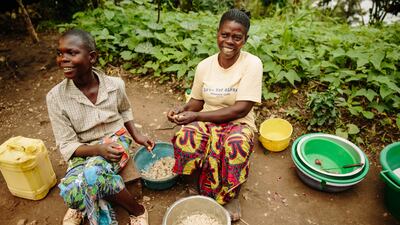
Toyota Mksiyura, right, from the Democratic Republic of Congo, who suffers from severe swelling in her feet caused by lymphatic filariasis. The UAE's Reach Campaign is aimed at tackling neglected tropical diseases. Photo: End Fund -
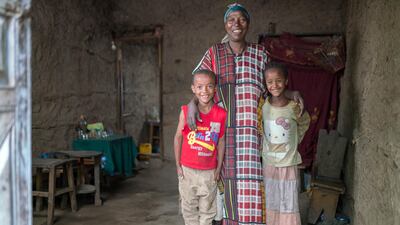
Ethiopian Kasech Fantu, who suffers from elephantiasis, with her children. Neglected tropical diseases are little known in the wider world but devastating for sufferers. Photo: The Carter Centre -

Daniel Boakye, a researcher working with The End Fund, is one of the world's foremost experts on black flies. The UAE began its Reach initiative mainly to help eliminate river blindness and lymphatic filariasis, which are caused by parasitic worms carried by flying insects. Photo: End Fund -
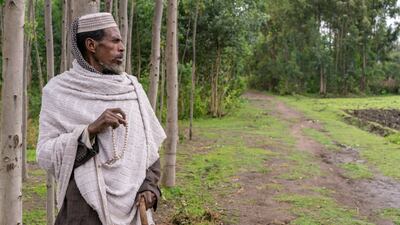
Farmer Lelamo Mukhtar had to sell his land and could not work anymore after he became ill with lymphatic filariasis. Photo: End Fund -
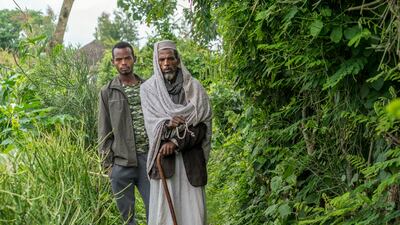
Mr Mukhtar with his son Fouwad, who has taken over farming and supporting the family after his father became ill. Photo: End Fund -
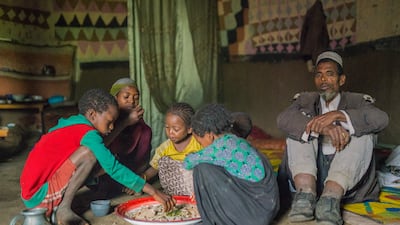
Mr Mukhtar with some of his 10 children. Photo: End Fund -
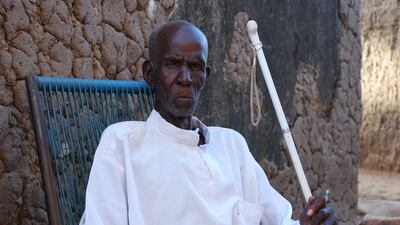
Malian Moce lost his eyesight over thirty years ago to river blindness. More than 200 million people globally require treatment for the disease, one of the leading causes of preventable blindness. Photo: End Fund -
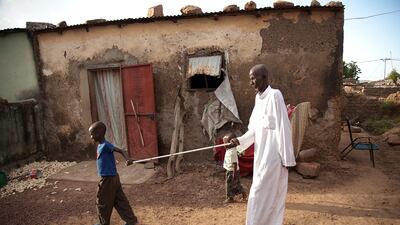
Moce is now receiving treatment. Photo: End Fund


The Global Fund is not a traditional multilateral. It is a public-private partnership whose model is country-led: more than 95 per cent of its funding is overseen by national platforms that bring together governments, civil society and communities. This ensures that investments reflect local priorities, not external agendas.
This is why Saudi Arabia, Kuwait, Qatar and the UAE have committed more than $350 million to the Global Fund since 2002. They understand this is a strategic investment. Every dollar invested through the Global Fund generates $19 in health and economic returns.
In Organisation of Islamic Co-operation countries, $24 billion invested by the fund has already delivered more than $400 billion in economic gains. Its operating costs are among the lowest in the global health sector, averaging just 6 per cent of total donor pledges.
The Gulf is investing heavily in artificial intelligence and advanced technologies. The Global Fund ensures that such innovations reach those who need them most.
For tuberculosis – still the world’s deadliest infectious disease – AI-powered tools now analyse chest X-rays in seconds, matching or exceeding human experts and allowing the disease to be diagnosed and treated where even where there are no trained radiologists available. The fund is using these in countries such as Sudan and Yemen, where health systems have collapsed. Portable digital X-rays combined with AI mean lives can be saved in the toughest conditions.
It is also rolling out long-acting HIV prevention tools, next-generation mosquito nets and other innovations. By leveraging its market-shaping power to drive down costs, the fund makes lifesaving drugs and technologies accessible at scale – just as it once cut the annual cost of HIV treatment from $10,000 for every person to as little as $35.
This is innovation that extends the benefits of Gulf-driven technology to the world’s most vulnerable – strengthening both human dignity and regional stability.
If the fund scales back now, the risks are profound. In the Horn of Africa, climate shocks and conflict are fuelling malaria’s return. Resistant strains of TB and malaria are emerging. Cuts in international funding are opening dangerous gaps just as the challenges intensify. Failing to act will cost lives, weaken economies and destabilise societies. Sustained investment, by contrast, will accelerate the end of these epidemics and build resilience against future threats.
The Global Fund’s Eighth Replenishment seeks $18 billion to save up to 23 million lives and avert 400 million new infections between 2027 and 2029. OIC member states alone would account for nearly 70 per cent of infections averted and almost 40 per cent of lives saved.
The Gulf has already shown leadership, with Saudi Arabia, Kuwait, Qatar and the UAE among the fund’s most important supporters. Renewing and scaling this commitment would not only protect vulnerable populations but also cement the Gulf’s role as a global leader in health, innovation and stability – aligned with the region’s own ambitions.
This is about shaping a future where no child dies from a mosquito bite, no young person is lost to HIV, and no teacher succumbs to TB. The Gulf’s investment in global health is, ultimately, an investment in its own prosperity and security. The cost of inaction is too high.
With vision, resolve and continued partnership, the Gulf can help turn the tide and end these epidemics once and for all.

