


Every breath we take, every sip of water we drink, and every meal we enjoy owes a debt to nature. Today in celebration of the International Day for Biological Diversity, we are reminded of how the natural world supports us daily. Our survival hinges on the intricate web of life consisting of biodiversity and ecosystems down to the plants, creatures and microorganisms that sustain us.
Yet this incredible natural system is under incredible strain. According to scientific estimates, up to one million species face extinction due to deforestation, pollution, climate change and overexploitation. This crisis places entire ecosystems in jeopardy, which in turn threatens food and water security, human health and livelihoods.
We cannot lose the invaluable contributions that nature provides. Bees and other pollinators are crucial for sustaining agriculture, wetlands naturally filter water and prevent storm surges, and forests store vast amounts of carbon.
But without committed and urgent action, we risk the collapse of our ecosystems.
Thankfully, it is not all doom and gloom. Around the world, people, governments and organisations are taking action. In the Kunming-Montreal Global Biodiversity Framework, all nations agreed to protect 30 per cent of their land and seas by 2030.

This is why the efforts, negotiations and decisions of the Convention on Biological Diversity and the UN Framework Convention on Climate Change are so significant.
In Dubai last December, the presidencies of the Cop28 climate conference (hosted by the UAE) and Cop15 biodiversity meeting (held in China) called for aligning biodiversity action plans with national climate strategies into one unified approach. Governments were urged to consider ecosystems, biodiversity and carbon stores when developing stronger climate action plans. This alignment aims to create comprehensive action plans that integrate both climate and biodiversity strategies.
The UAE Consensus – the set of negotiated outcomes agreed upon at Cop28 – emphasised halting deforestation by 2030, restoring degraded ecosystems and recognising the vital role of nature in climate solutions. It included a pledge to eliminate 14 per cent of global emissions by reducing deforestation, supported by a total of $2.7 billion in funding to protect and restore nature. Modelling by example, the UAE also committed $100 million specifically for forest preservation, reinforcing the need for immediate and effective global efforts.
Climate action and biodiversity protection are not just about signing diplomatic agreements. They must be addressed at all levels.
Consider the fact that indigenous peoples and local communities have long been custodians of our natural world and their intergenerational knowledge and contributions must be recognised. Their role in forest management, conservation and protecting vulnerable communities is invaluable.
Here in the UAE, the Ministry of Climate Change and Environment has implemented several initiatives to engage citizens in mangrove reforestation, while the Environment Agency – Abu Dhabi partners with Emirates Nature-WWF and local businesses for sustainable coastal management.
-

People from all around the world, including the small island nation of Tuvalu, descend on Cop28 in Dubai. Chris Whiteoak / The National -

Performance artist Marius Diaconu leads a Unity Dance on the opening day at Expo City. Chris Whiteoak / The National -

British Foreign Secretary David Cameron at the second day of the summit. Chris Whiteoak / The National -

Visitors from Ecuador at the event. Chris Whiteoak / The National -

The Saudi pavilion turned heads. Chris Whiteoak / The National -

Protesters held flags reading: 'No climate justice without human rights.' Chris Whiteoak / The National -

Global cultures on full display on day three. Chris Whiteoak / The National -
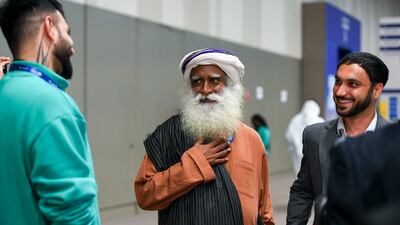
Sadhguru, founder and head of India's Isha Foundation, on day three. Khushnum Bhandari / The National -
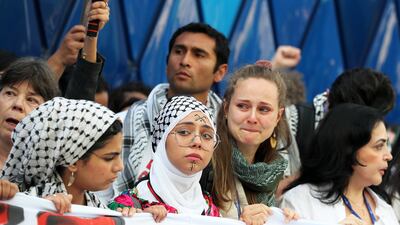
Cop28 demonstrators call for a ceasefire in Gaza. Pawan Singh / The National -

Brazil's popular pavilion. Chris Whiteoak / The National -

Expo City's impressive dome at night. Chris Whiteoak / The National -

Commissioned artwork titled The Choice by Tristan Eaton at Expo City. Chris Whiteoak / The National -
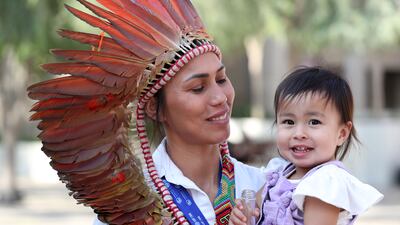
Visitors young and old at the site. Chris Whiteoak / The National -
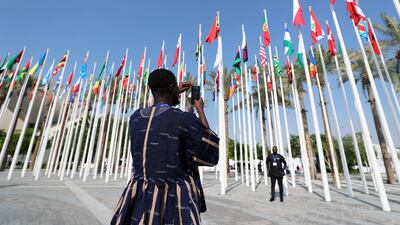
The summit is a global affair. Chris Whiteoak / The National -

Activists air their hopes at the site. Chris Whiteoak / The National -

Local and international communities are working together to secure a greener future. Chris Whiteoak / The National -

Visitors arrive for day six of the summit. Chris Whiteoak / The National -

Young activists from Engajamundo protest about smog being created from deforestation in the Amazon. Chris Whiteoak / The National -

Colours on display on day six. Chris Whiteoak / The National -

Members of a Sikh human rights group in attendence. Chris Whiteoak / The National -

Egyptian comic Bassem Youssef attends a talk on the sixth day. Chris Whiteoak / The National -

The Wake up experience with Sadhguru. Chris Whiteoak / The National -

The Wake up experience with Sadhguru. Chris Whiteoak / The National -

The first week of talks finished on a high, with hard negotiations planned for the second one. Khushnum Bhandari / The National -

Protestors call for a ban on fossil fuels. Khushnum Bhandari / The National -

Day seven's Sustainable Fashion show. Pawan Singh / The National -

Talks resumed on day nine, after a one-day break. Chris Whiteoak / The National -

Friends for Future protest to phase out fossil fuels on day nine. Chris Whiteoak / The National -

Global Campaign to Demand Climate Justice also demonstrate. Chris Whiteoak / The National -

International visitors at the site on day 11. Chris Whiteoak / The National -

People protest about 'no climate justice without human rights'. Chris Whiteoak / The National -

Mariam Almheiri, minister of Climate Change and Environment, speaks at the launch ceremony of the environmental identity. Chris Whiteoak / The National -

Visitors watch the protests. Chris Whiteoak / The National -

Day 11 at Cop28. Chris Whiteoak / The National -

Day 11 at Cop28. Chris Whiteoak / The National -

Indonesian dancers perform on day 12. Chris Whiteoak / The National -

Day 12 at Cop28. Chris Whiteoak / The National -

Negotiations remain under way on day 12. Chris Whiteoak / The National -

Messages left at the Indonesian pavilion. Chris Whiteoak / The National -

Protestors call for climate action to extend to food systems. Chris Whiteoak / The National -

Nuclear for Climate demonstrators. Chris Whiteoak / The National -
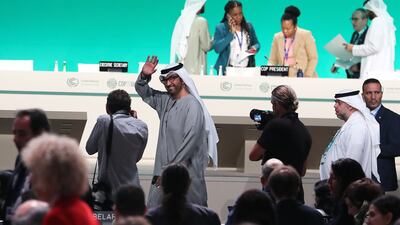
Dr Sultan Al Jaber, Cop28 President, arriving for the plenary session on day 14. Pawan Singh / The National


Globally, organisations associated with regional conservation, such as the International Union for Conservation of Nature, play a pivotal role in bringing together countries and partners. The IUCN’s seven expert commissions, with 15,000 scientists, create tools and standards such as the Red List of Threatened Species and Key Biodiversity Areas that inform national strategies.
Across various sectors, the path forward demands shared knowledge and practical solutions.
Businesses need to adopt sustainable practices, whether through responsible waste management, ensuring sustainable supply chains, or investing in climate-critical technologies. Governments should ensure that environmental policies account for the interconnectedness of ecosystems and the global impacts of local actions. Civil society can amplify voices for change, educating the public on the importance of biodiversity and advocating for greener choices.
These actions and networks are so important as we approach crucial meetings such as the Bonn Climate Conference, the Cop29 climate conference in Azerbaijan and Cop16 biodiversity conference in Colombia.
Each represents a milestone where diverse stakeholders align their strategies and update commitments towards safeguarding biodiversity and mitigating climate impacts.
Political will, inclusive engagement, multilevel action, financial support and disciplined execution will be critical in the months and years ahead. The frameworks and plans are in place, but real change requires our collective commitment. On this International Day for Biological Diversity, we must all, as this year’s theme suggests, “Be Part of the Plan”.

