Razan Khalifa Al Mubarak is president of the International Union for Conservation of Nature and UN Climate Change High-Level Champion for the leadership team of Cop28 UAE
March 03, 2024
As we convened in Abu Dhabi for the Cultural Summit 2024, under the banner of “A Matter of Time”, I was reminded of the critical juncture at which we stand – a moment that will undoubtedly find its place in history.
This gathering in my home city, a nexus of culture and innovation, underscored the urgency of our mission to confront the dual crises that threaten our planet: climate change and the loss of nature and biodiversity.
In my roles as president of the International Union for Conservation of Nature and the UN Climate Change High-Level Champion for Cop28, I have come to appreciate the intricate dance between time and the environmental challenges we face.
Our understanding of time – whether the ticking clock of our daily lives or the expansive geological eras – shapes our response to these crises. The disconnect between the frenzied pace of human activity and the slower rhythms of the natural world has led to unsustainable consumption patterns, pushing us beyond Earth's limits.
Earth Overshoot Day, which last year fell on August 2, highlights the gravity of our situation. This date marks the time when humanity's demand on nature surpasses what our planet can regenerate in a year, illustrating our over-consumption as if we lived on 1.75 Earths. The consequences of our actions are not abstract future predictions but present realities.
Preserving nature calls for a sharp increase in renewable energy, better energy efficiency and a responsible shift away from fossil fuels. Chris Whiteoak / The National
The impacts of climate change and biodiversity loss are felt here and now, with rising temperatures, erratic weather and faltering ecosystems that present immediate threats to human and non-human life alike. It also affects our ways of life, including cultural heritage and practices.
Emirati women made traditional crafts at Cop28 in Dubai. Showcasing the region's rich heritage and promoting cross-cultural dialogue on environmental issues is crucial. Chris Whiteoak / The National
The concept of “tipping points” – moments of irreversible environmental damage – are a stark warning. Yet amid this urgency lies an unprecedented opportunity for transformation. By rethinking our relationship with time, we can align our actions with the natural cycles that have sustained life for aeons, balancing immediate human needs with the long-term health of our planet.
Our path forward is clear but challenging. It calls for a sharp increase in renewable energy, heightened energy efficiency, a responsible shift away from fossil fuels and a renewed commitment to preserving nature.
The decisions and pathways laid out in the landmark UAE Consensus agreement from Cop28 are a testament to what can be achieved when nations and non-state actors come together. However, the financial hurdles are significant. Despite mobilising more than $2.7 billion for nature at Cop28, we face a nearly $1 trillion annual funding gap to adequately protect our planet. This calls for not just public and institutional funding, we must also mobilise private finances to bridge this gap.
We must redefine what we consider progress
The solutions to these challenges require a shift in governance to embrace long-term goals, ensuring that our actions today do not compromise the well-being of future generations. This includes mass forest restoration, adopting regenerative agricultural practices and protecting the oceans, among many others. Such initiatives, supported by commitments made at Cop28, highlight the indispensable role of ecosystems in our survival and well-being.
Our collective endeavour must also involve redefining what we consider to be progress. True progress is not measured by consumption or economic growth alone but by the sustained health of our societies and the natural world.
The challenges we face are not the responsibility of any single country or sector but a global imperative. Achieving a sustainable future requires collaboration across all of society, including governments, businesses, scientists, indigenous communities and cultural institutions. It is through this collective effort that we can hope to forge a legacy of resilience and stewardship for our planet.
As we reflect on the role of cultural institutions in this global effort, it becomes clear that they possess a unique power to inspire change. By fostering a deep connection with people and communities, cultural institutions can bridge the gap between traditional knowledge and action, transforming the way we understand and respond to the environmental crisis.
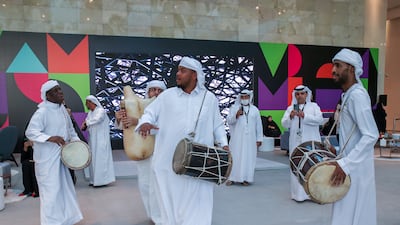
Through exhibitions, education and community engagement, they can turn scientific data into compelling narratives that resonate with a broad audience, sparking a collective movement towards sustainability. Further, Abu Dhabi's museums and cultural institutions can help play this role by showcasing the region's rich heritage and promoting cross-cultural dialogue on environmental issues.
In this critical moment, we are called to choose the legacy we will leave behind. Will we be remembered as the generation that stood by as our planet suffered, or as the pioneers who rose to meet the greatest challenge of our time? The decision is ours, and the time to act is now.

Mumbai Indians 213/6 (20 ov)
Royal Challengers Bangalore 167/8 (20 ov)
Q&A with Dash Berlin
Welcome back. What was it like to return to RAK and to play for fans out here again?
It’s an amazing feeling to be back in the passionate UAE again. Seeing the fans having a great time that is what it’s all about.
You're currently touring the globe as part of your Legends of the Feels Tour. How important is it to you to include the Middle East in the schedule?
The tour is doing really well and is extensive and intensive at the same time travelling all over the globe. My Middle Eastern fans are very dear to me, it’s good to be back.
You mix tracks that people know and love, but you also have a visually impressive set too (graphics etc). Is that the secret recipe to Dash Berlin's live gigs?
People enjoying the combination of the music and visuals are the key factor in the success of the Legends Of The Feel tour 2018.
Have you had some time to explore Ras al Khaimah too? If so, what have you been up to?
Coming fresh out of Las Vegas where I continue my 7th annual year DJ residency at Marquee, I decided it was a perfect moment to catch some sun rays and enjoy the warm hospitality of Bab Al Bahr.
The biog
Hobbies: Writing and running
Favourite sport: beach volleyball
Favourite holiday destinations: Turkey and Puerto Rico
Founders: Omer Gurel, chief executive and co-founder and Edebali Sener, co-founder and chief technology officer
Based: Dubai Media City
Number of employees: 42 (34 in Dubai and a tech team of eight in Ankara, Turkey)
Sector: ConsumerTech and FinTech
Cashflow: Almost $1 million a year
Funding: Series A funding of $2.5m with Series B plans for May 2020
Asia Cup Qualifier
Final
UAE v Hong Kong
Live on OSN Cricket HD. Coverage starts at 5.30am
Mercer, the investment consulting arm of US services company Marsh & McLennan, expects its wealth division to at least double its assets under management (AUM) in the Middle East as wealth in the region continues to grow despite economic headwinds, a company official said.
Mercer Wealth, which globally has $160 billion in AUM, plans to boost its AUM in the region to $2-$3bn in the next 2-3 years from the present $1bn, said Yasir AbuShaban, a Dubai-based principal with Mercer Wealth.
“Within the next two to three years, we are looking at reaching $2 to $3 billion as a conservative estimate and we do see an opportunity to do so,” said Mr AbuShaban.
Mercer does not directly make investments, but allocates clients’ money they have discretion to, to professional asset managers. They also provide advice to clients.
“We have buying power. We can negotiate on their (client’s) behalf with asset managers to provide them lower fees than they otherwise would have to get on their own,” he added.
Mercer Wealth’s clients include sovereign wealth funds, family offices, and insurance companies among others.
From its office in Dubai, Mercer also looks after Africa, India and Turkey, where they also see opportunity for growth.
Wealth creation in Middle East and Africa (MEA) grew 8.5 per cent to $8.1 trillion last year from $7.5tn in 2015, higher than last year’s global average of 6 per cent and the second-highest growth in a region after Asia-Pacific which grew 9.9 per cent, according to consultancy Boston Consulting Group (BCG). In the region, where wealth grew just 1.9 per cent in 2015 compared with 2014, a pickup in oil prices has helped in wealth generation.
BCG is forecasting MEA wealth will rise to $12tn by 2021, growing at an annual average of 8 per cent.
Drivers of wealth generation in the region will be split evenly between new wealth creation and growth of performance of existing assets, according to BCG.
Another general trend in the region is clients’ looking for a comprehensive approach to investing, according to Mr AbuShaban.
“Institutional investors or some of the families are seeing a slowdown in the available capital they have to invest and in that sense they are looking at optimizing the way they manage their portfolios and making sure they are not investing haphazardly and different parts of their investment are working together,” said Mr AbuShaban.
Some clients also have a higher appetite for risk, given the low interest-rate environment that does not provide enough yield for some institutional investors. These clients are keen to invest in illiquid assets, such as private equity and infrastructure.
“What we have seen is a desire for higher returns in what has been a low-return environment specifically in various fixed income or bonds,” he said.
“In this environment, we have seen a de facto increase in the risk that clients are taking in things like illiquid investments, private equity investments, infrastructure and private debt, those kind of investments were higher illiquidity results in incrementally higher returns.”
The Abu Dhabi Investment Authority, one of the largest sovereign wealth funds, said in its 2016 report that has gradually increased its exposure in direct private equity and private credit transactions, mainly in Asian markets and especially in China and India. The authority’s private equity department focused on structured equities owing to “their defensive characteristics.”
Tips to avoid getting scammed
1) Beware of cheques presented late on Thursday
2) Visit an RTA centre to change registration only after receiving payment
3) Be aware of people asking to test drive the car alone
More than 2.2 million Indian tourists arrived in UAE in 2023 More than 3.5 million Indians reside in UAE Indian tourists can make purchases in UAE using rupee accounts in India through QR-code-based UPI real-time payment systems Indian residents in UAE can use their non-resident NRO and NRE accounts held in Indian banks linked to a UAE mobile number for UPI transactions
What vitamins do we know are beneficial for living in the UAE
Vitamin D: Highly relevant in the UAE due to limited sun exposure; supports bone health, immunity and mood. Vitamin B12: Important for nerve health and energy production, especially for vegetarians, vegans and individuals with absorption issues. Iron: Useful only when deficiency or anaemia is confirmed; helps reduce fatigue and support immunity. Omega-3 (EPA/DHA): Supports heart health and reduces inflammation, especially for those who consume little fish.
Houthis: Iran-backed rebels who occupy Sanaa and run unrecognised government
Yemeni government: Exiled government in Aden led by eight-member Presidential Leadership Council
Southern Transitional Council: Faction in Yemeni government that seeks autonomy for the south
Habrish 'rebels': Tribal-backed forces feuding with STC over control of oil in government territory
Timeline
2012-2015
The company offers payments/bribes to win key contracts in the Middle East
May 2017
The UK SFO officially opens investigation into Petrofac’s use of agents, corruption, and potential bribery to secure contracts
September 2021
Petrofac pleads guilty to seven counts of failing to prevent bribery under the UK Bribery Act
October 2021
Court fines Petrofac £77 million for bribery. Former executive receives a two-year suspended sentence
December 2024
Petrofac enters into comprehensive restructuring to strengthen the financial position of the group
May 2025
The High Court of England and Wales approves the company’s restructuring plan
July 2025
The Court of Appeal issues a judgment challenging parts of the restructuring plan
August 2025
Petrofac issues a business update to execute the restructuring and confirms it will appeal the Court of Appeal decision
October 2025
Petrofac loses a major TenneT offshore wind contract worth €13 billion. Holding company files for administration in the UK. Petrofac delisted from the London Stock Exchange
Indoor Cricket World Cup - Sep 16-20, Insportz, Dubai
16 Indoor cricket matches are 16 overs per side
8 There are eight players per team
9 There have been nine Indoor Cricket World Cups for men. Australia have won every one.
5 Five runs are deducted from the score when a wickets falls
4 Batsmen bat in pairs, facing four overs per partnership
Scoring In indoor cricket, runs are scored by way of both physical and bonus runs. Physical runs are scored by both batsmen completing a run from one crease to the other. Bonus runs are scored when the ball hits a net in different zones, but only when at least one physical run is score.
Zones
A Front net, behind the striker and wicketkeeper: 0 runs
B Side nets, between the striker and halfway down the pitch: 1 run
C Side nets between halfway and the bowlers end: 2 runs
D Back net: 4 runs on the bounce, 6 runs on the full
Under ‘snapback’, measures imposed on Iran by the UN Security Council in six resolutions would be restored, including:
An arms embargo
A ban on uranium enrichment and reprocessing
A ban on launches and other activities with ballistic missiles capable of delivering nuclear weapons, as well as ballistic missile technology transfer and technical assistance
A targeted global asset freeze and travel ban on Iranian individuals and entities
Authorisation for countries to inspect Iran Air Cargo and Islamic Republic of Iran Shipping Lines cargoes for banned goods
