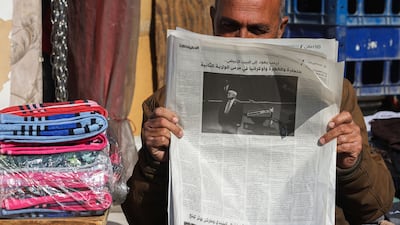
With the change of administration in Washington, many observers predicted uncertainty regarding US policy in the Middle East, particularly towards Iraq. It is widely acknowledged that US President Donald Trump’s priorities focus on domestic issues such as immigration, economic reform and job repatriation. Nonetheless, his appointments of strong leaders to key foreign policy positions have signalled to the world a continued focus on maintaining US influence abroad in general and the Middle East, in particular.
Mr Trump and his team have already shown their commitment to preventing escalation. Indeed, their role in helping to achieve a ceasefire in Gaza was instrumental even before the President’s inauguration. Mr Trump has long been engaged on the subject of fighting ISIS, and one of his central campaign promises has been the total defeat of that terrorist group.
In a March 2024 interview, he proudly referred to his leading role in ISIS’s downfall, stating that he “got rid of it”. While the group has largely been physically eradicated in Iraq, where it once controlled vast territory, it remains a threat in remote areas and now poses a risk of resurgence in Syria, particularly following the collapse of the Assad regime. Evidently, a total and enduring defeat of ISIS beyond any chance of recovery will require strong co-operation between Iraq and the US. In fact, such co-operation will be essential.
Iraq and the US can partner on many security, political and economic issues for mutual benefit. Regionally, Iraq is emerging as an anchor of stability and a significant player in diplomacy. Under Prime Minister Mohammed Shia Al Sudani’s “Iraq First” policy, the country has adopted a moderate and inclusive approach that prioritises common interests. This positioning enhances the country’s influence in the region and underscores its importance as a US partner in preserving stability.
A robust and prosperous US-Iraq relationship fosters stability and prosperity in the region
But the US-Iraq relationship extends far beyond military and security co-operation. It encompasses diverse sectors such as energy, agriculture, education and economic development. Mr Al Sudani is currently leading Iraq through an ambitious reconstruction effort, with funding surpassing any allocations in the past two decades.
Iraq presents significant opportunities for American companies in the energy sector. Discussions with major firms like ExxonMobil and Chevron are underway, alongside initiatives involving GE, Baker Hughes, KBR and Halliburton. Collectively, the projects earmarked for US companies could be valued in the tens of billions of dollars over the next few years. Financial institutions, including the EXIM Bank and the IMF, have expressed their interest in supporting these efforts. Notably, the Prime Minister is expected to announce a groundbreaking financial initiative that could transform Iraq’s business landscape and strengthen its relationship with the US further.
American businesses are increasingly drawn to Iraq, as evidenced by the growing activities of the US-Iraq Business Council. The US Chamber of Commerce’s events in Iraq now attract more American companies than ever before.
According to Trading Economics, a data and forecasting firm, US exports to Iraq reached $2.26 billion in 2023 – a remarkable 230 per cent increase from 2022 and 280 per cent higher than in 2021. Agricultural exports alone totalled $357 million, more than double the 2022 figures and triple those of 2021. These figures are expected to rise significantly in 2024 and 2025. American farmers, in particular, stand to benefit from this burgeoning trade relationship.
Additionally, the Iraqi government has approved a programme to send 5,000 students abroad for master’s and doctoral studies, with nearly 3,000 slated to study in the US. American universities stand to benefit significantly from this initiative, alongside collaborations with institutions such as the American Universities in Baghdad, Duhok and Sulaimaniyah.
Mr Al-Sudani has described relations with the US as both “strategic” and “institutionalised”, emphasising the depth of this partnership in recent media appearances. Most notably, in an interview with Elaph in London, hours before the inauguration of Mr Trump on January 20, the Prime Minister said Iraq is “ready to co-operate with the new administration”. He emphasised that this relationship is based on the countries’ shared Strategic Framework Agreement, “as well as our partnership in the Global Coalition to Counter ISIS”.
A robust and prosperous US-Iraq relationship fosters stability and prosperity in the region, benefiting the interests of both nations and their peoples. With strategic co-operation in security, economics and diplomacy, this partnership has the potential to shape a more stable and prosperous Middle East.

COMPANY%20PROFILE
%3Cp%3E%3Cstrong%3EName%3A%20%3C%2Fstrong%3ESmartCrowd%0D%3Cbr%3E%3Cstrong%3EStarted%3A%20%3C%2Fstrong%3E2018%0D%3Cbr%3E%3Cstrong%3EFounder%3A%20%3C%2Fstrong%3ESiddiq%20Farid%20and%20Musfique%20Ahmed%0D%3Cbr%3E%3Cstrong%3EBased%3A%20%3C%2Fstrong%3EDubai%0D%3Cbr%3E%3Cstrong%3ESector%3A%20%3C%2Fstrong%3EFinTech%20%2F%20PropTech%0D%3Cbr%3E%3Cstrong%3EInitial%20investment%3A%20%3C%2Fstrong%3E%24650%2C000%0D%3Cbr%3E%3Cstrong%3ECurrent%20number%20of%20staff%3A%3C%2Fstrong%3E%2035%0D%3Cbr%3E%3Cstrong%3EInvestment%20stage%3A%20%3C%2Fstrong%3ESeries%20A%0D%3Cbr%3E%3Cstrong%3EInvestors%3A%20%3C%2Fstrong%3EVarious%20institutional%20investors%20and%20notable%20angel%20investors%20(500%20MENA%2C%20Shurooq%2C%20Mada%2C%20Seedstar%2C%20Tricap)%3C%2Fp%3E%0A
ALRAWABI%20SCHOOL%20FOR%20GIRLS
%3Cp%3ECreator%3A%20Tima%20Shomali%3C%2Fp%3E%0A%3Cp%3EStarring%3A%C2%A0Tara%20Abboud%2C%C2%A0Kira%20Yaghnam%2C%20Tara%20Atalla%3C%2Fp%3E%0A%3Cp%3ERating%3A%204%2F5%3C%2Fp%3E%0A
Cricket World Cup League 2 Fixtures
Saturday March 5, UAE v Oman, ICC Academy (all matches start at 9.30am)
Sunday March 6, Oman v Namibia, ICC Academy
Tuesday March 8, UAE v Namibia, ICC Academy
Wednesday March 9, UAE v Oman, ICC Academy
Friday March 11, Oman v Namibia, Sharjah Cricket Stadium
Saturday March 12, UAE v Namibia, Sharjah Cricket Stadium
UAE squad
Ahmed Raza (captain), Chirag Suri, Muhammad Waseem, CP Rizwan, Vriitya Aravind, Asif Khan, Basil Hameed, Rohan Mustafa, Kashif Daud, Zahoor Khan, Junaid Siddique, Karthik Meiyappan, Akif Raja, Rahul Bhatia
Mercer, the investment consulting arm of US services company Marsh & McLennan, expects its wealth division to at least double its assets under management (AUM) in the Middle East as wealth in the region continues to grow despite economic headwinds, a company official said.
Mercer Wealth, which globally has $160 billion in AUM, plans to boost its AUM in the region to $2-$3bn in the next 2-3 years from the present $1bn, said Yasir AbuShaban, a Dubai-based principal with Mercer Wealth.
“Within the next two to three years, we are looking at reaching $2 to $3 billion as a conservative estimate and we do see an opportunity to do so,” said Mr AbuShaban.
Mercer does not directly make investments, but allocates clients’ money they have discretion to, to professional asset managers. They also provide advice to clients.
“We have buying power. We can negotiate on their (client’s) behalf with asset managers to provide them lower fees than they otherwise would have to get on their own,” he added.
Mercer Wealth’s clients include sovereign wealth funds, family offices, and insurance companies among others.
From its office in Dubai, Mercer also looks after Africa, India and Turkey, where they also see opportunity for growth.
Wealth creation in Middle East and Africa (MEA) grew 8.5 per cent to $8.1 trillion last year from $7.5tn in 2015, higher than last year’s global average of 6 per cent and the second-highest growth in a region after Asia-Pacific which grew 9.9 per cent, according to consultancy Boston Consulting Group (BCG). In the region, where wealth grew just 1.9 per cent in 2015 compared with 2014, a pickup in oil prices has helped in wealth generation.
BCG is forecasting MEA wealth will rise to $12tn by 2021, growing at an annual average of 8 per cent.
Drivers of wealth generation in the region will be split evenly between new wealth creation and growth of performance of existing assets, according to BCG.
Another general trend in the region is clients’ looking for a comprehensive approach to investing, according to Mr AbuShaban.
“Institutional investors or some of the families are seeing a slowdown in the available capital they have to invest and in that sense they are looking at optimizing the way they manage their portfolios and making sure they are not investing haphazardly and different parts of their investment are working together,” said Mr AbuShaban.
Some clients also have a higher appetite for risk, given the low interest-rate environment that does not provide enough yield for some institutional investors. These clients are keen to invest in illiquid assets, such as private equity and infrastructure.
“What we have seen is a desire for higher returns in what has been a low-return environment specifically in various fixed income or bonds,” he said.
“In this environment, we have seen a de facto increase in the risk that clients are taking in things like illiquid investments, private equity investments, infrastructure and private debt, those kind of investments were higher illiquidity results in incrementally higher returns.”
The Abu Dhabi Investment Authority, one of the largest sovereign wealth funds, said in its 2016 report that has gradually increased its exposure in direct private equity and private credit transactions, mainly in Asian markets and especially in China and India. The authority’s private equity department focused on structured equities owing to “their defensive characteristics.”
Teri%20Baaton%20Mein%20Aisa%20Uljha%20Jiya
%3Cp%3E%3Cstrong%3EDirectors%3A%3C%2Fstrong%3E%20Amit%20Joshi%20and%20Aradhana%20Sah%3C%2Fp%3E%0A%3Cp%3E%3Cstrong%3ECast%3A%3C%2Fstrong%3E%20Shahid%20Kapoor%2C%20Kriti%20Sanon%2C%20Dharmendra%2C%20Dimple%20Kapadia%2C%20Rakesh%20Bedi%3C%2Fp%3E%0A%3Cp%3E%3Cstrong%3ERating%3A%3C%2Fstrong%3E%204%2F5%3C%2Fp%3E%0A
Who's who in Yemen conflict
Houthis: Iran-backed rebels who occupy Sanaa and run unrecognised government
Yemeni government: Exiled government in Aden led by eight-member Presidential Leadership Council
Southern Transitional Council: Faction in Yemeni government that seeks autonomy for the south
Habrish 'rebels': Tribal-backed forces feuding with STC over control of oil in government territory
COMPANY%20PROFILE
%3Cp%3E%3Cstrong%3EName%3A%3C%2Fstrong%3E%20Carzaty%2C%20now%20Kavak%3Cbr%3E%3Cstrong%3EBased%3A%3C%2Fstrong%3E%20Dubai%3Cbr%3E%3Cstrong%3ELaunch%20year%3A%20%3C%2Fstrong%3ECarzaty%20launched%20in%202018%2C%20Kavak%20in%20the%20GCC%20launched%20in%202022%3Cbr%3E%3Cstrong%3ENumber%20of%20employees%3A%3C%2Fstrong%3E%20140%3Cbr%3E%3Cstrong%3ESector%3A%3C%2Fstrong%3E%20Automotive%3Cbr%3E%3Cstrong%3EFunding%3A%20%3C%2Fstrong%3ECarzaty%20raised%20%246m%20in%20equity%20and%20%244m%20in%20debt%3B%20Kavak%20plans%20%24130m%20investment%20in%20the%20GCC%3C%2Fp%3E%0A
Our family matters legal consultant
Name: Hassan Mohsen Elhais
Position: legal consultant with Al Rowaad Advocates and Legal Consultants.
Adele: The Stories Behind The Songs
Caroline Sullivan
Carlton Books
SCHEDULE
6.30pm Maiden Dh165,000 (Dirt) 1,400m
7.05pm: Handicap Dh170,000 (D) 1,600m
7.40pm: Maiden Dh165,000 (D) 1,600m
8.15pm: Handicap Dh210,000 (D) 1,200m
8.50pm: Handicap Dh210,000 (D) 2,000m
9.25pm:Handicap Dh185,000 (D) 1,400m
Amith's predicted winners:
6.30pm: Down On Da Bayou
7.05pm: Etisalat
7.40pm: Mulfit
8.15pm: Pennsylvania Dutch
8.50pm: Mudallel
9.25pm: Midnight Sands
THE LOWDOWN
Photograph
Rating: 4/5
Produced by: Poetic License Motion Pictures; RSVP Movies
Director: Ritesh Batra
Cast: Nawazuddin Siddiqui, Sanya Malhotra, Farrukh Jaffar, Deepak Chauhan, Vijay Raaz
The%20specs
%3Cp%3E%3Cstrong%3EEngine%3A%3C%2Fstrong%3E%201.5-litre%204-cylinder%3Cbr%3E%3Cstrong%3ETransmission%3A%20%3C%2Fstrong%3ECVT%3Cbr%3E%3Cstrong%3EPower%3A%20%3C%2Fstrong%3E119bhp%3Cbr%3E%3Cstrong%3ETorque%3A%20%3C%2Fstrong%3E145Nm%3Cbr%3E%3Cstrong%3EPrice%3A%20%3C%2Fstrong%3EDh%2C89%2C900%20(%2424%2C230)%3Cbr%3E%3Cstrong%3EOn%20sale%3A%20%3C%2Fstrong%3Enow%3C%2Fp%3E%0A
GAC GS8 Specs
Engine: 2.0-litre 4cyl turbo
Power: 248hp at 5,200rpm
Torque: 400Nm at 1,750-4,000rpm
Transmission: 8-speed auto
Fuel consumption: 9.1L/100km
On sale: Now
Price: From Dh149,900
