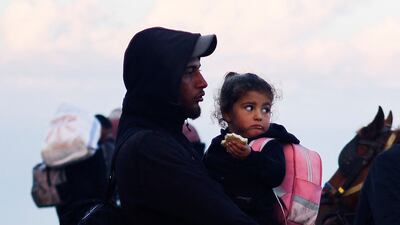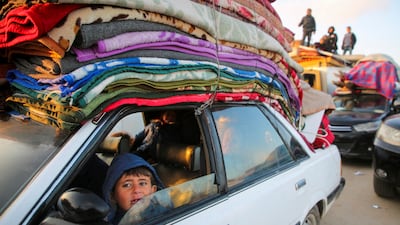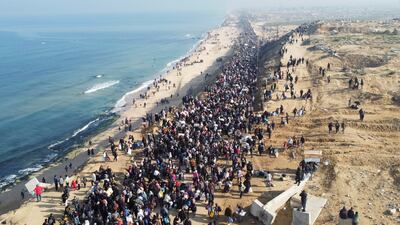
There are two realities that must be confronted in any consideration of “What’s next for Gaza?” The first is that it would be naive and risky to put too much faith in this current ceasefire. The second is that failing to understand the true human toll of this war is dangerously insensitive – it’s far greater than the tens of thousands of Palestinians who have been killed and/or severely wounded by Israeli forces.
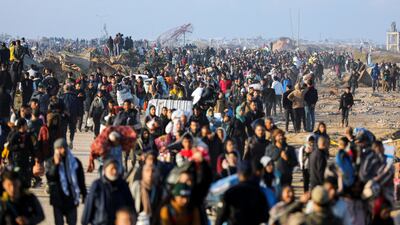
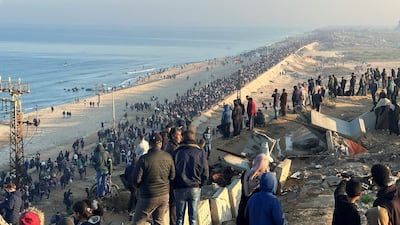
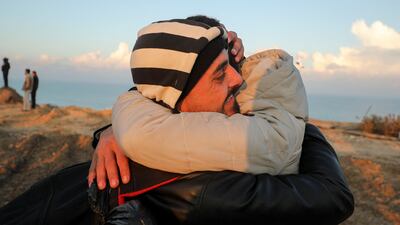
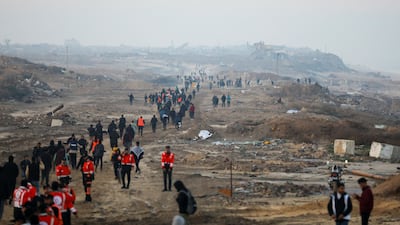
The pause in Israel’s bombing of Gaza is, undoubtedly, a welcome development. It has provided Palestinians relief, the opportunity to grieve, and for some, the chance to attempt to trek northward, assess the damage to their bombed-out neighbourhoods and dig through the rubble to find the bodies of missing family members. The pause has also allowed for a huge influx of food and aid supplies into Gaza and the passage of critically wounded Palestinians to Egypt for treatment.
This was the good news about the pause. The bad news is that the agreement is weak, with no enforcement mechanism. The original plan offered by former US President Joe Biden more than six months ago included three phases with the parties agreeing to all three from the outset.
The switch can be flipped to end the bombs, but the impact of this devastating war will continue to take its toll for more than another generation
We’re learning from the Israeli press that Israeli Prime Minister Benjamin Netanyahu has been assuring his supporters that he will only honour the first phase and will resume the bombing when it’s over. Reportedly, he may not withdraw Israeli forces from Gaza, nor allow Palestinian governance in Gaza that politically connects that area with the West Bank.
The administrations of Mr Biden and now US President Donald Trump have chosen to ignore Mr Netanyahu’s intentions to make a show of their “success”. Mr Biden had been providing support and cover for the Israeli leader from the beginning of the conflict. From October 2023 until leaving the White House, Mr Biden and his team supported Mr Netanyahu’s goals and gave him free rein.
Despite Mr Biden's insistence that he had been strenuously pursuing a ceasefire for half a year, there is clear evidence that the administration knew that Mr Netanyahu wouldn’t agree to a ceasefire and yet continued to publicly claim that Israel supported one and that Hamas was the major obstacle. The charade continues with this agreement because even though Mr Biden would have known the ceasefire is probably of limited duration, he took the “PR victory” before his term in office ended.
The pause provided much the same for Mr Trump – an early show of his ability to solve a problem that haunted his predecessor. That the ceasefire may not last more than a few months doesn’t appear to matter to the new US administration. What seems to count for Mr Trump is the show at the moment: a good photo-op and a boost in ratings. It doesn’t appear to matter to him if down the road the ceasefire doesn’t last; most Americans may have forgotten it by then.
It's very likely that neither this Israeli government or any of its possible successors, nor the Trump administration or any of its possible successors have any interest in a just solution to the conflict.
And so, even setting aside the matter of the ceasefire, despite plans afoot to lay out a path towards peace, starting with an interim government in Gaza, there doesn’t seem to be any real buy-in from the Israeli government. Nor will the US pressure Israel to take the steps needed to move peace forward.
There is another equally worrisome reality that is cause for concern: wars have consequences that last long after the bombs stop falling. Often unforeseen, the consequences can lay dormant for years like a virus before manifesting themselves. Because neither the Israeli leaders nor their American enablers have ever understood Palestinians’ humanity, they can’t fathom the long-term effect this disastrous war is having and will continue to have on its survivors.
The counts are staggering: more than 47,000 dead, 116,000 wounded, as many as 33,000 with permanent disabilities, an estimated 50,000 missing and unaccounted for, 90 per cent of the population (almost 1.9 million) forced to relocate with most of them now homeless because their previous residences have been destroyed, and 34,000 children orphaned with no surviving family members.
We are told that it may take two decades to clear the rubble and unexploded ordinance in Gaza and then years more to rebuild. But healing the wounds of war that will continue to plague the survivors will take much longer. The switch can be flipped to end the bombs, but the impact of this devastating war will continue to take its toll for more than another generation. There will be multiple types of psychological disorders such as trauma, anxiety, severe depression, and internalised violence leading to self-hurt or striking out at others.
Compounding this pain is the shock of seeing the rubble of their homes and the ruins of what their communities had once been. Over the decades that it will take to clear the destruction and rebuild their homes and lives, where are the Palestinians to go?
It’s not as if the Israeli government is likely to look with compassion on the survivors of their war. Palestinians fear with reason that if they leave what is left to them in Palestine, the Israeli forces may not let them return. Neither the US nor the Israeli officials are prepared to ensure the counselling and care needed to heal the wounds of this war will be available to the community of victims. The future is, therefore, uncertain, but leaning towards bleakness.
Live updates: Follow the latest on Israel-Gaza

WOMAN AND CHILD
Director: Saeed Roustaee
Starring: Parinaz Izadyar, Payman Maadi
Rating: 4/5
Specs
Engine: 51.5kW electric motor
Range: 400km
Power: 134bhp
Torque: 175Nm
Price: From Dh98,800
Available: Now
SCORES IN BRIEF
Lahore Qalandars 186 for 4 in 19.4 overs
(Sohail 100,Phil Salt 37 not out, Bilal Irshad 30, Josh Poysden 2-26)
bt Yorkshire Vikings 184 for 5 in 20 overs
(Jonathan Tattersall 36, Harry Brook 37, Gary Ballance 33, Adam Lyth 32, Shaheen Afridi 2-36).
Fight card
Preliminaries:
Nouredine Samir (UAE) v Sheroz Kholmirzav (UZB); Lucas Porst (SWE) v Ellis Barboza (GBR); Mouhmad Amine Alharar (MAR) v Mohammed Mardi (UAE); Ibrahim Bilal (UAE) v Spyro Besiri (GRE); Aslamjan Ortikov (UZB) v Joshua Ridgwell (GBR)
Main card:
Carlos Prates (BRA) v Dmitry Valent (BLR); Bobirjon Tagiev (UZB) v Valentin Thibaut (FRA); Arthur Meyer (FRA) v Hicham Moujtahid (BEL); Ines Es Salehy (BEL) v Myriame Djedidi (FRA); Craig Coakley (IRE) v Deniz Demirkapu (TUR); Artem Avanesov (ARM) v Badreddine Attif (MAR); Abdulvosid Buranov (RUS) v Akram Hamidi (FRA)
Title card:
Intercontinental Lightweight: Ilyass Habibali (UAE) v Angel Marquez (ESP)
Intercontinental Middleweight: Amine El Moatassime (UAE) v Francesco Iadanza (ITA)
Asian Featherweight: Zakaria El Jamari (UAE) v Phillip Delarmino (PHI)
The specs
Engine: 4.0-litre, six-cylinder
Transmission: six-speed manual
Power: 395bhp
Torque: 420Nm
Price: from Dh321,200
On sale: now
RESULTS
6.30pm: Maiden (TB) Dh 82,500 (Dirt) 1.600m
Winner: Miller’s House, Richard Mullen (jockey), Satish Seemar (trainer).
7.05pm: Maiden (TB) Dh 82,500 (D) 2,000m
Winner: Kanood, Adrie de Vries, Fawzi Nass.
7.50pm: Handicap (TB) Dh 82,500 (D) 1,600m
Winner: Gervais, Sandro Paiva, Ali Rashid Al Raihe.
8.15pm: The Garhoud Sprint Listed (TB) Dh 132,500 (D) 1,200m
Winner: Important Mission, Royston Ffrench, Salem bin Ghadayer.
8.50pm: The Entisar Listed (TB) Dh 132,500 (D) 2,000m
Winner: Firnas, Xavier Ziani, Salem bin Ghadayer.
9.25pm: Conditions (TB) Dh 120,000 (D) 1,400m
Winner: Zhou Storm, Connor Beasley, Ali Rashid Al Raihe.
Mercer, the investment consulting arm of US services company Marsh & McLennan, expects its wealth division to at least double its assets under management (AUM) in the Middle East as wealth in the region continues to grow despite economic headwinds, a company official said.
Mercer Wealth, which globally has $160 billion in AUM, plans to boost its AUM in the region to $2-$3bn in the next 2-3 years from the present $1bn, said Yasir AbuShaban, a Dubai-based principal with Mercer Wealth.
“Within the next two to three years, we are looking at reaching $2 to $3 billion as a conservative estimate and we do see an opportunity to do so,” said Mr AbuShaban.
Mercer does not directly make investments, but allocates clients’ money they have discretion to, to professional asset managers. They also provide advice to clients.
“We have buying power. We can negotiate on their (client’s) behalf with asset managers to provide them lower fees than they otherwise would have to get on their own,” he added.
Mercer Wealth’s clients include sovereign wealth funds, family offices, and insurance companies among others.
From its office in Dubai, Mercer also looks after Africa, India and Turkey, where they also see opportunity for growth.
Wealth creation in Middle East and Africa (MEA) grew 8.5 per cent to $8.1 trillion last year from $7.5tn in 2015, higher than last year’s global average of 6 per cent and the second-highest growth in a region after Asia-Pacific which grew 9.9 per cent, according to consultancy Boston Consulting Group (BCG). In the region, where wealth grew just 1.9 per cent in 2015 compared with 2014, a pickup in oil prices has helped in wealth generation.
BCG is forecasting MEA wealth will rise to $12tn by 2021, growing at an annual average of 8 per cent.
Drivers of wealth generation in the region will be split evenly between new wealth creation and growth of performance of existing assets, according to BCG.
Another general trend in the region is clients’ looking for a comprehensive approach to investing, according to Mr AbuShaban.
“Institutional investors or some of the families are seeing a slowdown in the available capital they have to invest and in that sense they are looking at optimizing the way they manage their portfolios and making sure they are not investing haphazardly and different parts of their investment are working together,” said Mr AbuShaban.
Some clients also have a higher appetite for risk, given the low interest-rate environment that does not provide enough yield for some institutional investors. These clients are keen to invest in illiquid assets, such as private equity and infrastructure.
“What we have seen is a desire for higher returns in what has been a low-return environment specifically in various fixed income or bonds,” he said.
“In this environment, we have seen a de facto increase in the risk that clients are taking in things like illiquid investments, private equity investments, infrastructure and private debt, those kind of investments were higher illiquidity results in incrementally higher returns.”
The Abu Dhabi Investment Authority, one of the largest sovereign wealth funds, said in its 2016 report that has gradually increased its exposure in direct private equity and private credit transactions, mainly in Asian markets and especially in China and India. The authority’s private equity department focused on structured equities owing to “their defensive characteristics.”
Asia Cup 2018 final
Who: India v Bangladesh
When: Friday, 3.30pm, Dubai International Stadium
Watch: Live on OSN Cricket HD
Desert Warrior
Starring: Anthony Mackie, Aiysha Hart, Ben Kingsley
Director: Rupert Wyatt
Rating: 3/5
More from Rashmee Roshan Lall
THE BIO
Occupation: Specialised chief medical laboratory technologist
Age: 78
Favourite destination: Always Al Ain “Dar Al Zain”
Hobbies: his work - “ the thing which I am most passionate for and which occupied all my time in the morning and evening from 1963 to 2019”
Other hobbies: football
Favorite football club: Al Ain Sports Club
Tamkeen's offering
- Option 1: 70% in year 1, 50% in year 2, 30% in year 3
- Option 2: 50% across three years
- Option 3: 30% across five years
Ziina users can donate to relief efforts in Beirut
Ziina users will be able to use the app to help relief efforts in Beirut, which has been left reeling after an August blast caused an estimated $15 billion in damage and left thousands homeless. Ziina has partnered with the United Nations High Commissioner for Refugees to raise money for the Lebanese capital, co-founder Faisal Toukan says. “As of October 1, the UNHCR has the first certified badge on Ziina and is automatically part of user's top friends' list during this campaign. Users can now donate any amount to the Beirut relief with two clicks. The money raised will go towards rebuilding houses for the families that were impacted by the explosion.”
UAE currency: the story behind the money in your pockets