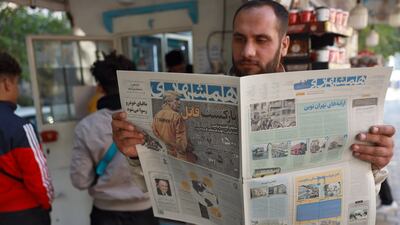
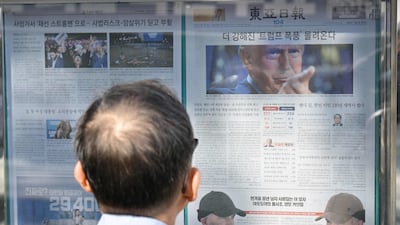
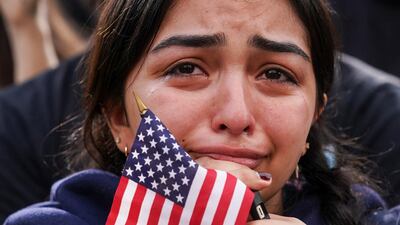
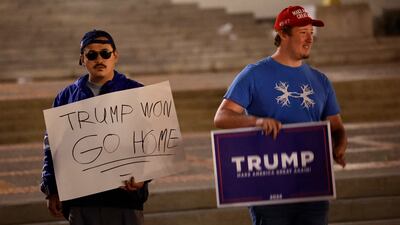
There are some scary predictions going around at the moment.
In European defence circles, there is talk of a continent no longer in a “post-war” military climate but “pre-war” instead. A leading British thinker on defence issues, Keir Giles, has published a stark new book suggesting that if Europe does not prepare for a new war, then it needs to prepare to lose it.
On trade, Donald Trump’s return to the US presidency in January comes with the promise of tariffs. That leads to rumblings that globalisation is coming to an end, with uncertainties about world trade, economies and international relations. Meanwhile France, Germany and Spain all have, for different reasons, shaky national governments. And there is the endless humanitarian suffering of the conflicts in the Middle East, Sudan and elsewhere.
November here in the northern hemisphere is a gloomy month, too. Shorter daylight hours and grey skies are not a recipe for optimism.
Nevertheless, there are some reasons to be modestly cheerful. Human problems have human solutions, and there’s nothing new about realistic fears for the future even if they may (thankfully) not come to pass.
I grew up in the Cold War era and remember scary documentaries and fictional TV programmes about northern Europe suffering a “nuclear winter”. The threat was that a nuclear exchange would cause immediate devastation, long-term pollution, crop failures and other catastrophes. Fortunately, common sense and peace prevailed.
And so, rather than fall prey to the European November gloom, Europeans – and indeed the rest of the world – should maybe consider some positive lessons from the past.
In the 1970s, Cold War pessimism was partly addressed by what Germans called, in a rhyming phrase, “Wandel durch Handel”, meaning “change through trade”. West Germans thought trading with East Germany would reduce the chance of conflict and promote stability by changing their communist neighbours economically and therefore create a better world.
On trade, Mr Trump seems to take a different view.
It’s difficult to pin down specific policies, but the future president speaks of tariffs of up to 60 per cent on Chinese imports. That could affect $500 billion of trade. It comes when the Asian giant has its own economic problems. Nevertheless, Chinese President Xi Jinping congratulated Mr Trump on his election victory and said that “a stable, healthy and sustainable China-US relationship is in the common interest of both countries and is in line with the expectations of the international community”.
Well, we can hope. But the US tariff question goes further than China.
It’s being discussed in European capitals and, while Mr Trump’s unpredictability may be a political asset for him, some assume that trading partners will be favoured according to how far Mr Trump divides the world into those who like him and those who do not.
The old German “change through trade” policy could nowadays be shorthand for optimistic globalisation. Poorer producing nations and richer consuming nations become economically intertwined. But for Germany, there are lasting problems in having become dependent on Russian energy, especially since the full-scale invasion of Ukraine in 2022.
In business circles, there is talk of “deglobalising”, “onshoring” and “friendshoring” – that is cutting business links with countries with which there may be serious disagreements. I attended a private meeting recently of senior businesspeople at an international bank. One speaker – an international trade consultant – asked the experts in the room how far they felt “deglobalisation” was real. Most suggested it was a threat rather than a reality, although Mr Trump’s victory and the tariff question may dampen that optimism next year.
The international trade consultant suggested that globalisation is – yes – under pressure, but world trade is so interconnected that it would be very difficult, except in the case of war, to disrupt all those connections. He also pointed out that Chinese companies have set up subsidiaries in third countries less likely to be subject to any Trump trade tariffs.
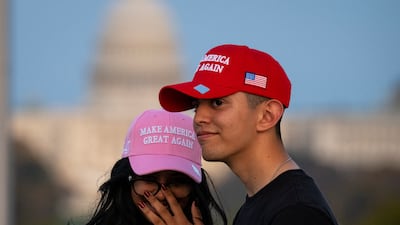
Besides, onshoring – replacing Chinese workers with higher-paid American workers – might appear to be good patriotic US politics, but it could increase the price of consumer goods. In the 2024 election, President Joe Biden’s record with inflation since 2020 was said by some American commentators to be a vote winner for Mr Trump. You might wonder if “Making America Great Again” through tariffs might raise prices and that – as this month’s election suggests – be politically dangerous.
Sadly, no crystal ball is available to predict what Mr Trump will do with his mandate to make America great again. A four-word slogan is not a policy. But it is easy to see why some commentators remain gloomy about conflict, deglobalisation and the world economy.
The good news – even if you do not like the result – is that the American people have spoken and it seems that the House of Representatives, Senate and presidency are all in Republican hands. No one seriously queries this year’s election results.
Economic protectionism, tariffs and onshoring will become part of our political vocabulary in 2025. But if the idea of “change through trade” sounds old-fashioned, “change through making trade costly” has some very obvious political drawbacks, too. What will Mr Trump do? I don’t know. Does he?

The%C2%A0specs%20
%3Cp%3E%0D%3Cstrong%3EEngine%3A%20%3C%2Fstrong%3E6-cylinder%2C%204.8-litre%20%0D%3Cbr%3E%3Cstrong%3ETransmission%3A%20%3C%2Fstrong%3E5-speed%20automatic%20and%20manual%0D%3Cbr%3E%3Cstrong%3EPower%3A%20%3C%2Fstrong%3E280%20brake%20horsepower%20%0D%3Cbr%3E%3Cstrong%3ETorque%3A%20%3C%2Fstrong%3E451Nm%20%0D%3Cbr%3E%3Cstrong%3EPrice%3A%20%3C%2Fstrong%3Efrom%20Dh153%2C00%0D%3Cbr%3E%3Cstrong%3EOn%20sale%3A%20%3C%2Fstrong%3Enow%3C%2Fp%3E%0A
Credit Score explained
What is a credit score?
In the UAE your credit score is a number generated by the Al Etihad Credit Bureau (AECB), which represents your credit worthiness – in other words, your risk of defaulting on any debt repayments. In this country, the number is between 300 and 900. A low score indicates a higher risk of default, while a high score indicates you are a lower risk.
Why is it important?
Financial institutions will use it to decide whether or not you are a credit risk. Those with better scores may also receive preferential interest rates or terms on products such as loans, credit cards and mortgages.
How is it calculated?
The AECB collects information on your payment behaviour from banks as well as utilitiy and telecoms providers.
How can I improve my score?
By paying your bills on time and not missing any repayments, particularly your loan, credit card and mortgage payments. It is also wise to limit the number of credit card and loan applications you make and to reduce your outstanding balances.
How do I know if my score is low or high?
By checking it. Visit one of AECB’s Customer Happiness Centres with an original and valid Emirates ID, passport copy and valid email address. Liv. customers can also access the score directly from the banking app.
How much does it cost?
A credit report costs Dh100 while a report with the score included costs Dh150. Those only wanting the credit score pay Dh60. VAT is payable on top.
Star%20Wars%3A%20Episode%20I%20%E2%80%93%20The%20Phantom%20Menace
%3Cp%3E%3Cstrong%3EDeveloper%3A%3C%2Fstrong%3E%20Big%20Ape%20Productions%3Cbr%3E%3Cstrong%3EPublisher%3A%3C%2Fstrong%3E%20LucasArts%3Cbr%3E%3Cstrong%3EConsoles%3A%3C%2Fstrong%3E%20PC%2C%20PlayStation%3Cbr%3E%3Cstrong%3ERating%3A%3C%2Fstrong%3E%202%2F5%3C%2Fp%3E%0A
The%20specs
%3Cp%3E%3Cstrong%3EEngine%3A%3C%2Fstrong%3E%20Dual%20synchronous%20electric%20motors%0D%3Cbr%3E%3Cstrong%3EPower%3A%20%3C%2Fstrong%3E660hp%0D%3Cbr%3E%3Cstrong%3ETorque%3A%20%3C%2Fstrong%3E1%2C100Nm%0D%3Cbr%3E%3Cstrong%3ETransmission%3A%20%3C%2Fstrong%3ESingle-speed%20automatic%0D%3Cbr%3E%3Cstrong%3ETouring%20range%3A%20%3C%2Fstrong%3E488km-560km%0D%3Cbr%3E%3Cstrong%3EPrice%3A%20%3C%2Fstrong%3EFrom%20Dh850%2C000%20(estimate)%0D%3Cbr%3E%3Cstrong%3EOn%20sale%3A%20%3C%2Fstrong%3EOctober%3C%2Fp%3E%0A
Libya's Gold
UN Panel of Experts found regime secretly sold a fifth of the country's gold reserves.
The panel’s 2017 report followed a trail to West Africa where large sums of cash and gold were hidden by Abdullah Al Senussi, Qaddafi’s former intelligence chief, in 2011.
Cases filled with cash that was said to amount to $560m in 100 dollar notes, that was kept by a group of Libyans in Ouagadougou, Burkina Faso.
A second stash was said to have been held in Accra, Ghana, inside boxes at the local offices of an international human rights organisation based in France.
Barings Bank
Barings, one of Britain’s oldest investment banks, was
founded in 1762 and operated for 233 years before it went bust after a trading
scandal.
Barings Bank collapsed in February 1995 following colossal
losses caused by rogue trader Nick Lesson.
Leeson gambled more than $1 billion in speculative trades,
wiping out the venerable merchant bank’s cash reserves.
Lexus LX700h specs
Engine: 3.4-litre twin-turbo V6 plus supplementary electric motor
Power: 464hp at 5,200rpm
Torque: 790Nm from 2,000-3,600rpm
Transmission: 10-speed auto
Fuel consumption: 11.7L/100km
On sale: Now
Price: From Dh590,000
WHEN TO GO:
September to November or March to May; this is when visitors are most likely to see what they’ve come for.
WHERE TO STAY:
Meghauli Serai, A Taj Safari - Chitwan National Park resort (tajhotels.com) is a one-hour drive from Bharatpur Airport with stays costing from Dh1,396 per night, including taxes and breakfast. Return airport transfers cost from Dh661.
HOW TO GET THERE:
Etihad Airways regularly flies from Abu Dhabi to Kathmandu from around Dh1,500 per person return, including taxes. Buddha Air (buddhaair.com) and Yeti Airlines (yetiairlines.com) fly from Kathmandu to Bharatpur several times a day from about Dh660 return and the flight takes just 20 minutes. Driving is possible but the roads are hilly which means it will take you five or six hours to travel 148 kilometres.
MATCH INFO
Barcelona 5 (Lenglet 2', Vidal 29', Messi 34', 75', Suarez 77')
Valladolid 1 (Kiko 15')
SUE%20GRAY'S%20FINDINGS
%3Cp%3E%22Whatever%20the%20initial%20intent%2C%20what%20took%20place%20at%20many%20of%20these%20gatherings%20and%20the%3Cbr%3Eway%20in%20which%20they%20developed%20was%20not%20in%20line%20with%20Covid%20guidance%20at%20the%20time.%3C%2Fp%3E%0A%3Cp%3E%22Many%20of%20these%20events%20should%20not%20have%20been%20allowed%20to%20happen.%20It%20is%20also%20the%20case%20that%20some%20of%20the%3Cbr%3Emore%20junior%20civil%20servants%20believed%20that%20their%20involvement%20in%20some%20of%20these%20events%20was%20permitted%20given%20the%20attendance%20of%20senior%20leaders.%C2%A0%3C%2Fp%3E%0A%3Cp%3E%22The%20senior%20leadership%20at%20the%20centre%2C%20both%20political%20and%20official%2C%20must%20bear%20responsibility%20for%20this%20culture.%C2%A0%3C%2Fp%3E%0A%3Cp%3E%22I%20found%20that%20some%20staff%20had%20witnessed%20or%20been%20subjected%20to%20behaviours%20at%20work%20which%20they%20had%20felt%20concerned%20about%20but%20at%20times%20felt%20unable%20to%20raise%20properly.%3C%2Fp%3E%0A%3Cp%3E%22I%20was%20made%20aware%20of%20multiple%20examples%20of%20a%20lack%20of%20respect%20and%20poor%20treatment%20of%20security%20and%20cleaning%20staff.%20This%20was%20unacceptable.%22%C2%A0%3C%2Fp%3E%0A
Engine: 3.5-litre V6
Transmission: eight-speed automatic
Power: 290hp
Torque: 340Nm
Price: Dh155,800
On sale: now
Civil%20War
%3Cp%3E%3Cstrong%3EDirector%3A%3C%2Fstrong%3E%20Alex%20Garland%C2%A0%3C%2Fp%3E%0A%3Cp%3E%3Cstrong%3EStarring%3A%3C%2Fstrong%3E%20Kirsten%20Dunst%2C%20Cailee%20Spaeny%2C%20Wagner%20Moura%2C%20Nick%20Offerman%3C%2Fp%3E%0A%3Cp%3E%3Cstrong%3ERating%3A%3C%2Fstrong%3E%204%2F5%3C%2Fp%3E%0A
Engine: 5.6-litre V8
Transmission: seven-speed automatic
Power: 400hp
Torque: 560Nm
Price: Dh234,000 - Dh329,000
On sale: now
Mercer, the investment consulting arm of US services company Marsh & McLennan, expects its wealth division to at least double its assets under management (AUM) in the Middle East as wealth in the region continues to grow despite economic headwinds, a company official said.
Mercer Wealth, which globally has $160 billion in AUM, plans to boost its AUM in the region to $2-$3bn in the next 2-3 years from the present $1bn, said Yasir AbuShaban, a Dubai-based principal with Mercer Wealth.
“Within the next two to three years, we are looking at reaching $2 to $3 billion as a conservative estimate and we do see an opportunity to do so,” said Mr AbuShaban.
Mercer does not directly make investments, but allocates clients’ money they have discretion to, to professional asset managers. They also provide advice to clients.
“We have buying power. We can negotiate on their (client’s) behalf with asset managers to provide them lower fees than they otherwise would have to get on their own,” he added.
Mercer Wealth’s clients include sovereign wealth funds, family offices, and insurance companies among others.
From its office in Dubai, Mercer also looks after Africa, India and Turkey, where they also see opportunity for growth.
Wealth creation in Middle East and Africa (MEA) grew 8.5 per cent to $8.1 trillion last year from $7.5tn in 2015, higher than last year’s global average of 6 per cent and the second-highest growth in a region after Asia-Pacific which grew 9.9 per cent, according to consultancy Boston Consulting Group (BCG). In the region, where wealth grew just 1.9 per cent in 2015 compared with 2014, a pickup in oil prices has helped in wealth generation.
BCG is forecasting MEA wealth will rise to $12tn by 2021, growing at an annual average of 8 per cent.
Drivers of wealth generation in the region will be split evenly between new wealth creation and growth of performance of existing assets, according to BCG.
Another general trend in the region is clients’ looking for a comprehensive approach to investing, according to Mr AbuShaban.
“Institutional investors or some of the families are seeing a slowdown in the available capital they have to invest and in that sense they are looking at optimizing the way they manage their portfolios and making sure they are not investing haphazardly and different parts of their investment are working together,” said Mr AbuShaban.
Some clients also have a higher appetite for risk, given the low interest-rate environment that does not provide enough yield for some institutional investors. These clients are keen to invest in illiquid assets, such as private equity and infrastructure.
“What we have seen is a desire for higher returns in what has been a low-return environment specifically in various fixed income or bonds,” he said.
“In this environment, we have seen a de facto increase in the risk that clients are taking in things like illiquid investments, private equity investments, infrastructure and private debt, those kind of investments were higher illiquidity results in incrementally higher returns.”
The Abu Dhabi Investment Authority, one of the largest sovereign wealth funds, said in its 2016 report that has gradually increased its exposure in direct private equity and private credit transactions, mainly in Asian markets and especially in China and India. The authority’s private equity department focused on structured equities owing to “their defensive characteristics.”