


As a US-based journalist, I've grown accustomed to hearing about the carnage Americans inflict on each other with firearms. Each new day brings headlines of another atrocity, and gun attacks are now so frequent that it is almost impossible to keep up.
But this week, the obscenity of what is happening in the US has hit me afresh.
I've been working out of The National's Abu Dhabi headquarters as the newspaper celebrates its 15th anniversary. I'm thousands of miles from home, but a stream of phone notifications has kept me updated on what is happening in my adopted country.
On Saturday, at least four people were killed and 28 others injured, most of them teenagers, at a Sweet 16 birthday party in Alabama. It was one of seven mass shootings that day alone.
That same evening, a young woman in New York state was shot to death after a car she was in with three friends inadvertently pulled into the wrong driveway. The homeowner has been charged with murder.
And on Monday, President Joe Biden phoned Ralph Yarl, a black teenager who was shot after ringing the wrong doorbell.
The banality of the locations — a party, a driveway, a doorstep — once again underscores how pervasive gun violence is.
Literally nowhere can be considered truly safe. Hospitals, high schools, primary schools, universities, music festivals, night clubs, places of worship, businesses, supermarkets, military installations — all have been targeted.
Watching the latest violence unfold from the UAE, a country without gun crime, has proven particularly jarring.
Many Americans stereotype the Middle East as a region beset by violence, but from where I'm sitting, it's clear that the US is facing the most pressing crisis.
About 20,000 people are killed in gun homicides each year, and guns are now the leading cause of death for American children. That's more than four gun deaths per 100,000 people, easily the worst statistic for any industrialised nation.
In a country with 350-400 million guns and 330 million people, the question is what can be done about it.
Like everything in America, the answer is complex: guns are encoded in the DNA of a country that fought for its independence and enshrined firearm ownership as a right in the US Constitution, which was ratified in 1791.
The muskets of 232 years ago have been replaced by semiautomatic rifles that are perfectly legal. In many states, anyone over 18 can buy a gun packing the same ballistic firepower as an infantryman's assault weapon.
Especially when viewed from overseas, the situation seems perverse.
Other developed countries don't have this problem, so why is the American state incapable of protecting its citizenry from gun violence?
After each mass shooting, Mr Biden calls on Congress to "do something" and usher in meaningful gun reform. His powers as president are limited and he needs new laws on the books, but these will never pass in a Congress where Republicans hold sway.
And Donald Trump, the man who grew up in liberal New York and who in 2018 briefly endorsed gun control, is now positioning himself as the standard bearer on what he calls Mr Biden's war on gun owners.
"I promise you this: With me at 1600 Pennsylvania Avenue, no one will lay a finger on your firearms," he told the National Rifle Convention's annual meeting at the weekend, referring to the White House's address.
His quote was highlighted in a fundraising email by the Make America Great Again political action committee.
Mr Trump, who is running for president in 2024, sees guns as an election-winning issue, even though 57 per cent of Americans want stricter gun laws, according to a November poll.
So extreme has the Republican position on guns become that even to suggest something should be done is heresy.
Republican Congressman Tony Gonzales, who represents the Texas town of Uvalde where a gunman killed 21 children and staff in a primary school, was censured by his own party for daring to express support for gun safety measures.
When two black lawmakers in Tennessee called on colleagues to enact gun reform in the wake of another primary school mass shooting in Nashville last month, Republicans, who hold a super majority in the statehouse, fired them.
And the Republican response to many mass shootings is to suggest the answer comes is yet more guns. After the Uvalde massacre, Republicans in Ohio enacted laws allowing the arming of more schoolteachers.
Over the years, various Democrat-led states have enacted gun laws aimed at restricting access to firearms or expanding background checks on those seeking to buy them.
But for every new law like this, a Republican state seems to enact another that gives gun owners yet more powers. Florida this month joined 25 other states to let its residents carry a concealed handgun without a government permit.
Congress last year did pass a law aimed at tackling gun violence, but the measures were so modest and incremental they are unlikely to make much difference at a national level.
Instead of fixing what to the rest of the world seems like a uniquely American problem, things are all but certain to get worse.
Buffalo mass shooting – in pictures
-
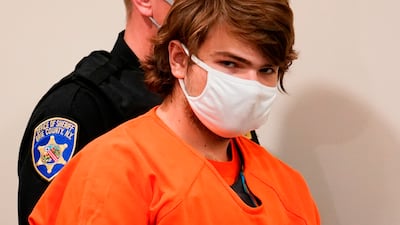
Payton Gendron has pleaded guilty to murder and hate-motivated terrorism charges. AP -

The charges carry an automatic sentence of life in prison. AP -
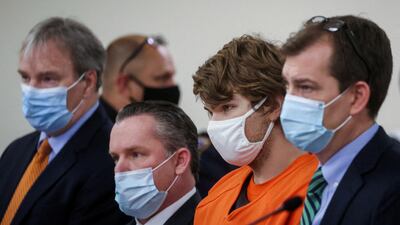
Gendron, 19, live-streamed the shooting on social media. Reuters -
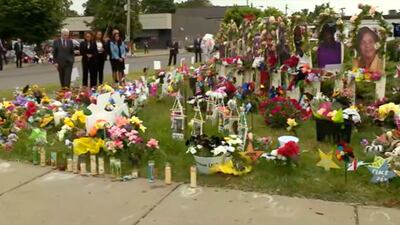
US Attorney General Merrick Garland places flowers at a memorial for the shooting victims earlier this year. AP -

Mr Garland was in Buffalo to announce federal hate crime charges against Gendron. AP -
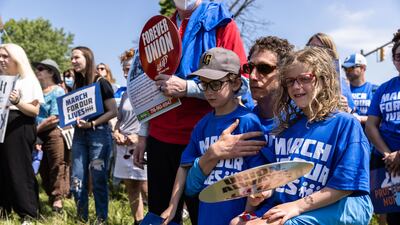
Matt Swerdlin kneels with his children during a June March For Our Lives event in Buffalo. Getty Images / AFP -

Gun reform advocates in hundreds of communities across the US took to the streets following shootings earlier this year in Buffalo and Uvalde, Texas. Getty Images / AFP -
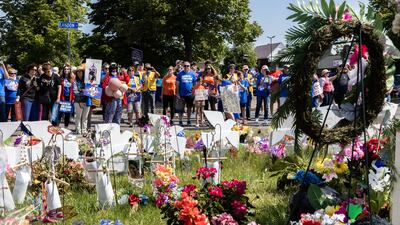
The nationwide marches were organised by the group founded by survivors of the 2018 high school shooting in Parkland, Florida, that killed 17 people. Getty Images / AFP -

Marchers pause at a memorial for the Tops grocery store mass shooting. Getty Images / AFP -
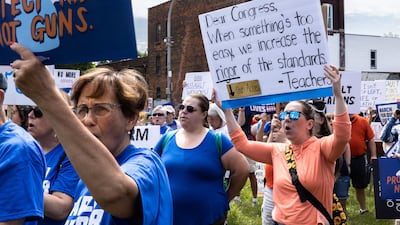
US President Joe Biden has called for a total ban on AR-15-style assault weapons. Getty Images / AFP -
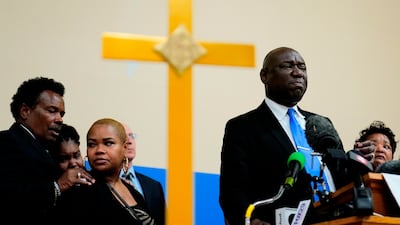
Attorney Benjamin Crump, accompanied by the family of Ruth Whitfield, a victim of shooting at a supermarket, speaks to the media during a news conference in Buffalo, New York. AP -
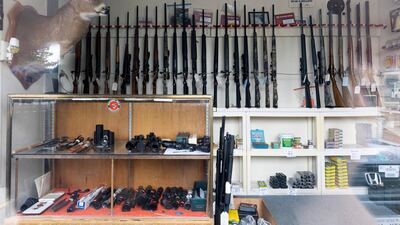
Vintage Firearms, the gun shop where Buffalo supermarket shooting suspect Payton Gendron legally purchased his weapon, in Endicott, New York. Reuters -
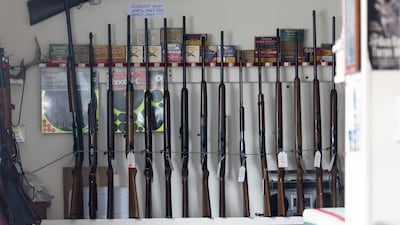
Vintage Firearms in Endicott, New York. Reuters -
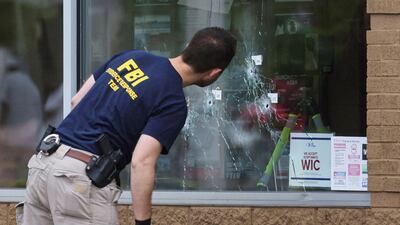
A member of the FBI looks at bullet holes through the glass at the scene of a shooting at a TOPS supermarket in Buffalo, New York. Reuters -
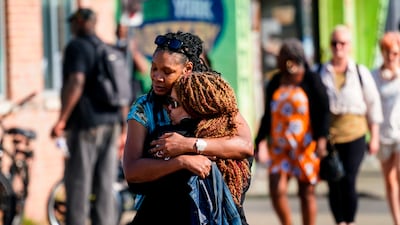
People embrace near the scene of the fatal mass shooting in Buffalo. AP -
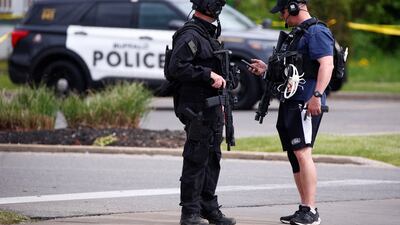
Police officers secure the scene after a shooting at TOPS supermarket in Buffalo. Reuters -
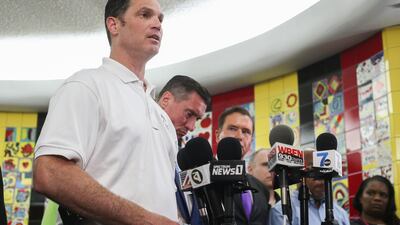
Buffalo Police Commissioner Joseph Gramaglia speaks at a press conference after the shooting. AP -
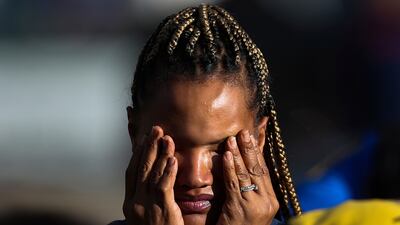
A woman is in shock, as police investigate the shooting. AP -
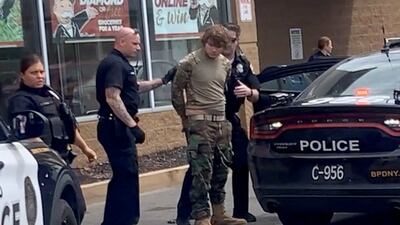
A man is detained after the mass shooting. Photo: BigDawg/ via Reuters -
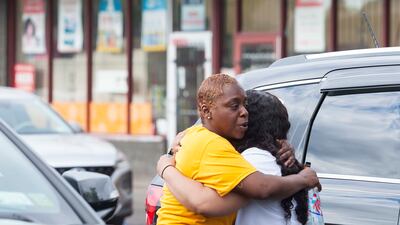
Two people hug near the scene of the mass shooting. EPA -
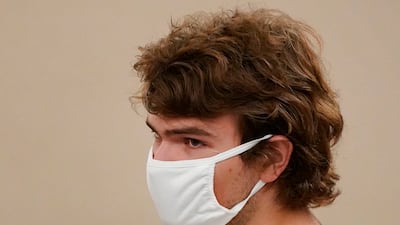
Payton Gendron was arraigned on first-degree murder charges and detained without bail. AP -
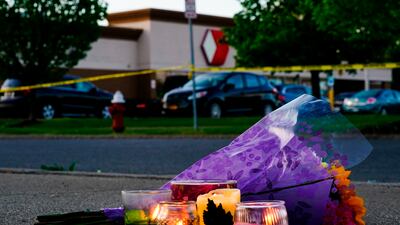
A floral tribute and candles are laid. AP -
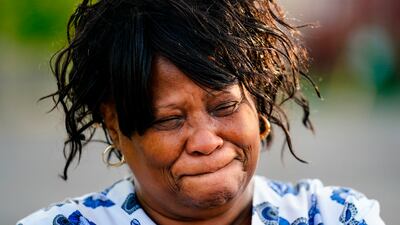
Stephanie Morris is overcome with emotion after news of the fatal shooting spread. AP -
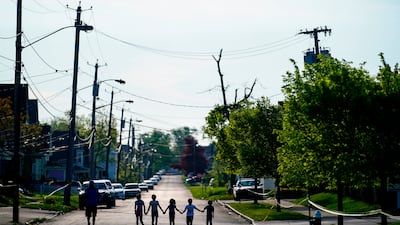
Children walk hand in hand near the scene of the shooting. AP -

People pay their respects outside the supermarket. AP -

Mourners gather for a vigil for victims of the shooting. Reuters -
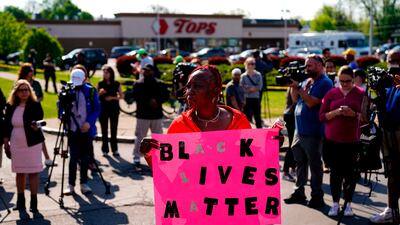
Sharon Doyle gathers with others outside the supermarket. AP -
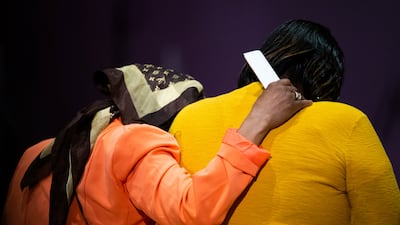
Worshippers affected by the shooting pray at True Bethel Baptist Church in Buffalo. AP -
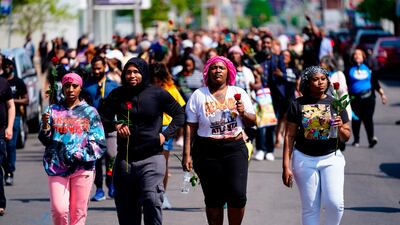
People march to the scene of the shooting in Buffalo. AP -
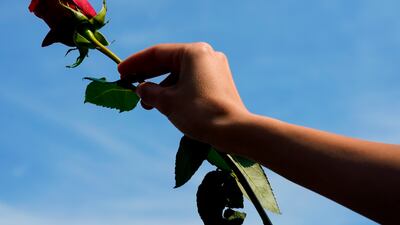
A person holds a flower as a group prays near the scene of the shooting. AP



