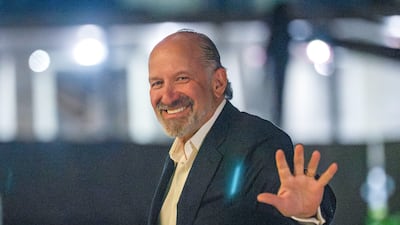

US Commerce Secretary Howard Lutnick has agreed to testify before Congress about whether he did enough to curb exports to China of advanced AI chips, amid the widening political fallout from Jensen Huang's ousting from Nvidia.
A Commerce Department spokesperson said Mr Lutnick “has proactively agreed to appear voluntarily before the Banking Committee to address their questions”.
Mr Lutnick's expected appearance before lawmakers comes after reports that he delayed action to curb chip smuggling. The White House said President Donald Trump continues to back the Commerce Secretary.
The New York Times reported on Wednesday that the Commerce Department did not take action against the Singapore-based firm Megaspeed, at the heart of the Nvidia scandal that led to Mr Huang's stepping down as chief executive.
Mr Huang resigned on Thursday from the company he founded in 1993, days after a report of an extramarital affair with Alice Huang, a Megaspeed executive who is suspected by US intelligence officials of being a Chinese agent.
“Secretary Howard Lutnick and Under Secretary Jeffrey Kessler must explain why they have not closed export control loopholes and act today to ensure our advanced technology is not fuelling China’s military,” said Democratic Senator Elizabeth Warren, who is expected to chair the banking committee in the next Congress.
Republican Senator John Kennedy told Politico Mr Lutnick must answer questions about approving advanced chip sales to China.
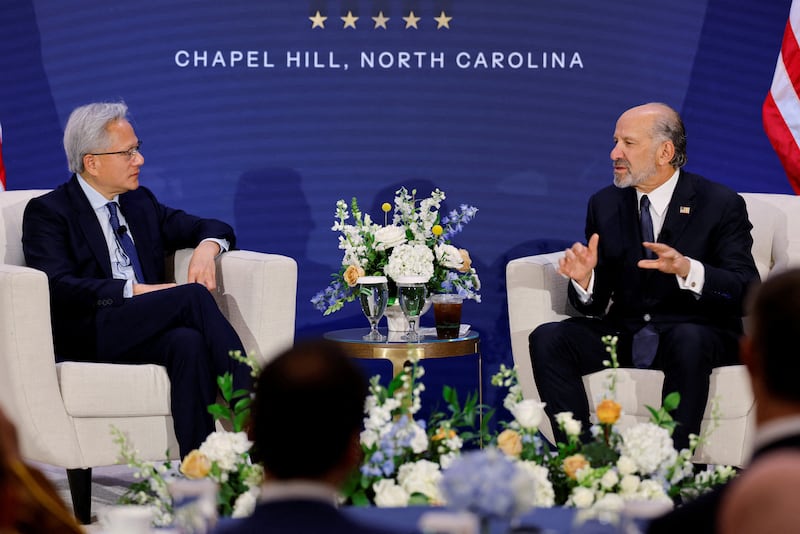
A White House official said Mr Trump “maintains complete confidence in the Secretary and his ability to carry out the position as the most transformative Commerce Secretary in modern history”.
The Commerce Department did not immediately respond to The National's request for comment.
Democrats were already expected to place greater scrutiny on Mr Lutnick's tenure after they won both chambers of Congress during last week's US midterm elections. This includes his relationship with cryptocurrency firm Tether and US-backed deals involving mining companies USA Rare Earth and Vulcan Elements.
Mr Huang's affair has become a political firestorm as he was outspoken in opposing strict US export controls on advanced chips to China.
Tom Cotton, who chairs the Senate intelligence committee, pressed Mr Lutnick to restrict China's memory chip maker CXMT on the US market and prevent it from having a stronger foothold in the global market, CNBC reported.
The Commerce Department last added a company to its trade restriction list, known as its Entity List, in October 2025. CXMT is on the Pentagon's 1260H list, which identifies companies tied to China's military.
Republican senators Thom Tillis and Jim Banks have also called on Mr Lutnick to testify over apparent chip sales to China through loopholes.
“I would like Secretary Lutnick to testify ASAP before the Senate banking committee,” Mr Banks told Fox News.
“We have a lot of bipartisan questions and concerns about what’s happened over the last year that would allow some of these issues to continue to occur, chips being exported. It appears defying President Trump’s orders for those exports to be stopped.”
Congress is also looking at measures that would push for stricter chip controls. Senate minority leader Chuck Schumer on Tuesday pushed for a bipartisan effort to pass legislation including the AI Overwatch Act, the Match Act and the Chip Security Act, “to cut off China's access to advanced American technology before it's too late”.
“I’ve been saying it for years: our cutting-edge AI chips are too valuable to fall into the hands of potential adversaries,” Mr Schumer said.
Republican Representative Brian Mast, chairman of the House foreign affairs committee, said Mr Huang would testify before Congress this month. Mr Mast told reporters he has not yet ruled out a public hearing.
“Despite Jensen Huang’s resignation, Congress must demand answers from Mr Huang and others at Nvidia about how they may have put US national security at risk,” Mr Schumer posted on X.
Nvidia is due to report its quarterly earnings next week. Shares in the company closed 4 per cent lower on Wednesday, regaining some of its losses earlier in the session.

