The war with Iran and its impacts on global energy supplies, maritime security, and trade are looming large over a G20 meeting in Atlanta, where the foreign ministers of the world's top economies are gathering amid deep geopolitical divisions.
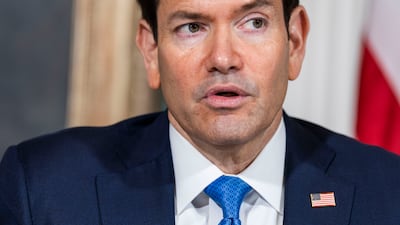
At the event, hosted by Secretary of State Marco Rubio, the US wants to focus the group on returning to its "core mission" of driving economic growth.
But disputes over Russia’s war in Ukraine, China's economic policies and the exclusion of South Africa threaten to overshadow the two-day event, which starts on Friday in the southern US state of Georgia.

The US has uninvited South Africa amid tension over Pretoria's domestic and foreign policies, including its legal action against Israel. Washington has meanwhile invited Russia - but not Ukraine - as President Donald Trump deepens his embrace of Moscow.
The European Union's foreign policy chief Kaja Kallas said on Thursday that she would urge partners at the G20 and at a separate EU-Canada summit to strengthen support for Ukraine.
She said she would also urge for accountability through a "Special Tribunal and Claims Commission".
"Russia must be accountable," she said on X, referring to a Russian attack at a crowded Ukrainian train station that killed at least 14 people.
Russian Foreign Minister Sergey Lavrov will be at the meeting, adding further tension to proceedings. Mr Trump this month issued sanctions waivers to allow Russia to export diesel in a bid to tame high fuel prices ahead of Tuesday's midterm elections.
The move has drawn intense backlash from critics who have argued that Moscow will plough any new revenue into its war machine against Ukraine or use it to deepen ties with Iran.
Mr Lavrov, a target of western sanctions over Russia's full-scale invasion of Ukraine, is the latest Kremlin official to visit the US. Finance Minister Anton Siluanov, who has also been hit with sanctions, attended a G20 meeting in North Carolina in September and held sideline talks with Treasury Secretary Scott Bessent.
Mr Rubio will attempt to show that the G20 can still co-operate on shared economic risks despite the splits between members.
According to the State Department, the G20 discussions are expected to focus on crises contributing to global economic shocks, including threats to freedom of navigation, energy and food security, and supply chains.
The conversations in Atlanta will provide an opportunity to discuss energy and supply chain issues, a State Department official said, "as well as identify ways to collectively address the impact of geopolitical tensions on economic security."
"Energy is foundational for economic growth around the world. Shared economic prosperity is tied to energy access, but it is also important that access is affordable and abundant," the official added.

The UAE is not expected to attend, but is an invited guest at a G20 leaders' meeting in Miami in December. Saudi Foreign Minister Prince Faisal bin Farhan is attending the Atlanta event.
French diplomatic sources said no joint declaration was expected from the Atlanta meeting, reflecting the divisions among members.
Still, the meeting's agenda shows how Washington hopes to separate geopolitical tension from the economic priorities it wants leaders to address.
The Trump administration has stressed the importance of deregulation, economic growth, energy security and technological innovation.
The US may issue a summary of the discussions, known as chair’s conclusions, although the extent to which it captures the differing positions of participants remains uncertain.
“The better measure is whether new partnerships and potentially new mechanisms are emerging to take these discussions forward," said Elaine Dezenski, senior director and head of FDD’s Centre on Economic and Financial Power.
Turkey is expected to urge Washington and Tehran to resolve their dispute through dialogue and diplomacy, warning that continued hostilities are exacerbating regional vulnerabilities, according to Turkish Foreign Ministry sources.
Foreign Minister Hakan Fidan is also expected to highlight the impact of attacks on ships and energy infrastructure in the Gulf.
The French sources said France will also use the meeting to press for greater co-operation on maritime security, including in Hormuz and Bab Al Mandeb.
Paris additionally wants ministers to discuss energy diversification and the transition away from fossil fuels as ways to reduce countries’ vulnerability to supply disruptions - a message likely to land with a thud for the Trump administration, which wants to increase drilling projects.
The Atlanta meeting is the final ministerial gathering under Washington's G20 presidency before leaders meet in Miami on December 14 and 15.
Russian President Vladimir Putin hasn’t yet said whether he’ll attend that G20 meeting.

