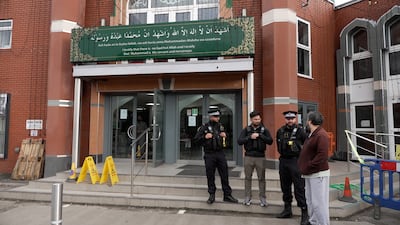

Attacks on British mosques are becoming more severe, while reports of lower-level types of intimidation of Muslims has decreased, a report has found.
There were 78 attacks and incidents against mosques in the UK and Channel Islands from the year ending in July 2026, amounting to an incident every five days, according to the campaign group British Muslim Trust.
The research found a reduction in lower-level threats to mosques and buildings owned by Muslim organisations, such as the drawing of crosses, flags and hateful slogans on mosque walls, desecrating objects left outside mosques and property damage.

But more severe incidents involving arson, weapons, threats to kill and violence have increased. This includes foiled plots for mass casualties, of which there were none the previous year. The report included “sustained harassment” and online campaigns in its assessment of more severe threats.
The attacks took place across 64 mosques and buildings on their premises, with almost one fifth of those premises experiencing multiple attacks in the same year.
The BMT, which was set up last year as the government’s watchdog for anti-Muslim hatred and threats, said the fluctuations showed “unchecked” low-level incidents had paved the way for more serious crimes.
“This data tells an incredibly sombre story about the rise in anti-Muslim hostility that British Muslims are living with. Today, a mosque is vulnerable purely because it’s a mosque,” said the BMT’s chief executive Akeela Ahmed.
“Security needs are increasing as a direct response to the severity of attacks that mosques are under. British Muslims are under attack due to the polarisation that is building and many Muslims are scared to go about their everyday lives.”
The Home Office has allocated £40 million ($52.8 million) of funding to protect mosques and Muslim community organisations in the UK. The BMT had previously reported some mosques had experienced delays of up to 18 months in obtaining that official funding.
The trust campaigns for a wider effort to tackle the underlying issues behind the security threats. “If we want to bring down the costs for protecting British Muslims in the UK, then we need to reduce the need for protection and address the root causes of hate against Muslim communities,” Ms Ahmed said.
“The rise in hate that we are witnessing is showing no signs of slowing down and until it does we need to make mosques a safe place for Muslim communities.”
There was an increase of attacks on mosques during Ramadan, with a man in Ayr, Scotland, repeated using a heavy object to hit a window in a room where women and children had gathered to break their fast.
A man was charged with terrorism-related crimes after allegedly stabbing worshippers outside a mosque in Edinburgh. Last year, a mosque was set on fire in Peacehaven, East Sussex.
Twelve people were arrested for plotting an “extreme right wing terrorism-related” attack directed at an Islamic event in Ipswich in July, according to Counter Terrorism Policing (CTP) London.
The report's authors faced questions over the inclusion of an attack on the former buildings of the East London Central Synagogue as one of the 78 attacks. The BMT said the attack followed an online hate campaign towards the local Somali community, members of which had announced their intention to buy the building and turn it into a mosque. The cause of the attack has not been identified, while two men were arrested on suspicion of involvement.
“The community received a significant amount of online hate. When the arson attack happened, many local Muslim communities felt affected, alongside Jewish communities,” the BMT report said.