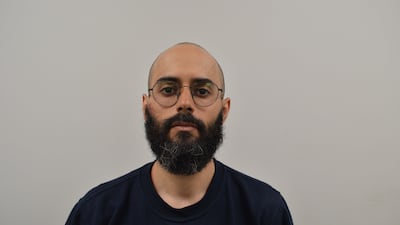

A Kuwaiti who attempted to break into the Israeli embassy in London armed with two knives to carry out a terrorist attack has been sentenced to life in jail.
Abdullah Sabah Albadri, 34, was arrested by armed diplomatic protection police who prevented him from climbing over the gates at the embassy building.
Body-camera footage of his arrest showed him telling officers he had “weapons” and wanted to “make a crime” inside the building.
Albadri was convicted of preparing terrorist acts and possessing two knives following a trial at the Old Bailey in London in April. He has now been given a life sentence and will serve a minimum of 20 years.
“The significant prison sentence he has received reflects the danger he posed on the day and the lack of remorse he has shown since he was arrested,” said Helen Flanagan, the head of Counter Terrorism Policing (CTP) London.
Ms Flanagan praised the officers who arrested Albadri for their “incredible bravery and professionalism, which, remarkably, resulted in nobody being seriously injured – despite being confronted by a man armed with knives, intent on carrying out a terrorist attack”.
Albadri first entered Britain on a small boat from France in 2021 and again in April 2025. Only 12 days after arriving in the country, he searched online for the location of the Israeli embassy.

Following his arrest, detectives found that Albadri had wanted to attack the embassy as an act of revenge for Israeli government’s military actions in Gaza.
Albadri also had a note on him when he was arrested that said he intended to die. Officers found he had searched online for several Arabic terms related to suicide attacks during the five days leading up to his arrest.
These internet searches strengthened the case that he had been planning to carry out a terrorist attack, London's Metropolitan Police said.
On the day of the incident, CCTV footage recovered by police showed Albadri walking from Kilburn in north-west London to the embassy in Kensington.
He was wearing a red-and-white scarf wrapped around his head and mouth, and sunglasses.
Albadri told his trial he was born into the stateless Arabian Bedouin tribe on Iraqi-Kuwaiti border and had no human rights or passport in Kuwait.
He said his father, a police officer, had paid for his education until he was 18 and that he later became a human-rights activist.

