A Muslim cleric who invited far-right rioters into his mosque for a meal says the UK needs to keep up the momentum of reconciliation that emerged in the aftermath of last week’s unrest.
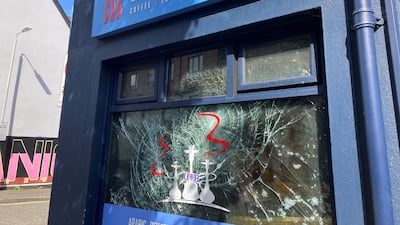
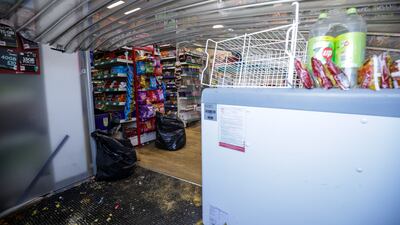
Far-right riots targeting hotels housing asylum seekers and mosques gripped the UK, leaving Muslims fearing for their safety on the street.
But imam Adam Kelwick, in the northern city of Liverpool, has taken a different approach. The week of riots, he said, had shown communities coming together to combat racism, and some people with far-right views being tempered by dialogue.
Online videos of the charismatic preacher embracing a far-right protester, and inviting another into Liverpool's Abdullah Quilliam mosque for food, became internet sensations. “We don’t want to go back to how we were before,” he told The National.
“We’ve entered into a new phase now. Alliances and friendships have been built from people who just over a week ago were considered to be our enemies. Now they're our friends and our protectors,” he said.
The riots were triggered by a fake news campaign, which falsely claimed that a Muslim asylum seeker was responsible for a deadly knife attack against girls at a dance class in Southport, 30km from Liverpool, on July 29.
Though courts eventually disclosed the suspect's real identity as British-born, 17 year-old Axel Radukabuna, protests and riots continued into the following week. The ensuing violence resulted in 975 arrests and 546 charges being brought, according to the National Police Chiefs' Council (NPCC).
Hundreds of people arrested during the riots began to appear in courts this week to face heavy charges.
Mr Kelwick welcomed the swift justice against the rioters, but hopes to continue the outreach work that began amid the violence.
He has just returned from a two-day retreat organised by Mark Scanlon, a former MMA boxer and fitness influencer from Liverpool – who had promoted one of the city’s far-right gatherings on his social media.
The rally on August 3 descended into chaos as police had cans and smoke bombs thrown at them, with parents and children seen running away from the violence.
Though many of Mr Scanlon’s own followers criticised his involvement in it, Mr Kelwick refrains from condemnation.
“The majority of the (protesters) were not far-right leaning, or driven by political ideologies. They were there because the emotions were so raw from the Southport stabbing, and they felt they wanted to do something,” he said.
The pair met for coffee in the days after the rally. Mr Scanlon invited the imam and his congregation to join him on an annual retreat that he organises in North Wales.
Most of Mr Kelwick's congregation were initially scarred to join the trip, but a highlight for them came on a walk in the countryside. “We were walking and talking in the countryside, and we prayed in a valley surrounded by the mountains. I never felt so safe before,” he said.
As we spoke, the imam was still receiving text messages from people he had met on the trip who had also taken part in the far-right rally. “I see it as an opportunity to admit I was wrong,” one person wrote to him.
One Yemeni woman from his congregation who went on the trip said she felt safe to return to work on Monday, after a week of staying at home.
But behind the positive messages, lies a darker reality.
Mr Kelwick’s Abdullah Quilliam mosque, which is the UK’s oldest, now has round-the-clock security and regular police patrols due to an emergency fund that the government released to protect Islamic spaces across the UK last week.
The imam admits he was worried when he saw the crowds gathered at Liverpool Pier Head on August 3. In previous years, members of the far-right coming into Liverpool to stage protests were chased away by locals when they got to the station, he said.
But not on that day. “To see that many people down on the Pier Head, I was very surprised, and worried,” he said.
Another danger came when a group of young Muslims made plans to take matters into their own hands, which could have caused more escalation and violence. Mr Kelwick said: “I found those guys and said: 'If anyone’s arrested for violence, I’ll come find you in prison and remind you of the shame you brought on to our community.'”
Since then he has sought to engage different communities to try to unite people. “Liverpool is a tribal city, half of the people have Irish origins, they have their own tribal leaders. It sounds strange, using it in a British context, but I've been sitting down with tribal leaders and making peace treaties with them,” he said.
There were steps the UK government could take moving forward, he said. While he praised recent security measures, he said more needed to be done around the messaging so Muslims were not seen to be getting preferential treatment – a trope peddled by the far right. “If it seems like the government is only giving this funding for mosques, that could just feed into this narrative,” he said.
More opportunities should also be created for dialogue between communities at the grassroots level. “I’m not talking about traditional interfaith dialogue. What we've been doing with members of the community in Liverpool for the last the last week or so, really needs to increase, because that's how you get rid of ignorance,” he said.
Another step was to put an end to “toxic” narratives about immigration – fuelling misinformation in public debate and on social media. “It has to be recognised that social media played a huge part in stoking this trouble up in the first place,” he said.
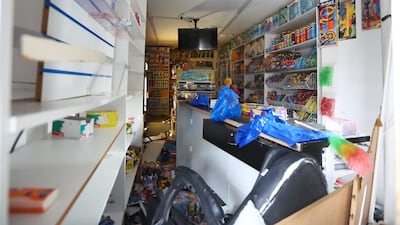
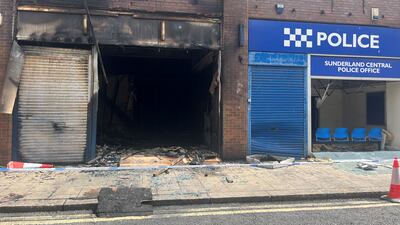
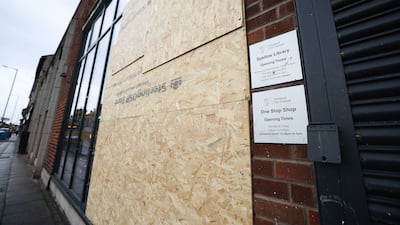
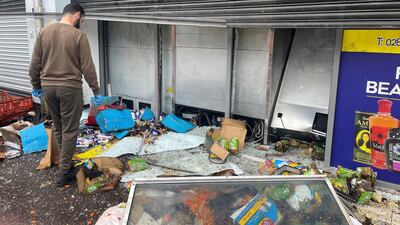
Damage caused by riots in the UK – in pictures
As a preacher, Mr Kelwick has sought to combat online misinformation by sharing his own videos of positive messages and correcting misconceptions about Islam.
But it was up to the government to regulate social media platforms. “This is a job for the government, not for me, and they've got their own battles to be had around issues like freedom of speech and all the rest of it.”
The fact that the riots happened weeks after the general election, in which political campaigns put immigration to the fore, is no surprise to Kelwick. “What we've seen on the streets is actually a result of the horrible campaign in the last general elections, where it was all about immigration and Muslims taking over,” he said.
Politicians such as Nigel Farage, the leader of the populist Reform UK party, were instigating the anger on the street with plausible deniability, he said: “They’re very good at supporting violent protests without supporting violent protests, good at being racist without being racist.”
Counter-extremism programmes such as Prevent were failing their own goals he said, and needed a “complete rebranding” to address the fears and suspicions they invoke among British Muslims.
A new version of the programme would need to be viewed as also protecting Muslims from far-right extremists. “There's a very delicate kind of balance which needs to be found there,” he said.
In its current state, the programme had caused a lot of distrust from the Muslim community, as it gave schoolteachers the power to refer children suspected to be at risk of radicalisation to local police.
“There’s so much damage being done,” said Mr Kelwick. “If you have to launch another programme which will not be at the expense of the development of the Muslim community, then you really need a complete rebranding.”
A Royal United Services Institute report last week found that the UK government had failed to treat far-right attacks as seriously as Islamic ones, resulting in a double standard in counter-extremism measures.
“Rusi’s research suggests that the nature of far-right violence, which is often seen as low-impact and disjointed, coupled with institutional bias and racism, means that far-right violence has historically not triggered the same responses from politicians, security services and the media as jihadist violent extremism,” the report said.
Mr Kelwick fears the government has been reluctant to reform the Prevent programme as “they see it as some kind of defeat, because a lot of very politically ideological Muslim organisations are also calling for the same thing.”

The biog
First Job: Abu Dhabi Department of Petroleum in 1974
Current role: Chairperson of Al Maskari Holding since 2008
Career high: Regularly cited on Forbes list of 100 most powerful Arab Businesswomen
Achievement: Helped establish Al Maskari Medical Centre in 1969 in Abu Dhabi’s Western Region
Future plan: Will now concentrate on her charitable work
Islamophobia definition
A widely accepted definition was made by the All Party Parliamentary Group on British Muslims in 2019: “Islamophobia is rooted in racism and is a type of racism that targets expressions of Muslimness or perceived Muslimness.” It further defines it as “inciting hatred or violence against Muslims”.
Types of fraud
Phishing: Fraudsters send an unsolicited email that appears to be from a financial institution or online retailer. The hoax email requests that you provide sensitive information, often by clicking on to a link leading to a fake website.
Smishing: The SMS equivalent of phishing. Fraudsters falsify the telephone number through “text spoofing,” so that it appears to be a genuine text from the bank.
Vishing: The telephone equivalent of phishing and smishing. Fraudsters may pose as bank staff, police or government officials. They may persuade the consumer to transfer money or divulge personal information.
SIM swap: Fraudsters duplicate the SIM of your mobile number without your knowledge or authorisation, allowing them to conduct financial transactions with your bank.
Identity theft: Someone illegally obtains your confidential information, through various ways, such as theft of your wallet, bank and utility bill statements, computer intrusion and social networks.
Prize scams: Fraudsters claiming to be authorised representatives from well-known organisations (such as Etisalat, du, Dubai Shopping Festival, Expo2020, Lulu Hypermarket etc) contact victims to tell them they have won a cash prize and request them to share confidential banking details to transfer the prize money.
* Nada El Sawy
The Melbourne Mercer Global Pension Index
Mazen Abukhater, principal and actuary at global consultancy Mercer, Middle East, says the company’s Melbourne Mercer Global Pension Index - which benchmarks 34 pension schemes across the globe to assess their adequacy, sustainability and integrity - included Saudi Arabia for the first time this year to offer a glimpse into the region.
The index highlighted fundamental issues for all 34 countries, such as a rapid ageing population and a low growth / low interest environment putting pressure on expected returns. It also highlighted the increasing popularity around the world of defined contribution schemes.
“Average life expectancy has been increasing by about three years every 10 years. Someone born in 1947 is expected to live until 85 whereas someone born in 2007 is expected to live to 103,” Mr Abukhater told the Mena Pensions Conference.
“Are our systems equipped to handle these kind of life expectancies in the future? If so many people retire at 60, they are going to be in retirement for 43 years – so we need to adapt our retirement age to our changing life expectancy.”
Saudi Arabia came in the middle of Mercer’s ranking with a score of 58.9. The report said the country's index could be raised by improving the minimum level of support for the poorest aged individuals and increasing the labour force participation rate at older ages as life expectancies rise.
Mr Abukhater said the challenges of an ageing population, increased life expectancy and some individuals relying solely on their government for financial support in their retirement years will put the system under strain.
“To relieve that pressure, governments need to consider whether it is time to switch to a defined contribution scheme so that individuals can supplement their own future with the help of government support,” he said.
Bert van Marwijk factfile
Born: May 19 1952
Place of birth: Deventer, Netherlands
Playing position: Midfielder
Teams managed:
1998-2000 Fortuna Sittard
2000-2004 Feyenoord
2004-2006 Borussia Dortmund
2007-2008 Feyenoord
2008-2012 Netherlands
2013-2014 Hamburg
2015-2017 Saudi Arabia
2018 Australia
Major honours (manager):
2001/02 Uefa Cup, Feyenoord
2007/08 KNVB Cup, Feyenoord
World Cup runner-up, Netherlands
The%20specs
%3Cp%3E%3Cstrong%3EEngine%3A%20%3C%2Fstrong%3E3.6-litre%2C%20V6%0D%3Cbr%3E%3Cstrong%3ETransmission%3A%20%3C%2Fstrong%3Eeight-speed%20auto%0D%3Cbr%3E%3Cstrong%3EPower%3A%20%3C%2Fstrong%3E285hp%0D%3Cbr%3E%3Cstrong%3ETorque%3A%20%3C%2Fstrong%3E353Nm%0D%3Cbr%3E%3Cstrong%3EPrice%3A%20%3C%2Fstrong%3EDh159%2C900%0D%3Cbr%3E%3Cstrong%3EOn%20sale%3A%20%3C%2Fstrong%3Enow%3C%2Fp%3E%0A
About RuPay
A homegrown card payment scheme launched by the National Payments Corporation of India and backed by the Reserve Bank of India, the country’s central bank
RuPay process payments between banks and merchants for purchases made with credit or debit cards
It has grown rapidly in India and competes with global payment network firms like MasterCard and Visa.
In India, it can be used at ATMs, for online payments and variations of the card can be used to pay for bus, metro charges, road toll payments
The name blends two words rupee and payment
Some advantages of the network include lower processing fees and transaction costs
UAE currency: the story behind the money in your pockets
Super Bowl LIII schedule
What Super Bowl LIII
Who is playing New England Patriots v Los Angeles Rams
Where Mercedes-Benz Stadium in Atlanta, United States
When Sunday (start time is 3.30am on Monday UAE time)
The specs
Engine: 5.2-litre V10
Power: 640hp at 8,000rpm
Torque: 565Nm at 6,500rpm
Transmission: 7-speed dual-clutch auto
Price: From Dh1 million
On sale: Q3 or Q4 2022
Mercer, the investment consulting arm of US services company Marsh & McLennan, expects its wealth division to at least double its assets under management (AUM) in the Middle East as wealth in the region continues to grow despite economic headwinds, a company official said.
Mercer Wealth, which globally has $160 billion in AUM, plans to boost its AUM in the region to $2-$3bn in the next 2-3 years from the present $1bn, said Yasir AbuShaban, a Dubai-based principal with Mercer Wealth.
“Within the next two to three years, we are looking at reaching $2 to $3 billion as a conservative estimate and we do see an opportunity to do so,” said Mr AbuShaban.
Mercer does not directly make investments, but allocates clients’ money they have discretion to, to professional asset managers. They also provide advice to clients.
“We have buying power. We can negotiate on their (client’s) behalf with asset managers to provide them lower fees than they otherwise would have to get on their own,” he added.
Mercer Wealth’s clients include sovereign wealth funds, family offices, and insurance companies among others.
From its office in Dubai, Mercer also looks after Africa, India and Turkey, where they also see opportunity for growth.
Wealth creation in Middle East and Africa (MEA) grew 8.5 per cent to $8.1 trillion last year from $7.5tn in 2015, higher than last year’s global average of 6 per cent and the second-highest growth in a region after Asia-Pacific which grew 9.9 per cent, according to consultancy Boston Consulting Group (BCG). In the region, where wealth grew just 1.9 per cent in 2015 compared with 2014, a pickup in oil prices has helped in wealth generation.
BCG is forecasting MEA wealth will rise to $12tn by 2021, growing at an annual average of 8 per cent.
Drivers of wealth generation in the region will be split evenly between new wealth creation and growth of performance of existing assets, according to BCG.
Another general trend in the region is clients’ looking for a comprehensive approach to investing, according to Mr AbuShaban.
“Institutional investors or some of the families are seeing a slowdown in the available capital they have to invest and in that sense they are looking at optimizing the way they manage their portfolios and making sure they are not investing haphazardly and different parts of their investment are working together,” said Mr AbuShaban.
Some clients also have a higher appetite for risk, given the low interest-rate environment that does not provide enough yield for some institutional investors. These clients are keen to invest in illiquid assets, such as private equity and infrastructure.
“What we have seen is a desire for higher returns in what has been a low-return environment specifically in various fixed income or bonds,” he said.
“In this environment, we have seen a de facto increase in the risk that clients are taking in things like illiquid investments, private equity investments, infrastructure and private debt, those kind of investments were higher illiquidity results in incrementally higher returns.”
The Abu Dhabi Investment Authority, one of the largest sovereign wealth funds, said in its 2016 report that has gradually increased its exposure in direct private equity and private credit transactions, mainly in Asian markets and especially in China and India. The authority’s private equity department focused on structured equities owing to “their defensive characteristics.”
Desert Warrior
Starring: Anthony Mackie, Aiysha Hart, Ben Kingsley
Director: Rupert Wyatt
Rating: 3/5
FROM%20THE%20ASHES
%3Cp%3EDirector%3A%20Khalid%20Fahad%3C%2Fp%3E%0A%3Cp%3EStarring%3A%20Shaima%20Al%20Tayeb%2C%20Wafa%20Muhamad%2C%20Hamss%20Bandar%3C%2Fp%3E%0A%3Cp%3ERating%3A%203%2F5%3C%2Fp%3E%0A
THE SPECS
Engine: Four-cylinder 2.5-litre
Transmission: Seven-speed auto
Power: 165hp
Torque: 241Nm
Price: Dh99,900 to Dh134,000
On sale: now
Ms Yang's top tips for parents new to the UAE
- Join parent networks
- Look beyond school fees
- Keep an open mind
The specs: 2018 Nissan Patrol Nismo
Price: base / as tested: Dh382,000
Engine: 5.6-litre V8
Gearbox: Seven-speed automatic
Power: 428hp @ 5,800rpm
Torque: 560Nm @ 3,600rpm
Fuel economy, combined: 12.7L / 100km
MATCH INFO
Serie A
Juventus v Fiorentina, Saturday, 8pm (UAE)
Match is on BeIN Sports
Ferrari
%3Cp%3E%3Cstrong%3EDirector%3A%3C%2Fstrong%3E%20Michael%20Mann%26nbsp%3B%3C%2Fp%3E%0A%3Cp%3E%3Cstrong%3EStarring%3A%3C%2Fstrong%3E%20Adam%20Driver%2C%20Penelope%20Cruz%2C%20Shailene%20Woodley%2C%20Patrick%20Dempsey%3C%2Fp%3E%0A%3Cp%3E%3Cstrong%3ERating%3A%3C%2Fstrong%3E%203%2F5%3C%2Fp%3E%0A
Who's who in Yemen conflict
Houthis: Iran-backed rebels who occupy Sanaa and run unrecognised government
Yemeni government: Exiled government in Aden led by eight-member Presidential Leadership Council
Southern Transitional Council: Faction in Yemeni government that seeks autonomy for the south
Habrish 'rebels': Tribal-backed forces feuding with STC over control of oil in government territory
Visit Abu Dhabi culinary team's top Emirati restaurants in Abu Dhabi
Yadoo’s House Restaurant & Cafe
For the karak and Yoodo's house platter with includes eggs, balaleet, khamir and chebab bread.
Golden Dallah
For the cappuccino, luqaimat and aseeda.
Al Mrzab Restaurant
For the shrimp murabian and Kuwaiti options including Kuwaiti machboos with kebab and spicy sauce.
Al Derwaza
For the fish hubul, regag bread, biryani and special seafood soup.