


Britain will continue to send arms to Israel despite the looming offensive in Rafah, David Cameron has said.
But after a key note speech delivered in London, the foreign secretary refused to be drawn on what the UK’s “red line” would be if Israel attacked southern Gaza, where 1.4 million citizens are sheltering.
Lord Cameron argued that Britain’s exports were marginal, unlike America which was a major arms supplier, as he responded to a question on whether Britain would follow the US after it warned that it would withhold weapons from Israel over Rafah.
“The US is a massive state supplier of weapons to Israel,” he said. “We do not have a UK Government supply of weapons to Israel, we have a number of licences, and I think our defence exports to Israel are responsible for significantly less than 1 per cent of their total.”
He insisted that Britain had the most rigorous arms export controls in the world and these were kept under constant review.
The most recent Foreign Office report stated that arms worth £42 million were exported, the majority of them spare parts for F-35 fighters, which have been used to bomb Gaza.
Lord Cameron also called on Britain and its allies to “out-compete, out-co-operate and out-innovate” adversaries, citing the Red Sea as a key battle.
International shipping has faced a deadly threat from missiles and drones launched by the pro-Iranian militia controlling the straits around Yemen. “While many countries have criticised the Houthi attacks, it is only the US and Britain that have been willing and able to step up and strike back at them,” he said.
The Foreign Office billed Lord Cameron's address as his first “big-picture” policy intervention, mapping out how the UK should respond to a more dangerous world.
“If [Vladimir] Putin’s illegal invasion teaches us anything, it must be that doing too little, too late, only spurs an aggressor on,” Lord Cameron said.
Since returning as foreign secretary late last year, Lord Cameron hinted at dismay at how few countries have been willing to get involved in military operations targeting Houthi bases.
“I see too many examples in this job of this lesson not having been learnt,” he said. “Take the Red Sea, where ship after ship has been attacked.”
US and UK carry out more strikes against Houthis in Yemen – video
He also addressed some European countries’ apparent unwillingness to invest in defence “even as war rages on our continent”.
He also urged Nato countries to agree at a summit in the US in July to spend 2.5 per cent of their GDP on defence.
Lord Cameron also underlined the need for the UK to invest in old alliances, with the freedom of being outside the EU, such as partnerships in Europe, the Five Eyes alliance, the G7 and Nato.
He called for a push to establish new partnerships, like the Aukus alliance with the US and Australia, and the Joint Expeditionary Force collaborations with nations in northern Europe.
-
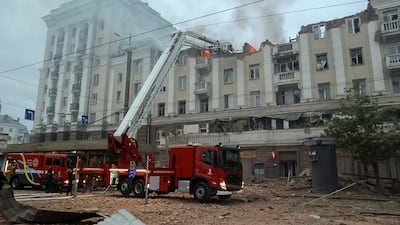
Ukrainian rescuers at the site of a rocket attack on a residential building in Dnipro, south-eastern Ukraine. EPA -
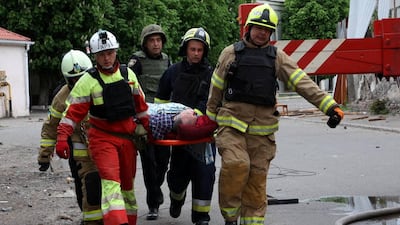
Rescues carry a person wounded by a Russian missile strike in Dnipro. Reuters -
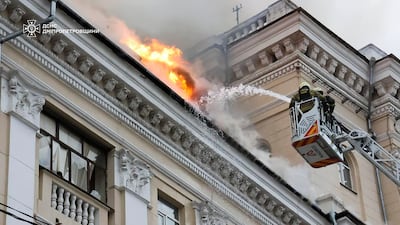
Rescuers tackle a blaze at a building struck by Russian bombs, in Dnipro. AP -
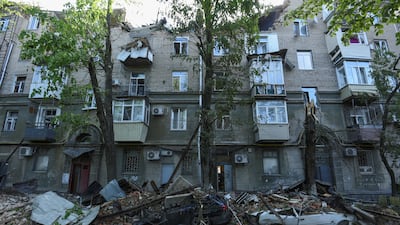
An apartment building hit by a Russian missile strike in Dnipro. Reuters -
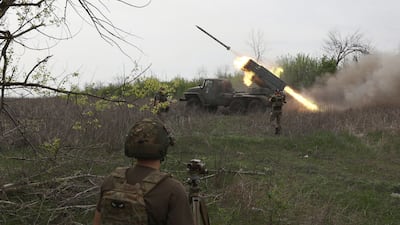
Ukrainian soldiers fire at Russian positions near the town of Kupyansk, Kharkiv Region. AFP -
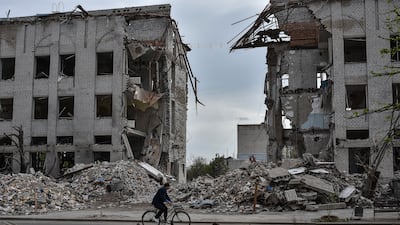
A building destroyed by a Russian air strike in the front-line town of Orikhiv. AP -
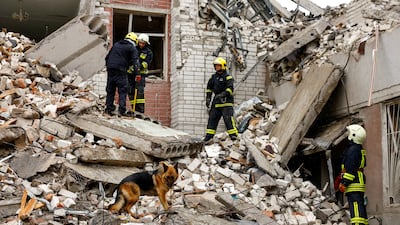
A dog stands on the rubble as rescuers work at the site of a destroyed building during a Russian missile strike in Chernihiv. Reuters -
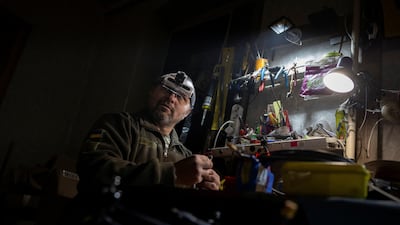
A Ukrainian serviceman works on an FPV drone in a workshop in the Donetsk region. Reuters -
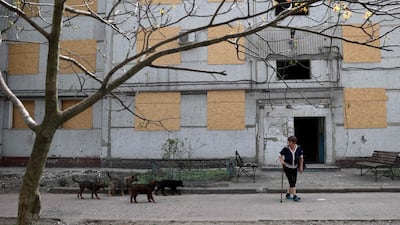
Local resident Kateryna, 77-years-old, walks with a litter of puppies, which she feeds in the yard of her bomb-damaged apartment block in the town of Kurakhove. AFP -
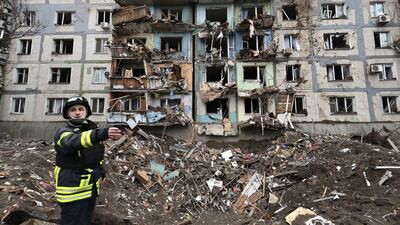
Ukrainian rescuers at the scene of a missile strike near a residential building, in Zaporizhzhia. EPA -
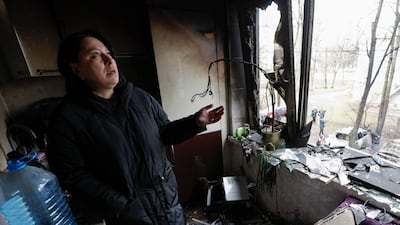
A woman looks at the damage in her flat after debris from a missile strike hit nearby, in Kyiv. EPA -

Ukrainian firefighters at the scene of a missile strike in Kyiv. EPA -
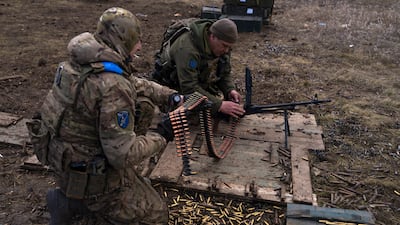
Ukrainian servicemen take part in military training at an undisclosed location near the frontline. EPA -
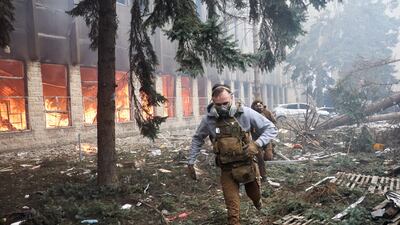
Ukrainian troops run near the site of a rocket attack on an industrial building, in Kharkiv. EPA -
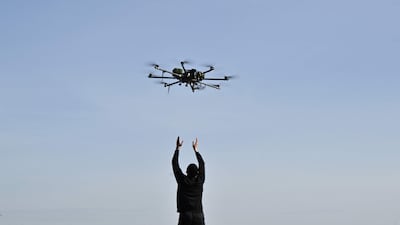
A pilot operates a drone at a training ground in the Kyiv region. AFP -

Ukrainian and Russian soldiers are depicted in a tug-of-war on a memorial in Izium, Kharkiv region. AP -
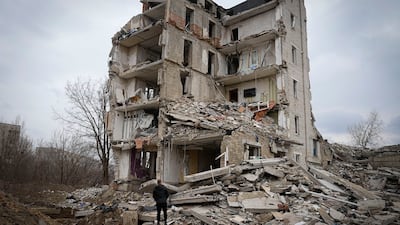
A man looks at his home in a damaged apartment building in Izium, Kharkiv. AP -
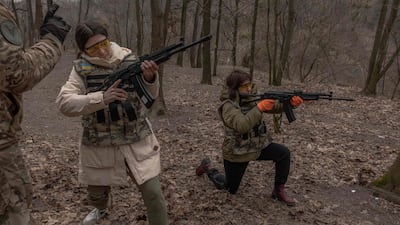
Ukrainian civilian women are trained to use weapons, in Kyiv. AFP -
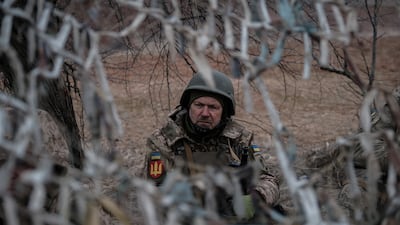
A Ukrainian soldier mans a position as new recruits receive training at an undisclosed location in the Donetsk region. EPA -
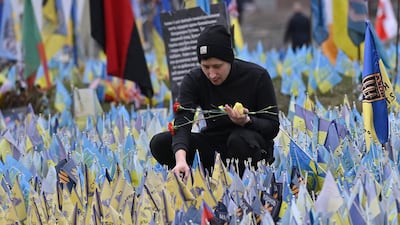
A man pays tribute at a makeshift memorial for fallen Ukrainian soldiers, at the Independence Square in Kyiv. AFP -
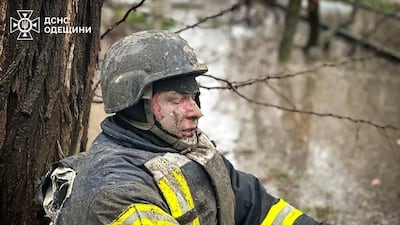
An emergency worker at the scene of a Russian attack in Odesa. AP -
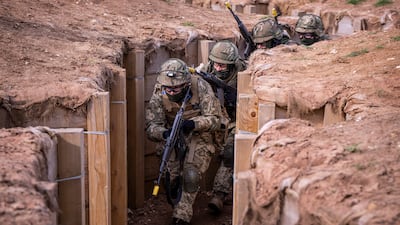
Ukrainian recruits are trained by members of the Danish military, in the east of England. AP -
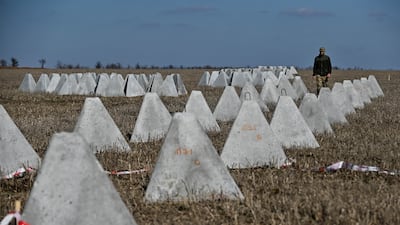
Danylo, commander of an engineering and sapper company of the Ukrainian Armed Forces, inspects pyramidal anti-tank obstacles known as 'dragon's teeth' before installing them into a new fortification line in Zaporizhzhia region. Reuters



