Tens of millions of adults around the world are embracing weight-loss drugs as health authorities work to tackle obesity rates and boost quality of life.
Recently released clinical data for the drug Wegovy – from the Danish company Novo Nordisk – indicates that the medication could also help children aged six to 12 to shed weight.
Just over four-fifths of youngsters who had a weekly injection of the drug while following a reduced-calorie diet and taking more exercise saw their body mass index fall after 68 weeks. Among a group given a placebo, only 23.5 per cent had a BMI reduction.

Prof Ania Jastreboff, of the Yale Obesity Research Centre in the US, said the children given semaglutide, Wegovy's active ingredient, also saw improvements in “multiple cardiometabolic measures” – metrics related to the cardiovascular system and metabolism.
In her statement, released by Novo Nordisk in response to the trial data, she said that this suggested “that effective treatments for severe childhood obesity may shift a child’s trajectory back towards one of improving weight-related health”.
Over the past decade Wegovy and similar drugs have had a transformative effect for millions of people around the world, helping them to lose weight by reducing their appetite.
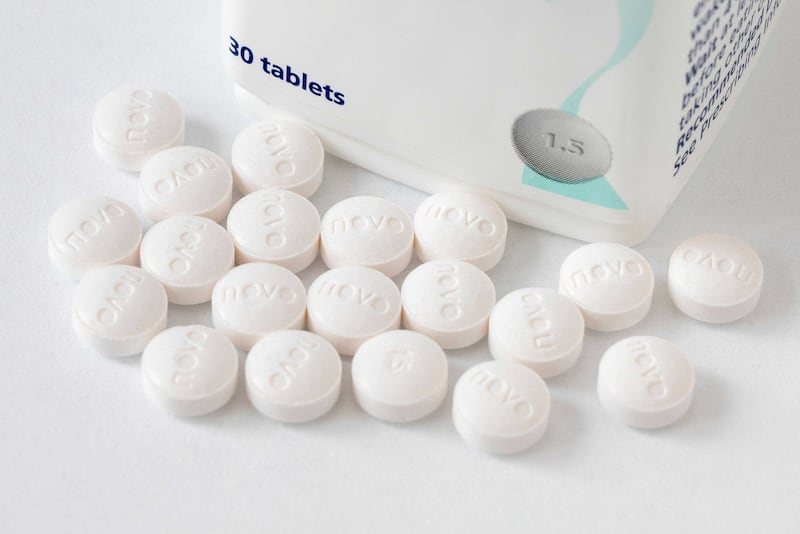
Wegovy was administered by injection when it was launched, but since June it has also been available in the UAE as a pill.
Semaglutide cuts the desire for food by mimicking the gut hormone glucagon-like peptide 1 (GLP-1), which the body releases after eating. Semaglutide is also present in the Type 2 diabetes medication Ozempic.
Mounjaro and Zepbound, rival Type 2 diabetes and weight-loss drugs from Eli Lilly, contain the active ingredient tirzepatide and act in a similar way.
Public health crisis
Childhood obesity is increasing. According to figures released by the charity Unicef last year, about 10 per cent of five to 19-year-olds worldwide are obese – which is about 188 million young people. In 1990, only two per cent, or 31 million, of the same age group were obese.
Dr Antje Hebestreit, head of the behaviour and health unit at the Leibniz Institute for Prevention Research and Epidemiology, in Germany, said childhood obesity was “a major public health concern”, especially as it often had long-term consequences.
“Childhood obesity increases the likelihood of obesity in adulthood and is associated with a higher long-term risk of Type 2 diabetes, cardiovascular disease and metabolic disorders, and certain cancers,” she said.

Prof Claude Marcus, a medical doctor and academic at the Karolinska Institutet in Sweden who researches childhood obesity, said obese children were three times as likely to die before reaching the age of 30, and 10 times as likely to develop Type 2 diabetes before their 30th birthday.
Risks of hypertension or high blood pressure and hyperlipidaemia – excess fat levels in the blood – are also increased. “There’s not a single organ in children not affected by obesity,” he said.
Diet rather than physical inactivity is the primary reason why so many more children are becoming obese, he said.
“The major cause is availability of something that we like to eat – sweet, salt, fat – 24/7,” he said. “We eat irregularly, we eat always. When you look at how children are physically active, there’s a poor association [with being overweight]. Their eating habits are far more important.”
Boosting treatment options
Obesity researchers indicated that having weight-loss drugs available for younger children would create alternatives for clinicians.
“I think it’s important to have a number of different treatment options for paediatricians working with children with obesity in order to support them,” said Richard Holt, professor of diabetes and endocrinology at the University of Southampton, in the UK.
“Not all will be responsive to behavioural management … It’s important children have opportunities for that range of treatments that adults have.”
He said with all drugs used during childhood, there was “a concern about very long-term side effects”, but any such effects would only emerge with time.
GLP-1 medicines are already approved for young people aged 12 to 18.
According to a recent investigation by The Guardian newspaper, in the UK 419 people under 18 were prescribed the drugs in the 2025-26 financial year, of whom 10 were aged below 12.
The figures are for prescriptions through the country’s National Health Service, and exclude private prescriptions so, the newspaper reported, they “are likely to be a considerable underestimate”.
Prof Marcus said it was rare for children younger than nine to require drug treatments because of their weight. But from around that age, they become more independent, and ill-effects linked to obesity, such as Type 2 diabetes, become more common.
“If we want to prevent these co-morbidities, we need to treat them very early, from that age,” he said. “It’s very good if we can add these very potent drugs to lifestyle support.”
In adults and adolescents, he noted, weight gain when treatment ended could be “a serious problem”. “There’s a chance we have a better long-term effect when we treat them before puberty,” he said.
Potential side effects
Prof Marcus indicated that the risk of serious side effects in children was likely to be low.
“We don’t know if there are unknown long-term effects,” he said. “Negative long-term effects are probably rare or extremely rare because we are using these drugs for many years now in adults. From six to 12 years [old] we probably won’t see many new types of side effects.”
When it comes to the drugs' potential effects on growth, Prof Marcus said children with obesity “grow much faster before puberty and less during puberty”.
“I’ve not seen that weight loss has any long-term negative effects on growth,” he said. “What might happen is when you start to use these drugs, you have the immediate effect on growth, but we don’t expect any negative long-term effects on final height.”
According to a study published this year by researchers in Greece, final heights in obese children tended to be similar or even slightly less than those of non-obese children.
Some doctors have expressed concern about the risk of an over-reliance on weight-loss medications.
Concerns over weight-loss quick-fix

Chris Whitty, England's Chief Medical Officer, asked earlier this year whether society’s answer was to “just rely on drugs to get us out of a hole” with respect to obesity.
“I do not think that is a socially acceptable answer. Actually I don’t think that’s a medically acceptable answer, because these drugs are not benign,” he said in comments reported by UK media.
Prof Marcus said the ideal would be for everyone, whether child or adult, to eat more healthily and to achieve weight reductions.
“That’s easy to say but extremely hard to achieve,” he said. “That’s a problem for adults and for children. Children have parents who can support them. I am sure they have a better chance to lose weight. At eight, nine, they’re more independent, they will need drugs on occasion.”